Television and pro wrestling in many ways are a marriage of necessity, that usually ends up as a bad relationship. In rare cases, when the product is hot and mainstream, and the ratings preclude what some would consider the negative stigma, the relationship is tremendous. Usually, that isn’t the case.
We are in, and have been for the past year, in probably the most unique time period for pro wrestling since television became an industry staple more than 50 years ago. We’ve got one major company, with several shows that air nationally, two of which are huge successes. With football out of the way, Raw is almost always the highest rated show of the week on cable, which is quite a feat considering how much landscape that entails. Smackdown is UPN’s highest rated show, and some have credited it with saving a network that appeared doomed before acquiring the show.
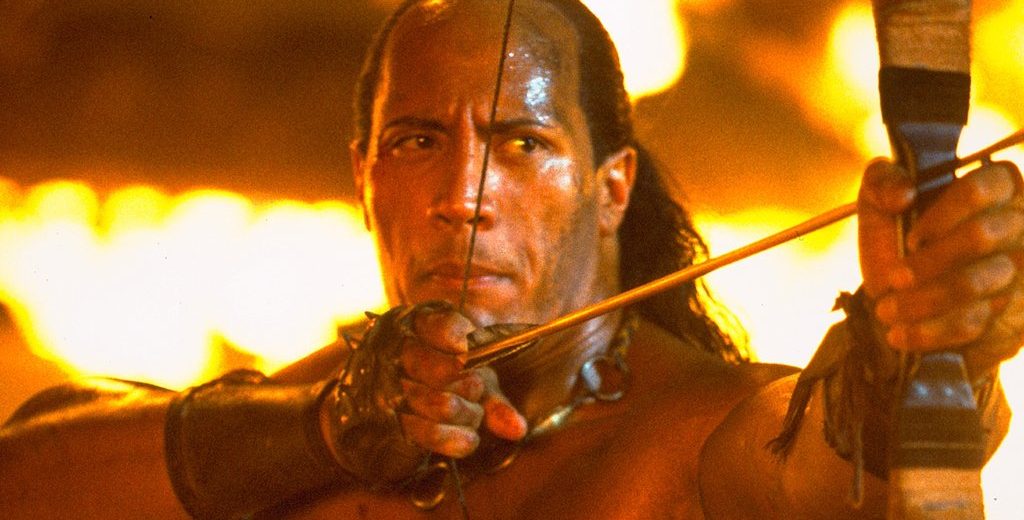
With his first starring role, “Scorpion King,” about to open, Dwayne Johnson’s Hollywood career may just be starting to take off. Pushed by many to be heir to the action hero throne held by people like Arnold Schwarzeneggar and Bruce Willis, Johnson has the right size, the right look, and more than the right charisma. He’s proven as a ratings and arena draw to wrestling fans, and “Mummy Returns,” where he actually had a small role but was practically promoted as a co-star, did incredible business. While rumors, backed up by the intensive re-shooting, indicate the movie may not be a great film, with the incredible hype, it will almost surely do excellent early box office.
What does that mean for wrestling? While Johnson will never knock wrestling and is careful about talking about balancing the two, he’s also admitted he never wants to go through the pace that he did over the past year.
The Montreal Screwjob is as famous (or infamous) a story as there has ever been in pro wrestling. It has also turned into one of the more exhausting stories in pro wrestling to keep talking about.
In the nearly 22 years since it happened, we has seen nearly every rock uncovered, nearly every question asked, rehashed, and asked again, and every participant/non-participant interviewed about what happened that cold Canadian November night. If you know the story, you have a take on it.
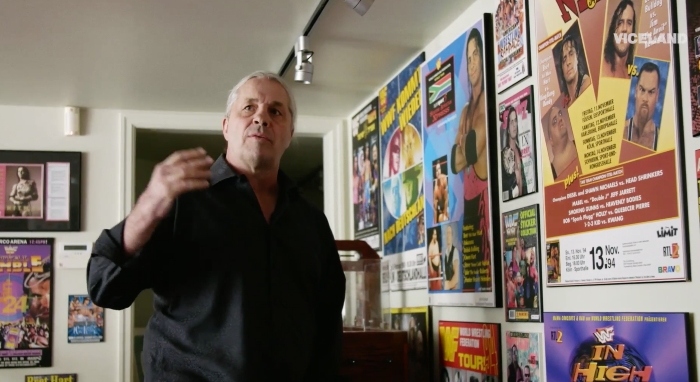
That meant the Viceland ‘Dark Side of the Ring’ filmmakers had a hell of a task on their hands with “The Montreal Screwjob” which debuted Wednesday night. While the documentary talks to many of the key players and has its moments in its near-50 minute runtime, it still struggles to overcome a fatal flaw: this story has been talked to death.
What’s In This Thing?
If you enjoy hearing from lots of wrestling luminaries, you get them here and then some. Several players from the Randy Savage/Elizabeth doc (Eric Bischoff, Scott Hall, Bruce Prichard) are back for “Screwjob” although Prichard and Bischoff come off as less charming and less trustworthy as in the Savage doc. Yes, I realize the ridiculousness of that statement as I type it.
But they are offset by the appearances of Bret Hart himself and Jim Cornette, a creative team member at the time. And then, there’s two surprise appearances but we’ll get to them in a few paragraphs.
After a breeze through Hart’s background and how he got to the WWF, we focus on the time after Hart defeated Ric Flair for his first WWF world title. Cornette and Prichard are strong here in explaining about what becoming a world champion means and help get over the significance of that honor historically. Prichard adds a foreboding quote about Hart: “You’ve got to remember that someone made you champion. You didn’t really beat anybody.” The look on his face and the manner in which he says this beg for a follow-up, but that is best saved for a deeper dive on a podcast.
We eventually get into the meat of “Screwjob”: the real-life feud between Hart and Shawn Michaels. Hart, Cornette, and Prichard recall their backstage brawl in Hartford that saw Hart rip out clumps of Michaels’ hair (“We were like two prostitutes fighting downtown or something,” Hart jokes), the backstory of Michaels’ “sunny days” comment, and the eventual financial decision McMahon has to make to let Hart out of his contract.
Likely the most talked about portion of the doc will be the discussion on how Hart was going to lose the title before leaving. We hear Hart explain how he didn’t want to drop the belt to Michaels, but we don’t get to hear his explanation of an alternate plan on how he wanted to go out.
Hart tells a story of how Michaels brushed him off when Hart said he would be professional in their Survivor Series match and to not worry about anything. I really wanted to hear Michaels’ side of the story as it makes him look terrible, But, it’s understandable why he didn’t participate in talking about all of this again.
Hart grows suspicious of how McMahon is going to screw him over at SS despite his creative control in the last 60 days of his contract. We then get our first interview with Earl Hebner, a sympathetic figure who calls the last 15 years post-Montreal “the sh*ts”. His inclusion is welcome and a key part of rounding out the tale sans Michaels.
Then, the screwjob happens with plenty of supporting footage from “Wrestling With Shadows” and WWE (listen to my interview with series co-creator Evan Husney for an interesting/serendipitous story on the sound man they used for the project).
But we need to move on because there’s some Vince Russo to get to.
Yep, the former WWF creative lead and lightning rod for controversy gives his side of the story, especially important and to where the idea to doublecross Hart came from. Cornette takes credit (if you can call it that), citing creative frustration and a challenge from McMahon to come up with an idea after they had exhausted all options. He used the original Montreal screwjob as an example, “The Battle of The Bite” that involved Ed ‘Strangler’ Lewis. Russo said he suggested the doublecross and didn’t hear it come from Cornette “unless I was in the bathroom when he said it.”
The final act focuses on what happened after the bell rang. Again, this is pretty much everything any wrestling fan knows about from Hart punching Vince to Michaels denying he had any involvement (no one believes it) to the controversy eventually creating the Mr. McMahon character which, strangely, might have been the biggest positive out of any of this, especially financially.
Perhaps the most head-scratching theory is from Hall who thinks the whole thing was a work, pointing to how the directors didn’t pull away from either Hart spitting on McMahon to Hart spelling out WCW with his hands. Like Michaels’ non-involvement, it’s an opinion not shared by anyone else with Cornette questioning how Hall claims he never talked to Michaels about what happened.
What’s Missing and What Should Be Missing?
Sit-downs with Michaels and McMahon would have been tremendous icing on the Montreal cake, but given they are beholden to the WWE Universe, I’m not surprised at their omission. Although, Michaels did talk to ESPN for a 20th anniversary story about Montreal. This is where it would have been great to see a pull quote or something from that interview given they have a narrator in Dutch Mantell that could have read it.
While the Cornette-Russo discussion is interesting, the doc focuses on their mutual hatred a little too much, especially considering they close the documentary with it. It does provide a memorable Cornette quote vowing he would “live to piss on (Russo’s) grave. Hate is a hell of a motivator.” But to close with that in a documentary focused on Hart vs. Michaels was a misfire.
There’s also several minutes committed to the infamous curtain call jammed in that doesn’t really fit in the context of the story and trends toward being a little too insider for a general audience.
Is It Worth Watching?
Even though I don’t need to hear about the Montreal screwjob ever again which includes the afterlife, I can live with this being the last longform content I watch, read, or listen to on the subject. Having Hart, Cornette, Russo, and Prichard walk us through the various stages of Montreal is a plus while Bischoff’s inclusion felt unnecessary.
Compared to the Savage and Bruiser Brody documentaries in the series, “The Montreal Screwjob” is a bit dense in spots without a lot of space to take in the ridiculousness of the situation being laid out. I would be interested to hear what non-wrestling fans think of it, especially with some of the perceived insider focus I mentioned above.
At the end of the day, though, even the most burned out wrestling fans will enjoy “The Montreal Screwjob” but plenty of those fans can and will find ways to pick some of the lack of details and specifics apart.
In looking at business for the past year, the WWF was still far stronger than any promotion in any era with the exception of comparing to its February 1998 through early 2001 boom period. The 9,200 paid attendance per event beat out WCW’s best year ever, 1998, which was 8,029, quite handily. Arena attendance was down 19.7% from 2000 and down 23.4% from its peak year in 1999.
Because of rising ticket prices, the average gate per live event was $289,492, down 12.4% from the record $330,588 in 2000, but actually ahead of the $286,495 during the record setting attendance year of 1999.
The WWF played to 32.9% sellouts last year, down from 53% the previous year and 63% during 1999.
For the year, PPV averaged a 1.07 buy rate, down 20.1% from the 1.34 average in 2000. It was an unusual drop, because this year had some outstanding buy rates in Wrestlemania and Invasion, but the consumers were clearly picking and choosing based on the show, because of the wide variation, unlike last year where most of the audience was buying every show.
The star of the 18th version of Wrestlemania was the same star of the first nine.
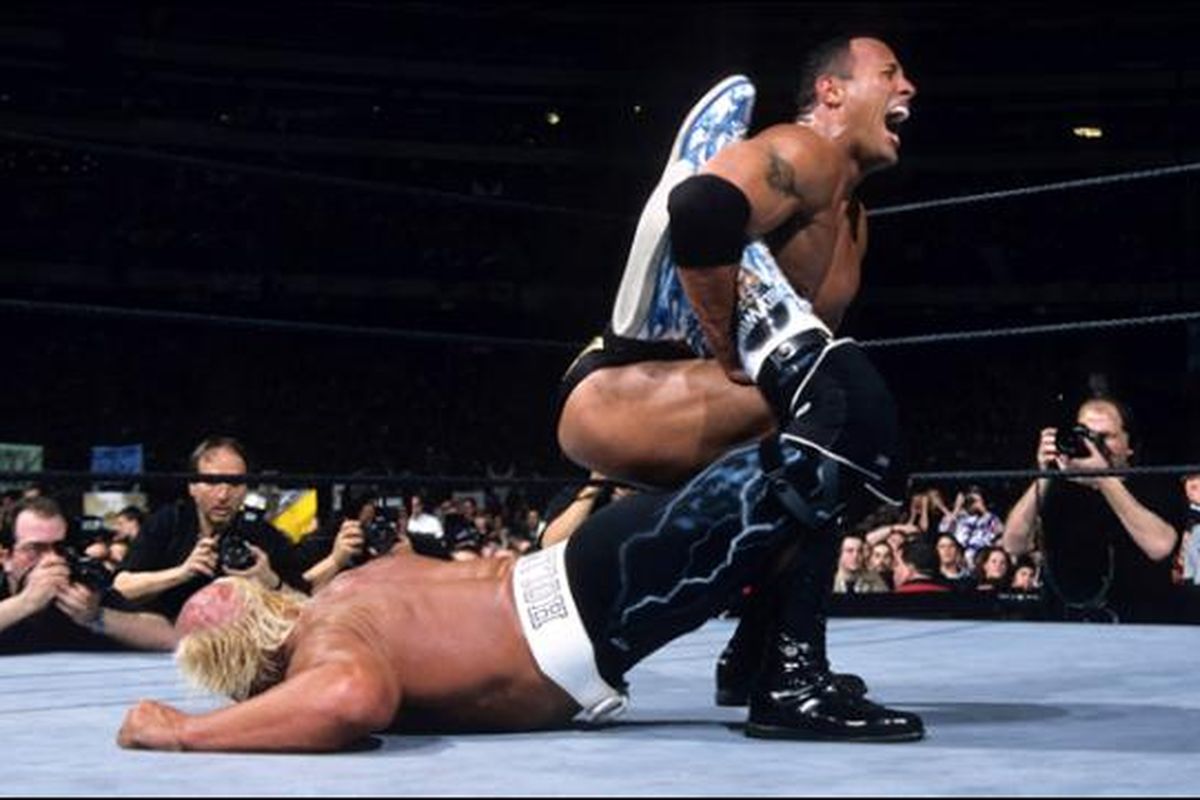
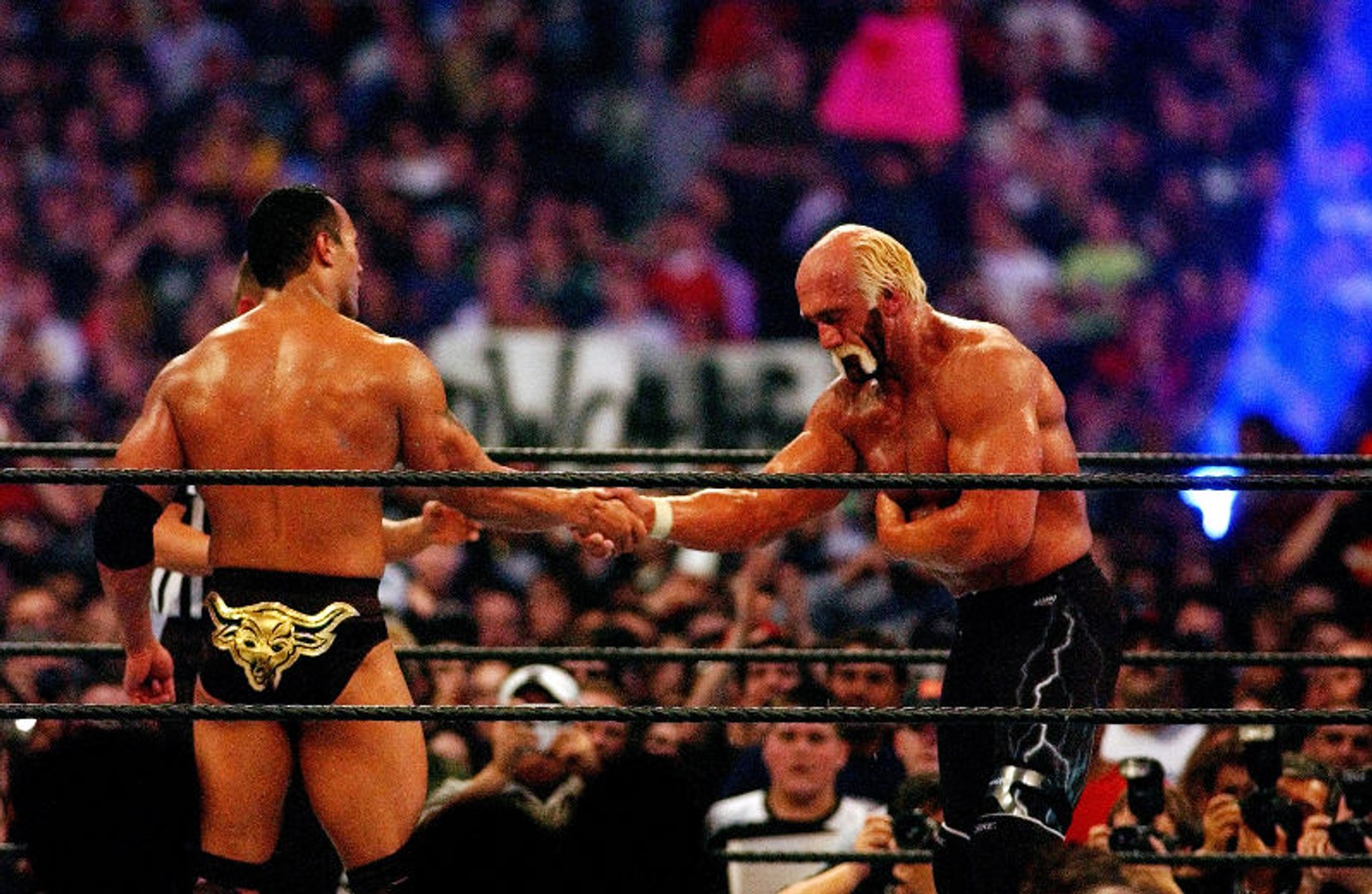
Hulk Hogan, back in Toronto, the city of two of the previous biggest matches of his career with Paul Orndorff and Ultimate Warrior, had his first match on WWF PPV against The Rock in what was billed as a match to determine who the all-time greatest wrestler in history was. It was the match where Hogan was to so-called pass the torch to Rock in storyline, but in reality, he cleverly took the torch from Rock in a manner Rock himself didn’t even understand until after the show was over.
It was clear at the Fan Axxcess all week that Hogan was going to be cheered like crazy, but even then, nobody expected how vociferous the boos for Rock wer
Going into the biggest show of the year, a major cloud of uncertainty about the future of the WWF, and for that matter, American wrestling in general, has hit.
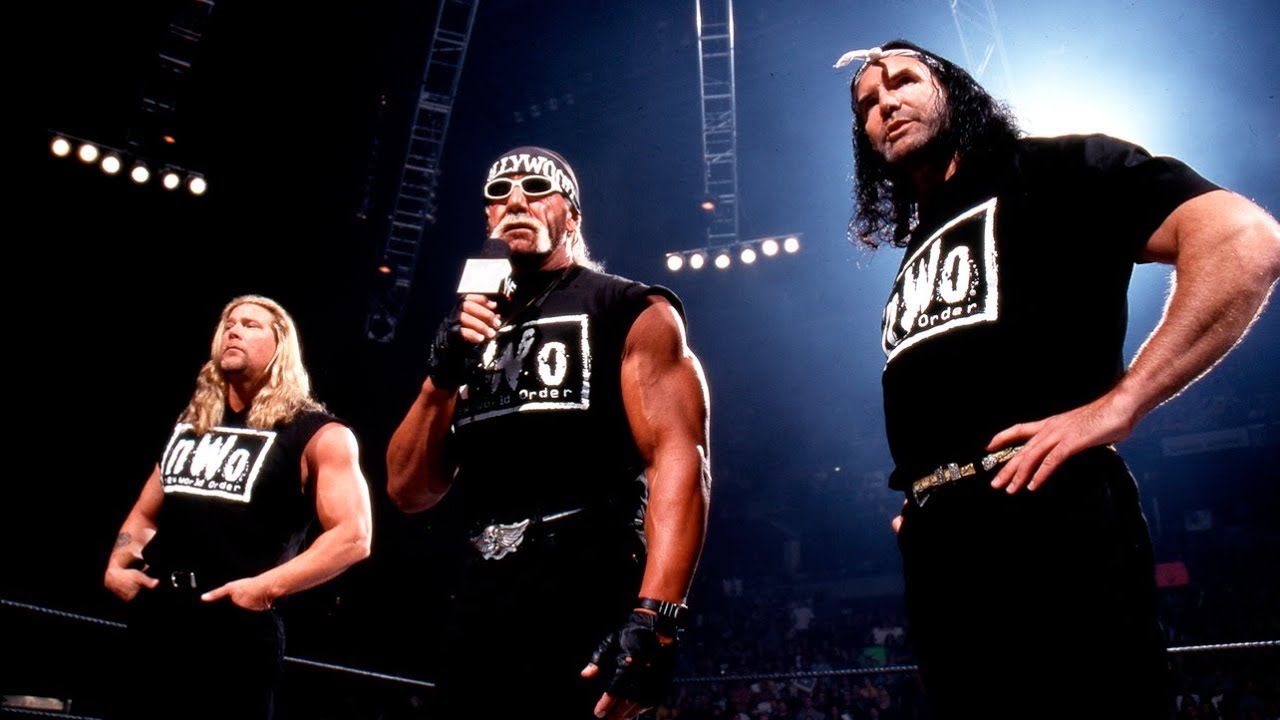
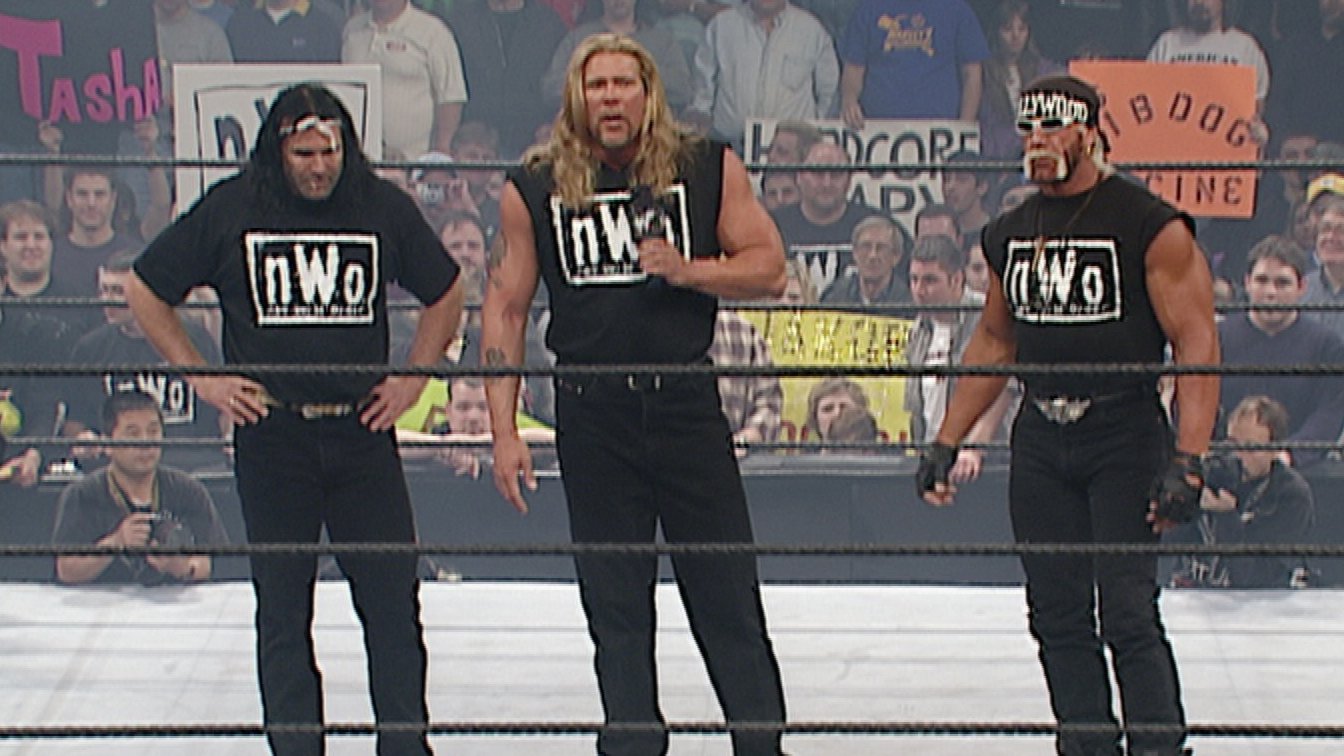
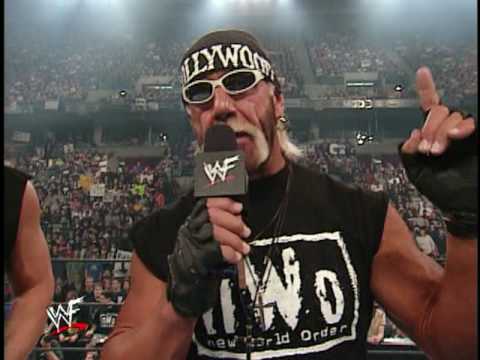
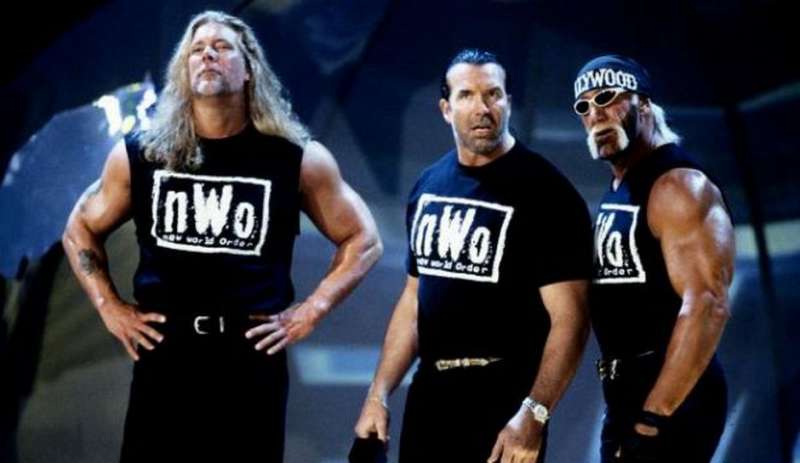
The NWO, for numerous reasons, are being talked of internally by many as a major flop due to the lack of increase in ratings. In fairness, while the short-term ratings boost ended up being limited to exactly one episode of Smackdown, the return of Hogan, Hall and Nash did spark the buy rate for No Way Out, and the Hogan-Rock marquee value and name Wrestlemania will probably prove to be a huge success this week. That is far less of a certainty than it appeared to be just a few weeks ago, and few are predicting a PPV number close to the record setting level of the Austin vs. Rock match last year.
But there was never any thought there would be any serious problems until after Wrestlemania anyway. The period after Wrestlemania historically has been funny.
It’s been a long time since there were major shows put head-to-head with a PPV in the United States. There was actually a short period of time, when PPV was in its infancy and the WCW vs. WWF war was still mired in that old school do anything to hurt the opposition, even if it hurts yourself, mentality when it was commonplace. Eventually, because the wrestling industry would have never stopped, the cable television industry forced a truce.
The first time was Thanksgiving of 1987. Jim Crockett Promotions planned its first-ever PPV event, Starrcade, its traditional big show of the year. Starrcade had been successful for years, dating back to its inception in 1983, as a closed-circuit event, mainly to the various arenas around the Carolinas. By 1985, when Crockett took over the promotion of Atlanta, after buying the contract for TBS from Vince McMahon and the subsequent folding of Ole Anderson’s Championship Wrestling from Georgia, Starrcade became so big it was held in two locations.
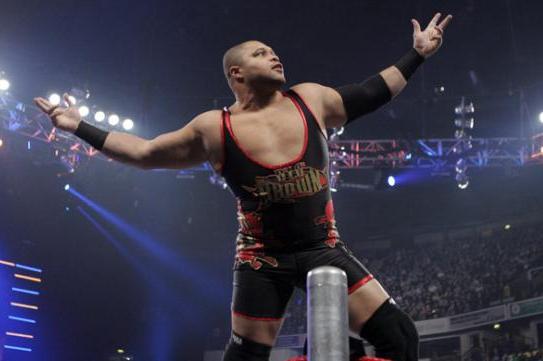
“Left My Wallet” is back with former WWF Intercontinental, European, and the first Euro-Continental champion, D’Lo Brown!
Aside from his children and wrestling, D’Lo’s two loves of his life are video games and sports. I pick up where CW Anderson and I left off a week ago as he and I talk about their obsession with playing Madden, what it’s like to game against “The Big Red Machine” Kane, Stevie Richards’ genius plans for gaming on the road, what games he loved growing up, Tecmo Bowl, Zelda, and more!
The talk then turns to sports as D’Lo explains how he became a Bears fan growing up in New Jersey, being a fan of the great 80s Bears teams, Walter Payton, Mitchell Trubisky and the current state of the Bears, where Antonio Brown and LeVeon Bell might end up, why he thinks the NFC is the dominant conference, and more.
Finally, the talk turns to wrestling as D’Lo tells what he’s up to now, training aspiring pro wrestlers, learning the business through car rides with veterans, how he gives back to his students, and more.
I’ve met D’Lo briefly on a few shows, but this is the first time we’ve really had a chance to talk at an extended length. This was personally one of my favorite shows and I know you’ll like it too.
It took almost no time for Scott Hall to be in the WWF doghouse.
As noted last week, Hall, claiming to have kicked his now legendary alcohol and drug dependencies, showed up on 2/11 in Las Vegas and made a complete spectacle of himself in public to where he had to be dragged into his hotel room to keep from further problems, totally embarrassing management that had gone to bat for him and pleaded his case among wrestlers who with few exceptions, were dead-set against the idea of bringing not only Hall, but also Hulk Hogan and Kevin Nash back.
To make matters worse, the next day in Los Angeles, when Steve Austin was told by Vince McMahon and Jim Ross of the plans to work an Austin vs. Hall match at Wrestlemania and to come up with ideas to build it and to work together to get comfortable, Austin’s response was reportedly something to the effect of why even waste my time, he’s not going to be in the company by the time Wrestlemania comes around and we all know it, so why start something when we know it’s going nowhere.
There were still few answers as the week came to an end in the third week of the saga of Keiji Muto, Satoshi Kojima and Tokimitsu Ishizawa leaving New Japan Pro Wrestling for All Japan.
During the week, even after their New Japan contracts expired at the end of January, all three were playing the role of being free agents entertaining offers. The only thing announced was that Muto would face Toshiaki Kawada for the Triple Crown, a match announced months ago, on 2/24 at Budokan Hall. Genichiro Tenryu issued a challenge to Kojima for the same show, but the match hasn’t been announced, and if that is the bout, it would strangely seem to favor the idea of Kojima starting with a loss. Muto has only said that he would attend All Japan’s 2/9 show at Korakuen Hall when they start their new tour, and discuss finances with Motoko Baba, acting as if no deal has been made.
The official signing of Terry Bollea (Hulk Hogan), Kevin Nash and Scott Hall by the WWF, with their return announced on television this week, will be the precursor to full scale changes in the way the company will be handling business after Wrestlemania.
All three signed two-year contracts. Hall & Nash signed on 1/18 and, according to friends of Hogan’s, he signed on 1/25, although others claim he actually had signed before that day. All three were flown to WWF headquarters in Stamford, CT on 1/25 to meet with all the key people in the front office and meet about storylines, marketing and merchandising ideas from 8 p.m. until about 4 p.m. All aspects of business were discussed including the idea that they have to prove themselves in the dressing room because of the legit skepticism (which is being used as an insider television angle and there are aspects of this that are being booked dangerously too inside) within the company whether bringing them in is the right decision.
New Japan Pro Wrestling was thrown into absolute chaos this past week, leaving the balance of power in Japanese wrestling in question when 2001 Wrestler of the Year Keiji Muto, IWGP junior heavyweight champion Tokimitsu Ishizawa (Kendo Ka Shin) and Satoshi Kojima all gave their notice and, along with five other front office employees, will be headed to attempt to rise All Japan Pro Wrestling from near ashes.
The moves, details of which are still sketchy, have resulted in rumors flying and made up newspaper tabloid stories throughout Japan. This leaves all business relations between All Japan and New Japan dead. New Japan immediately attempted to forge a stronger working relationship with Pro Wrestling NOAH. In addition, there is a significant power struggle going on in New Japan which will likely shake out over the next week when Antonio Inoki returns from Los Angeles at the end of the week.
Former NWA Junior Heavyweight champion Les Thornton has passed away at the age of 84.
The news first broke on Facebook, where his wife Terry wrote the following (via Slam Sports): “It is with great sadness we share that Les Thornton peacefully took his leave on February 1, 2019 at 11:15 am, with his devoted wife, Terry at his side.”
Born in Manchester, England, Thornton entered professional wrestling in 1957 and at one point trained in Billy Robinson’s Snake Pit, where he learned technical wrestling and submissions. He traveled to the United States in 1970 and won the NWA Junior Heavyweight championship on six occasions between 1980 and 1983.
In 1984, he was one of only a handful of people that joined the WWE when they purchased Georgia Championship Wrestling. He was used primarily as a jobber, but was also a part of coordinating their house shows in the Middle East.
He retired in 1990 and had been living in Canada running a gym prior to his death.
The Facebook post further said: “In honour of Les’ wishes there will be no funeral service. Instead, those wishing to pay respects are invited to make a donation to the Calgary Humane Society.”
A point to ponder when looking at the news story that changes the entire face of American pro wrestling.
1) Since Kurt Angle has headlined more shows that have drawn 10,000 fans in the last 15 months than Kevin Nash & Scott Hall have combined in careers that have gone a combined 29 years
2) Has headlined more PPV shows than have drawn 1.0 buy rates in the last 15 months than Hall & Nash combined have drawn in their entire careers
3) Has headlined more Madison Square Garden sellouts in that same time period than Hall & Nash in their entire much longer WWF careers
4) And has had more **** matches in the last three months than Hall & Nash combined in their entire careers, does that mean that Hall & Nash have to fly coach now that they are coming to the WWF?
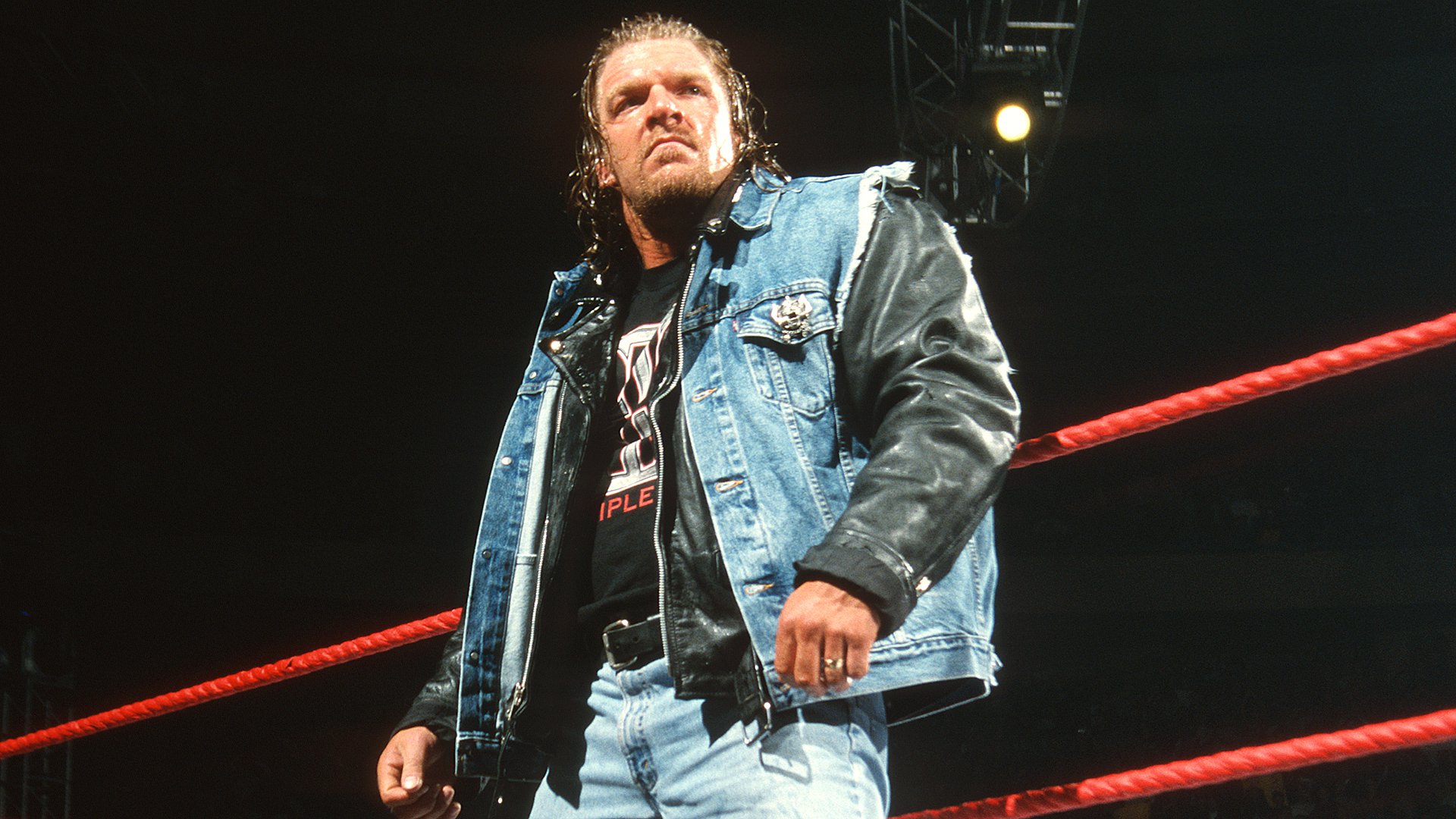
In the most hyped WWF return in recent memory, a much larger version of HHH returned working house shows starting on 1/4 in Binghamton, NY and made his first appearance on Raw on 1/7 from Madison Square Garden.
After being out of action since a 5/21 quadriceps tear, and one of the great promotional video pieces ever in wrestling to build up his return, crowds blew the roof off every building he appeared ni. It may ended up being the injury, like what happened with Shawn Michaels in 1996 after beating beaten up outside a bar and WWF playing it off as a career ending injury and then in his comeback, the injury made a great worker into someone who really becomes a significant arena draw. The silver lining in coming back from a very serious injury is that from a marketing standpoint, time off is the greatest thing for most characters who are overexposed on television.