NFL Hall-of-Fame linebacker and occasional WCW wrestler Kevin Greene passed away Monday at the age of 58 with cause of death still unknown.
Best known for his time with the Pittsburgh Steelers, Greene ranks third all-time in sacks with 160 and was a two-time All-Pro and five-time Pro Bowler.
Wrestling fans will remember Greene’s appearances for WCW in 1996 through 1998 as he worked in both singles and tag team matches with some of the company’s top stars.
He teamed with fellow former NFL player Steve McMichael at the 1996 Great American Bash in a losing effort to Ric Flair and Arn Anderson. McMichael turned on him and joined the Four Horsemen.
He returned in 1997 to team with Flair and Roddy Piper in a victory over NWO members Kevin Nash, Scott Hall and Syxx (X-Pac) at Slamboree. A month later, he got revenge against McMichael in a win at the Great American Bash.
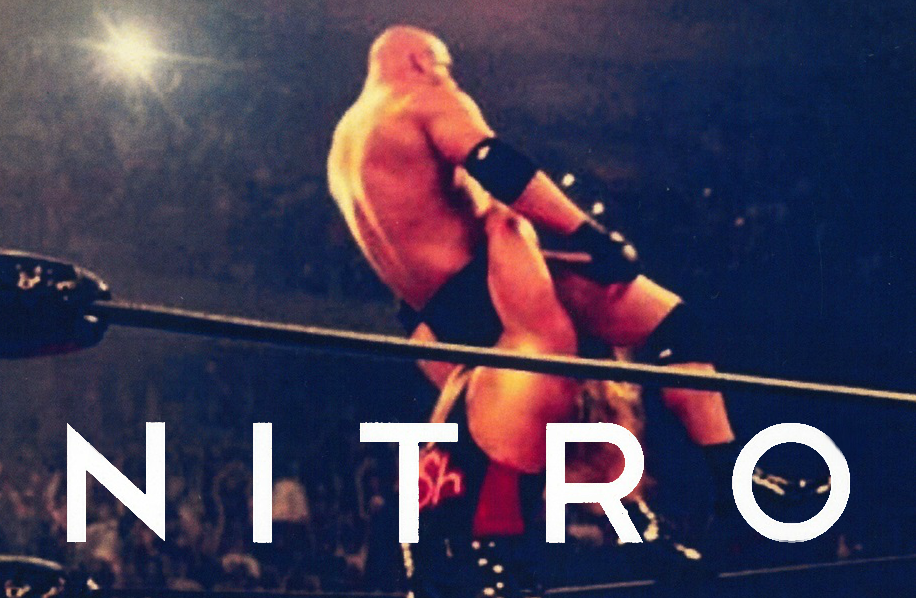
After another year-long absence, he returned to take on The Giant (Big Show) on a June 1998 edition of Nitro, winning in a quick DQ. The Giant would beat Greene a month later at Bash at the Beach in Greene’s final match.
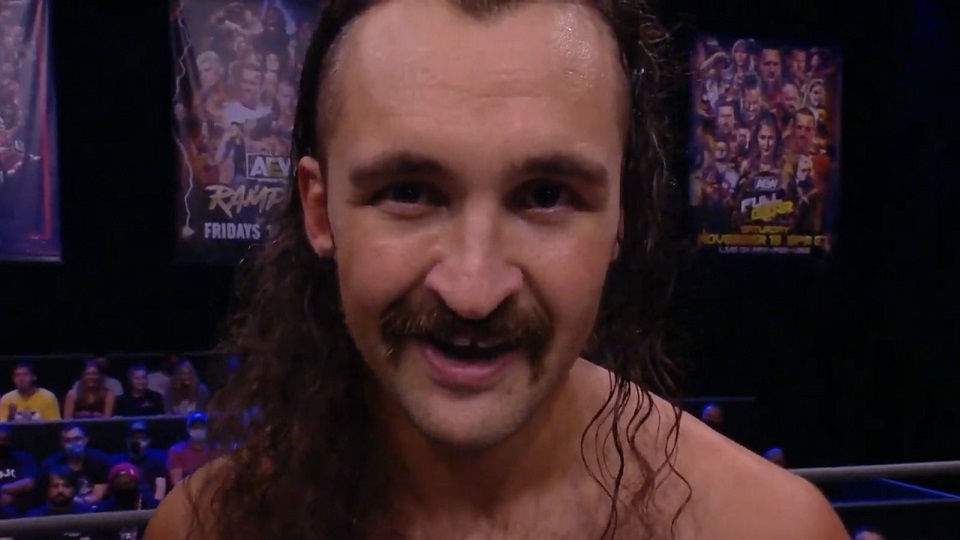
We take a look at the life and wrestling career of Tracy Smothers with a major feature as the lead story in this week’s issue of the Wrestling Observer.
We look at those he helped teach, his last two decades on the independent scene, his battle with cancer, with comments from his friends and many of today’s major stars. We look at the unique first time he was in the ring, wrestling bears, playing sports growing up, the famous first TV taping he worked against five Hall of Famers in one night. We look at his runs in different territories, his first major title, the birth of the Southern Boys tag team, the best match of 1990 in U.S. wrestling, why the Southern Boys name was dropped, Smoky Mountain Wrestling, ECW, Freddie Joe Floyd, The Thugs and much more.
Also in this issue:
Kylie Rae stepping away from pro wrestling and some of the lessons this should teach us.
Preview AEW’s Full Gear show as well as WWE’s Survivor Series, looking at the matches, the booking, selling tickets and what can be expected.
The WWE Twitch situation, a WWE meeting with employees, what is banned at the Thunderdome, A&E specials, where wrestling stands in sports ratings, WWE ratings outside the U.S., college star talks WWE, next week’s TV, most-watched shows on the WWE Network and current WWE market value.
Preview both New Japan tournaments coming up. We look at how much the junior talent in New Japan has dropped over the last year and why.
The last fight of Anderson Silva in UFC and his career, as well as full coverage of Saturday’s UFC show.
Gate of Destiny, one of Dragon Gate’s signature events of the year, the angles, who is getting promoted, the future of the company as well as match-by-match coverage.
DDT’s Ultimate Party.
Ratings breakdowns in every segment for Wednesdays and every category for other shows, looking at stats not available elsewhere to get the deepest read into how shows are doing, what categories are doing well and how shows compare with previous weeks and one year ago.
Results of all the major pro wrestling events around the world over the past week.
ORDERING INFO: Order the print Wrestling Observer right now and get it delivered via mail, by sending your name, address, Visa or Master Card number and an expiration date to [email protected] or by going to www.paypal.com directing funds to [email protected].
Rates in the United States are $14.50 for 4 issues, $35.50 for 12, $70 for 24, $116 for 40 and $149.50 for 52.
In Canada and Mexico, the rates are $16 for 4, $27 for 8, $38.50 for 12, $76 for 24, $126 for 40 and $162.50 for 52.
For the rest of the world, rates are $18 for 4, $48.50 for 12, $93 for 24, $155 for 40 and $201.50 for 52.
If you order by mail with a check, cash or money order to P.O. Box 1228, Campbell, CA 95009-1228, you can get $1 off in every price range.
SUNDAY NEWS UPDATE
WWE
WWE issued a statement on the passing of “Jeopardy!” host Alex Trebek, who passed away today at the age of 80 from pancreatic cancer. Trebek appeared at WrestleMania VII, serving as a backstage interviewer, and was the guest ring announcer for the main event match between Hulk Hogan and Sgt. Slaughter.
Paige and her boyfriend, Ronnie Radke, had an experience with a stalker earlier today. “Scariest thing ever,” she wrote on Twitter. “He told us symbols led him to us. But Ronnie got him in a hold until police got there. Wtf is wrong with people… thank god Ronnie is around to protect our house. Jesus.”
The company filed to trademark (via HeelbyNature) six WCW names on November 2: Slamboree, The Match Beyond, Bunkhouse Stampede, BattleBowl, SuperBrawl, and Bash at the Beach.
The Undertaker vs. The Great Khali in a no holds barred match from the November 9, 2007 episode of Raw and Roman Reigns vs. Sheamus from the February 12, 2018 episode of Raw are today’s free WWE YouTube uploads.
Other Wrestling
Alberto El Patron told TMZ he was considering legal action against Paige after she accused Patron of being physically abusive. In an interview with the Grown Ass Women podcast, Paige described the cycle of abuse. “It’s like it’s up to 6, 7 hours a day you’re literally trapped in a certain room and getting your ass beat every couple of minutes, you know what I mean?” she was quoted as saying. Patron responded, telling TMZ . “It was the other way around. I have the evidence. Not just words. I would say Raya, why? Why? Why are you doing this Raya? And, I’m not calling you Paige because you were never Paige to me, you were Raya.”
MLW announced that MLW Fusion will air on Wednesday nights starting on November 18 at 7 p.m. ET on their YouTube channel.
During last night’s NJPW Wrestle Kingdom 15 press conference, NJPW Chairman Naoki Sugabayashi said that since July 11, NJPW had staged 54 live events and have had zero COVID-19 cases, with a combined overall crowd of 72,706.
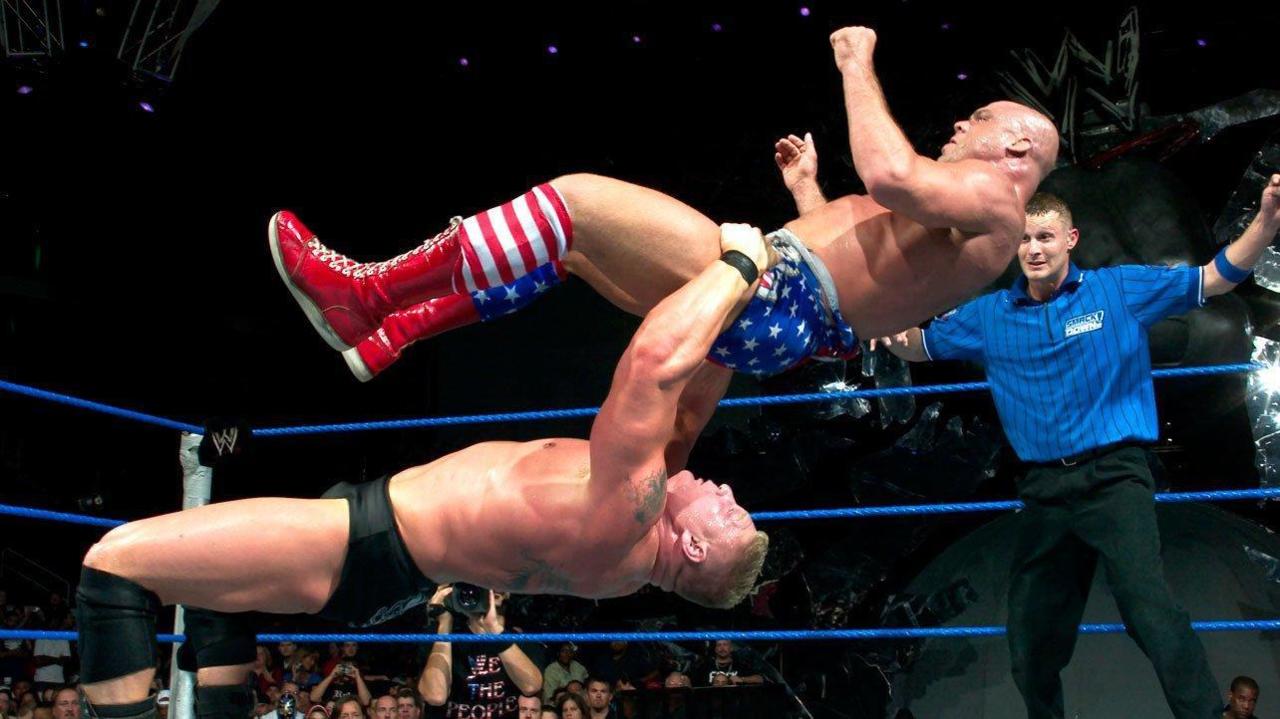
The attempt by Kurt Angle and Brock Lesnar to make modern television wrestling history with the most widely viewed 60:00 match ever in the U.S. turned into an emotional experience in the days before the match that took place on 9/16 in Raleigh.
Lesnar blew out his knee while wrestling a tune-up match in Richmond on 9/14, and the next night in Greenville, NC, he and Angle only did about a 1:00 match, with much interference, to protect him. The exact nature of the injury hasn’t been determined. The first diagnosis was floating cartilage in the knee, which caused it to lock, but there was some fear by the next night that it was a torn ACL. The company was going on the belief that the injury was not that serious since the original plan of Lesnar going over to win his third WWE championship wasn’t changed. Then, on 9/15, Angle’s older sister died from heart problems. The Angle family has had a long history with angina, to the point Angle himself has done TV commercials for angina awareness.
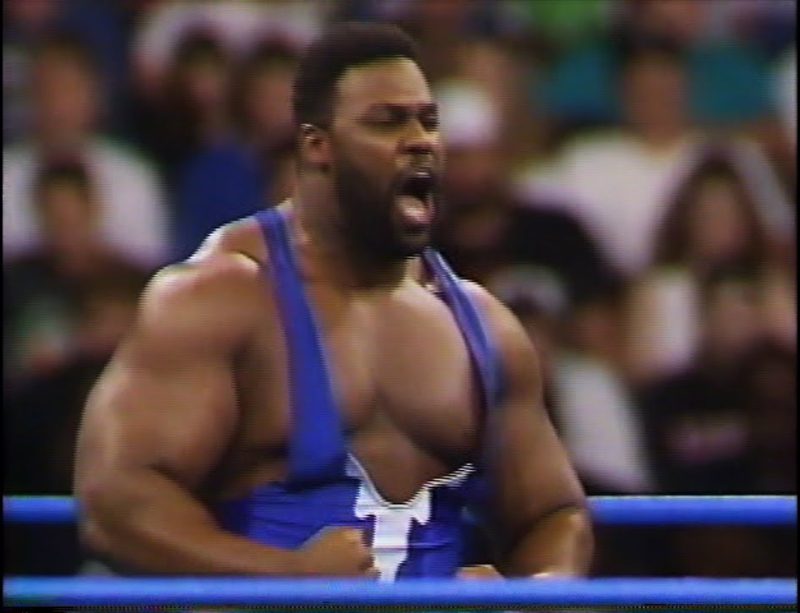
Left My Wallet returns with a special free episode featuring former WCW star Ice Train, aka Harold Hogue.
The man with one of the greatest entrance themes ever joins the show to talk about his football career, why he didn’t play in the NFL, what brought him into pro wrestling, and who are some of today’s NFL stars he enjoys watching.
We also talk about his time in Europe, how much Fit Finlay meant to him in his development, his tenure in WCW and why he was his own worst enemy, why the Fire and Ice tag team with Scott Norton didn’t succeed, and why he never ended up in WWE.
He then talks about his own personal battle with COVID-19 as he, along with his wife and son, became infected earlier this year. He discusses what he did to fight through it, the one technique that might have saved his life, and the message he has for listeners on what to do to be as safe as possible in today’s world.
Finally, he talks about his own personal mission to break the world barbell curl record at the young age of 55!
Before our talk, Producer Rob joins the show for a quick segment to preview this years Wrestling Observer Fantasy Football League.
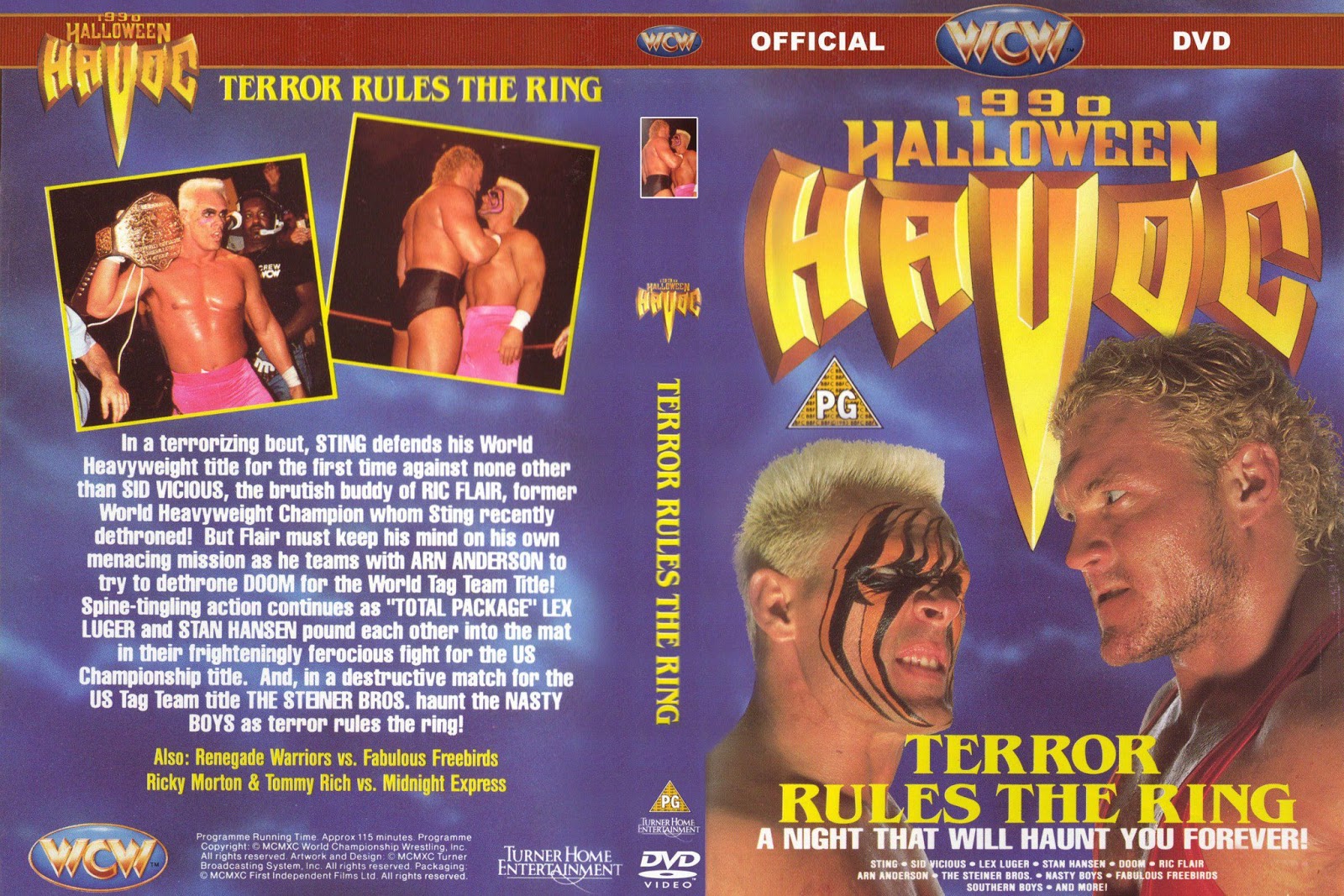
This one is packed with hilarity. Various matches, storylines and headscratchers include Terry Taylor as the Black Scorpion, the Fabulous Glambirds, the Steiner Brothers, the Nasty Boys, what if Teddy Hart had managed Doom, Stan Hansen and his tobacco, and Sting vs. Sid Vicious in the main event for the Generic World Title and the doppleganger finish.
You’ll laugh, you’ll cry, and you’ll have a good time looking back at WCW Halloween Havoc 1990.
The first of four WCW Halloween Havoc reviews for the month of October has arrived on the DragonKingKarl Classic Wrestling Audio Show.
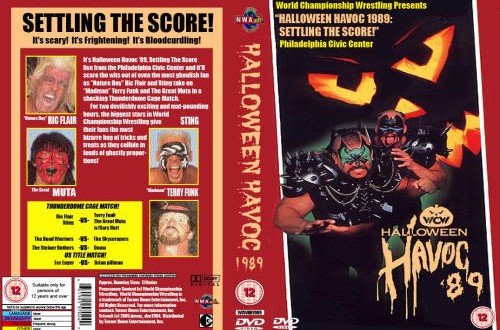
1989 was the first WCW Halloween Havoc featuring the Midnight Express, Tommy Rich, The Freebirds, The Dynamic Dudes, Doom, The Steiner Brothers, Lex Luger, Brian Pillman, the Skyscrapers, The Road Warriors, and a ridiculous main event where a wacky steel cage caught fire and Great Muta and Terry Funk fought Ric Flair and Sting.
I had a blast rewatching and recording these and the next four weeks are going to be insanity like never heard before on the DragonKingKarl Show.
The Bryan & Vinny & Craig Show is back with our look at Retro Raw and Nitro from 19 years ago this week! RAW has Steve Austin all over it and MORE WITH ANGLE AND STEPH AND HUNTER, a storyline that’s jumped the shark. Nitro has what may be the final appearance of Vince Russo, a week after he made himself the WCW World Heavyweight Champion..and a ladder match for a duck. A fun show as always so check it out on video.f4wonline.com as well~!
The Bryan & Vinny & Granny Show is back today and we hope you enjoy it because we’re never doing something like this again. By popular demand — NEVER TO BE CONSIDERED AGAIN — we agreed to watch New Blood Rising, one of the worst fucking PPVs of all time. Don’t ever watch this show, and don’t ever expect us to review TNA. Also, a fun Granny segment.
By Bradley Craig, British wrestling historian and author exclusively for F4WOnline.com
The presentation of All Elite Wrestling’s Buy In pre-show and its Double or Nothing pay-per-view marks British TV network ITV’s latest foray into professional wrestling.
Its last, launching World of Sport Wrestling as an in-house entertainment brand, was its first actual attempt to provide its own content. Unfortunately, the viewership rapidly declined over the course of its first series, and it appears that outsourcing is the direction that the network is looking to pursue through its broadcasting of an AEW product.
But, ITV has a long and established history of working with external wrestling content providers.
Domestically, the channel partnered with Joint Promotions and later All-Star Wrestling to provide its content. However, the broadcaster has worked with global brands for its wrestling output, including stateside promotions such as WWE and WCW.
Paving the way for commercial television throughout British shores, Independent Television network (ITV) was launched in 1955. Upon its inception, the channel was tasked to produce viable programming in competition to the BBC television service, and was the only alternative for viewers at the time. As Joint Promotions was formed as a monopoly wrestling organization in post-WWII Britain, it was inevitable that its status as the clear market leader would provide it with the greatest broadcast opportunities upon the advent of television.
ITV quickly established a partnership with Joint, and their first collaborative broadcast of pro wrestling was held on November 9th, 1955. Eventually, this would lead to a weekly diet of matches by 1960, most notably on Saturday afternoons as part of a cluster of sports programming called Let’s Go. The coverage was a ratings success, the high point of which was a famed May 25, 1963, rematch between rival heels Mick McManus and Jackie Pallo, held on the same day as the FA Cup Final (the culminating match of the most prestigious knockout soccer tournament in England) which some insist to have attracted a television viewership of 16 million viewers.
Within a few years, the Saturday afternoon schedule of ITV sports coverage was reconfigured. From January 2, 1965, the channel debuted World of Sport, a variety sports show that would continue to showcase professional wrestling as a regular fixture. Similar in format to ABC’s Wide World of Sports in the United States, it would remain an institution for domestic wrestling fans until its eventual cancellation on September 28, 1985. Nevertheless, professional wrestling would remain a part of ITV’s Saturday programming.
The standalone show, simply titled Professional Wrestling, would evolve into a rotation of footage provided by Joint Promotions, All-Star and, from 1987, the WWF (incidentally, one of the advertised matches set for UK broadcast was a match between Bret Hart and Tom Magee). In 1988, the show was axed, ending a tradition of 33 years of pro wrestling coverage on ITV.
After the cancellation of British wrestling in 1988, some regions within the ITV network did showcase other American promotions, but the most prominent of these was its deal with WCW which lasted from 1989-1995. In its early years, ITV was a commercial network consisting of several regional franchisees across the United Kingdom. Within this network, Grampian Television was the local broadcaster for the majority of northern Scotland from 1961 through 2006. And it was on Grampian that WCW was presented for the first time to a British audience with its initial transmission on January 10th, 1990: a Wednesday night at 1:30 AM.
Advertised on local newspaper listings as Superstars of Wrestling, the show was actually a repurposed version of WCW Pro Wrestling, created specifically for the international market. It was contained within a block of programming called Night Time, a nocturnal cluster of shows produced by the Granada franchise of ITV being broadcast to several regions across the network in England and Wales, as well as the Grampian region within Scotland. The shared production output between regional franchisees was essential; it was made in an effort to reduce budgets during their low-viewership late hours.
A number of changes were implemented to ensure that WCW Pro Wrestling was immediately accessible to the British market during its initial run. Although it retained the same opening sequence and featured many of the same matches, new commentary was recorded by Lance Russell and later Eric Bischoff to specifically remove any references to upcoming PPVs or house show dates being promoted for the domestic circuit. In fact, the commentators would frequently refer to the show as “International Pro”, recognizing that it was an adapted version and not the original syndicated show that was transmitted across the United States. Almost all linking segments were removed, and replaced with additional matches from other WCW tapings.
Despite an unenviable late-night slot, and an irregular broadcast run in which the airing days and start times were frequently shifted, WCW Pro Wrestling was a success. Introducing a new audience to the superstars of WCW, its popularity steadily increased, which led to the inaugural 1991 tour of the United Kingdom and Ireland and opening up merchandise opportunities.
As a result of the increased brand awareness, WCW was awarded a more regular fixture on ITV.
In addition to its established slot within the Night Time schedule, feedback to some sporadic weekend airings of WCW Pro Wrestling had been well-received. In response, the network had decided to give WCW the timeslot which was once synonymous with wrestling during the era of World of Sport.
On May 29, 1992, WCW made the transition to late afternoons every Saturday with each episode usually starting around 3:50 PM and finishing before the release of the domestic soccer results. A key change was made to the wrestling programming. From its first Saturday broadcast, the international version of WCW Pro Wrestling was substituted in favor of WCW Worldwide, which had just been given a substantial production overhaul in early April. On commentary, long-time Worldwide host Tony Schiavone would be joined by Jesse “The Body” Ventura, their banter being a significant departure from the solo commentary which was prevalent on Pro Wrestling.
Furthermore, Worldwide was given a fresh opening title sequence and on-screen graphics, and various format changes to modernize the show. These included exclusive interviews with the wrestlers and, most notably, the addition of WCW Magazine newsflash segments which updated viewers on relevant storyline happenings within the promotion. Each episode would end with a teaser of the following week’s feature attraction main event in order to entice the viewer to return.
Despite the shows being broadcast several weeks beyond their initial United States air date, the product appeared visually fresher than ever. The Turner production values were a sharp contrast from the Saturday afternoon fare that the British pro wrestling audience had accepted for years. In less than one year of securing the timeslot, the decision was made to tour the UK for a second time in March 1993.
With the improved production values placing greater emphasis on the personalities of the talent, WCW was able to generate mainstream interest in its roster and be in a stronger position to launch its licensed products. One publicity tour in promotion of the WCW Official Video range featured Johnny B. Badd and Van Hammer on a number of media appearances including magazine and radio interviews, and were also the focus of a segment on the BBC daily lunchtime magazine show Summer Scene. However, it was another summertime event which truly illustrated both the live-event potential and the mainstream appeal of professional wrestling in the United Kingdom.
On August 29, 1992, WWF held its annual SummerSlam pay-per-view spectacular at Wembley Stadium in London. Headlined by an unforgettable Intercontinental Championship match between brothers-in-law Bret Hart and Davey Boy Smith, the show was an unparalleled success. Drawing a reported crowd of over 80,000 to the live show, it was a spectacular which likely prompted WCW to galvanise its efforts in the promotion of a second UK tour.
By the autumn of that same year, the announcement was made. WCW was coming back to the United Kingdom, this time for The Real Event tour. With Bischoff promoting the tour in various market-specific WCW Magazine segments that were edited into the UK broadcasts of WCW Worldwide, the company was in a stronger position to communicate its return to its core television viewers. WCW Magazine, which occasionally modified its content for the UK market, ran adverts for the live events. By the New Year, ITV started to promote the tour, setting promotional interviews with Sting for Look-In, and its daily program, Good Morning Britain.
But it was the availability of another wrestling star who had an equally strong influence on the appeal of The Real Event to local fans.
In the autumn of 1992, the WWF career of Davey Boy Smith had come to an end. Amidst a steroid scandal that rocked the Federation, Smith was one of several names who departed with the company as it came under increasing scrutiny from the mainstream media in the United States. However, in the United Kingdom, there was little to diminish the box office value of Smith. As the most prominent British wrestling star of his era, he was a proven commodity and had been cultivated by the WWF as the top attraction of its European tours.
His acquisition by WCW in January 1993 was timeous for the promotion of The Real Event as the national media heavily publicized the arrival of “The British Bulldog”. In WWF, the reach of Smith’s wrestling matches were constrained by the boundaries of its exclusive deal with satellite television provider Sky. For the first time since the 1980s, he could be appreciated by the larger ITV audience. Capitalising on his appeal, he rapidly became the key focus of WCW’s marketing adverts and press releases within local newspapers in an effort to build momentum in the weeks leading to the tour.
But, at the same time, WCW was in the midst of a significant managerial change, due to the abrupt resignation of Bill Watts from the role of Executive Vice President of Wrestling Operations in February. As an interim solution, Wrestling Operations would be administered by Ole Anderson while the booking of talent was under the direct supervision of Dusty Rhodes. Despite the internal upheaval, the promotional appeal of The Real Event was unaffected. In fact, sales figures of tickets were indicating record business.
It would later be reported that the company drew a record-breaking gate of 11,500 fans at its sold-out March 11th event from Wembley Arena, over 10,500 fans to its NEC Birmingham show, a capacity crowd of 8,000 fans to the G-MEX in Manchester, another 5000 person sell-out at the AECC in Aberdeen, and two crowds of approximately 3,000 to Kings Hall, Belfast and The Point in Dublin.
Critical reviews of the tour were highly praised. Coming off the SuperBrawl III PPV, the roster appeared motivated to excel in front of some of their largest paid audiences on international soil. But the success was illustrated in the statistics. In terms of consecutive business, it was WCW’s most lucrative schedule of house shows that the company had promoted to that point.
WCW would retain this national timeslot within most of the ITV regions until 1995. With no major national broadcast shopfront for its product, the streak of commercially viable UK live events came to an end.
For ITV, there would be no significant national presence of professional wrestling on the network until the pilot broadcast of the domestic production of WOS Wrestling in 2016.
However, a repurposed version of WCW Worldwide would later return to a national terrestrial audience in the summer of 1999 through a partnership with Channel 5, which lasted until the closure of the promotion in 2001. The timeslot proved somewhat successful as the novelty spurred another set of international tours presented by WCW which maintained box office appeal during a time when its domestic gate returns had shown sharp decline.
But it would not be long before the company’s prime competitor would secure a deal with a national broadcaster.
In December 1999, when WWF’s partnership with Sky was set for renewal, the promotion secured a deal with Channel 4 to showcase WWF Heat on Sunday afternoons as part of a cluster of shows under the T4 banner (a programming block aimed at teenage and young adult viewers), together with five of its PPVs per year, commencing with the 2000 Royal Rumble.
In terms of viewership potential, the presentation of AEW Buy In on ITV 4 presents the greatest reach for a US-based promotion since the WWFs deal with Channel 4 ended in 2001. But AEW’s Double or Nothing pay-per-view is being presented to a new audience via a broadcaster with a historic link to professional wrestling that can be traced back 64 years.
In the short term, it is clear that ITV is willing to take a gamble with AEW’s debut at Las Vegas.
What remains a subject of speculation is the broadcaster’s commitment to professional wrestling as a long-term property and the international opportunities that might be born from that investment.
Television and pro wrestling in many ways are a marriage of necessity, that usually ends up as a bad relationship. In rare cases, when the product is hot and mainstream, and the ratings preclude what some would consider the negative stigma, the relationship is tremendous. Usually, that isn’t the case.
We are in, and have been for the past year, in probably the most unique time period for pro wrestling since television became an industry staple more than 50 years ago. We’ve got one major company, with several shows that air nationally, two of which are huge successes. With football out of the way, Raw is almost always the highest rated show of the week on cable, which is quite a feat considering how much landscape that entails. Smackdown is UPN’s highest rated show, and some have credited it with saving a network that appeared doomed before acquiring the show.
In looking at business for the past year, the WWF was still far stronger than any promotion in any era with the exception of comparing to its February 1998 through early 2001 boom period. The 9,200 paid attendance per event beat out WCW’s best year ever, 1998, which was 8,029, quite handily. Arena attendance was down 19.7% from 2000 and down 23.4% from its peak year in 1999.
Because of rising ticket prices, the average gate per live event was $289,492, down 12.4% from the record $330,588 in 2000, but actually ahead of the $286,495 during the record setting attendance year of 1999.
The WWF played to 32.9% sellouts last year, down from 53% the previous year and 63% during 1999.
For the year, PPV averaged a 1.07 buy rate, down 20.1% from the 1.34 average in 2000. It was an unusual drop, because this year had some outstanding buy rates in Wrestlemania and Invasion, but the consumers were clearly picking and choosing based on the show, because of the wide variation, unlike last year where most of the audience was buying every show.
More episodes of WCW Thunder are set to be made available on the WWE Network next week.
WWE Network News reported today that more Thunder episodes will be uploaded to the Network next Monday (March 18). The report stated that 20 episodes will be added.
The first set of Thunder uploads were added to the Network in March 2018. The first 77 episodes of Thunder are currently available on the Network, with them ranging from the show’s premiere in January 1998 to the end of August 1999.
The final edition of Thunder aired in March 2001, which was the month that WCW closed its doors. Thunder was a two-hour show that aired on TBS and ended up serving as secondary in-ring programming to Monday Nitro.
Episodes of WWE Confidential were added to the Network as last month’s classic content drop, while episodes of WWF Superstars from 1992 were uploaded in January.
2001 will never be looked back upon as being a great year for wrestling. Wrestling always has its ups and downs, but usually there is someone doing well when someone else isn’t. This past year, with the exception of the Pride promotion, nearly every company did worse than would have been expected one year ago.
Sometimes, like in 1993, when wrestling was at something of a creative lull with some of the major companies, new promotions with new ideas (UFC, K-1, Pancrase, ECW, Michinoku Pro) form and spark the business to a stronger rebound. This year was the year of the creative lull, but instead of new promotions, we saw WCW and ECW fold once, and then the fantasy versions of them fold a second time in an angle so botched that in many people’s eyes it forever removed the tag genius booker and replaced it with one very lucky SOB on the Vince McMahon resume. We saw RINGS on the brink of going under.
The World Wrestling Federation has set another target date to split into two supposed rival promotions, this time being 1/7, the date of a live Raw in Madison Square Garden.
This has been a constant story of dates being set and changes being made, literally since the buying of the remnants of World Championship Wrestling in late March. WWF has been, since that time, through so many dates and so many plans that even though inside the company aren’t taking this target date as anything serious, with most feeling it’s 50-50 whether it will take place or not.
Many of the reasons for splitting have already been squandered with the destruction of the brand name of WCW, as well as whatever potential the brand name of ECW could have had, due to booking based on ego instead of business that has left everyone perplexed that it could have happened. It’s been quite a year for the company, which for all its faults, has remained at a level ahead of the most profitable organizations in the history of this industry even while business has constricted.
On a new Josh Nason’s Punch-Out, hear my conversation with Evans and learn more about the book. If you’ve read the book or are thinking about it, I think you’ll like this show quite a bit. And…it’s spoiler-free. (Yes, there are some cool new things that you’ll learn in the book!)
On the topic board:
Evans’ background and why he picked this specific topic to write his first book on
How he got access to 120+ Turner employees
What he learned in his extensive talks with Eric Bischoff
Who he wanted to talk to and couldn’t
Some of his key takeaways from the project
This is one of the best wrestling books I have ever read, and is perfect for those of you who are into the business of wrestling and TV. Click below to listen now.
Also, check out my interviews with fellow authors Jonathan Snowden (Shamrock, Total MMA, etc), and Lee Daly (Before A Fall on PRIDE Fighting Championships).