The Week In Japanese Wrestling: Daichi Hashimoto wins gold

Editor’s note: The following originally appeared in this week’s edition of Figure Four Weekly.

**********

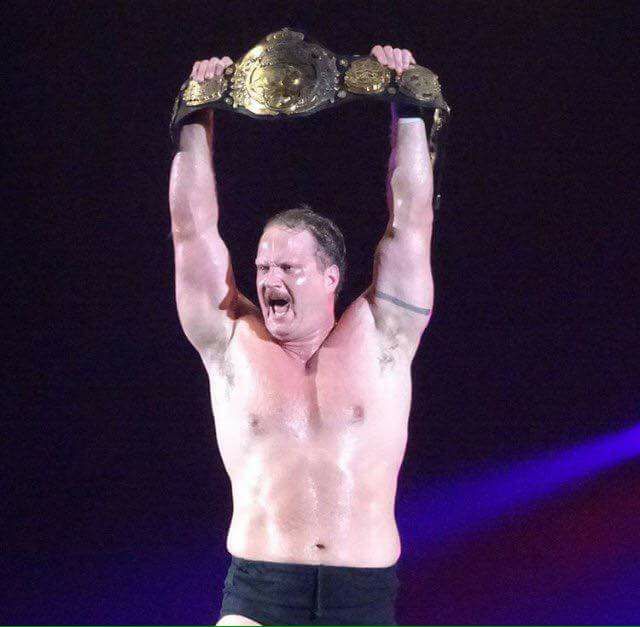
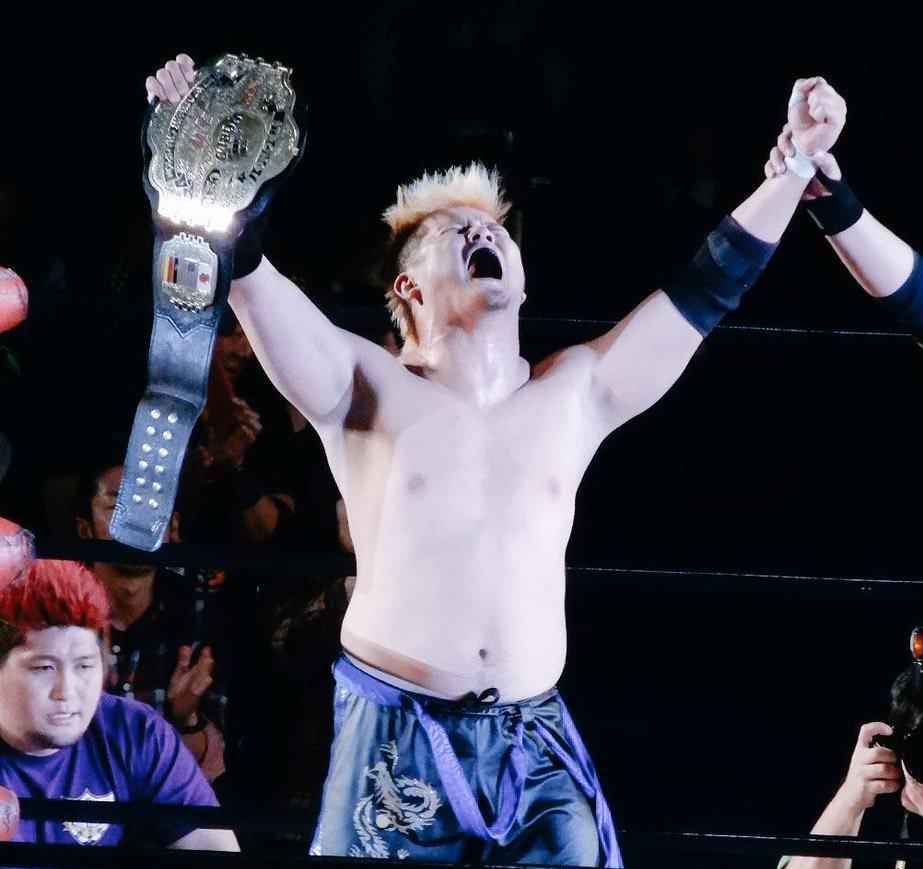
At Big Japan’s “Death Vegas” show in Yokohama this past weekend, Daichi Hashimoto had the crowning moment of his career — becoming Big Japan’s new Strong Heavyweight Champion.

In 2011, when he had his much-hyped debut against Masahiro Chono in Sumo Hall, this achievement six years later would have been seen as a shocking disappointment for the son of the great Shinya Hashimoto. However, just a few years ago, it would have seemed to be an achievement that would be way out of reach.

The reality is that Sunday’s win was indeed a great triumph for the young 25 year old. It marked the fact that he has well and truly stepped out of his father’s shadow and is carving his own path where he’s comfortable and has been accepted.

Daichi is not Shinya. He does not have his father’s size and does not have his father’s presence. The expectations that were placed on him in his formative years were too much. He had great veterans like Chono, Keiji Mutoh, and Shinjiro Ohtani (all friends of Shinya) looking out for him, but they were trying to hold him up as something he wasn’t. And media and fan expectations didn’t help. It was a severe amount of pressure for someone just entering his 20s.

Daichi ended up trying to strike out on his own when things just weren’t working for him. He got into the fold with Antonio Inoki’s IGF, which is not exactly the healthiest and most nurturing environment for a young wrestler. That didn’t last, and it really looked like Hashimoto’s career might be a wash-out.

He was given a lifeline, though. Over the years, Daichi had sporadically popped up in Big Japan, regularly opposing or teaming with his namesake Kazuki Hashimoto. It always seemed like the smaller-scale (and somewhat grimier) environment allowed him to perform with more relaxation and confidence. He also appeared to strike up an obvious bond with Kazuki.

At the beginning of 2016, BJW announced it would be taking Daichi in as a full-time member of their roster. Under the tutelage of Daisuke Sekimoto and with a real brotherhood surrounding him (as opposed to his father’s legendary friends), Daichi started to really flourish. His personality was coming out more in the way he carried himself and in his appearance, with more of a punk look mixed into the pure martial artist ensemble he had previously.

A sign that BJW were committed to him and saw him as a potential big-time player for them came on March 31st, 2016 at Korakuen Hall when Hashimoto pinned Sekimoto clean in the main event with the Rising DDT. It was easily his best career performance to that point and a huge victory.

Daichi has for the most part pushed on from that point and had more very strong performances. He’s flourished whenever he’s had the opportunity to face any of the younger BJW dojo prospects as he’s been able to act as the aggressor and more of his cocky charisma has been able to come through.

In Yokohama, he went one-on-one with Hideki Suzuki — champion since March and one of the most commanding in-ring presences in the sport. It’s hard for even the biggest and most dynamic guys to look credible against Suzuki as his legit shooting skills just make him seem at such a higher level of ability. It was going to be hard for Daichi to come across like a worthy conquerer of the Billy Robinson protege.

But when it was all said and done, he absolutely did. He took a beating but kept pushing forward and didn’t ever look overawed (this sounds like I’m talking about a UFC fight, but Suzuki’s matches are oftentimes more akin to that than pro wrestling). Hashimoto needed big offense to make it look realistic that he could beat Suzuki — and big offense he delivered. Thunderous kicks and a brutal sheer drop brainbuster, which drilled the champion through the mat, gave Daichi the win.

It was the culmination of a really unique seven-year story, and the beginning of the next chapter of the Hashimoto legacy.
The Week In Japanese Wrestling: Sekimoto is coming to WWN’s WM week

Editor’s note: The following originally appeared in this week’s Figure Four Weekly.

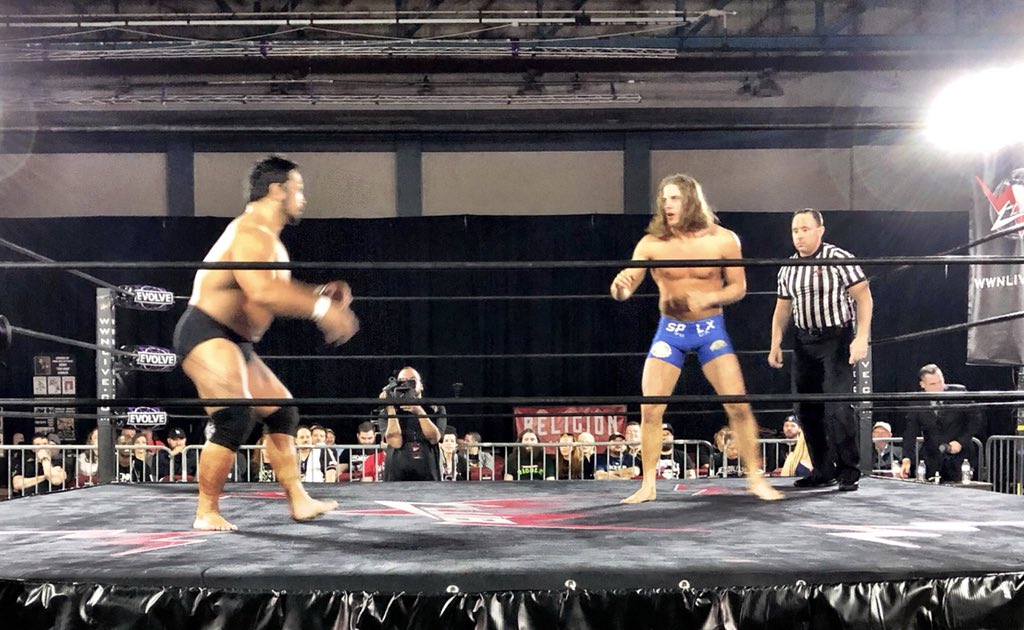
In terms of producing high-end in-ring action in New Orleans for WrestleMania weekend, WWN has played the best hand so far with the surprise announcement that Big Japan’s Daisuke Sekimoto will be one of their featured wrestlers for their EVOLVE events and the WWN Supershow.

While the likes of Hiroshi Tanahashi and Kenny Omega will draw more headlines as part of other shows, Sekimoto is a far better bet when it comes to potentially delivering some classic matches that week.

For those unfamiliar, Sekimoto is one of the best wrestlers in the world. He has been for at least a decade. He blends jaw-dropping power offense with a throwback style and an ability to weave subtle stories into a match. Most importantly for a live crowd, particularly one unfamiliar with him, is that he carries an immense aura and physical charisma which has seen him get over instantly in front of all kinds of crowds over the years. From wXw to CHIKARA to any number of promotions in Japan, Sekimoto has fans in the palm of his hand minutes into most matches. On top of all that, he never takes it easy and always gives 100 percent with incredible fire shown in his performances.

In terms of wrestlers I’ve seen live, the best comparison I can give to him is that he was like a blend of Kenta Kobashi and Bryan Danielson. He commands your attention like Kobashi, and then he takes you on a rollercoaster ride like Danielson. Needless to say, if you can get to one of the events he’s on, you need to — particularly if he’s paired off with someone who knows him well like WALTER or Zack Sabre Jr.

Here are some of Sekimoto’s best bouts from his home promotion BJW and other companies in his homeland. Check these out and you’ll probably be willing to swim to New Orleans to see the great man in action!

  • vs. Kento Miyahara (Triple Crown Championship, AJPW 2016)
    A gem of a World title match with Sekimoto coming off winning the Champion Carnival as an outsider. They cut a heck of a pace, and Sekimoto poses all kinds of questions at the then-dominant champion. Really well worked and executed.
  • vs. Hideki Suzuki (Strong World Championship, BJW 2017)
    Two title matches in March of this year. Both need to be watched to see how brilliantly they weave an intricate story into the bouts. For fans of intense old school mat wrestling, these are must-see.
  • vs. Yuji Okabayashi (Strong World Championship, BJW 2015)
    A bona fide epic on the biggest BJW show of all time, their Sumo Hall debut. Sekimoto puts over his protege in a terrific bout.
  • w/ Okabayashi vs. Twin Towers (BJW Tag Titles, BJW 2015)
    One of the craziest tag matches I’ve ever seen — a 30-minute war. Sekimoto and Okabayashi get a rare chance to play underdog and their fighting spirit comes through in spades).
  • w/ Okabayashi vs. Hama/Soya (All Asia Tag Titles, BJW 2011)
    There’s a lot going on in this match, but what makes it so fun is seeing Sekimoto try to deal with former Sumo wrestler Hama. They have great chemistry. Super heated inter-promotional match.

The Week In Japanese Wrestling: Joe Doering wins AJPW’s Triple Crown

Editor’s note: the following originally appeared in this week’s Figure Four Weekly.

It’s well documented that 2017 has been a crazy year in pro wrestling. The list of stories from this year is a mile long, but there may be none sweeter than that which concluded this past weekend when Joe Doering won the Triple Crown Championship in All Japan.

Doering is one of the most unique wrestlers in the world; a total throwback. He is like 1984 Stan Hansen dropped into 2017, but he doesn’t feel like a ripoff of the legendary Texan. Doering is his own man, and has his own great relationship with the Japanese crowd. He’s wild and they love him. His matches are tremendous and look completely different to any other matches out there. For all those reasons, it’s really cool that he’s become champion. But none of them are the reason why this is arguably the best story of the year.

In March of 2016, Doering was pulled from the upcoming Champion Carnival. He had a brain tumor.

It was not known whether the Canadian would ever wrestle again. He underwent brain surgery and all the chemotherapy needed, and he defeated the illness. Joe Doering said “F*ck Cancer” and that’s exactly what he meant! He now sells an incredible T-shirt with that slogan and a picture of him essentially giving a lariat to cancer.

He was back in the ring at the beginning of 2017 and looked like he didn’t miss a beat. Considering he had been out of action with an injury for a long period before the diagnosis, this was extra impressive. To be honest, he looked better than he ever had before.

The crowds have been behind him all year. His entrance where they chant “Joe!” to the beat of his awesome music never fails to create excitement. His matches against Shuji Ishikawa and Daisuke Sekimoto (among others) were absolutely fantastic, and his turn on stablemate Suwama during the summer made him seem even more wild and unpredictable.

On Saturday in Yokohama, it was Doering against Suwama one-on-one for the Triple Crown. His opponent was just coming off winning the title himself two weeks earlier in quite possibly the best match of his career against Kento Miyahara, but you can bet Suwama was only too happy to be the man to drop the historic championship to one of his closest friends.

While the match has not yet aired, from the photos and live reports, it appears to have been a great scene. Doering’s triumph was not just a victory for him, but it was a victory for the belief that professional wrestling can still be a magical sport where great stories are always possible. “Joe! Joe! Joe!”

The Week In Japanese Wrestling: WRESTLE-1 on the rise

Editor’s note: the following originally appeared in this week’s Figure Four Weekly.

On September 8th, 2013, Keiji Mutoh launched his new promotion WRESTLE-1 into the Japanese pro wrestling landscape. It followed the split of Mutoh and many of his wrestlers from an All Japan promotion that was left in bad shape.

In all honesty, this was the last thing Japanese wrestling needed. The pool was already full and another splintering of promotions just watered things down.

W-1 never really got going to any great degree and — as recently as last year — many felt the promotion might not be long for the world. Conversely, Jun Akiyama had steadied All Japan’s ship and built the company up again on the back of a steady ace in Kento Miyahara. Mutoh had tried with different guys in that role, but it never worked out.

The one thing W-1 did have going for it was that they were quietly developing an impressive pool of young talent in their dojo system under the watchful eye of Kaz Hayashi and Shuji Kondo. This year, that youth movement has given the company the identity it’s been looking for — and right now they are on a major upswing.

Hayashi and Kondo have really taken the reigns as president and vice president of the company, with Muto seemingly taking more of a figurehead position and removing himself from direct involvement. The WRESTLE-1 we’re seeing right now is the Hayashi/Kondo vision, and it’s being carried out by their kids.

Of course, for any Japanese promotion at their level, Korakuen Hall is a huge measuring stick. They have had a string of great shows in the building in recent months and the reactions are getting stronger and stronger from the fans in attendance. The match quality has become really high level and the personalities up and down the card have really clicked with the audience.

On September 2nd, they had a very successful big show in Yokohama that really felt like a coming out party of sorts for both the promotion and the wrestlers. If this were the 1990s, this would be the W-1 show that would be getting passed around in tape trading circles.

They also now have their Miyahara. Champion Shotaro Ashino has been the definition of a top guy this year. Since he won the title from Masayuki Kono in March, he has dominated — knocking off challengers left and right and really establishing his persona, ring style, and attitude. He now has his own stable and comes off like a star.

Other names to watch for are Jiro “Ikemen” Kuroshio (a charismatic babyface), Koji Doi & Kumagoro (a tag team with great chemistry), Daiki Inaba (a no-frills technician with a great look), Andy Wu (a spectacular high-flying masked man), and Takanori Ito (the Japanese Kevin Owens). It might be a stretch to call this the ground floor, but the W-1 elevator is definitely on the rise. It’s time to jump on. 

The Week In Japanese Wrestling: The awesome Masato Tanaka

Editor’s note: The following originally appeared in this week’s Figure Four Weekly.

**********

“Extremely impressive or daunting; inspiring great admiration, apprehension, or fear.”

The definition of the word “awesome” is quite appropriate for 44-year-old Masato Tanaka, especially with “The Gladiator” Mike Awesome being the rival he was so synonymous with throughout the 1990s.

It’s a feud that certainly pushed both men to their physical limits, and for Awesome the consequences were tragic. For Tanaka, the fact that he’s here 20 years later wrestling like a man possessed is very much impressive, awe-inspiring, and also something that has to provoke apprehension and fear like the definition suggests.

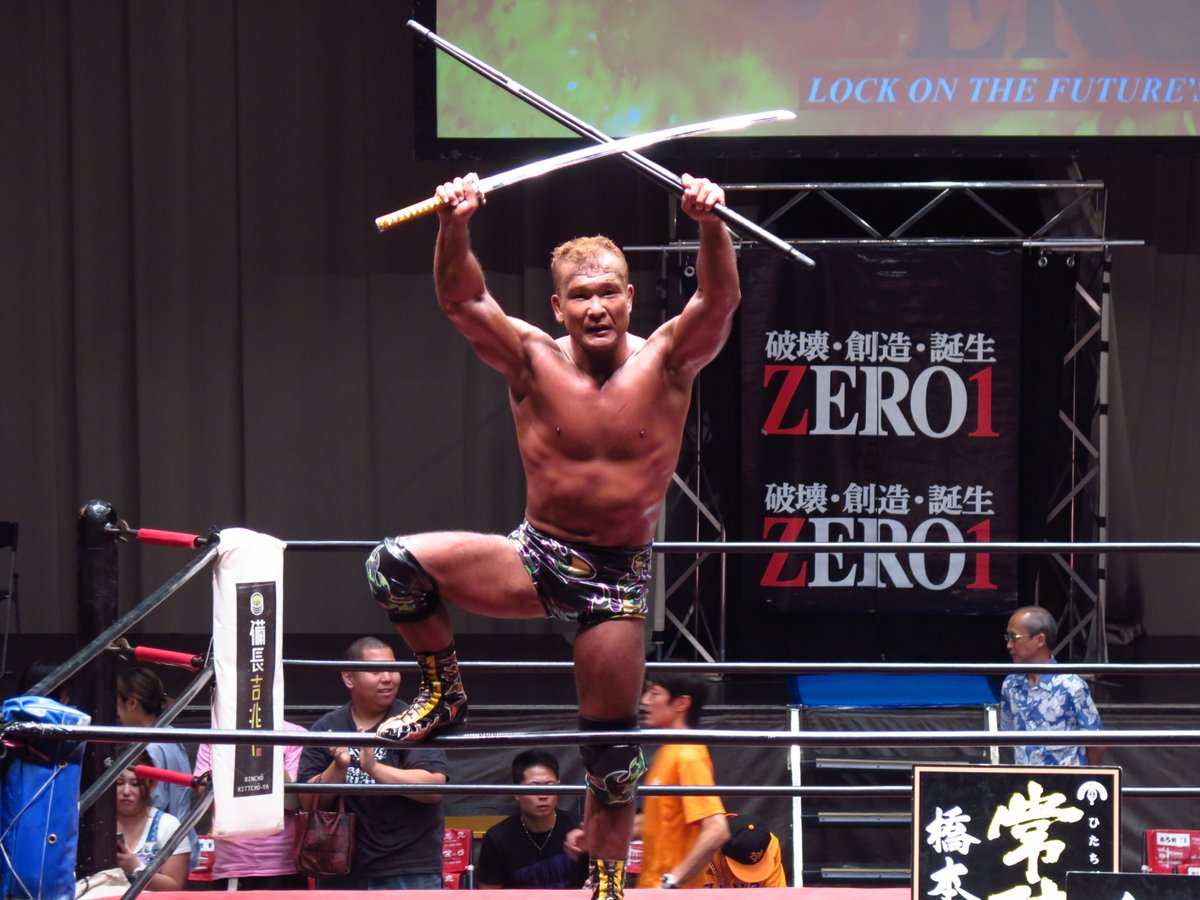
This weekend I watched Zero1’s Fire Festival final, which pit Tanaka against young pretender Yusaku Obata. The match was nuts. If there were lessons to be learned from what happened to Katsuyori Shibata, they weren’t on display here.

I’m not a wrestler and I’m not a doctor, so I’m not going to try to break down that element of this. I’m a fan, and as a fan I was simply in awe of the level of performance, particularly from the 44 year old. The match went over 30 minutes and was non-stop, with Tanaka especially moving at an incredible pace. The Korakuen Hall crowd was on fire for the closing stretch and the atmosphere harkened back to years prior when Zero1 was in a better place than it is now.

Both men were launching bombs at each other — from hard strikes to huge suplexes. Obata repeatedly hit variations of top rope double knee drops to Tanaka’s chest and stomach, while the former ECW star went to the well of his vicious Sliding D until one final match-ending blow got the job done.

In terms of effort and physical performance, this match is up there with the classics produced by New Japan this year. It may not have had the level of psychology or nuanced storytelling of a Kazuchika Okada vs. Kenny Omega match, but it was every bit as impressive from an athletic point of view. Even more so when you consider Tanaka’s age.

We’re exactly 10 years since Tanaka transformed himself from the stocky, barrel-chested (somewhat pudgy) wrestler he was in FMW to the insanely cut, lightweight version of himself that he’s maintained to this day. He was out of action with a shoulder injury at that time, and when he came back with his new look and a somewhat new style based around the Sliding D as his big new move, fans were extremely excited as he began to produce one great match after another.

Nobody thought he’d keep that up into his 40s, and yet here he is. A friend of mine (very much a casual fan) who saw him live at WrestleMania weekend with me a few years ago put it best. “He’s like a greyhound, Alan! There’s no stopping him.” As implausible as it is, for now, there’s no stopping Masato Tanaka.

The Week In Japanese Wrestling: A look at NJPW’s tag team scene

Editor’s note: The following originally appeared in this week’s Figure Four Weekly.

The announcement of New Japan Pro Wrestling’s King of Pro Wrestling card was notable for a few reasons. Hiromu Takahashi was kept out of the Junior Heavyweight title match, with Will Ospreay and KUSHIDA set to compete one-on-one instead. Also, Kota Ibushi won’t challenge Hiroshi Tanahashi just quite yet, as their Intercontinental title match looks like it will happen in Osaka at Power Struggle instead.

However, the thing that I find not only notable, but at this point I would say is comical, is that yet again the IWGP Tag Team titles are being defended in the same three-way dance that we had on all three Destruction shows — Killer Elite Squad vs. War Machine vs. Guerrillas of Destiny.

More than anything else in the highly successful booking run of Gedo, the heavyweight tag team scene has been criticized for a lack of creativity and care from his pencil. We may have reached the pinnacle of it with this match.

Back in 2012, it was TenKoji vs. KES that was done to death. The matches were always good, but by the 1,000th time nobody was frothing at the mouth for them. Since then it’s been one program after another involving the likes of Gun & Gallows, G.O.D, and the ROH team of the moment where the titles get traded around and end up back where they started. Nothing against any of those teams — for the most part they’ve all worked hard and every program has produced at least one very good match — but there’s been zero juice to any of the rivalries.

For a career tag worker, Gedo’s lack of care for the division he once called home is rather surprising. It’s also disappointing because of the historic significance tag team wrestling has in Japan. The peak of this was probably with 90s All Japan Pro Wrestling where the tag titles were contested for by the top stars who had their regular pairings to go alongside their singles endeavors. As a result, Kawada & Taue, Misawa & Kobashi, and Akiyama & Kobashi are remembered as some of the greatest tag teams ever, in addition to all of those men being legendary singles wrestlers.

NJPW has had their own great tag scene over the years as well. TenKoji’s dominance in the early 2000s saw them wrestle a variety of teams and really elevate the belts. In the 90s, The Steiners and the monster team of Vader & Bam Bam Bigelow proved great opposition for natives like Masa Chono, Keiji Muto, Hiroshi Hase, and Shinya Hashimoto.

Gedo has teased fans with alternatives, but has never followed them through. At the start of 2015, he had a rare combination of native heavyweight stars finally win the belts in Katsuyori Shibata & Hirooki Goto. It looked like they were being positioned opposite another newly formed team in Kota Ibushi & Tetsuya Naito. Then the rug was swept out and the titles went back to Gun & Gallows.

Last year, another alternative was explored with a brief integration of the junior heavyweight tag teams with the heavyweights. That got fans excited and the matches which featured The Young Bucks and reDRagon moving up were excellent, but the experiment was forgotten about once 2017 started.

Sadly with this KOPW lineup it seems Gedo’s more set in his ways than ever, and despite what an inarguably great run he’s had as NJPW booker, the tag team scene will forever be pointed to as a black mark against him.

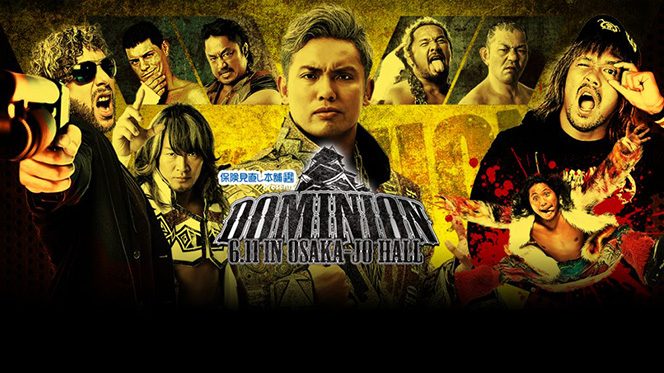
The Week In Japanese Wrestling: Looking ahead to NJPW Dominion

Editor’s note: The following originally appeared in this week’s Figure Four Weekly.

With a marvelous Best of the Super Juniors in the books, New Japan Pro Wrestling heads toward Osaka-jo Hall this weekend for one of the year’s biggest shows and the rematch the world has been waiting for.

Dominion is a card that is unapologetically similar to Wrestle Kingdom at the Tokyo Dome on January 4th. Some will complain and try to portray this as a negative, but step back and think about this. It follows the same card structure and has three direct rematches of one of the greatest shows ever.

The three matches getting redone were all considered classics. All of the main programs are quite clearly massively over with the live crowds up and down Japan if you listen to the reactions. Finally, and perhaps most importantly, the show is sold out, and it sold out with increased ticket prices. This company is on fire and the card being presented is what their audience en masse wants.

Kazuchika Okada and Kenny Omega will take to the stage for the main event with the impossible task of following what they did in January. They’re not going to try to top that. They’re too smart to. They are going to try to make this one different, to tell a different story, and to make it stand alone but also work within their overarching rivalry. It’s going to be truly fascinating to watch.

Tetsuya Naito has only gotten hotter since the Dome and it feels like he’s set to break through onto an even bigger plain of existence that has only ever been occupied by a select handful of New Japan legends. One of those is of course Hiroshi Tanahashi, and these two will also have their work cut out trying to top what they did five months ago. How big a factor Tanahashi’s biceps injury will be, and how that may change the result of the match, is anyone’s guess.

The BOSJ winner KUSHIDA will get his title shot against Junior Heavyweight Champion Hiromu Takahashi. KUSHIDA will attempt to avenge not only his Tokyo Dome loss but also the shocking two-minute defeat he suffered in April at Sakura Genesis.

With the form the challenger is in, this could be one of the best Junior title matches of this run. Takahashi has been can’t-miss ever since becoming champion, and this will be a defining night for him in terms of possibly taking him next level within the promotion (much like his LIJ leader Naito).