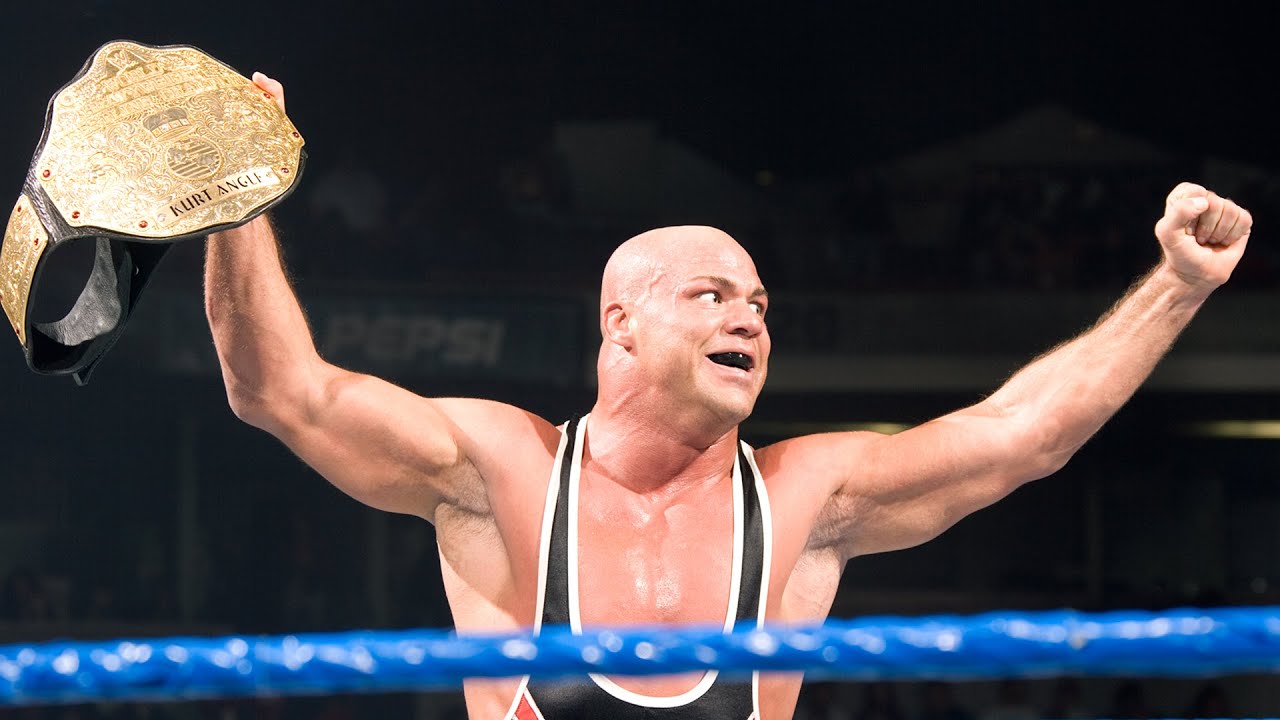
Coming off the heels of the injury to Edge, who undergoes neck surgery on 3/10, came a slew of injuries that have destroyed the depth of the company’s heel division, and in particular Smackdown champion Kurt Angle.
Angle, the most valuable full-time performer in the company, had an MRI on his neck on 3/3 and the results came out that Angle had severe neck damage. He will become the eighth WWE wrestler over the past few years to undergo neck surgery under Dr. Lloyd Youngblood in San Antonio, which will put him out of action for about one year. His symptoms, shooting pains down both of his arms, numbing in the fingers and a burning sensation in the neck had gotten worse while on the South Africa tour this past week.
His neck problems date back to amateur wrestling, as he suffered a broken neck in late 1995, and was not nearly recovered from it when he won the Olympic trials in freestyle wrestling at 220 pounds (against competition that included Mark Kerr, Mark Coleman and Dan Chaid) and later the gold medal.
World Wrestling Entertainment has made several creative changes including the elimination of most of the influence of Paul Heyman from the creative process as well as an apparent pulling the trigger on the plans for splitting the PPV shows.
As reported here several weeks ago, the plans, effective at King of the Ring, is to promote eight brand specific PPV shows per year and four dual brand PPV shows. It is expected this announcement will be made officially at the company’s stockholders quarterly investment conference which comes after this issue’s deadline.
King of the Ring, which takes place on 6/15 in Houston, will be an All-Raw show. Vengeance, which takes place on 7/27, will be the first All-Smackdown show. SummerSlam on 8/24 will be a joint show, while Unforgiven (9/21 in Philadelphia) will be a Raw show, No Mercy on 10/19 will be a Smackdown show, Survivor Series will be a joint show, and Armageddon on 12/14 will be a Raw show. Royal Rumble and Wrestlemania next year will also be dual brand shows.
Curt Hennig used to brag to his friends that he had a horseshoe up his ass because he was so lucky. And friends, dumfounded how Hennig would routinely hit jackpots on quarter slots and managed to make big money from wrestling without giving up his family and hanging out with his friends, were even more shocked when hearing that he had passed away.
For Bobby Heenan, who Curt would always say was like a second father to him, it was eerie, reminding him of the death of Heenan’s favorite traveling partner, Ray Stevens.
“He called me last week and it was strange,” said Heenan. “It was like Ray Stevens, who never called me, other than to say pick me up at 5. Stevens called me the day before he died. He said he just wanted to talk. I’d known him for 30 years and he never called to talk. That’s just how he was. Curt called last week and I wasn’t home. He left a message saying that he just wanted to see how I was doing.”
Curt Hennig, whose career was one of the top wrestlers in the world ended prematurely with a back injury, saw his life end shockingly under mysterious circumstances in a Brandon, FL hotel room on 2/9. He was 44.
Hennig was considered one of the top five or ten wrestlers in North America from 1987-91 during a period where he had lengthy runs with both the AWA world heavyweight title and the WWF Intercontinental title.
Born March 28, 1958, Curt was the son of veteran badass Larry Hennig, a burly 6-3, 300 pounder who wasn’t a great worker, but was well respected as being one of the tough guys of his era. Larry started his career as “Pretty Boy” Larry Hennig, known for his late-1960s tag team with “Handsome” Harley Race and early 70s tag team with “Luscious” Lars Anderson. He was known later in his career after turning babyface as “The Axe,” using a form of clothesline as his finisher.
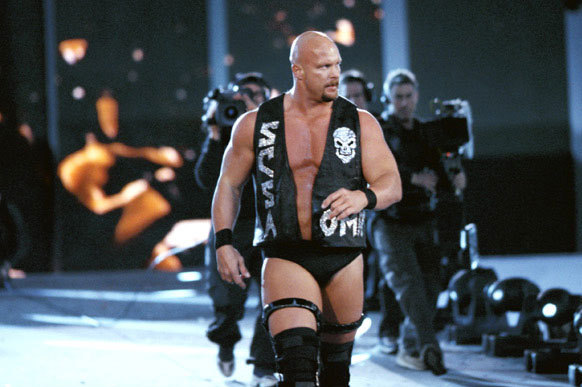
The much ballyhooed Steve Austin story in the WWE’s Raw magazine turned out to be exactly what you’d expect from the company that gave you Confidential, a peak inside, combined with working a storyline.
Austin gave what appeared to be his legitimate reasons for being frustrated, dating back to Wrestlemania X-7. But the only names he specifically targeted with being upset with were Rock and HHH, his two most likely next opponents in what were clearly attempts to make people think his heat with them was legit while building up their program. It was nothing less, or more, than what you’d expect. It was a brilliant promotional move by the company, to jump-start sales to their magazine with an interview they can likely put on Confidential later, and use on television as well to build his return. The magazine article said he would return to the company, but claimed “I’m not 100 percent sure I‘d like to get back in the ring,” which is clearly storyline.
An interview with Dwayne Johnson has put into question his pro wrestling future while WWE appears to be on the verge of what will be a hot streak leading into Wrestlemania with the return of Rock, Hulk Hogan, Steve Austin and possibly Kevin Nash. However, the odds of Bill Goldberg being part of that package decreased over the past week.
According to an article by someone using the pseudonym Jake T. Icon (who does a regular column in the Wrestling Chatterbox newsletter), who claimed to have been an extra on the set of “Helldorado” (which is the name they seem to be going with for Johnson’s current project), the two talked about his future, and he claimed that he would wrestle at No Way Out against Hogan, at Wrestlemania against Goldberg, and then retire from wrestling. He said it wasn’t a retirement for good, but with so many movie projects, he wouldn’t have time to do wrestling, but was planning on returning some day when he’s not as hot a commodity in Hollywood.
Since the dawn of time, there have been tens of thousands of men who can call themselves professional wrestlers. Of them, not one was more hated. And because of the changing nature of the business, probably no one ever will be.
There have been Sheiks too numerous to count in wrestling, but when you say The Sheik, everyone knows who you are talking about–Ed Farhat. The Sheik was one of both the most famous and infamous characters in the history of the business. If you base being a heel on getting intense, riot causing heat and the ability to draw huge crowds regularly and consistently in the same venue, he was the best there ever was.
Farhat had been in rough shape regularly for the past seven plus years, and had worsened the past two years, several times being on death’s door. His major health problems started after suffering a heart attack after a match in Japan in May of 1995.
What is officially being labeled a suicide, the death of Dream Stage Entertainment (Pride) president Naoto Morishita is just the latest in a string of events that is changing the face of the industry at record speed.
Morishita’s death at the age of 42 comes just two weeks after K-1 President Kazuyoshi Ishii was forced to resign his post after being indicted on tax evasion charges. This leaves the future cloudy of the two companies that, from an appearance and business standpoint, appeared to go into 2003 as the strongest entities in this rapidly changing industry. The circumstances and speculation surrounding Morishita’s death combined with Ishii’s arrest have left this aspect of the industry in Japan, which was at an all-time popularity peak this past month, reeling with an image problem and there is fear that a lot of sponsors will pull out. The traditional pro wrestling industry in Japan went through a similar problem in 1964 after the gangland style slaying of Rikidozan.
With the balloting now completed and the awards issue a week away, it’s time to take a list look at the Wrestler of the Year Award, renamed this year the Lou Thesz/Ric Flair award.
It’s a wide open field this year because, unlike most years, which have multiple strong candidates, this year has multiple candidates that come close, but nobody that would have won the award in any previous year.
Two years ago, when it was a four-man field (all of whom would have been good winners), we went back in a number of categories and tried to make comparisons. This year, the top candidates are Kurt Angle, Chris Benoit, Eddy Guerrero, HHH, Brock Lesnar, Keiji Muto, Yuji Nagata, Antonio Rodrigo Nogueira, Tito Ortiz, Rock, Bob Sapp, Yoshihiro Takayama, Genichiro Tenryu and Manami Toyota. For purposes of comparisons, I’m going to first eliminate Benoit (no PPV main events, nor a strong draw, didn’t wrestle the entire year, and the only thing he has going for him is workrate and there are other candidates stronger), Guerrero (for the same reasons as Benoit, plus he was even lower on the totem poll then Benoit in WWE), HHH (a big star who was pushed, but probably overall did more harm than good), Ortiz (one match, no matter how well it did at the box office, does not win Wrestler of the Year, and there are a half dozen stronger shoot candidates this year) and Toyota (a great worker and Hall of Famer, but women’s wrestling just isn’t popular enough and she isn’t a big enough star, and that’s a major part of this award).
The entire foundation of sports entertainment in Japan was thrown for a loop when the most powerful man in the Japanese industry, K-1 promoter Kazuyoshi Ishii, 49, was indicted on tax evasion charges on 12/26. He and two other high ranked officials of the company, also indicted in the scandal, resigned the next day.
Besides being president of K-1, Ishii was involved in joint promotions this past year with both Pride and All Japan Pro Wrestling. The arrest came just weeks after the most successful show in the company’s history, and in a year where Ishii’s promotional wizardry peaked with the creation of the Bob Sapp phenomenon.
Indicted along with Ishii were Takeshi Sato, 43, the President of Inter Media Corporation, a company under the K-1 umbrella handling its advertising, and Sanshi Terakubo, 67, who handled the accounting for the parent company.
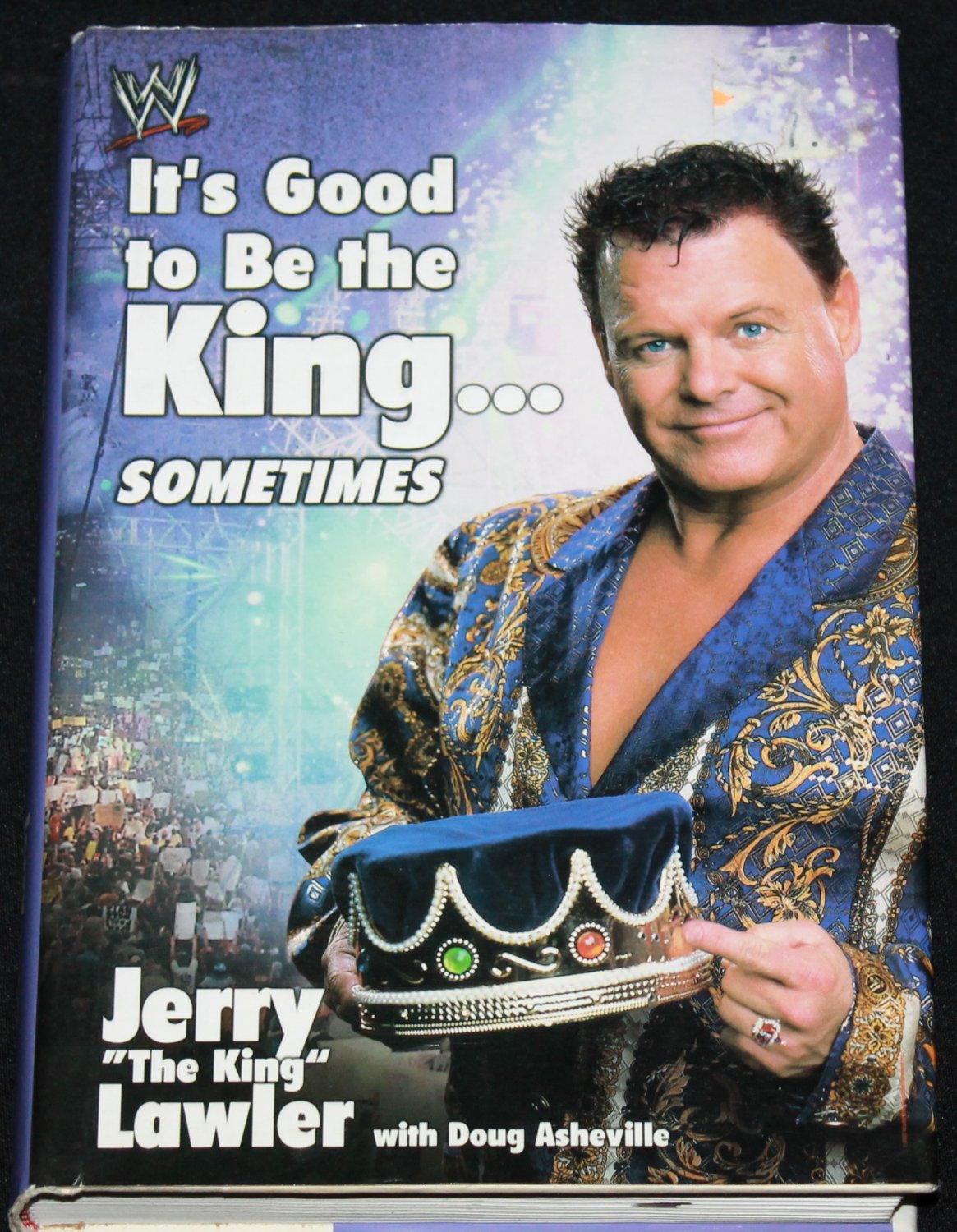
Of all of the thousands of pro wrestlers who have come along in the past 30 years, few subjects are more intriguing than Jerry Lawler.
Lawler is the last remaining headliner from the early 70s who is still a visible major star in American wrestling. While all his contemporaries except Ric Flair (who started his career a few years after Lawler, although both are 53) are gone and forgotten, with the exception of people like Terry Funk, Dusty Rhodes or Abdullah the Butcher on the Japan or indie scene, Lawler is on Raw every Monday night in his latest guise.
The King has gone from a stereotypical 70s Southern rasslin’ heel with no body and a smart mouth with a Southern accent, to one of the greatest regional draws and local babyface icons in wrestling history. When regional wrestling ran its course and his career appeared over, he was reinvented on the national stage as a TV announcer, and one of the WWF’s great heels for a run with Bret Hart.
An interview with Rock on a Dallas radio station on 12/14 revealed that WWE is planning a Rock vs. Bill Goldberg match for Wrestlemania.
As mentioned last week, WWE officials have been more aggressive than ever before in dealings with Goldberg. The current plan and offer for Goldberg has not been finalized. The sides are closer in negotiations than they have ever been in history, would be for a huge guarantee to work two matches with Rock, the first at Wrestlemania on 3/30 in Seattle’s Safeco Field and a rematch at Backlash on 4/27, presumably a situation where each wrestler would get one win, which would alleviate problems with finishes on both sides.
The funny thing is, Wrestlemania is probably the worst time possible for it to be financially worth while to do the match. A Wrestlemania show with all the major names in big programs, even in a down time, just because of the name and tradition of the show, will probably do somewhere around 750,000 buys.
Although the time he spent as a full-time wrestler in Georgia was relatively short, the legend of Mr. Wrestling, Tim Woods, his greatest successes and most famous matches and feuds were in that state.
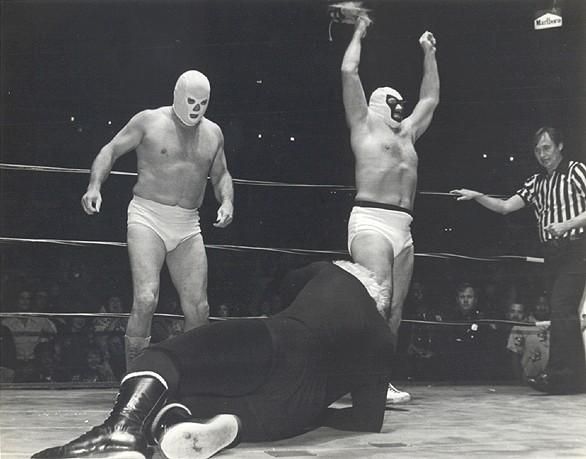
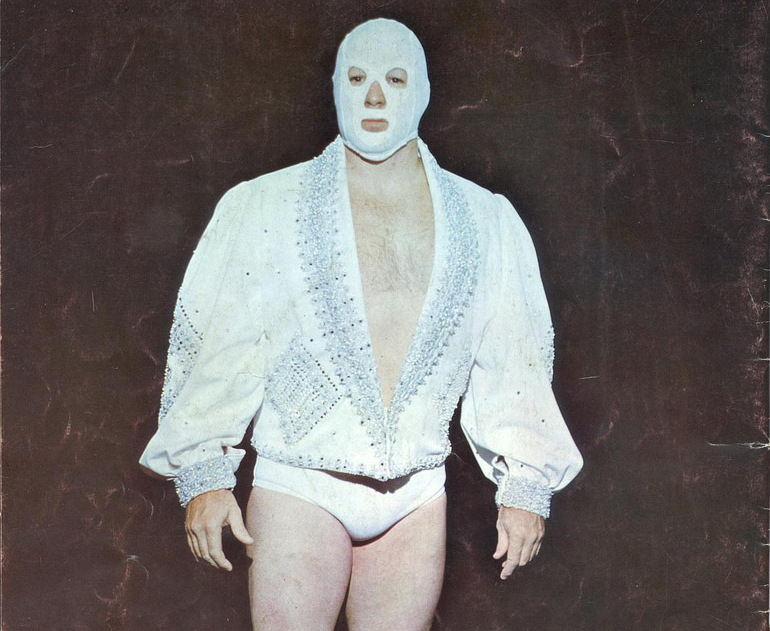
It was one of those booking ideas that worked to perfection. Leo Garibaldi was the booker in Georgia in 1967 and wanted to build the territory around the gimmick of Mr. Wrestling, who had achieved some notoriety when he turned into a drawing card for promoter Joe Dusek’s Nebraska promotion.
Dusek came up with the concept of Mr. Wrestling in 1965, with the white trunks, white boots and all white mask, as the technical wrestling marvel. Dusek a few years earlier had huge success with another former college wrestler, Big Bill Miller, putting him under the mask as the black-clad Dr. X in 1959 and making him his local world champion.
Among wrestlers who worked with him in the Carolinas during the mid-70s, the first story told about Tim Woods is one that for years was kept within the fraternity as one of the biggest secrets.
In the October 4, 1975 plane crash near Wilmington, NC that ended the wrestling careers of Bob Bruggers and Johnny Valentine, and in which Ric Flair suffered a broken back that put him out of action for four months, there was a fourth wrestler on the plane. Tim Woods.
Woods was headed to a match in Wilmington where he was going to wrestle Valentine in the main event. Because the plane crash drew significant media publicity, Woods took the bullet for the team. He checked out of the hospital the next day, claiming to be fine, even though he was banged up really bad and could barely move.
Editor’s note: The following is the December 6, 2010 edition of the Wrestling Observer Newsletter, with the lead story being Dave Meltzer’s in-depth look at the history of pro wrestling events on Thanksgiving.
From all of us here at F4WOnline, we hope you and your family have a great Thanksgiving. We’re incredibly thankful for all of the support that our subscribers and readers give us.
**********
A long time ago….In a galaxy far far, well, not that far away…..
“Starrcade 83, don’t miss your chance to be part of the sports event of a lifetime. See Rowdy Roddy Piper vs. Greg Valentine, first time ever in a collar match. A Flare for the Gold, Ric Flair vs. Harley Race for the world heavyweight championship and Jack & Jerry Brisco vs. Ricky Steamboat & Jay Youngblood for the world tag team title. Starrcade 83, Greensboro Coliseum, a Flare for the Gold, don’t you miss it.”
Tony Schiavone: “Fans, 9 super spectacular matches that night. You’ll see Maniac Mark Lewin & Kevin Sullivan vs. Johnny Weaver & Scott McGhee, The Assassins 1 & 2 with Paul Jones against Bugsy McGraw & Rufus R. Jones, another big tag team match, Dick Slater & Bob Orton Jr vs. Chief Wahoo McDaniel & Mark Youngblood. You’ll also see Abdullah the Butcher there, against Carlos Colon. TV title against the mask, Kabuki with Gary Hart against Charlie Brown from Outta Town. The World tag team title is at stake, Jack & Jerry Brisco taking on Ricky Steamboat & Jay Youngblood w/2 special stipulations we will talk about in just a minute (the title can change hands via DQ and Angelo “King Kong” Mosca as special referee). The collar match you want to see, Rowdy Roddy Piper vs. Greg Valentine. And in the cage, no disqualification, for the world heavyweight championship, former champion Ric Flair taking on Harley Race.
Ric Flair: “Alright Harley, it’s come down to this, brother. You and I in the cage. Two men walk in, you the world heavyweight champion, me wanting it. The people in this part of the country have never seen the world championship change hands. Thanksgiving night, they’re going to see it. Believe it, Whooo!”
A lot of people, when thinking about when Thanksgiving was the biggest night of the year in wrestling, think about Starrcade 83. In many ways, it was the show that launched the modern era of pro wrestling, some 16 months before the first WrestleMania. The event was held not only live at the Greensboro Coliseum, but closed-circuited to 17 locations around the Carolinas as well as into Puerto Rico.
The actual debut of pro wrestling on closed circuit television was in 1971, shortly after John Tolos threw Monsel’s powder in the eyes of Freddie Blassie on KCOP-television’s live Saturday night wrestling show from Hollywood, CA. But that era, when the promotion was on fire in 1971 and 1972, was limited to broadcasting some shows that they knew the Olympic Auditorium couldn’t hold to two or three large movie theaters in the city.
Closed circuit wrestling had been done similarly by the mid-70s in Madison Square Garden during Bruno Sammartino’s second title reign, where when the Garden would sell out well in advance, they would book what was then called the Felt Forum, a 4,000-seat arena that was part of the MSG complex, to get the overflow.
In 1976, there was actually an event much bigger than Starrcade, the Muhammad Ali vs. Antonio Inoki fight, which was on closed circuit throughout North America. The wrestling promoters booked the show and in hundreds of closed-circuit locations around the country. The idea was to combine the boxing audience with its biggest draw, and the wrestling audience by using Andre the Giant (against boxer Chuck Wepner) and closed circuit of top stars in the area. There were a number of live events, in cities like San Francisco, Los Angeles, Houston, Atlanta, Chicago and Shea Stadium in New York to air the area’s biggest wrestling stars for the undercard that night.
But outside of the Northeast, where the real draw was Sammartino coming back from a broken neck against Stan Hansen and drawing 32,000 fans, and not Ali vs. Inoki, the event was a major financial disappointment.
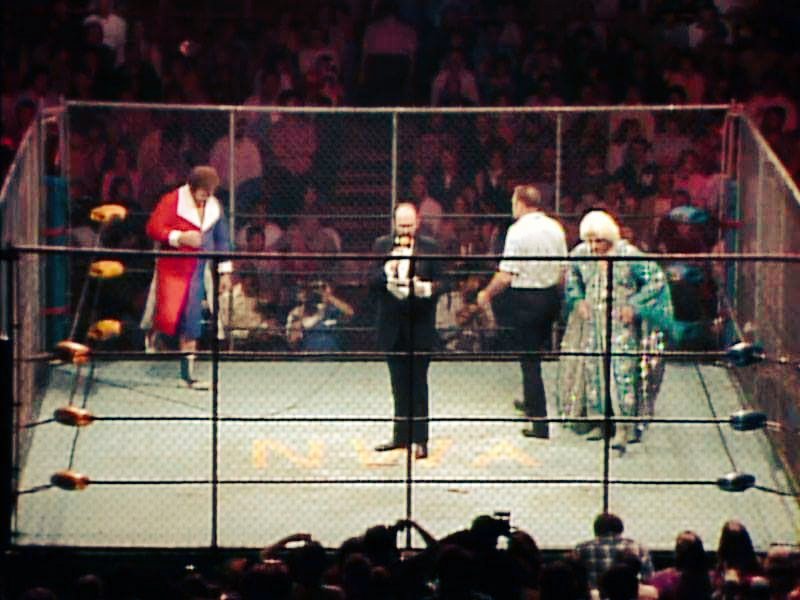
This was something different, as there was no Ali involved, which meant no mainstream publicity. This was a regional wrestling company booking most of its regular major arenas for a closed-circuit showing of the biggest event it ever produced. The event is still probably the single most memorable and talked about wrestling show ever held in that part of the country. Closed-circuit was hit-and-miss, with the promotion blaming terrible weather, but there were still an additional 30,000 fans watching besides the 15,447 which sold out the Greensboro Coliseum in advance. Flair won the title for a second time, beating Race in a match with Gene Kiniski as referee. Flair vs. Race is generally considered one of the two best memorable wrestling matches in the history of Carolinas wrestling. The other, held eight months earlier in the same arena, was Steamboat & Youngblood vs. Sgt. Slaughter & Don Kernodle in Greensboro. That match was actually responsible for Starrcade. That even sold out the Coliseum, turned away 6,000 at the door (which has been exaggerated as the years have gone by), and was responsible for one of the cities most famous traffic jams, with fans coming from all over the territory for the match. Between the traffic jam and turning so many people away, this led to idea of the first Starrcade. Instead of having their fans who wanted to see what they were promoting as a once-in-a-lifetime event have to drive into town, they would beam the show into their home arenas.
Every major match had a storyline, but the key was that Flair had become the area’s biggest star in the 70s, and on September 17, 1981, became the first wrestler based in the Carolinas to win the NWA world heavyweight title, when he beat Dusty Rhodes in Kansas City. However, on June 10, 1983, in St. Louis, Race regained the title. There was politicking over who would beat Race for the title, which mostly came down to Flair and David Von Erich. At the time Flair was clearly the stronger candidate, and they ran a series of angles for months. Race came into the territory in July for defenses against Flair in most of the major cities, and after disputed finishes, announced he would never defend against Flair again. He then put up a $25,000 bounty to anyone who would injure Flair and put him out of action. Dick Slater and Bob Orton Jr. gave Flair a stuff piledriver, putting him out of action. Flair even did a retirement speech with a neck brace in one of the most memorable interviews of his career, only to come back chasing Slater and Orton Jr. around with a baseball bat, and then working around the territory in grudge matches beating both men. Race agreed to one last title shot, with no DQ, in a cage.
An interesting note regarding that show. Dusty Rhodes, who was at the show, but didn’t wrestle, and was soon to take over as booker of the territory, came up with the actual name “Starrcade.” Gordon Solie, the Florida and Georgia announcer, who did not broadcast in the territory, was flown in to be the lead announcer even though he wasn’t fully familiar with all the wrestlers and their angles. And forgotten in history, is that the head booker of the territory, who set up all the angles, was not even there for the event, as Dory Funk Jr. was in Japan for the annual All Japan Real World Tag League tournament.
The show was nearly ruined. A far bigger story than Starrcade and the first closed circuit event was going on in pro wrestling. Vince McMahon Jr., Vince McMahon Sr., and Jim Barnett (their Director of Operations at the time) all resigned from the NWA at its 1983 convention, as a prelude to the WWF’s national expansion. They were attempting to sign every big star with the strategy that they take the top draws in the local areas, and buy the television time slots in the existing areas, and then run in those areas using the local stars and a crew of national stars. It didn’t work out exactly like that everywhere, as many wrestlers liked who they worked for, including Flair, but that was the idea. McMahon Jr. had a secret meeting with Race right before Thanksgiving, offering him a big guarantee to bring what most fans believed to be the legitimate world heavyweight title to WWF, where no doubt he’d drop it in a unification match with Hulk Hogan, who McMahon had just signed to be his flag bearer and was about to make champion.
Race, who was part owner in a money losing regional promotion in Kansas City, as well as a traditionally strong St. Louis promotion that had just started a decline, turned it down out of loyalties to the companies he owned, his partners, and the people who trusted him for so many years to hold the championship. Race claimed he told McMahon, while in a bathroom where the secret discussion was taking place, to look in the mirror. McMahon didn’t understand where he was going, but Race said that every day when he wakes up, the first thing he has to do is look in the mirror. And if he signed that deal, he’d have no respect for the reflection for the rest of his life. One version of the story Race used to tell, but now when asked changes the subject (as noted by Race’s high placing in the recent WWE DVD) is that McMahon was so furious, as they were walking out of the bathroom with the deal dead, McMahon charged and tried to tackle Race, who quickly reversed and subdued him. Whether true or not, the story, minus the physical aspect, was identical to the story Howard Cosell, the legendary sportscaster told, when he was approached by McMahon to be his lead announcer at that same time, and Cosell gave it no consideration and turned down McMahon, noting McMahon snapped and laid into him verbally like he couldn’t believe.
THANKSGIVING FLASHBACK – November 24, 1983
Greensboro Coliseum – Starrcade ‘83 A Flare for the Gold
Rufus R. Jones & Bugsy McGraw b The Assassins (Jody Hamilton & Ray “Hercules Hernandez” Fernandez)
Kevin Sullivan & Mark Lewin b Johnny Weaver & Scott McGhee
Abdullah the Butcher b Carlos Colon
Dick Slater & Bob Orton Jr. b Wahoo McDaniel & Mark Youngblood
Charlie Brown (Jimmy Valiant) b Great Kabuki to win the NWA TV title and retain his mask
Roddy Piper b Greg Valentine in a dog collar match
Ricky Steamboat & Jay Youngblood b Jack & Jerry Brisco to win the NWA world tag team titles with Angelo Mosca as referee
Ric Flair b Harley Race to win the NWA title in a cage match with Gene Kiniski as referee