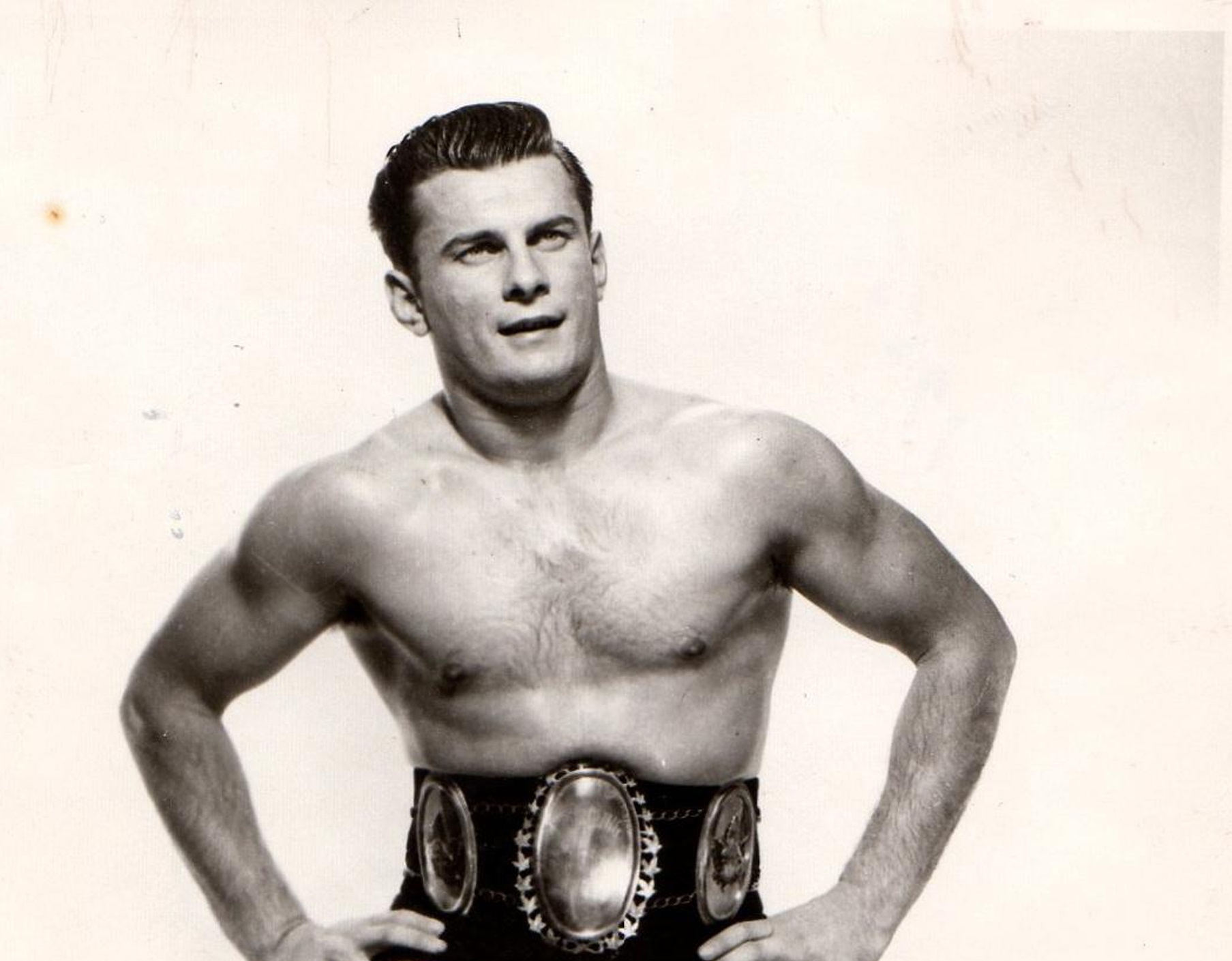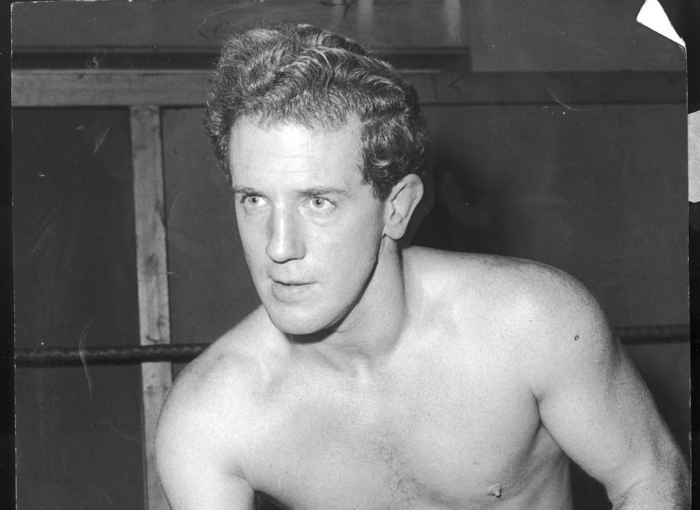
Making a case for Jackie Pallo to be a WO Hall of Famer

By Bradley Craig for F4WOnline.com

To a generation of older Britons, he is one of two names that symbolise the heyday of British professional wrestling on television. Best remembered for his cocky heel persona, the star of ‘Mr TV’ Jackie Pallo transcended the industry and he became a bonafide celebrity in the United Kingdom, a household name of the highest order.

The apex of Pallo’s fame occurred on 25th May 1963, during his return contest with Mick McManus which immediately preceded the FA Cup Final (the culminating match of the most prestigious knockout soccer tournament in England). It was the second year in a row that the two rivals would be pitted against each other, during the most important date on the British television wrestling calendar.

There are reports that the 1963 rematch between McManus and Pallo drew 3 million more viewers than the Cup Final itself, at least on ITV, which aired the football in competition against national broadcasting giant BBC. Some claimants insist that the match attracted a total of 16 million viewers. Regardless of myths and legendary ratings, it is now accepted as a historical fact that this contest pulled the highest viewing figure of any bout in British wrestling history.

But it was this standing as a celebrity, and the power that went along with it, which made him a controversial figure within the industry. To some, the legacy of Jackie Pallo is that of a trailblazer. A huge pull at the box-office, he proved that the skillset of a pro wrestler could be transferred towards mainstream fame and create opportunities for a life beyond wrestling. To others, he was a reviled figure who chose to play by his own rules and challenged the structure of a closed-shop, monopoly business.

As a performer, Jackie Pallo was largely admired as an expert crowd manipulator, the supreme showman who mixed an arrogant personality with competent ring skills to become, arguably, the most hated heel in the history of British wrestling. Some of his contemporaries eschewed his fast-paced, bumping style for its lack of credibility. But, by adapting his skills to the tastes of the small screen audience, his legend grew. In a decade when the concept of fame was ever evolving, his larger-than-life antics positioned him as the first true television wrestling star in Great Britain.

When his career ended due to injury, Jackie Pallo once again made headlines. In 1985, as he accepted retirement from the ring following full hip-replacement surgery, his controversial autobiography You Grunt, I’ll Groan was released. As the title suggests, it was an expose that openly discussed the co-operative nature of professional wrestling matches and its backstage politics.

Pallo’s defence was that the industry he had loved, and helped grow, was no more. He claimed that the business had already been exposed by the barely-mobile, overweight few who were being positioned as its top stars to the point where suspension of disbelief was not possible. For him, it was no longer feasible to deny the truth, during a time where the viewership of professional wrestling had taken a tumble, a decline which eventually played a part in its cancellation.

But for some within the wrestling community, his honesty was an unforgivable sin.

It was this betrayal which fully earned Pallo the right to his greatest claim: he was the man they all loved to hate.

The historic significance of Jackie Pallo is undeniable. Amongst the generation that has followed in the years since his passing, his legend still evokes polarising opinion. It was a far cry from his humble beginnings.

EARLY LIFE

Pallo was born Jack Ernest Gutteridge on 12th January 1926, and grew up in a small apartment flat above a gym in Islington, a densely-populated district in London. His father, Jack, was a second-generation boxer who frequently taught classes at the gym along with his twin brother Dick. Although he had trained to box in his youth, ‘Jackie’, as he was known to his family, worked a series of manual jobs before he met a local girl, Trixie. Romance blossomed and the pair started dating.

The couple were engaged in 1943. It was actually this engagement which spurred him to become a wrestler. Finding insufficient income from his work as a mechanic, he would later claim that it was his ongoing inability to afford a wedding which led to him exploring the idea of life as a wrestler to supplement his living wage.

Like many pro wrestlers of the era, Gutteridge’s grappling beginnings were rooted in the fundamentals of the amateur game.

In 1949, he enrolled in training sessions held by George Mackenzie at the Ashdown Wrestling Club and Canonbury Towers. Mackenzie was a skilled shooter, who had previously taught unarmed combat to troops during the war, and he saw some potential in the young upstart. Gutteridge enjoyed early success in local bouts, but soon discovered there was little money to be made in the legit sport. He quickly decided that he wished to pursue a career in the pro ranks, much to the disappointment of his trainer, who considered him a sell-out, and to the embarrassment of his family, who had firmly established a reputation of credibility within the boxing community.

Having worked around the fight industry, they had an inclination of the ‘bent’ nature of the world that Jackie was hoping to enter. They insisted that he would have to change his name if he was ever going to compete in a professional wrestling match.

Travelling to Brixton, Gutteridge approached promoters Jack Dale and Les Martin to seek out any opportunities that might be available. A short try-out opposite veteran grappler Pat Cloak resulted in Gutteridge being ruthlessly scurfed (an old British term for roughed up), but capitalising on his keen demeanour, Jackie was offered the chance to have a role within Dale-Martin Promotions as a ‘second’. To modern fans, unfamiliar with the old British system, pro wrestling bouts in the UK were contested under Lord Mountevans Rules which, similar to boxing matches, were fought in rounds. A second would be on hand to act as a corner-person of sorts, offering water or a towel to one of the competitors during the intervals within the match. He also worked as a referee, and honed his pitchman skills as a ring announcer for the group. Although the pay was miserable, these roles allowed Gutteridge to study the entire workings of the business as a close observer for a period of over two years.

It was as an observer that Gutteridge would be paired with the performer who forever changed his path to stardom. He had been assigned to act as the second to a revered veteran great, the legendary Jack Pye.

UK historians frequently cite ‘Dirty’ Jack Pye as the first true heel of British professional wrestling. Renowned for an aggressive style which solidified his position as arguably the biggest draw of the 1930s, Pye’s success was partly due to his unsavoury charisma. Subtly employing dirty tactics out of the referee’s sight whenever he could, it was this perceived arrogance which created newspaper headlines and elevated Pye to the pinnacle of a sport bustling with legitimately hard men who worked the British rings.

Pye’s critics would denounce him as a shameless self-publicist, who soiled the standing of the industry for personal gain. To Gutteridge, he was the prototype of a sure-fire box office attraction. Moreover, by exploiting personality over sheer in-ring skill, it allowed for a longer career atop the profession. Pye was still a major draw into the 1950s.  

Gutteridge studied all he could from Pye, learning the craft from one of the earliest proponents of ring-psychology. In the meantime, Jackie continued his boxing classes at the family gym, and had started to take up bodybuilding. Respecting the youngster’s commitment to physical improvement, and realising that he was prepared to work at the lowest level, the Dale-Martin partnership would eventually allow Gutteridge to make his start as a professional wrestler.

To virtually no fanfare, the career of Jackie Pallo would commence.

FODDER TO THE STARS

Jackie Pallo made his pro debut in 1950 at Nine Elms Baths, a historic pool building in Battersea. In his first match, Pallo had managed to secure a fall against his opponent Young Atlas (Frank Morris). He didn’t win the contest, as matches were typically held over three falls for a standard match (occasionally more for a special challenge). Far from an embarrassing first showing, it would be a long time before Pallo would recapture the same level of success from his debut: he would later claim that four years would pass before he would score a fall in any of his matches. Demoralised, he started to understand his role – he was simply ‘fodder’ for the bigger stars. He was also disappointed that the lighter stars earned half as much as the heavyweights, many of whom he considered lumbering and lazy. As a lean welterweight, Pallo learned there was little room for upward mobility, and this was a source of genuine resentment.

Nevertheless, Pallo endured. His studious nature and unwavering commitment to his craft established him as a real ‘grafter’, and he gradually earned the respect as someone who was willing to work hard in order to progress his skills.

Open to new ideas and new styles, Pallo understood that it was Pye’s innovations as a performer which set him apart from the other wrestlers, and so he sought out inspiration from the other side of the Atlantic.

A new western world had been created in the aftermath of World War II. Based on the sharing of fresh ideas to rebuild cities and nations rocked by war, there were opportunities to be had in the greater commercialism of the new, using readily-available and efficient forms of high-speed communication and the exploitation of international ideas which had previously seemed out of reach. Indeed, the sharing of innovative notions would forever change the arts, from global cinema to music to architecture. As a form of performance art, pro wrestling was no different. Though there were would be nuances which might prove to be region-specific, there were commonalities which could be emulated internationally. Tried and true methods from elsewhere could be demonstrated to an audience which had never seen their application.

Pallo immersed himself with American wrestling magazines which he ordered in the hope of finding new moves for addition to his expanding repertoire, and discovered exotic characters which could inspire his evolving persona.

THE MAN THEY LOVED TO HATE

Ousting his working-class background, Pallo was billed as being from Highbury, an expensive district in London where only the rich and famous seemed to live. Even though ‘Gorgeous’ Jackie’s voice had the thickest of cockney accents, he would insist that he was a member of the social elite.  

But it was the attire of Pallo which first captured the attention of wrestling fans. It is incredible to think that there was a point in time where simply wearing striped trunks in a wrestling match would be sufficient reason to draw heat, but this was the case with Pallo.

According to Pallo’ memoirs, his famous trunks were a gift from the celebrity strongwoman Joan Rhodes (today Jack Gallagher wears similar trunks in homage to Pallo), and he soon ousted his traditional gown for satin robes and gold-sprayed boots. In an era where plain, understated attire was the norm, his flashy appearance was a contrast from the other ring performers of 1950s Britain, and exuded an arrogance that was rare for a public performer in the UK.

Also outlandish was his hair. Apparently grown to length for a role as an old-time sailor in a historical film, the bleached curly blonde ‘barnet’ of Pallo was tied into a ponytail by a velvet ribbon. Bearing in mind that there was public criticism of The Beatles’ hairstyles when they first became mainstream stars, the effeminate length of Pallo’s hair was a source of irritation to the working-class audiences which had expectations of tough masculinity from its wrestling stars. He would frequently swivel his mane in a campy manner to wind up the crowd. After his matches, Pallo would present the ribbon to a fan, usually the loudest heckling female member of the audience. It was a similar device to the use of bobby pins that would be hurled into the crowd by Gorgeous George in the United States to draw the ire of the masses.

His use of transatlantic imports such as the tombstone piledriver (which he called the Head Drop), the aeroplane spin, his vaunted back arm submission (an elevated double chicken-wing hold), and the sit-on backbreaker and arm lever, were a sharp contrast to the commonplace chain matwork employed by other grapplers of the era. It was a marriage of an in-ring arsenal to complement his show-off personality.

Remembering his time as a second to Pye, the subtle use of dirty tricks were also a staple of Pallo’s routine, frequently employing his use of boxing punches to earn him public warnings from referees as crowds jeered for his disqualification.

But his main learning from Pye was in the manipulation of the media to make his star shine even brighter. In an era of professional wrestling where records are scarce, the vibrant lifestyle of Jackie Pallo seemed to be extremely well-documented by the press. One article, captured in national tabloid The Daily Mirror in 1963, documented the story of Eva Milne, a middle-aged spectator who had been banned from wrestling shows by promoter William Little. She had attacked Pallo with her shoe after becoming wildly enraged by his cheating. The fact that a reporter and photographer were on hand to interview all concerned is suspect to say the least, but it was a common theme in Pallo’s relationship with the press. Even if the event was likely staged, it was typical of Pallo’s expertise to use the media to his advantage.

The press had an interesting relationship with Pallo, and regularly covered him in national interviews, in which he was lauded for his articulate wit, exquisite knowledge of fine arts, photography and his taste for the high life. All of these polished attributes were placed in juxtaposition with the perception of an aggressive, rule-breaking grappler. In previous years, wrestlers were perceived as somewhat of an enigma, operating from the shadows of a closed-shop which was hard for outsiders to penetrate. In the UK, Pallo was one of the few who made himself accessible to the media, even if the purpose was only to reveal a carefully constructed extension of his personality. It earned him fame, but it also created enemies. Some insisted he was creating a mockery of professional wrestling, by partaking in these publicity stunts. Most, Pallo surmised, were merely jealous of his increasing success as a mainstream star. Nevertheless, it boosted his public profile.

Image was important to Pallo. At a mere 5’6” and 11 ½ stones (161 lbs) in weight, he had to project a personality that was larger than his frame. But he would soon find the perfect outlet in television, as his slight stature could be somewhat muted by the capture of a small screen, a domain where the sense of spatial awareness was under the control of a television production crew and skilled camera framing. For Pallo, it was television which changed the fortunes of the lighter weight wrestlers. On a small screen, a viewer’s interest would captivated by action, not just size.

MR TV

Jackie Pallo had forged a relationship with the small screen from the moment that the television cameras recorded its earliest footage of British pro wrestling in 1955. In fact, Pallo and Cliff Beaumont were the very first wrestlers to be filmed by a UK production team, but the footage was simply shot to test camera angles for the premiere show before the crowd were allowed into the Westham Baths for the tapings.

Despite his on-screen absence from the first few broadcasts, Pallo was an integral part to the early success of the shows. He became a technical adviser to Kent Walton, a radio disc jockey who had been appointed as the commentator for wrestling coverage on the channel which would eventually become ITV. Pallo’s expertise was essential – for over 18 months he imparted his knowledge of the holds and conveyed their names to Walton. In the meantime, Pallo would learn some of the nuances of television production from being in the arenas during the setup.

In 1956, Pallo would have his first broadcast match against Jack Dempsey, but it was an incident during a later contest with Alan Colbeck which caused him to gain the national attention of the armchair fanbase. Unfortunately, no footage of it appears to exist today, but the story varies from Pallo missing a dropkick to landing awkwardly during a failed corner posting. In any event, the sequence resulted in Pallo straddling the ropes as he sold the excruciating pain from between his legs. A simple spot by the standards of today, but it was a moment which provoked large volumes of phonecalls to the station switchboard from concerned viewers who wanted to check up on his condition.

Once again, the media manipulation of Pallo had succeeded. He had become the most talked-about wrestler on television. It would not be long until he was given a handle which further solidified this status.

Ironically, this did not come from an incident at a pro wrestling show. Rather, it came during a broadcast of the variety programme Sunday Night at the London Palladium. The biggest television show at the time, Pallo was set to make a brief appearance in a comedy routine with host Don Arroll. During the rehearsals, voice-over actor Peter Cockburn had announced him as, “Jackie Pallo – the wrestler from television.” He was quickly stopped by Pallo.

“No,” he interjected. “Introduce me as MR TV”.

On the live broadcast, Pallo’s demand was granted, and the name stuck.

And Pallo would do everything he could to live up to the moniker during those precious small screen moments. Even if he knew that his appearances would be limited by the office.

Dale-Martin, which controlled the use of talent for ITV, believed in rationing the use of its stars. As a member of Joint Promotions (a cartel of promoters, somewhat of Britain’s version of the National Wrestling Alliance), the company had a large pool of national talent that it could showcase on television. Sparingly using them prevented overexposure and allowed Joint to boost the appeal of its carefully selected individual wrestlers, creating headliners which could to be used on the hundreds of touring shows that operated under the auspices of their monopoly.

Moreover, it was important for Joint Promotions to limit an individual’s appearances on the screen. Having a tight leash on the television product was their way of restricting the bargaining power of its talent base.

Even at the height of his popularity, ‘Mr TV’ was limited to a mere half a dozen televised matches over the course of a year’s wrestling output.

Nevertheless, as a wrestler who had created some of the more memorable moments on television, Pallo was a performer in demand. In 1958, he participated in his first international tour, which included a championship match in Paris. According to Pallo’s assessment of his 1963 domestic booking schedule, Joint Promotions was running over 100 shows per week in towns across the country, and estimated that as many as 600 wrestlers were making a full-time living from the industry. For Pallo, who had struggled in an impoverished childhood, his lifestyle was transformed. He could now afford the most lavish of pleasures, by working as a top draw in as many as 300 shows per annum. Given the size of the United Kingdom, it is hard to comprehend wrestling’s domestic popularity during that time in comparison to today’s industry.

However, for Pallo, television remained a key part of his ongoing success. So he started to diversify into acting in 1962. First appearing as a guest star in an episode of the medical soap Emergency Ward 10, he would later appear make high-profile appearances on The Dickie Henderson Show, Celebrity Squares, The Generation Game and even the legendary sitcom Are You Being Served? He capitalised on his fight choreography skills in roles on The Saint, and as a villain from sixties spy show The Avengers. On top of that, Pallo was a regular face in British television commercials, appearing in adverts for diverse products such as razor blades, gravy browning, and beer. He made every effort he could to stay in the public imagination by remaining on the telly.  

He would even make the transition from the small screen to the silver screen, first in the revenge thriller The Reckoning before portraying a comedic role as Barbara Windsor’s husband in the Elstree farce Not Now Darling!

Making connections with many of his co-stars, it was not long before Pallo would bring along some of his new celebrity friends to wrestling matches. Honor Blackman, a cast member of The Avengers who became a worldwide icon as Bond girl ‘Pussy Galore’ from the film Goldfinger, was one of the many guests that attended a card at his urging. The image of British wrestling was changing, and Pallo played a huge part in creating its new-found glitz and glamour.

Pallo had successfully flaunted his celebrity and the mainstream media to increase the profile of himself and, most importantly, British wrestling as a whole. It was a principle that he also used to publicise its most famous rivarly.

THE GREATEST RIVALRY IN BRITISH WRESTLING HISTORY

During the time that Pallo had continued to grow into the role of his Mr TV persona, Mick McManus had also been branded as ‘The Man You Love to Hate’ by the press. Despite being a fellow Londoner, McManus was presented as an Irishman whenever he performed in the ring, in order to exploit a very real political and cultural dissent between the UK mainland and Ireland which had intensified over the course of the 1960s.

In addition to being the perennial British Welterweight Champion, McManus had a powerful role behind the curtain – he was the director of Joint Promotions and a key decision maker in its booking schedule. This power enabled McManus to solidify his own position as a star villain – he would wrestle more times on television than anyone from the era. On the road, McManus would rarely lose. If he did, it was usually to set up a more lucrative match in which he would emerge the clear winner.

McManus was a no-frills bad-guy, a stocky-framed grappler with short jet-black dyed hair, adorned in plain black boots and trunks. He was the visual antithesis of the exuberant Pallo in almost every respect.

With such differing personas, the office at Dale-Martin decided to create a dream match between the two most identifiable villains in British wrestling.

To viewers of the small screen, the rivalry started in April 1962, moments after McManus had successfully defended his British Welterweight crown in a television bout.

Immediately following the winning decision, Pallo stormed to the ring, and challenged McManus to a match on Cup Final Day. To intensify matters, he offered McManus £100 winner-takes-all side stakes.

McManus accepted. The two greatest stars of a generation were set on a collision course at Wembley.

In their first encounter, held on 5th May 1962, the two wrestled to a 1-1 draw.

McManus narrowly defeated Pallo to retain his title in their highly-anticipated rematch the following year, but the real result was its success. It was a record-breaking affair which may never be equalled in British professional wrestling.

Nevertheless, despite all efforts to present McManus as the most hated villain in wrestling, the crowd would back him whenever he would face Pallo. Although he was promoted as a despicable, vicious heel, the wrestling fans had grown to respect McManus’ toughness and methodical ring style, and cheered him whenever he would lay into Mr TV. They simply hated the arrogant Pallo too much.

It would be several years later before the pair would be seen together again on television. In January 1967, they would appear on The Eamonn Andrews Show, a late-night talk programme which was broadcast on ITV each Sunday. Their appearance led to a heated argument on camera, their most talked-about publicity stunt since McManus had emerged from between the ropes and into the crowd, in order to steal a kiss from Pallo’s wife Trixie at ringside during a match interval.

The public had a clear appetite for the Pallo-McManus rivalry and wanted more. The feud would continue off-screen, at venues across the country.

The most famous of these were their four bouts which headlined The Royal Albert Hall between 1967 and 1973. The pairing was a huge success, with both men boasting that the venue had sold out, despite the promotion doubling the ticket price of admission. Pallo was no stranger to the venue, he was a main attraction at its supercards which included shows attended by The Duke of Edinburgh between 1963 and 1968. It was widely reported that the 1963 card was the first time that there had been a royal presence at a professional wrestling event. For Dale-Martin Promotions, it was essential that it be filled it with the sport’s best and brightest stars.

McManus and Pallo had helped change public perception of what made a wrestler marketable. In the fledgling era of television, a new class of lighter weight, exciting stars had reached the top of the profession and connected to their audience. Yet Pallo prided himself on being the more versatile performer of the two. If there was a demand, he was willing to go on with the heavies in catchweight bouts (contests between grapplers from different weight classes).

In December 1972, Pallo won his only match of the series with McManus, leading to two unsuccessful challenges for McManus’ European Middleweight title the following year.

Titles were of secondary concern to Pallo, whose main aim was to generate income. Over the course of his career, he only carried one: the British Heavy Middleweight Championship. Winning it from Bert Royal on 21st April 1969, the title was rapidly returned to the former champion. As a touring attraction, Pallo found himself of far greater value, earning his greatest payoffs in his matches with McManus. Eleven years after their first bout, box office magic still existed between the two ageing competitors.

Aware of the inevitable, attempts had already been made to breathe new life into their rivalry.

Though commonplace today, tag team wrestling was a rare occurrence in British wrestling. If used correctly, it could mask the shortcomings of performers by showcasing them in short bursts of action. It could also give the rub to a new talent, through their association with an established, veteran star.

For quite some time, Pallo had been keeping a watchful eye on the development of his son, Jackie Jr., as he prepared for an in-ring career at the Dale-Martin gym, under the tutelage of former lightweight great Bernard Murray. Making his debut in the summer of 1971, it was less than a year before the team of Pallo & Son headlined a show at The Royal Albert Hall against McManus and his partner-in-crime, ‘Iron Man’ Steve Logan, on 31st May 1972.

By putting the names McManus and Pallo on the same bill, it guaranteed box-office success for the local promoters within the monopoly of Joint Promotions. It could also be a vehicle for the creation or enhancement of other talent within their books.

From assessment of the win-loss records of Britain’s greatest wrestling rivalry, there is no doubt that McManus had used his political edge to appear the more dominant of the two, at least to the general public. But, beyond the surface, it was Pallo who outmanoeuvred the entire booking system of Joint Promotions to secure the future of his family – he had ultimately used the feud as a means to place a spotlight on his son. A new star was born, and his name was Pallo.

With two generations of the family working at the top of the profession, the Pallo name carried even more weight, and a brand value which became harder for Joint Promotions to control.

THE GREAT BEYOND

At the turn of the 1970s, sports entrepreneur Jarvis Astair had already started a process of acquiring the key members from the Joint Promotions banner. Following a company buy-out of Dale-Martin Promotions, Astair had installed Mike Judd to run its business. From the on-set of Judd’s appointment, there was a personality clash with Pallo.

Meanwhile, Jackie Pallo had continued to diversify as a performer, parlaying his celebrity into ventures beyond television. At the urging of theatre producer Paul Elliot, he would make his debut as a stage actor for a pantomime in 1969 (to international readers, the ‘panto’ is a family stage play which is performed during the Christmas holiday season. It intertwines the innocence of a fairytale storyline through song and dance routines, but contains clever innuendoes and jokes for the adults). He would remain a fixture of the panto for over a decade.  On 28th May 1971, Pallo released the novelty record Everyone Should Get What I’ve Got. Later, he would be joined by his wife and son for a follow-up album, Ring-a-Long with the Pallos.

Less reliant on wrestling as his principle source of income, Pallo claimed that this was a source of envy from many within the wrestling fraternity. It was also the beginning of a power struggle between Pallo and Joint Promotions.

This culminated when ITV had requested that Pallo be the subject of their primetime show, This Is Your Life. Working with Pallo’s family to research his life, the channel flew in a number of guests who were to provide anecdotes on Jackie’s life. The taping was scheduled to be a surprise, and arrangements were made to have it filmed at the Fairfield Hall, Croydon, where Pallo was set to wrestle.

As the first wrestler to appear on the programme, this was an opportunity for Joint Promotions to showcase the life and times of its top attraction. But the company had other plans. Immediately before the taping, Pallo’s wrestling booking was changed from Croydon to Aberdeen, the most northern city within the reach of Joint Promotions.

As a result, the recording would have to be cancelled. But ITV remained keen, and it was later rescheduled to be held in Reading. The re-organised episode eventually aired on 18th April 1973. 

Although the show was supposed to be a celebration of Pallo’s career, it ended up becoming a rather bitter experience. Internal jealousies were starting to interfere with Pallo’s life and business interests beyond wrestling, and his relationship with Joint Promotions continued to deteriorate.

It appeared that the office was trying to strip the television out of Mr TV.  

By 1975, the situation had become untenable. Pallo contacted Judd, and tendered notice of his resignation.

Immediately, he opened up a new promotion, heralding the era of Pallo Enterprises, and dubbing himself ‘The Star Who Presents the Stars’. With a handful of disgruntled wrestlers defecting to work for Pallo, it spurred a bitter war against Joint. Pallo would find mixed success, mainly operating in the venues which not have an exclusive deal with their monopoly.

As the decade continued, the organisation of Joint Promotions continued to evolve into a single commodity under the ownership of Sears Holdings (a subsidiary of the bookmaker group William Hill), and it was not long before Max Crabtree would take helm. Crabtree’s vision was to create a new star in his brother Shirley, a wrestler who had returned from a long sabbatical.

Shirley was virtually unrecognisable from his earlier stint in the ring. Gone was his once-athletic physique, replaced by sheer mass. He was eventually repackaged as Big Daddy, a burly brawler in a leotard. Forming a dominant tag team with Giant Haystacks, the duo would later split, leading to a highly-publicised feud. The rivalry would peak in 1981, with a very short match between the two at Wembley. It was immediately clear that neither party possessed the stamina to work an extended match.

Thus, the pair were mainly booked opposite each other tag team bouts, where both behemoths would have a younger partner who could carry the workload of the match. And usually to take the fall, in an effort to preserve the invincibility between the two giants. It was a formula which was repeated again and again, with diminishing results, leading to a mass exodus of promising talent from Joint.

With some of the brightest young prospects leaving the United Kingdom to pursue their own dreams of in-ring success, others would seek work within the independent scene. Some would join the fledgling All-Star Wrestling brand run by promoter Brian Dixon, and a number would even contact Pallo Enterprises for dates.

Pallo had earned a reputation with some of the wrestlers for being a fair employer, and one who was willing to give an opportunity to the smaller stars. Furthermore, his brand had started to operate overseas, completing a successful tour of Nigeria in 1981.

But, at home, he continued to be embroiled in a bitter war with Joint Promotions, during a time when the overall business was in decline.

In 1983, Jackie Pallo suffered an injury which would end his career. Assessing the domestic state of the business, he became a vocal critic of the style of wrestling which had been force-fed to the British public by the Crabtrees.

Having been a key performer who changed the perception of the smaller athlete, the top level of the British wrestling industry had seemingly regressed to a carnival freakshow based purely on size.

Early in his career, Pallo jibed that the heavyweights of the time were comparatively lazy, wrestling a slower, less action-packed style than the smaller talents. But the heavyweights of the 1980s were now large to the point of being barely movable, and this made Pallo gag. From his standpoint, they had killed the business to the point it was simply no longer defendable. To Pallo, the idea of kayfabe was officially dead and buried.

With the industry at home failing, his son left to pursue a new life within the territorial wrestling system of the United States. Meanwhile, Pallo set to work on his autobiography.

You Grunt, I’ll Groan was released in 1985. At the time, some considered it an assault on the industry. Freely using insider terminology within its prose, Pallo’s book was a revelation. It revealed the extent of his backstage rivalry with McManus, and contained blistering criticisms of the ongoing promotion of Big Daddy. But most of all, he committed the cardinal sin of admitting that the results of wrestling were predetermined.

It was not the first time that the business had been exposed in the United Kingdom. Over a decade earlier, a national newspaper had released a transcript of a backstage conversation between two headliners as they discussed the layout and outcome of their upcoming contest.

Upon the publication of his autobiography, Pallo was vilified as a traitor, mainly by those still working under the remnants of Joint Promotions. Amidst the controversy that ensued, he quietly removed himself from the wrestling business.

He later moved from Barnet to Thanet, a small village in rural Kent. But, even in retirement as an active wrestler, Pallo remained busy. He became a favourite after-dinner speaker and variety act host of local events.

Meanwhile, the domestic industry of wrestling continued to decline. Failing to modernise with the changing tastes of its audience, the Saturday afternoon institution ended up getting cancelled by ITV in 1988.

Some attributed Pallo’s tell-all book as a key factor in the downfall of the industry. Yet he was one of the most vocal proponents in championing its return to British screens.

The increasing popularity of satellite and cable television in the United Kingdom illustrated that there was still an audience for professional wrestling, largely due to the ratings success of imported programming from the World Wrestling Federation. Inspired by the presentation of American-style pro wrestling, Pallo launched a new venture, the World Alliance Wrestling in 1989. Filmed at the Derngate Entertainment Complex in Northamption in 1989, Pallo hoped to capture the imagination of fans by copying the model of an American product, but through the use of a British roster.

Unfortunately, the experiment failed, and Pallo was only able to recover £15,000 of the £80,000 production costs that he invested into the product.

It was a sour experience for Pallo. Mr TV had failed to find an audience on the small screen.

In the years that followed, his television appearances became sporadic, usually on nostalgia features focusing on the glory days of British wrestling.

He died on 11th February 2006.

LEGACY

As a performer, Pallo was a visionary. He studied the trends that drew in local crowds, but was also open to untried ideas which originated beyond his geographical boundaries. He incorporated fresh, transatlantic ideas and made them work to a new audience, creating one of the most iconic personas in the history of the professional wrestling industry. Positioning himself at the forefront of the modernisation of a dated vaudevillian institution, he was a key talent who helped usher in a golden age of professional wrestling in the wake of television.

Along with his rival McManus, George Kidd, Alan Miquet and so many others, Pallo was part of a generation of talent that redefined the value of the smaller competitors. In turn, it laid a foundation for a subsequent in-ring revolution, as the likes of ‘Rollerball’ Mark Rocco, The Dynamite Kid, Danny Collins, and others nurtured a cross-over style which had a global impact, fostering the progressive era of a junior-heavyweight division across North America and Japan.

Critics of Pallo have decried his personal selfishness, while others have praised his audacious nature, opening up enterprise in the face of a monopoly industry. He was one of the few to admit a truth that the general public had suspected for years, while promoters were trying to hoodwink an increasingly-educated fanbase with a condescending product which had clearly run its course.

Thirty years after British wrestling was removed from television in 1988, the legacy and contributions of Jackie Pallo to the wrestling industry remain a taboo subject.

As of 2018, The British Wrestlers Reunion has yet to recognise the career of Jackie Pallo, despite having over 60 entrants into its own version of a Legends Hall of Fame, even including part-time performers from the summer holiday camp circuit. These awards, selected by a small committee, have been a fixture of its gatherings since 1996. Pallo’s name is a curious omission.

A clear resentment to Pallo clearly still exists within the British wrestling community, but one matter cannot be erased from history. There is simply too much evidence.

Jackie Pallo was the first true superstar of television wrestling in Britain.

For that alone, he belongs in every credible Hall of Fame which honours the best of professional wrestling in the United Kingdom.

Bradley Craig is an award-winning professional wrestling historian and author based in the United Kingdom. In 2016, he co-authored Through the Shattered Glass, the critically-acclaimed memoir of Jeanie Clarke. He is also the founder of The Professional Wrestling Hall of Fame for Scotland. 
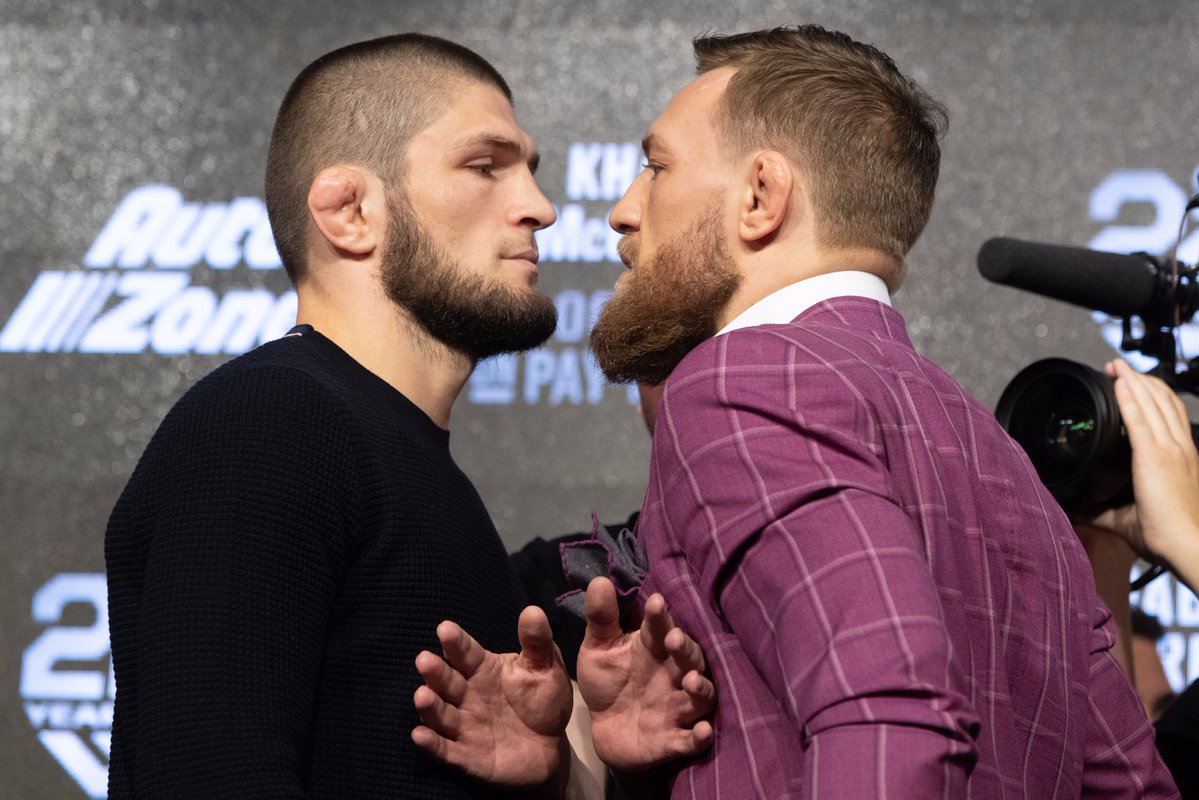
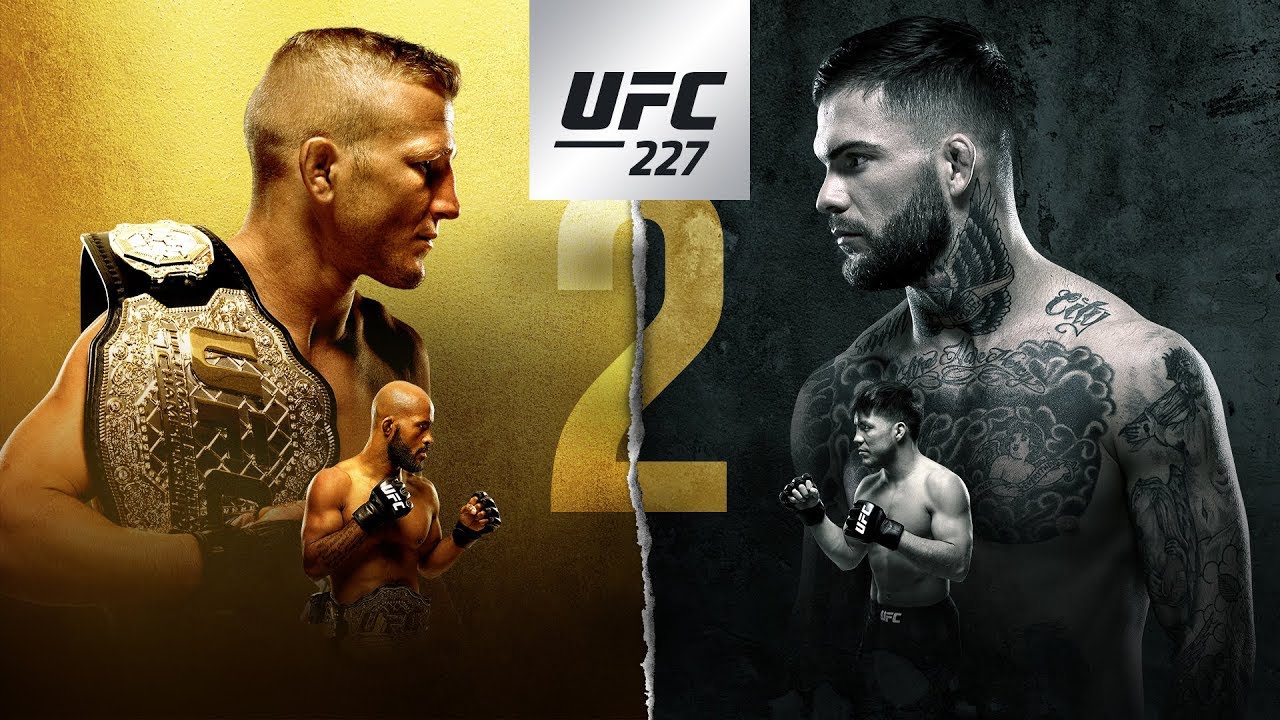
UFC 229 Conor vs. Khabib: Questions, answers, predictions

It’s here: the UFC return of Conor McGregor after a two-year absence against his toughest challenge to date in Khabib Nurmagomedov. Oh, and Khabib’s the champion but you’d barely know by all of the attention the challenger is getting.

Let’s take a look at the show and answer a few questions with Paul Fontaine and Ryan Frederick, the later of which who will actually be in the T-Mobile Arena tonight. If you want some free audio to listen to, check out my interviews with Sean Sheehan and Garrett Gonzales.

  • UFC Lightweight Champion Khabib Nurmagomedov vs. Conor McGregor
  • Tony Ferguson vs. Anthony Pettis
  • Ovince Saint Preux vs. Dominick Reyes
  • Derrick Lewis vs. Alexander Volkov
  • Michelle Waterson vs. Felice Herrig
  • Sergio Pettis vs. Jussier Formiga
  • Vicente Luque vs. Jalin Turner
  • Aspen Ladd vs. Tonya Evinger
  • Scott Holtzman vs. Alan Patrick
  • Gray Maynard vs. Nik Lentz
  • Lina Lansberg vs. Yana Kunitsaya
  • Ryan LaFlare vs. Tony Martin

What are you most looking forward to?

Ryan: That’s pretty easy: the main event. It’s the Khabib and Conor show and the biggest fight in a long time, perhaps ever. Having been on the scene in Las Vegas the last few days, it is a huge event. I’ve never experienced a fight week quite like this one in 14 years of going to UFC events. It’s also a great fight on paper, one of the absolute best matchups the UFC can put together. It’s a good clash of styles and a fight where literally anything could happen.

Paul: Obviously the main event but Tony Ferguson is my favorite fighter so I’m looking forward to that one as well. After years of delivering exciting fights and highlight reel knockouts, the former interim champion and TUF winner gets a chance on the biggest stage of his career and with a victory could set himself up for a huge payday down the line against the Conor/Khabib winner.

Josh: LaFlare vs. Martin, duh. The whole main card looks great on screen, but we’ve said that before. It’s the Conor-Khabib show, baby. That’s it.

Anything being slept on?

Josh: Because of the long shadow cast by the main event, Ferguson-Pettis is somewhat being overlooked but I feel like there’s still a ton of buzz about that one too. Maybe Formiga-Pettis because of the title shot implications for the winner, but unless there’s an impressive finish, I don’t sense a lot of newsworthiness to come out of it. Maybe Waterson-Herrig a little?

Ryan: I don’t know that it is being slept on, but we have a fantastic co-main event between Ferguson and Pettis. That could be all kinds of wild and it’ll be interesting how good Ferguson looks coming back so early from a devastating knee injury. A couple of other good fights on the card are Saint Preux and Reyes, and the other Pettis brother, Sergio, against Formiga.

Paul: The whole card is great. One of the Fight Pass prelims has two former title contenders squaring off with Yana Kunitskaya taking on Lina Lansberg. Both were overmatched against Cris Cyborg but who isn’t? At their more natural weight classes, both could make some noise in a bantamweight division that’s really not all that deep and in need of viable title contenders for champ Amanda Nunes.

Anything not doing it for you?

Paul: The heavyweight fight between Derrick Lewis and Alexander Volkov is important and has relatively big names. But while it has a chance to be good, I’m not so sure. Both have had real snoozers in the past and Lewis recently had one of the worst fights of the year, maybe of all time, against Francis N’Gannou on another high profile card. Hopefully, I’ll be proven wrong.

Ryan: There’s two fights that could end up being boring and it’s luckily the first two on the card: Maynard against Lentz and LaFlare against Martin. They feature fighters who play a lot of points fighting and don’t take a lot of chances, and they have all been in more boring than exciting fights. They could put the crowd to sleep early, but I doubt many will be in the arena for those bouts anyway.

Josh: The undercard is kinda meh as far as interesting names, but the fights could be good. Everything seems to be in line though.

What’s the intrigue with the show?

Ryan: It’s obviously what happens in the main event, and whether this sets not only the buyrate record, but by how much. Numbers like 3 million buys have been thrown out, and while I don’t think it’ll get there, it wouldn’t shock me if it actually did. This is a massive event and I’m sure everyone in the end really hopes that Conor wins.

Paul: Really, the intrigue in this show is the intrigue about this sport in general. It’s the classic matchup in the main event — grappler vs. striker — and in those two disciplines, there are none better in the sport than Khabib and Conor. Whoever is able to execute their game plan should win and do so handily. Whatever happens, it’s almost a consensus that the winner will dominate. If the fight’s on the feet, Conor should win and quickly. If Khabib is able to take him down, he will hold him there and grind him to the mat for 25 minutes. Anything can happen in MMA and maybe one of these scenarios doesn’t happen but that’s why we watch the fights.

Josh: If McGregor wins and reclaims the title, that puts the division in a tough spot because I don’t see him wanting to be another one of the guys and start defending the title twice a year. McGregor’s in interesting fight territory now, not ‘defend the belt against all comers’ territory. I don’t see Khabib becoming a big star (aka PPV draw), but there’s still some intrigue in that Ferguson fight if they can try to make it for the 100th time. What happens after the fight is almost as interesting as what happens in the fight…almost.

What will be people talking about most after the show is done?

Paul: A rematch, for sure. If this show sets records (and at this point, even just breaking the record with something like 1.75 million buys would be considered a disappointment), everyone will want to see them fight again. That sucks for the likes of Ferguson, Diaz, GSP, Woodley and anyone else that is highly ranked at anywhere from 145-170. But Conor is all about big fights and big money and a rematch of the biggest money fight of all time would be the biggest fight possible and would also make sense sporting-wise. This could be the first fight in a series between these two as they both should have years of competitive fights left in them.

Ryan: It will be all about what is next for Conor. I do think if he wins, his next fight comes against Tyron Woodley as he goes for another title. It wouldn’t surprise me if that is the way it goes even if he loses, but in that scenario, I see Nate Diaz next. If Khabib wins, I totally think we are getting him against GSP next year.

Josh: That this is the biggest UFC PPV of all time, that Ferguson is the rightful No. 1 contender, and that McGregor continues to do everything he says he can do and then some.

Who wins?

Conor vs. Khabib

McGregor: Josh, Ryan, Paul

Ferguson vs. Pettis

Ferguson: Ryan, Josh, Paul

Lewis vs. Volkov

Lewis: Josh
Volkov: Ryan, Paul

OSP vs. Reyes

OSP: Josh
Reyes: Ryan, Paul

Waterson vs. Herrig

Waterson: Ryan
Herrig: Nason, Fontaine

Follow along with our live coverage all night.

Making a case for Johnny Rougeau to be a WO Hall of Famer

Submitted by Pat Laprade

Johnny Rougeau has been one of the most popular wrestlers to ever come from the Montreal territory, only behind Yvon Robert and on par with Edouard Carpentier. His peak was between 1966 and 1972, although he had started to become popular at the end of the 1950s. He holds the crowd attendance record for wrestling at the old Forum before they renovated the arena and added seats. He holds the third best wrestling attendance in the history of the Forum and the second biggest ever in Montreal. His last name is royalty in the province of Quebec with his brother and three nephews all becoming wrestlers.

As a promoter, he has three of the best 20 attendances in the history of Quebec wrestling. And when you look at the biggest draw in the history of the province, based on pretty much the same system Dave Meltzer uses at a worldwide level, he’s fifth in Quebec, behind Yvon Robert, Killer Kowalski, Hulk Hogan and Edouard Carpentier, four Hall of Famers.

Born Jean Rougeau on June 9, 1929, he started his wrestling career in 1951. Rougeau was proud of his convictions, and when he was given convincing arguments, he could get involved in multiple projects as demonstrated by the numerous careers he juggled. It’s no surprise, therefore, that he decided to help create the first trade union at Coca-Cola in the 1950s. The move ultimately cost him his job. His uncle, Eddy Auger, wrestled in the Detroit territory at that time. When someone got injured, Auger called his nephew. Rougeau had played hockey, but also trained as an amateur wrestler when he was a teenager. He had done a few matches here and there in the late 1940s, but didn’t pursuit wrestling at the time. Out of work, Johnny decided to accept his uncle’s invitation.

It was the beginning of an incredible career.

At the time, it was difficult to break into the Montreal territory as Eddie Quinn found Rougeau, like many local guys, to be too small. Nevertheless, he finally made his Montreal Forum debut on January 30, 1952. He wrestled semi-regularly in the preliminaries throughout 1952 and 1953. When not wrestling at the Forum, he would do upper mid-cards and main-events for promoter Gerry Legault at the Exchange Stadium. It was common in those days for the prelim guys at the Forum to main-event around town for other promoters.

Quinn and Yvon Robert, the biggest wrestling star Quebec has ever known and part owner of the territory at the time, were in a position to decide which French-Canadian would be part of the show. They could make you a hero or a zero. Robert, in particular, was determined to maintain his position, even late in his career. Over the past decade, only Larry Moquin had kept an enviable place in the organization. Robert was in his early forties and knew his wrestling career was nearing its end. Clearly, he would get to choose who would take his place and he had the choice between many young up-and-comers like Maurice Vachon, Guy Larose (Hans Schmidt), Sammy Berg, Tony Angelo, or even Yvon’s own brother, Maurice Robert.

Robert ultimately chose Johnny Rougeau.

The first step was the Junior Heavyweight title, held at the time by a veteran named Harry Madison, who had represented Canada in freestyle wrestling at the 1932 Los Angeles Summer Olympics. On June 8, 1953, in front of a sold-out Exchange Stadium, Rougeau won the title. The special referee for the match was none other than Yvon Robert.

Then, three months later, Rougeau wrestled in his very first main-event at the Montreal Forum. On September 9, Rougeau, 24, teamed with Yvon Robert and Larry Moquin, the three French-Canadians as they called them, against Ernie Dusek, Hans Hermann and Al Mills. The show drew 8,000 fans. Three weeks later, the rematch drew 9,000 fans. In the newspapers, he was already called the guy who would most likely replace Robert. Quinn made him wrestled in all of his core cities like Montreal, Quebec City and Ottawa. For the next few years, Rougeau would team with Robert or with Manuel Cortez, who was the office’s policeman. On February 1st, 1956, a double main event of Killer Kowalski vs. Buddy Rogers and Robert and Rougeau against the Dusek brothers drew 10,000 fans.

One knock I’ve heard about Rougeau was that aside from Detroit when he first broke in the business, he only wrestled in the province of Quebec and didn’t have an international career. That couldn’t be further from the truth.

Although he was mainly wrestling in Montreal, he also wrestled in the United States and had quite a success out there. His uncle, Eddy, who was wrestling in the United States under the name of Pierre LaSalle, was so well liked and respected in the business that he opened many doors for his nephew. In 1952, working for Al Haft in the Ohio region, Rougeau was one of the most popular wrestlers, battling Joe Scarpello and Ed Francis over the MWA Junior Heavyweight title on top, and also having a feud with Roy Shire. Haft liked him so much that he brought that feud to another territory he was promoting at the time, West Virginia, where Rougeau and Shire would do main-events or at least featured matches.

His good look and charisma allowed him to become popular quite fast. He also wrestled in Indiana until March 1953 where he had a tag team run with his uncle. Once Robert picked him to be his replacement, he brought Rougeau to Hartford, Burlington, and Boston, all New England towns where Robert was already well known. Being Robert’s heir had its advantage as Rougeau was also booked in Tampa for Cowboy Luttrell in February 1954 and from his first match, was said to have made a big hit with local fans. So much that only five days later, he main evented in Miami against TV champion Verne Gagne. The February-March Florida trip became an annual gig for Rougeau as he went back in 1955, this time working more towns, staying much longer and wrestling mainly on top. He would also wrestle in Massachusetts and in Texas that year. He was rapidly climbing his way up.

Back in Montreal, and although he was 6’ 1” and 215 pounds, he was still seen as a small guy by Quinn, who didn’t make him wrestle at the Forum that year. So, he went to work in the same New England cities he had done before, but then moved to Baltimore and in the states of Virginia and South Carolina. He was so popular that in a Baltimore newspaper, it was said that Rougeau was the wrestler with the most fan clubs throughout the United States and Canada. In a Virginia newspaper, a story was written about Rougeau getting a shot at Robert’s title back in Canada in June and putting over Rougeau as a promising prospect. That title shot never happened.

That same summer, he did the Montreal Alouettes football team training camp and actually made the team. But for various reasons, including not getting along with the coach, he decided to leave one week before the start of the season. At the beginning of 1957, he made his debut in Minneapolis for Wally Karbo and Dennis Stecher. In a very short period of time, newspapers were calling him the new sweetheart of Minneapolis, a young television star, and said that even Hard Boiled Haggerty liked him. As a matter of fact, Rougeau teamed with Haggerty during that run, feuding with the Kalmikoffs on top, also featured in the state of Wisconsin. It was working so well that at one point, it was Verne Gagne who teamed with Rougeau against the Russians. He left Minnesota in April to come back to Montreal. Since his last match at the Forum, Edouard Carpentier had made a name for himself and Quinn understood that smaller guys could draw. Rougeau came back and wrestled at the Forum for the first time in over a year. Robert was retiring and he still wanted Rougeau to be his successor, thinking the territory needed a Quebecer and not only a Frenchman.

Rougeau was now billed as a heavyweight and he drew 12,000 fans against Killer Kowalski on July 10, 1957. One of many rematches between the two was held on November 13, 1957 and drew 12,698 fans. That same feud moved to Boston where the two were immediately put in a main event program. Rougeau was hugely popular and easy to work with. That’s probably why so many people wanted to partner with him or help him out. Johnny Rougeau would say that Yvon Robert polished his style and that he improved when he was under the tutelage of the former champion. Robert taught him the tricks of the trade, even the Japanese arm lock, Robert’s famous submission hold he used to win so many matches, a sign he was passing the torch. In Quinn’s territory, he was now used in main events teaming with guys like Carpentier and Pat O’Connor or feuding in singles with Killer Joe Christie. He was also used a lot in Ottawa.

In the spring of 1959, though, Rougeau crossed the Atlantic and wrestled in France for the first time. It was Rougeau’s thinking to not overexpose himself. That’s why he would leave the territory from time to time in order to comeback stronger. Working for the great promoter Raoul Paoli, who had started his promotion in the 1930s with Henri Deglane, he main evented the Palais des Sports in Paris on April 6, 1959, against Felix Miquet. The match drew a record of 20,000 fans. Rougeau stayed in Europe for a few months after that, wrestling in France, Germany, Belgium and Sweden. Back in Montreal in August, he teamed with Carpentier and Pepper Gomez against Kowalski, Boris and Nicoli Volkoff and drew 11,200.

Business was starting to get tough in Montreal and Quinn lost his weekly wrestling TV program in the fall of 1960. Just before that, Rougeau and Buddy Rogers would draw 12,366 fans on April 13 and teaming with Bobby Managoff against Rogers and Kowalski, Rougeau drew another big crowd with 10,099. Around the same time, Robert officially became Rougeau’s manager. It was in 1961, under Robert’s management, that Rougeau won the Montreal title for the first time, defeating Hans Schmidt. After having been successful in the United States, Rougeau finally sat on top of the Montreal territory.

But being a man driven by projects, Rougeau started to open up to other businesses. In the early 1960s, he became friends with René Lévesque, a former journalist-turned-politician who ended becoming one of the most popular Quebec Prime Ministers of all-time. Rougeau held different jobs for him, working as his bodyguard, his confident and his most fervent militant. After winning the title, Rougeau bought the Mocambo, a downtown Montreal night club that wasn’t doing well. Rougeau’s perseverance eventually made it the most successful club in Montreal. Artists from all over the world came to perform, including the likes of Chubby Checker, Nat King Cole, Fats Domino and Liberace, as well as the who’s who of Montreal local performers.

With his involvement in politics and entertainment, Rougeau remained popular, one of a few with Carpentier and Buddy Rogers. When Channel 2 decided to drop wrestling, Quinn approached channel 10 and by September of that year, he was back on TV. This time, he wasn’t presenting new matches or live events. He gave the station a master tape of something like 20 to 25 hours of wrestling. However, Johnny Rougeau was one of the wrestlers most often featured on it. During that time, in 1962, Johnny also wrestled a series of shows at Madison Square Garden in New York City, but for whatever reason wasn’t really pushed. When Quinn finally retired, Yvon Robert started his own promotion, running a few shows at the Montreal Forum beginning in July 1963, but mainly using the Paul-Sauvé Arena. Rougeau wrestled on a semi-regular basis for Robert, until Robert later closed down his promotion in November 1964.

Rougeau sold his club and since he had been featured so much even in those last years, he wanted to get back into wrestling full time and the only thing making sense for him was to start his own wrestling company. On May 6, 1965, at the Paul Sauve-Center, All Star Wrestling was born. The first move after that was to get on TV. To do so, he took Quinn’s master tapes, which Robert inherited at Quinn’s death in December 1964, without either asking Robert’s permission or offering him a partnership and went to Channel 10 to pitch his new show. The show was approved and “On the Mat” started in 1966. Since Rougeau could not wrestle and have his name on a promoter’s licence at the same time as this was prohibited by the athletic commission, he made Bob Langevin his promoter, a role that Langevin had also played for Eddie Quinn a few years before.

Rougeau’s weekly arena was now the Paul-Sauve Center which could only fit 7000 fans. That said, Rougeau was the main star and he sold it out many times. This new wrestling venture allowed Johnny to bring back his brother, Jacques, into the mix. Jacques had wrestled a little in the late 50s, but didn’t think it paid good enough to keep going. Between 1965 and 1967, the promotion got more and more followers. The main stars besides the Rougeaus were Hans Schmidt, Carpentier, Rogers, Baron Von Rashke, and Maurice Vachon. Johnny won the Montreal title on two occasions during that time, once against Schmidt and once against Vachon.

Rougeau would reach new heights in 1968-69. In the span of three months, he would draw more than 50,000 fans at the Forum. It actually started when Jacques took Oreal Perras, who was wrestling under the name of Red McNulty, and transformed him into a Russian named Ivan Koloff. Johnny Rougeau saw money in him especially with the Cold War that was still strong in the 1960s. On April 22, Rougeau and Koloff drew 17,348 fans on the very last show at the Montreal Forum before some big renovations added seats. It was the biggest crowd ever recorded at the Forum until then. Upon its reopening, Rougeau and Koloff beat that number with a sellout of 20,890, the biggest crowd in North America that year. Yvon Robert was the referee for both matches.

To end the year, Johnny and Abdullah the Butcher drew 13,000. Rougeau’s success continued in 1969 as he drew more than 10,000 fans on four consecutive shows, two in Montreal and two in Quebec City. He’d face Abdullah the Butcher and Ivan Koloff in singles action and also teamed with his brother Jacques. On February 17, 1969, Rougeau and Abdullah drew 17,000. For the second year in a row, it was the largest crowd in all of wresting in North America. All in all, Rougeau’s promotion drew more than 10,000 fans in the province of Quebec on seven occasions in 1969, something the territory had not seen in a decade.

It continued in 1970 when Johnny drew more than 10,000 three times, including against Danny Lynch and Chris Tolos, who were not drawing cards in Montreal. On March 30, 15,239 came to see Johnny reclaim the title against Abdullah. It was Johnny’s first reign in two years, but his fourth since 1965. It’s also worth noting that the Forum wasn’t used every month during the 1960s and 1970s, therefore, drawing big crowds was something even rarer. That said, the weekly shows at Paul-Sauve were doing great and it was a lot because of Johnny’s popularity.

By then, the relationship between Robert and Rougeau fell into disarray, with Robert angry that Rougeau had not included him in this new venture, even though he’d helped him when he started and booked him on his shows in the past years. On the other hand, some speculate that Robert owed him money from the shows he wrestled on. Whatever the case may really be, the animosity lasted for many years. Robert didn’t want to work for Rougeau afterward; he refereed matches, occasionally, because the fans were asking for him and he didn’t want to disappoint them. But it’s clearly the main reason why he went to meet with Maurice Vachon about starting Grand Prix Wrestling.

Grand Prix started in June 1971 and two months later, on August 2, 1971, Johnny decided to call it quit. The reason wasn’t Grand Prix Wrestling though, but junior hockey. In 1969 he had bought a team and participated in the first season of the Quebec Major Junior Hockey League (QMJHL).

The decision was done at the last minute since the Montreal Forum wasn’t even booked for what was sold as Johnny’s last match. The show sold-out Paul-Sauvé, as Johnny was victorious against Mr. X. It was also the right timing since another Rougeau was getting in the business. Jacques’ eldest son Raymond had just started and was already making noise. Johnny was so happy that his nephew was following the family tradition that on Ray’s first match, he chose to be by his side, booking Jacques in another town. Same thing with Raymond’s first TV match, as Johnny was the one accompanying him to the ring. Since Johnny had two daughters, Raymond was the son he never had.

If 1971 still belonged to the Rougeaus, 1972 would be the year of Grand Prix Wrestling, except for two shows. Seeing his promotion losing ground to the competition, Johnny came back from retirement. His return on June 12, 1972 against The Sheik drew 15,000 fans, the largest crowd All Star Wrestling would do at the Forum that year. Johnny then decided to hold the biggest show ever done in the history of Quebec wrestling.

For the first time, a wrestling show would be held at Jarry Park Stadium, home of the Montreal Expos. The stadium could fit 8,000 more seats than the Delorimier Stadium that Quinn was using in his time. It was a Rougeau celebration where Johnny main-evented against Abdullah the Butcher, Jacques defeated The Sheik for the title, while Raymond beat Don Serrano for the Junior Heavyweight title. The show drew 26,237 fans, the largest crowd at the time in the history of Quebec wrestling and only 103 fans short from being the largest crowd in all of wrestling that year, finishing a close second to Dory Funk Jr against Fritz Von Erich at Texas Stadium. From a business stand point, it was Montreal’s first 100,000$ gate with 101,650$.

However, Grand Prix was too strong and the following year, it beat All Star’s number when 29,127 fans to see Mad Dog Vachon beat Killer Kowalski, the only show ever to beat Rougeau’s. Johnny kept wrestling until 1973 when he retired for a second time. He had also sold his hockey team, started doing color commentating and hosting a wrestling radio show. By January 1974 though, the Vachons had left Grand Prix and the shareholders couldn’t work well together. All Star and Grand Prix promoted a few joint shows and it was the end for Grand Prix. Johnny and All Star had won the war. Johnny came back in the ring on June 30, 1975, drawing 12,464 fans against Tarzan Tyler at the Forum, the biggest crowd for an All Star Wrestling show in over a year-and-a-half.

Two months later, he would win the Montreal title or a seventh and last time. With the 1976 Montreal Summer Olympics approaching and his eager to get back into hockey, he sold All Star in the spring of 1976. A few months before, in February, he teamed with his brother and nephew one last time and with a double main-event that also included Jean Ferre against Abullah the Butcher, the show drew 11,000 fans. Two months later, on the last All Star Wrestling show held at the Forum, Ferre and Koloff drew 10,000 spectators, the last time Rougeau would promote a large crowd at the Forum.

Soon after he sold the promotion, Channel 10 cancelled On the Mat after 10 years. It was truly the end of an era.

In hockey, as in wrestling, Rougeau commanded respect. Journalists, players and the management on other teams all appreciated his frankness and well-defined ideas. It was his initiative, for example, that sent the league’s young players back to school. In 1981 he was named president of the QMJHL, a title he would keep until his death. A trophy is now awarded in his honour to the team that finishes first in the regular season.

On May 25, 1983, Johnny Rougeau, 54, died after battling cancer. More than 7,000 attended his funeral three days later, one of the biggest in pro wrestling history. Only icons like El Santo, Giant Baba and Mitsuharu Misawa were honoured by more. He was inducted in the Quebec Wrestling Hall of Fame in 2004 and in the QMJHL Hall of Fame in 2015.

Because of Johnny, the name Rougeau has been synonymous with the Montreal territory for more than 60 years. His brother Jacques, his nephews Raymond, Jacques Jr and Armand, his niece Joanne, and three of his grandsons were all involved in wrestling at one point and to this day. Johnny Rougeau main-evented more than 20 shows that drew at least 10,000 fans in the province of Quebec only. When he retired for the first time in 1971, he was holding the assistance record in Montreal, but also in Chicoutimi with 7,900, Sherbrooke with 8,062, Trois-Rivieres with 4,300 and Quebec City with 13,000.

He was not the best technical wrestler out there, but Yvon Robert wasn’t either. He was more of a brawler who could sure also hit a dropkick right on the nose. Rougeau relied on his charisma, his talking ability and on how well he could read a crowd. He had the look, the flashy jackets, he was a crowd pleasure, and women loved him. He was very smart and was a savvy promoter who knew what to do to make a buck. The fact he could move very quickly to main-event status and could become popular so fast in territories he never worked before is very telling.

If that’s not enough to be in the Wrestling Observer Hall of Fame, I don’t know what is.

UFC 228: Questions, answers and predictions

UFC 228 returns to PPV tonight for what can best be described as “a show” from Dallas, TX. 

Without any fanfare, let’s bring you a look at the card courtesy of yours truly, Paul Fontaine and Ryan Frederick.

The Card

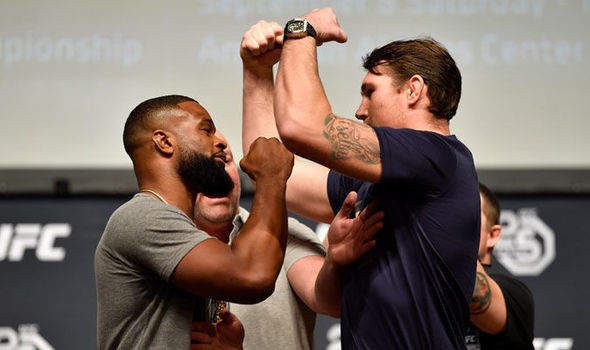
  • Welterweight Champion Tyron Woodley vs. Darren Till
  • Jessica Andrade vs. Karolina Kowalkiewiecz
  • Zabit Magomedsharipov vs. Brandon Davis
  • Jimmie Rivera vs. John Dodson
  • Abdul Razak Hassan vs. Niko Price
  • Carla Esparza vs. Tatiana Suarez
  • Aljamain Sterling vs. Cody Stamann
  • Geoff Neal vs. Frank Camacho
  • Charles Byrd vs. Darren Stewart
  • Diego Sanchez vs. Craig White
  • Jim Miller vs. Alex White
  • Irene Aldana vs. Lucie Pudilova
  • Jarred Brooks vs. Roberto Sanchez

What are you most looking forward to?

Paul: There’s a lot on this show, really. However, it would have been Nicco Montano finally defending her flyweight title and potentially seeing Valentina Shevchenko capturing UFC gold.

Ryan: I’m looking forward to the main event. People like to downplay Tyron Woodley as champion, but he is a smart fighter. However, Till has the edge in this fight in my eyes. He’s going to have the size advantage and with him making weight rather easily on Friday, I think that plays into Woodley’s head just a little bit. I feel like Woodley was fully expecting Till to miss weight. It’s an intriguing welterweight title fight.

Josh: Honestly, nothing. Gun to my head, I’d say Till-Woodley but I don’t like how this fight got made. Overall, there’s some names on this show, but I won’t be hitting the ‘Buy’ button for UFC 228.

Anything being slept on?

Paul: The two bantamweight fights on the FX prelims. Until recently, Jimmie Rivera was on a 20 fight win streak, the 29-year-old Aljamain Sterling was once thought to be the future of the division, former flyweight title challenger John Dodson has a win over current champ TJ Dillashaw, and the least known of the four bantamweights, Cody Stamann, has the quietest 17-1 record you’ll ever see. Sterling meets Stamann and Rivera faces Dodson and the winners of those fights could potentially have a title eliminator fight down the road. It’s notable that Rivera, in the middle of his long win streak, lost an exhibition fight to get on The Ultimate Fighter 14th seasons. The winner of that season? His opponent tonight, Dodson.

Ryan: I see the two bantamweight fights on the card being overlooked. They feature top-ten ranked fighters in Rivera, Dodson, Sterling and Stamann in what has become one of the deepest divisions in the UFC. The winners of the two fights could end up fighting next, and they are both solid fights. Also, the main card opener is a great fight between Alhassan and Price should be explosive.

Josh: Dodson-Rivera for the reasons Paul laid out. It’s easy to forget Rivera had a fight lined up with Dominick Cruz before injury put it on the sidelines. He’s right there in the title match mix and a win here should either get him that shot or perhaps even Cody Garbrandt or Raphael Assuncao depending on how the cards play out with Dillashaw.

Anything not doing it for you?

Paul: I’ll say it: the main event. Woodley bores me and Till should be fighting at middleweight. And why bother having Colby Covington fight for an interim title a couple months back if he was just going to be stripped for not making this show? The welterweight division has kind of been a mess since GSP vacated the title in 2013 and I couldn’t care less who wins this fight.

Ryan: The fight, to me, that had the least intrigue ended up falling off the card when Montano was forced out of the Shevchenko fight. I thought it was a foregone conclusion that Shevchenko was going to win the fight easily. It’s a shame the fight was taken off the card, but it wasn’t doing much for me.

Josh: As I mentioned before, the whole show. Not to be too negative, some of these fights could be better used other places. This feels like a quota show, not a can’t miss event.

What’s the intrigue with the show?

Paul: Despite me not personally caring about the result of the main event, it has to be who emerges from that fight. Another thing for those of us who follow the business of MMA is just how this show will do on PPV. With college football just getting going, a big boxing show airing opposite the event, and a month out of the biggest MMA show of the year with Conor vs. Khabib, a lot of casual PPV buyers may choose to skip this one.

Ryan: It’s what happens in the main event. It feels like it might be time for someone new to reign at 170 pounds, and it will see where Woodley needs to be when discussing the great fighters in the sport.

Josh: Whether size matters and whether Till is ready for this opportunity. I cringe a bit at the thought of another boring Woodley fight and the post-fight reaction if that happens.

What will be people talking about most after the show is done?

Paul: I fully expect Colby Covington to make some sort of appearance and challenge the Woodley-Till winner so there could be some buzz around that. Also, Tatiana Suarez is unbeaten and has the featured FX prelim fight. Another win for her could have people talking about a potential title shot at Rose Namajunas.

Ryan: I’m not sure anyone is going to be talking about much when this show is over. It’s going to be whoever wins the main event. I do see that we will have the next challenger for Rose Namajunas being determined, and I’m picking it to be Karolina Kowalkiewicz. Outside of that, not a whole lot will be talking points come next week.

Josh: That Woodley is better than given credit for, that Till is heading to middleweight, that Rivera is ready for bigger names, and that Suarez could be Namajunas’ biggest challenge to date.

*********

Who wins?

Woodley vs. Till

Till: Ryan
Woodley: Josh, Paul

Andrade vs. KK

Andrade: Paul, Josh
Kowalkiewicz: Ryan

Esparza vs. Suarez

Suarez: Paul, Ryan, Jos

Rivera vs. Dodson

Dodson: Paul
Rivera: Josh, Ryan

Follow along with our live coverage tonight and check out Paul’s more robust picks on his site.

UFC Lincoln: Questions, answers, predictions

The UFC’s August has been a relatively quiet one, but the promotion kicks off a four-in-five week stretch tonight in Lincoln, Nebraska, with an interesting main event and a lot of litmus test fights up and down the card.

Per usual, Paul Fontaine and Ryan Frederick are here to help me answer a few questions about the card, the majority of which can be seen on FS1 and FS2.

The show:

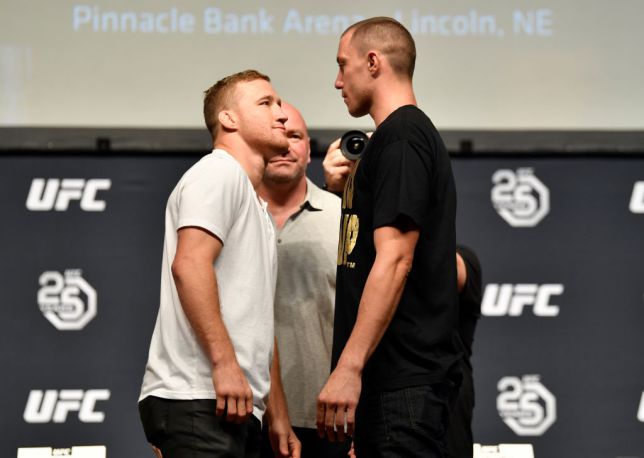
  • Justin Gaethje vs. James Vick
  • Michael Johnson vs. Andre Fili
  • Cortney Casey vs. Angela Hill
  • Jake Ellenberger vs. Bryan Barbarena
  • John Moraga vs. Deiveson Figueiredo
  • Eryk Anders vs. Tim Williams
  • James Krause vs. Warlley Alves
  • Iuri Alcantara vs. Cory Sandhagen
  • Andrew Sanchez vs. Markus Perez
  • Mickey Gall vs. George Sullivan
  • Joanne Calderwood vs. Kalinda Faria
  • Drew Dober vs. Jon Tuck
  • Rani Yahya vs. Luke Sanders

What are you most looking forward to?

Ryan: Gaethje vs. Vick. Gaethje provides some of the most action-packed fights in the sport, and there is a very good reason tonight is his third main event in just his fourth UFC appearance. It is about time that Vick, an excellent fighter, gets a spotlight fight as he has a solid win streak and is making headway into the title picture at 155 pounds. It’s a great fight that should produce a lot of action. I’m also interested in seeing how some notable fighters — namely Eryk Anders, Mickey Gall and Joanne Calderwood — bounce back after recent tough losses.

Paul: The main event, for sure. Other that, I’d like to see if Mickey Gall can rebound from his first career loss and become any kind of a star coming off the high profile wins over Sage Northcutt and CM Punk. He’s in a good spot, opening up the TV broadcast on FS2.

Josh: Without a doubt, the main event because of the stakes for both guys. Vick has been calling for a big fight for months and months, and answered the call when Al Iaquinta had to drop out due to…something. A win here puts him in a spot where he can’t be ducked anymore while a loss makes it that much harder to get the names he wants. For Gaethje, he really needs a win here. He certainly won’t get cut, but even the most exciting fighters need a ‘W’ to stay relevant, especially in a deep division like 155.

Anything being slept on?

Josh: Gall vs. Sullivan because, not that long ago, Gall was touted as a very interesting prospect at welterweight. I’m glad to see him back in there after his recent defeat and this one will tell us a lot about whether he’s made advances since his last time out. Also, the aforementioned Anders gets a nice opportunity to resume his push after his controversial decision loss to Lyoto Machida, a fight he shouldn’t have been in to begin with. A flashy finish will put him back on the right track. 

Ryan: There is an excellent flyweight fight between John Moraga and Deiveson Figueiredo on the main card that is flying under the radar. There hasn’t been much attention given to the flyweight division this year (I believe this is just the second or third flyweight fight to be on a main card in 2018), but there is a new champion at 125 pounds and a growing list of contenders. Moraga has bounced back strong of late after a tough string of losses, and Figueiredo is undefeated in 14 career fights. This should be a good one.

Paul: Anders was supposed to be the next big thing before the Machida fight. He’s still very early in his career and his fight with little-known Tim Williams is not getting a lot of buzz. He’s the biggest favorite on the card and I’m looking for a big bounceback performance from “Ya Boy”.

Anything not doing it for you?

Paul: I like women’s MMA as much as the next guy but seeing Angela Hill vs. Cortney Casey that high up on the card seems a little odd. Pair that with the fact that it will most likely be a boring standup fight for 15 minutes and I’m not really sure why they’re getting such a high profile spot that could be used for the flyweight bout Ryan brought up earlier, or even what I think could be a better women’s fight between Joanne Calderwood and Kalindra Faria on the Fight Pass portion of the show.

Ryan: I’m not sure we should still be seeing Ellenberger fight, at least not in the UFC. He is 2-8 in his last ten fights, being finished in six of those losses. He was actually cut at one point, but begged Dana White to get his job back, won in his next fight after that, but has since lost three straight, all by brutal knockout. He is also less than three months removed from being knocked out cold at the hands of Ben Saunders. He probably shouldn’t be fighting at all, let alone this quickly again, but this could be it against Barberena.

Josh: I agree with Ryan on Ellenberger, but another fighter in that same vein is Michael Johnson. He’s lost five of his last six and while I understand he’s moved down a division, he’s been finished in his last three. Another loss here doesn’t forebode well for his Octagon future.

What’s the intrigue with the show?

Ryan: I don’t think there is that much intrigue, but it is nice to see some UFC action after three weeks away. It’s a big stretch heading into the end of the year. The only real interest might be in the main event, and a couple of undercard fights. This isn’t a star heavy show and might not pull in big ratings, but is a solid refresher from no UFC action since August 4.

Paul: Whether or not Gaethje will actually die in the Octagon. He gives it his all each and every fight and at some point, all of these brutal wars are going to catch up to him. Until they do, he’ll keep racking up the Fights of the Night and entertaining his growing multitude of fans.

Josh: The outcome of Vick-Gaethje and how Anders performs.

What will be people talking about most after the show is done?

Ryan: That the winner of the main event finds himself just outside the title picture at 155 pounds. It’s a real toss-up as to whom that is going to be, but the winner will definitely be in the conversation for a top-five opponent in their next fight.

Paul: Other than the main event, It will be whether or not Anders is as good as he’ll probably look against Williams and whether he can be a middleweight contender like everyone thought he could be going into the Machida fight. Also, Gall will probably have an interesting callout should he win his fight.

Josh: That Gaethje sustained his spot and that Vick is still a bit far away from the upper echelon of the division.

**********

Who wins?

Justin Gaethje vs. James Vick

Gaethje: Ryan, Paul, Josh

Michael Johnson vs. Andre Fili

Johnson: Ryan
Fili: Paul, Josh

Jake Ellenberger vs. Bryan Barbarena

Barberena: Paul, Ryan, Josh

James Krause vs. Warlley Alves

Alves: Ryan, Josh
Krause: Paul

Mickey Gall vs. George Sullivan

Gall: Josh, Ryan, Paul

Keep up with our live coverage tonight.

Previewing NXT TakeOver: Brooklyn

The best weekly wrestling show on television returns to Brooklyn for the 4th time this weekend. Apparently, SummerSlam is also this weekend, which is something I actually forgot about until I started writing this article.

What I didn’t forget about was the summer oasis that is NXT. Yet again, our pals from Florida are stacking a card that will undoubtedly please even the most cynical of wrestling fans. It’s becoming old hat to write about how they constantly put on the best shows of the year as the worst TakeOver this year will be better than the best main roster PPV by a large margin.

One reason it works so well is the weekly content is packed into a one hour show. When you have so much talent and so little time, the writing absolutely can’t be lazy; there just isn’t room for it. You can mail in an episode of Raw because next week, there will be another 3+ hours of new stuff. It’s a lot different when there’s only sixty minutes to fill. It trims the fat, and forces everyone to be at their best at all times. By not having every wrestler on every show, it allows for everyone to feel important. Would Velveteen Dream be as successful as he is if he came out every week to cut meaningless promos? Well, he probably would because he is a treasure, but you get the point.

On name vaue alone, tonight has the chance to be one of the best TakeOvers ever, which is saying something. You can make an argument that every match has a chance to be match of the night. Now like we always do at this time, let’s rundown the card and see how TakeOver Brooklyn should shake out.

EC3 vs. Velveteen Dream

This match might not be for a formal championship, but it absolutely is for the championship of my heart. The video of the two of them by the pool should be nominated for best short film every year for the rest of time. I listed this match first because it’s the only one where I’m not sure the actual wrestling will be great. For all of EC3’s strengths, and they are many, he really isn’t a standout in-ring performer. That doesn’t mean he isn’t good, but he doesn’t really do anything that makes you want to re-watch his matches. I’m pretty well sold on Dream being an excellent worker, I’m just curious as to how their styles will go together. I also can’t wait to see Dream’s ring gear. I hope he get Dixie Carter’s face airbrushed on his tights.

Dream is in this weird place where he doesn’t need to win to feel important…but he probably needs to start winning. That’s kind of what happened with Bray Wyatt; he was so over just based on him, that it didn’t matter if he won or lost. (Until he lost all the time and guess what? It actually wound up mattering.) I’d like EC3 to win because he needs it more, setting up an easy redemption story about how Dream can’t win on the biggest stage. People already cheer for him, so just lean into that a little bit more and have him go over big at the next TakeOver.

NXT Women’s Champion Shayna Baszler vs. Kairi Sane

One of the main (and few) criticisms I have about Baszer as champion is that all of her feuds and matches, with the exception of Nikki Cross, kind of follow a similar formula: Big, bad MMA fighter turned wrestler can IRL beat down any of her smaller, weaker opponents. It’s tried and true, and it absolutely works for her. It doesn’t ask her to do anything she isn’t comfortable with while buying time for her to gain experience and round out her skill set. That’s how you develop a talent and how you make someone a real star. You play to their strengths and hide their weaknesses. 

NXT is perfect, because they haven’t handled Sane well at all. They failed to capitalize on her momentum from winning the first Mae Young Classic and from having the best finisher on the roster. Don’t get me wrong, she still feels important, but not nearly as important as someone who won the first MYC should be.

What it ultimately comes down to is this: I haven’t really felt emotionally invested in any of the women’s title matches since Baszler has had the belt as the stories just haven’t quite been there. I think this one comes the closest with Sane finally getting the coveted ‘mean streak’ on this week’s NXT. The three elbow drops combined with the shot of her locking in her submission while staring at the champion did more for me than any of the promo work combined. But, this just doesn’t seem like the right time to take the belt off of Baszler as it makes too much sense keeping it on her at least up to the Evolution event in September.

NXT Tag Team Champions The Undisputed Era (Kyle O’Reilly and Roderick Strong) vs. Moustache Mountain

The Undisputed Era continues to be one of the best things on television week after week. Their smarmy backstage promos are always unnecessary and utterly fantastic. Everything they do is slimy and skeezy and I love it. I even love that they keep Bobby Fish around while he rehabs his injury just so he won’t get a big return pop. I just love it all.

In my younger and more vulnerable years, I didn’t appreciate tag team wrestling like I do now. I would always like one person in a team more than the other, and wondered why I couldn’t see more of just them. Now at the wise and sage-like age of 32, I’ve come to appreciate the perfection of tag matches. Tag teams aren’t keeping my favorites from me; they’re making me like my favorites more. Like I said earlier, it’s so important to accentuate a wrestler’s positives while hiding their weak points, and tag wrestling does that. Strong is perfect in this way. He can get tagged in, do a million moves (his strength) and not have to continuously sell (his weakness).

This match could steal the show. I’ve written like 200 words and haven’t even touched on how good British Strong Style is, or how well they can play to an audience. Trent Seven and his perfect hair is one of the better tag workers around. Tyler Bate is an absolute stud who can do just about anything in the ring — from deadlfiting a 300 pounder like WALTER to a shooting star press — his potential is almost staggering. Putting those two with absolute workhorses like Roddy and O’Reilly is a recipe for fireworks. Just look at how good the tag title match was at the last TakeIver. No disrespect to Danny Burch and Oney Lorcan, but Seven and Bate are just better. I have high hopes for this match and wouldn’t be surprised to see the titles change hands.

NXT North American Champion Adam Cole vs. Ricochet

This is the first proper showcase of Cole since he came to NXT as this is his first one-on-one matchup on a TakeOver card. He showed up last year in Brooklyn to beat down Drew McIntyre and since then, he was in a War Games match; a street fight; and a ladder match AND a tag match on the same night which is insane. I can’t remember another time a big name has gone a full year in the company and hasn’t wrestled a regular singles match on any of the big shows they were on. There isn’t any rhyme or reason behind it, but it’s still weird.

Anyway, this match is going to rule and should play to the strengths of both guys. Cole is better wrestling as a heel on top, and it goes without saying that Ricochet’s clear strengths are playing the high flying babyface. The crowd is going be beyond hot for both these guys. Their insane natural charisma is really only matched by their wrestling ability. What’s really cool is how different the charisma is. Cole is one of the best mic workers in the entire company and carries himself like a star. Ricochet doesn’t have anywhere near the same promo skills, but is arguably the most physically gifted wrestler in the entire world.

As an aside, Cole’s presence kind of needs to seen to be believed. Of course the crowd goes nuts for him whenever he’s on, but seeing it live is something else. I was live at an EVOLVE show when he wrestled WALTER in a non-brodcast match and the building went nuts when he came out even after a tremendous card finishing up a doubleheader of wrestling. Not one person was sitting down; the dude just has it.

Let’s say Cole retains here and continues to establish the North American championship as important. The title is still new and the midcard is flush with people ready to come after it. Put Ricochet on Raw right now while he can still move like he can.

NXT Champion Tommaso Ciampa vs. Johnny Gargano – Last Man Standing

So it’s come to this: These two one more (last?) time for the NXT championship. Did Aleister Black’s injury speed up the timeline for this feud? Sure. Is that a bad thing? Sure isn’t. I wasn’t crazy about Black’s run with the title because no matter what he did, he was always going to play second fiddle to whatever the latest chapter of the Gargano/Ciampa story was. That’s not necessarily an indictment on him, it’s just that there are more interesting and better guys right in front of us. Ciampa really is on Emperor Palpatine levels of evil right now and everyone needs to step aside and respect the one true king.

This is a match that doesn’t really need a preview. I don’t need to write how it’s going to be real good because if you are reading this, you presumably have eyes and have watched NXT before. I just wonder what story there is left to tell. Do we really want to see a long Gargano redemption story? Didn’t we already kind of see that while Ciampa was out? Didn’t we see him fighting through the spectre of Ciampa, finally moving past him, only for him to return and send the whole thing back to square one?

That Gargano and this Gargano are two different people entire with one thing in common: a singular focus on Tommaso Ciampa. While the first version tried to move past the obsession, to get over the betrayal and become his own person, the current version is nothing like that. This version is only focused on destroying Ciampa, and taking everything from him. This version is also flat out unlikeable. If it wasn’t for how great Ciampa is at playing his role, no one would be rooting for Gargano. He’s completely unlikeable and hard to root for, which all leads to one question. What next?

Gargano has already put his NXT career up once against Andrade “Cien” Almas, so would they really go to that well again? And if he wins the title, then what? We do this again in the fall? Now seems like the time to end everything once and for all. It’s the rubber match of the greatest feud and greatest story in the history of NXT, and it’s a Last Man Standing match. I have absolutely no idea which way this will go but I am so, so excited to find out.

Follow along with our live coverage tonight.

Flip Gordon on ‘All Out’, making ROH his home

By Gary Mehaffy for F4WOnline.com

All In is one of the most eagerly anticipated wrestling events of the year…unless you’re Flip Gordon, who, as of this writing, still isn’t booked on the show.

However, he is hosting a party in association with Pro Wrestling Tees called All Out: a pre-show event in the Sears Centre parking lot for those going to the event.

I recently spoke with Gordon on the All In show, why he hopes his “friends” that are involved with it do well, and his insight into just how hard Cody and The Young Bucks are working on the show.

Other topics included why he decided to make Ring of Honor his home promotion, why he thought he blew his 2017 tryout with them, how he combined his Army Reserve training with his wrestling dates, his work for New Japan Pro Wrestling, having the opportunity to wrestle Rey Mysterio for Northeast Wrestling, who he would love to face, and much, much more.

Right click save

UFC 227: Our questions about Dillashaw-Garbrandt II and Johnson-Cejudo II

The UFC returns tonight for the first of two August shows, headlined by two rematches in lighter weight divisions struggling to get attention. 

Yes, welcome back to the “Demetrious Johnson isn’t a star/is an underpromoted star” show, even though he’s not headlining tonight’s event….even though he is continuing to attempt to set records with flyweight title defenses. (See? Now I’m doing it!)

The card:

  • Bantamweight champion TJ Dillashaw vs. Cody Garbrandt II
  • Flyweight champion Demetrious Johnson vs. Henry Cejudo II
  • Thiago Santos vs. Kevin Holland
  • Polyana Viena vs. JJ Aldrich
  • Cub Swanson vs. Renato Moicano
  • Pedro Munhoz vs. Brett Johns
  • Ricky Simon vs. Montel Jackson
  • Ricardo Ramos vs. Kyung Ho Kang
  • Matt Sayles vs. Sheymon Moraes
  • Jose Torres vs. Alex Perez
  • Danielle Taylor vs. Zhang Weili
  • Marlon Vera vs. Wuliji Burne

As usual, yours truly, Paul Fontaine, and Ryan Frederick are your navigators.

What are you most looking forward to?

Ryan: The main event. Yeah, it is quick to give Garbrandt an immediate rematch seeing as he never even defended the bantamweight title before losing it to Dillashaw, but the only other viable contender in the division, Dominick Cruz, has been on the injured list until just recently. The rivalry is there, and I don’t expect it to endthere. I’m also looking forward to the Johnson-Cejudo rematch, but just because I appreciate how great Johnson is, and I wanna see if Cejudo has anything for him this time.

Paul: Garbrandt has been one of my favorite fighters for a couple of years now. Longtime readers may recall me picking him as a future fighter to watch before he even won the title from Cruz. He’s still very young and winning the title back could cement him as one of the greatest 135’ers in history.

Josh: Not much. This card isn’t doing it for me at all and while the two top fights are high on skill, I’m not into anything happening tonight. Dillashaw and Garbrandt basically disappeared for a year, outside Dillashaw and Johnson flirting with a fight that seemingly will never happen. Johnson is what he is and while Cejudo has shown marked improvement since they last fought, we’ve seen this movie before.

Anything being slept on?

Paul: Brett Johns vs. Pedro Munhoz, two of the most underrated fighters in their division, anchors the FX prelims. A high profile win here could put either guy one or two fights awa from a title shot. Johns, in particular, has been a champion in other organizations and has a bit of a star aura about him.

Ryan: I’m not sure if it’s being slept on as it’s getting some attention, but the Fight Pass headliner between Shorty Torres and Alex Perez is one of the best fights on the card. Torres had full preparation for this fight, and it’s a good fight for him as Perez is tough and solid. Johnson did mention Torres as a future challenger, so he knows where his competition is going to be coming from. IAnother intriguing prelim is the bantamweight battle between Ricardo Ramos and Kyung Ho Kang.

Josh: Nah.

Anything not doing it for you?

Josh: As mentioned before, it’s the whole show for me. Maybe it’s because of the Red Sox-Yankees slugfest, but I can’t muster up the interest. I think part of that is the lack of a fun contender queue for the champion. If Garbrandt wins, I don’t want to wait a year to see this a third time. If Cejudo pulls off the upset, we’re getting that fight a third time. So…yeah.

Ryan: It’s not a deep show by any means. It’s not the weakest pay-per-view line-up this year, but injuries did take their toll on the card with cancelled bouts. There isn’t anything not doing it for me, but there isn’t a lot of overall interest outside of the top two fights.

Paul: Honestly, anyone but the most hardcore of hardcore fans would have to struggle to find anything on this show worth caring about outside of the two main events. The whole undercard is kinda “meh”, but the Danielle Taylor fight on the Fight Pass prelims is the one that will probably suck the most. If I didn’t have to watch it, I wouldn’t because the next good Danielle Taylor fight I see will be the first.

What’s the intrigue with the show?

Ryan: The intrigue is in the main event and if Cejudo can score a different outcome in his second shot at dethroning Johnson. Outside of that, the show is really only for the hardcores. There was more intrigue for the press conference on Friday.

Paul: If Johnson can cement his legacy as the greatest pound for pound fighter in history by successfully defending his title yet again. People are talking right now that this is a foregone conclusion, and it probably is, but I have a funny feeling things may not go according to plan.

Josh: If Johnson can retain yet again. If he does, I agree with the sentiment Chuck Mindenhall had on this week’s ‘MMA Beat’ that eventually, Johnson will need to go outside his comfort zone and go up a weight class or fight Dillashaw or else risk complete fan apathy.

What will be people talking about most after the show is done?

Ryan: It will be that Johnson remains the top pound-for-pound top fighter in the sport, and if it is finally time for the superfight between him and the winner of the main event. I personally think that Garbrandt is going to win this time over Dillashaw, and that it’ll probably lead to an immediate third fight which would be a mistake for now. Give it some breathing room if that happens as these two have tied up the 135-pound title for close to two years now. It’s time to get these divisions moving.

Paul: I’m going out on a limb and predicting that people will be talking about the fact that for the first time in history, someone other than Demetrious Johnson is the UFC flyweight champion. Outside of that, and what Ryan mentioned, it will be just whether or not this show can set the modern era record for the least purchased PPV.

Josh: That Johnson and Dillashaw were both victorious and that they really need to make that fight happen.

Who wins?

TJ vs. CG II

Dillashaw: Josh
Garbrandt: Ryan, Paul

DJ vs. HC II

Johnson: Josh, Ryan
Cejudo: Paul

Swanson vs. Moicano

Swanson: Ryan, Paul
Moicano: Josh

Follow along with our coverage tonight.

Jonathan Gresham on Ring of Honor, being married by Nikita Koloff

By Gary Mehaffy for F4WOnline.com

On this special audio interview for the website, I talked with rising Ring Of Honor star Jonathan Gresham.

Here’s a few of the topics we hit upon in our 30 minute talk:

– How he got his start in the business and what he has done to get himself to the position that he is in now, including his struggles with a promotion that refused to book him anywhere but the opening match

– His recent ROH title match with Jay Lethal at Center Stage in Atlanta and the reception it received

– Why he thinks that weight classes could be a good thing for the wrestling industry and why he likes wrestling an individual style as opposed to a hybrid style

– His ambitions in Ring Of Honor, his role there, and how they are developing new talent for the future

– How he was married to wrestler Jordynne Grace by none other than Nikita Koloff…in Koloff’s hotel room…with wedding music played from Koloff’s iPad.

Enjoy this talk by clicking below:

Right click save

UFC Calgary: Our questions and answers

After a card decimated by terrible luck, a promise to do better, and years of absence, the UFC finally returns to Calgary….Alberta, Canada, for a fun Fox show headlined by a rematch fight fans have wanted to see since their first tangle ended in a lackluster finish.

Helping yours truly sift through the show and answer a few questions is fellow MMA website scribes Paul Fontaine and Ryan Frederick. Also, we must shout out Ryan Pike who will be covering the show live from cageside starting at 4 PM Eastern.

(Apologies for this going up after the show started. We had a major thunderstorm that knocked out Internet.)

The Show

  • Eddie Alvarez vs. Dustin Poirier 2
  • Jose Aldo vs. Jeremy Stephens
  • Joanna Jedrzejczyk vs. Tecia Torres
  • Alexander Hernandez vs. Olivier Aubin Mercier
  • Jordan Mein vs. Alex Morono
  • Kajan Johnson vs. Islam Makhachev
  • Hakeem Dawodu vs. Austin Arnet
  • Gadzhimurad Antigulov vs. Ion Cutelaba
  • John Makdessi vs. Ross Pearson
  • Alexis Davis vs. Katlyn Chookagian
  • Dustin Ortiz vs. Matheu Nicolau
  • Randa Markos vs. Nina Ansaroff
  • Devin Powell vs. Alvaro Herrera

What are you most looking forward to?

Ryan: The entire main card is fantastic, especially for a free fight card. The main event between Alvarez and Poirier has history, some bad blood, and unresolved business, and could end up being one of the best fights of the year. The co-main event between Aldo and Stephens is great matchmaking. We haven’t seen Aldo in a three-round fight, or a non-title fight for that matter, since his WEC days, and he’s a classic quick starter. It’s a good chance to see if he has anything left, or if his best days have truly passed him.

Jedrzejczyk and Torres is another great fight, and they have a history being former teammates at American Top Team. It’s a chance to see if Jedrzejczyk can get another crack at champion Rose Namajunas, who coincidentally (or not) trained with Torres for this fight. And the opener between Hernandez and OAB is a great battle of lightweight youngsters eager to move up the rankings.

Paul: Obviously, the main event. We were robbed of a three round war last year when these two fought the first time and an inadvertent foul ended things early. Now we potentially and hopefull get five founds of fun violence. Both of these guys go balls to the wall every time out and have produced some of the most memorable fights in MMA history. Best case scenario, we have a fight of the year candidate while Fight of the Night is almost a guarantee.

Josh: Without a doubt, the main event and the co-main event as a distant second. I can’t say much more than has been said about the Alvarez-Poirier rematch, but this: a dud of a fight would be a heartbreaker. While you might think it’s not possible, can I remind you about Francis Ngannou and Derrick Lewis?

Anything being overlooked?

Josh: In a sense, the Jedrzejczyk-Torres fight as the former and once dominant champion really needs to pick up a win here in order to stay relevant in the division. Imagine saying that two years ago. Torres has a real shot to beat her and a win here puts her in title contention talk where a loss probably sees Jedrzejczyk moving up a weight class. Also, I think that more people should be looking at how one of the best featherweights of all time (and possibly the best) finds himself in such a strange place in his career at such a young age.

Ryan: A fight that deserves to be much higher on the card Ortiz vs. Nicolau at flyweight. Ortiz has won two straight and is gaining momentum, while Nicolau has scored six straight and seems to be getting better each time he steps into the Octagon. The winner could be very close in securing a title shot at 125 pounds. The fight is buried in the middle of the Fight Pass prelims, but deserves to be in the televised prelims portion. It’s definitely overlooked.

Paul: I would have gone with the flyweight fight as well so I’ll pick another flyweight fight but in the women’s division with Alexis Davis vs. Katlyn Chookagian. Davis is a former title challenger at bantamweight and holds a win over the current champion in that division, while Chookagian has lost only once in her entire career. Davis has an impressive 6-2 record in UFC including wins over Sarah Kaufman, Valerie Letourneau and the aforementioned Amanda Nunes. FightMatrix.com lists these two as the #3 and #4 fighters at flyweight in the worldwide rankings.

Anything not doing it for you?

Paul: Aside from the two aforementioned flyweight bouts, the entire undercard is kinda “just fights”. For the most part, it’s Canadian-based fighters who you usually only see on these cards north of the 49 against fighters from the rest of the world. At the end of the day, they exist just to fill time and won’t really have any lasting impact in terms of rankings or future big fights. I was really hoping that local product Jesse Arnett, one of the top non-affiliated fighters in any weight class out there, would get a shot on this card, but there are still a few more cards in Canada this year for the Big Cat to make his UFC debut.

Ryan: The only fight that I really don’t care for is Davis vs. Chookagian because it has the chance to be very boring. Both women, especially Chookagian, have shown themselves to be patient, point fighters, and the styles could make for a boring fight. It is the most skippable fight on the card.

Josh: Everything seems to be slotted where it should be. It’s a Fox show in the middle of a busy stretch so talent is stretched thin.

Any intrigue with this show?

Ryan: The main card and whether the three former champions can show they still belong in the title discussion, or if it is time for new contenders to emerge and work their way towards title shots. The main card is such great matchmaking that this is really a can’t-miss event for UFC fans.

Paul: If you add a title fight, almost any title fight really, to the main card, those five fights would be talked about as one of the best PPVs of the year. That’s how good this main card is. To me, the most intriguing thing is the fact that it’s been a combined 19 fights and near 14 years since we have seen either Aldo or Jedrzejczyk in a non-title fight. It will be interesting to see if either of the former long-time champions in their respective divisions adjust their game plans to reflect the fact that they’re only fighting for 15 minutes instead of the usual 25.

Josh: As Ryan and Paul mentioned, it’s the main event and the performances of Aldo and Jedrzejczyk that are the most intriguing and important. Everything else is shifting among the lower undercard. However, if Alexander Hernandez has another impressive performance at lightweight, that’s a great win for a young prospect. I’m also interested in Devin Powell’s performance as he lives and has a school about 15 minutes away from me.

What will be people talking about most after the show is done?

Ryan: I see people being interested if performances earned fighters title shots. The winner of the main event is definitely in the discussion for a title shot, especially if Conor McGregor doesn’t come to a new deal to fight. I think people will see that the former #1 fighter in the world, Jose Aldo, is past his prime, and that Joanna Jedrzejczyk is destined to be Joanna Champion once again, but maybe not necessarily at 115 pounds.

Paul: Having just seen the fight of the year, whether Eddie Alvarez re-signs with UFC for a potential title shot (if he wins) or if Bellator offers him big money to return to the organization where a trilogy fight with Michael Chandler could be one of the biggest potential fights for 2019. Also whether or not Jose Aldo is done, should he lose for a third straight time.

Josh: That Aldo and Jedrzejczyk will find themselves searching for answers after losses, that Alvarez has a ton of leverage as a free agent, and that it was a fun night of fights.

Who wins?

Eddie Alvarez vs. Dustin Poirier 2

– Alvarez: Ryan, Josh
– Poirier: Paul

– Jose Aldo vs. Jeremy Stephens

– Stephens: Ryan, Josh, Paul

– Double J vs. Double T

Jedrzejczyk: Ryan, Paul
Torres: Josh

– Alexander Hernandez vs. Olivier Aubin Mercier

OAM: Ryan, Paul, Nason

– John Makdessi vs. Ross Pearson

Makdessi: Josh, Paul
Pearson: Ryan

A beginner’s guide to the 2018 NJPW G1 Climax

With the first G1 Climax 2018 card set to start early Saturday morning, anticipation is mounting for New Japan fans who expect nothing more than some of the best wrestling they’ll see all year.

This article aims to serve as a primer for this year’s tournament, and will get you ready for what is going on for the next month or so in New Japan Pro Wrestling. Be sure to check out written reports over the next few weeks for the latest scores, as well as coverage on our various radio programs.

Also be sure to check out Adam & Mike’s Big Audio Nightmare, which has an audio rundown of this year’s tournament along with predictions!

History and how to watch —

What is the G1? What does G1 stand for?

The Grade 1 Climax tournament is held every year with a varying number of wrestlers competing to win, usually around 20.

Each wrestler is put in one of two blocks and must wrestle everyone in that block. The two people with the most points in their respective blocks will face off in the finals to determine the winner of the tournament.

When does it start, or end for that matter? Just how many shows are there?

This year’s G1 starts on July 14 at 5:30 a.m. Eastern time, with the final show airing on August 12 at 5:00 a.m. ET (for other time zones, check here for a time conversion). Altogether, there will be 19 total shows airing throughout July and August.

Will there be English commentary?

Yes. For the first time ever, all 19 events will have English commentary by Kevin Kelly, with Don Callis joining in occasionally.

Additionally, the big bouts on these shows will be covered in the near future on NJPW’s AXS TV time slot, with Jim Ross and Josh Barnett on commentary.

I’ve heard about New Japan World but have no idea how to use it. How do I sign up for it and how do I navigate the site?

Well, first off, going to the site helps wonders!

On the top of the site, you’ll see an option to select a language. Pick English, then go back to the top and you’ll be able to see a place where you can login or sign up. Click on the latter.

From here, it should be relatively straightforward. Fill in the information and your preferred billing method and you should be fine from there. NJPW World accepts most credit cards and PayPal as payment options.

If you’re still having trouble, hit me up on Twitter and we can try to sort things out.

These shows are VERY early in the morning. When do these pop up on demand?

Shortly after the show ends. If not, they will more than likely be posted later that day.

Wait, so are people going to wrestle on all 19 of these shows?

Like it has been for the past few years, these shows won’t exclusively feature block matches. For each event until the finals, there will be five tournament matches (with the blocks rotating each show) on a card. The rest of the card will mostly consist of multi-man tag team matches that will be designed to hype up the next series of tournament bouts.

How are points in this tournament determined?

Whoever wins a match is given two points. If a match ends in a draw, it’s one point each. A loss gets you zero points.

Say that at the end of a tournament two guys in the same block are tied for the most points. What happens then?

Whoever won the match between the two earlier in the tournament gets the tiebreaker and advances to the finals.

What does the tournament winner get?

They will receive a briefcase, which inside will have an IWGP Heavyweight Championship match contract for the Wrestle Kingdom Tokyo Dome show on January 4. Winners tend to defend the briefcase a couple of times, usually against people that beat them during the tournament.

So if the winner gets an IWGP title shot, why is the IWGP Heavyweight Champion in the tournament?

It’s the norm for the champion at the time to compete in the G1. Any losses the champion might receive during the tournament can very well set up future title matches. But, if they win, it clearly demonstrates how dominant they are as champion.

An IWGP Heavyweight Champion doesn’t often win the tournament, but it has happened in the past. Kensuke Sasaki and Keiji Mutoh have both won while holding the title.

Who has won the most G1 tournaments?

Masahiro Chono, also known as “Mr. August,” has won the tournament on five different occasions since its inception in 1991.

Ok, so to put it bluntly, what makes the G1 so special?

It’s one of the best tournaments you’ll see all year. Everyone always has their working boots on, going to the limit in what they can do. For the younger guys, the goal is to prove they can hang with the more established members of the NJPW roster. The same thing goes for the older generation who don’t get the big title shots anymore but can still prove their value by competing on a big stage.

The tournament also features big matches you won’t see anywhere else in New Japan all year. Stablemates go up against one another, like SANADA vs. Tetsuya Naito or Kazuchika Okada vs. Jay White. We’ll also see rematches of classic bouts, like Kenny Omega vs. Kota Ibushi and Hiroshi Tanahashi vs. Okada.

The G1 has continually built up its prestige over the last few years as one of the premier tournaments in pro wrestling. That doesn’t automatically mean that this will be a great tournament, but enough goodwill has been established for it to be very promising.

Give me a rundown of this year’s brackets.

Sure!

A Block participants —

  • Togi Makabe: He’s seen better days, but Makabe is still a great brawler and is arguably one of the more popular members of the NJPW roster. Expect stiff bouts against the likes of Michael Elgin, Bad Luck Fale, and Minoru Suzuki.
  • Michael Elgin: Elgin is still reeling after having a short run as NEVER Openweight Champion. A good effort in the G1 could go pretty far for him.
  • Hiroshi Tanahashi: Still calling himself the ace of New Japan, this is the time of the year Tanahashi shines the brightest. Expect nothing but greatness from someone who is still one of the best in professional wrestling today,
  • Kazuchika Okada: Coming off one of the most impressive title runs in pro wrestling history, Okada is at a crossroads. This tournament represents the next stage of his career, and where he’ll go from here will be based on his performance. A lot is on the line for him.
  • Jay White: Still trying to find his way in CHAOS, White isn’t too happy after losing the IWGP United States Heavyweight title to Juice Robinson at the G1 Special in San Francisco. He looks to make up for it by going far in his first-ever G1 Climax tournament.
  • YOSHI-HASHI: Perhaps the most underrated member of CHAOS, YOSHI-HASHI has a chance to prove himself against the likes of fellow stablemates White and Okada. He has some big tasks ahead of him, but you never know when he’ll pick up a win.
  • Bad Luck Fale: There are a lot of questions regarding Fale in this year’s G1 tournament. Tama Tonga has said that he’s part of the new Firing Squad faction within the Bullet Club. How will he react when he faces Hangman Page? He always does well early on, so expect him to start racking up wins quickly.
  • Hangman Page: Although he is currently battling his own inner self over the supposed “death” of Joey Ryan on Being the Elite, Page has a real shot at standing out in his first G1 Climax. This is his proving ground.
  • EVIL: Having just lost the IWGP Tag Team titles, EVIL looks to gain some momentum by competing in this year’s tournament. His match with Okada will be one to watch if their feud last year was an indication of anything.
  • Minoru Suzuki: Leader of Suzuki-gun and fresh off his 30th anniversary show, Suzuki looks to cement his legacy by winning the G1 Climax tournament for the first time.

B Block participants —

  • Kenny Omega: The IWGP Heavyweight Champion looks to continue his insane amount of momentum by picking up another accolade: winning the G1 for a second time. What will it be like when he and Ibushi square off for the first time in years? Fans (and the entire internet) will wait with baited breath when these two clash.
  • Tetsuya Naito: The leader of Los Ingobernables de Japon, Naito looks to gain ground after losing the IWGP Intercontinental title to Chris Jericho. His bout against fellow teammate SANADA will be one to watch. 
  • Kota Ibushi: The other half of the Golden Lovers, Ibushi loves to follow the beat of his own drum. That usually results in some just plain crazy high spots, including jumping off balconies. But potential matches with the likes of Tomohiro Ishii and Naito are sure to be some of the greatest matches of the tour.
  • Zack Sabre Jr.: This year’s New Japan Cup winner looks to rebound after failing to dethrone Okada earlier this year. A finals win would give him another crack at the title.
  • Hirooki Goto: Always the bridesmaid and never the bride, NEVER Openweight Champion Goto is an excellent worker. The problem with him is that he never captures “the big one.” Is this year different? Well, probably not, but he’ll have good matches.
  • SANADA: SANADA is also coming back after losing the Tag Team titles to The Young Bucks at Dominion. As someone who’s pegged for stardom, SANADA is always someone to watch in a tournament such as this. One question that is on everyone’s mind: how will he fare against stablemate Naito?
  • Juice Robinson: The new IWGP United States Champion is riding a wave of momentum after beating Jay White at the G1 Special last weekend. Scoring wins over Naito, Omega or Ibushi would up his cred even more.
  • Tomohiro Ishii: The Stone Pitbull lives up to his name, giving it his all in every match he’s in. He’ll certainly have great matches, but how long will his body be able to stand all the punishment? We’ll have to see based on how many bandages he’s sporting by the time of the finals. 
  • Tama Tonga: Just a week ago, Tonga would have been just another Bullet Club performer in the G1. But after splitting from the Bullet Club and forming the Firing Squad, he looks to step it up a level in this year’s tournament. Watch out for his match against Omega, as fireworks are sure to go off.
  • Toru Yano: The notorious trickster of NJPW, Yano will do absolutely anything to get a win, including ref bumps, turnbuckle shots, and low blows. Yano always squeaks by with an upset in at least one or two of these matches, so be ready for a surprise!

So who’s facing who on what day?

Check here for a list of full cards, including non-tournament matches. Keep in mind the card for the finals won’t be revealed until the day before at the earliest.

Anything else I should know?

I don’t think so, but again, hit me up on Twitter and I’ll be happy to answer!

I’ll just reiterate what I said earlier: if you aren’t a fan of the Japanese style of pro wrestling, this is still worth a look because of all the different types of matches you’ll be seeing in the tournament. There’s bound to be something that you’ll enjoy.

For 999 yen (under $10) a month, I feel this is worth the time and investment to get into. Give this a shot, especially if you grow bored of what’s going on with WWE or other companies.

UFC Boise & Bellator: Our questions about JDS, Sage, and more

Fans of those fighting in cages have not one, not two, but three shows to satiate their bloodsport palletes — all of which are on free TV. 

Action kicks off Friday with the first of two Bellator shows (yep, you read that right) and continues through Saturday with a pretty fun looking UFC show in Boise, Idaho, and Bellator running a hybrid MMA/kickboxing show overseas. 

We’re still waking up from the intended return of Brock Lesnar and the events of UFC 226, but I threw cold water in the faces of Paul Fontaine and Ryan Frederick, propped them up, and asked them some questions about the weekend.

Also, be sure to listen to the most recent (and free) edition of Josh Nason’s Punch-Out featuring Jeremy Botter. Cheap pop!

**********

Some of the best of Bellator Friday & Saturday on Paramount

– Women’s Featherweight Champion Julia Budd vs. Talita Nogueira

– Eduardo Dantas vs. Michael McDonald

– Men’s Featherweight Champion Patricio “Pitbull” Freire vs. Daniel Weichel

– Andrey Koreshkov vs. Vaso Bakocevic

UFC Boise on Fox Sports One

– Junior dos Santos vs. Blagoy Ivanov

– Sage Northcutt vs. Zak Ottow

– Dennis Bermudez vs. Rick Glenn

– Randy Brown vs. Niko Price

– Myles Jury vs. Chad Mendes

– Cat Zingano vs. Marion Reneau

– Eddie Wineland vs. Alejandro Pérez

– Darren Elkins vs. Alexander Volkanovski

– Justin Scoggins vs. Said Nurmagomedov

– Kurt Holobaugh vs. Raoni Barcelos

– Liz Carmouche vs. Jennifer Maia

– Mark De La Rosa vs. Elias Garcia

– Jessica Aguilar vs. Jodie Esquibel

What are you most looking forward to this weekend?

Ryan: Nothing screams “must-see” for me as it’s just a simple weekend with a lot of fights. I am interested in seeing how well Junior Dos Santos and Chad Mendes perform coming off of USADA suspensions. By all accounts, Dos Santos was innocent and got a reduced suspension while Mendes admitted to using banned substances and took a two-year suspension. I also look forward to always seeing Cat Zingano compete as she has one of the best stories in the sport and it is impossible to root against her

Paul: Saturday’s show is really deep, so I’m just looking forward to a great night of fights. This probably sounds odd considering my stance on last weekend’s show (and especially given how everything turned out) but this show, aside from the main event, is far bigger on paper. Four former PPV main eventers are on the card as well as five former world champions from other organizations. The one that really intrigues me, aside from the one Freddy already mentioned, is the Zingano/Marion Reneau fight. Reneau may be the most underrated female fighter on the roster and Zingano has looked really good in her fights, despite losing three straight. She’s also one of the few people to have ever beaten Amanda Nunes in the UFC.

Josh: As a whole, the Saturday UFC show is aces for something on FS1. Lots of names, lots of litmus test fights, and intrigue up and down the card, at least to hardcores anyway. However, I am finding myself really into the Eduardo Dantas-Michael McDonald fight on Friday’s Bellator show. These are two talented bantamweights and a nod toward some of the gradual depth that the promotion is starting to slowly add. 

Anything being overlooked?

Paul: “Super” Sage Northcutt! He’s got one of the longest winning streaks at lightweight in the company but keeps stepping up to welterweight where he usually loses. He’s been around for years so it’s hard to remember (until you see him) that he’s one of the youngest fighters on the roster at 22 and the youngest fighter on this card. But with increased training from Team Alpha Male, there is plenty of time for him to put it all together and justify all the hype that surrounded him early in his career. I’ve always got a sliver of hope that he could be one of those few fighters that break through as mainstream stars and he just needs to win the big fights.

Ryan: The Friday night Bellator card has a good co-main event between Dantas and McDonald. I still firmly believe the UFC made a mistake with letting McDonald go as he’s fun and action-oriented fighter. On the UFC side, I totally think the Elkins-Volkanovski fight is being overlooked. Elkins has a six-fight win streak while Volkanovski has won 14 straight. It’s buried down on the prelims, and I understand why since both have been shown to produce less than exciting fights, but it is a legitimate bout that has divisional ramifications.

Josh: Other than McDonald-Dantas, it’s hard not to look at Mendes-Jury and get excited. Before he left, Mendes was a top featherweight who famously got KO’d by Conor McGregor. Jury is one of the sport’s enigmas: talented yet quiet. He seems to disappear so it’s easy to forget about him, but with a more regular fight schedule, I think he’d be on more radars. The lighter weight classes are really coming to play this weekend.

Anything not doing it for you?

Josh: I don’t understand why Bellator is doing two shows on two days instead of combining them into a more desirable event. Seriously, drop the kickboxing league, focus on MMA, and give us five solid fights once a month. That’s all we need. Also, the Bellator titles need a bit of an importance boost, don’t they?

Ryan: I don’t hate the fight and I get why he is in the spot, but Northcutt should not be in a co-main event slot at this point, especially since there is some good depth on this UFC show. (Jury vs. Mendes should have got that honor.) Northcutt has made some good decisions in joining a legitimate training camp and there has been improvement, but he has a dangerous fight against Ottow. It should be opening the main card, though, because there are just better options there.

Paul: Ryan is nuts…Sage should be headlining! That said, I’ll go with another co-main event: Alessio Sakara vs someone named Jamie Sloan for Bellator Saturday on a national network in a promotion that likes to think of itself as major league. I think that’s pretty sad. But when you look at the rest of the card, you can see why. I watch everything and I will watch this show but I have no idea when. Or why, for that matter.

Any intrigue with these shows?

Paul: Rick Glenn, Jessica Aguilar, Blagoi Ivanov, Eddie Wineland and Jennifer Maia are all former world champions in other organizations and all fighting on Saturday’s show. That’s the intrigue for me: how will these champions in other companies stack up against some of the best in UFC and they all have tough matchups. Obviously, Wineland has been around forever and Glenn and Aguilar have had a few UFC fights, but Ivanov and Maia are complete unknowns unless you watch other MMA groups. Maia is the second rated women’s flyweight in the world according to FightMatrix.com and Ivanov has only lost to Alexander Volkov in his career and he’s a top five guy in UFC right now. There’s so much on this show!

Ryan: It’s how the former title challengers compete on the UFC show. Dos Santos could be close to getting back into contention now that Stipe Miocic has lost the championship. Mendes has fought for the 145-pound title three times, and he’s only lost to Jose Aldo, Conor McGregor, and Frankie Edgar in his career. He was a top four featherweight at the time of his suspension, and if he comes back in top form, he provides a good and fresh challenge in a division that has changed in the 31 months since he last fought.

Zingano has a win over the current champion, but has lost two straight. She’s fighting for the second time this year, though, something she’s never done in the UFC, and the four months since her last fight is the shortest time between fights for her since joining the UFC. I’m interested is seeing if she can get back towards the rematch with Nunes.

Josh: The guys covered it fairly well above. If you’re into MMA, there’s something for you without too much barrier to entry. There are plenty of litmus test fights and yes, all of it’s on basic cable. Huzzah!

What will be people talking about most after the show is done?

Ryan: Perhaps it will be one of those aforementioned former title challengers if they get good wins. I just see it as a weekend of fights with nothing particular worth rushing to the television to watch. While there are two title fights for Bellator, they aren’t high profile. It should be a good weekend of fights.

Paul: If Zingano wins, it could be about whether she could earn a title shot and a rematch with Nunes with one more win. If Nunes is indeed going to fight Cyborg in December, it would make sense to give Zingano a fight on that show as well and have her there as a stand-by title challenger in case either of them fall out of the fight. As the reigning Invicta FC champion, Maia could step into the top three of the UFC rankings if she wins her debut fight. And if JDS loses in the main event, people could be talking about whether or not he will retire. Of course, he won’t, but it won’t stop people from bringing it up.

Josh: That Marion Reneau has earned herself a title shot, that JDS has a little more left in the tank, and Myles Jury is ready for a big name at featherweight.

Who wins?

– Ryan: Budd, McDonald and Pitbull in Bellator; Dos Santos, Mendes, Zingano, Bermudez and Sage at UFC Boise

– Paul: Budd, Dantas, Pitbull; Rusev….er…Ivanov, Jury, Zingano, Glenn, and Super Sage.

– Josh: Budd, Dantas, Pitbull; JDS, Jury, Reneau, Glenn, Northcutt

Our questions about UFC 226 and TUF 27 finale weekend

After a trip overseas last weekend, UFC returns to Las Vegas for two shows this weekend, starting tonight on FS1 with the TUF 27 finale event and continuing Saturday with UFC 226, a buzzworthy and much-anticipated card despite the loss of the Max Holloway-Brian Ortega featherweight title bout.

As always, we have some questions about the 20+ fights we’re about to see and the storylines leading in/coming out of them. Joining me as always is Paul Fontaine and Ryan Frederick, one of which isn’t excited for Saturday one damn bit!

Be sure to check out Paul’s recap of Thursday’s UFC Hall of Fame ceremony, will ya?

TUF 27 Finale | Friday

  • Tavares vs. Adesanya
  • Trizano vs. Giannetti
  • Katona vs. Cuccinello
  • Caceres vs. Bravo
  • Modafferi vs. Honchak
  • Di Chirico vs. Marquez
  • De La Rosa vs. Ostovich
  • Pena vs. Smullen
  • Gunther vs. Zuniga
  • Bessette vs. Peterson
  • Meerschaert vs. Piechota
  • Diamond vs. Mitchell

UFC 226 | Saturday

  • UFC Heavyweight Championship: Miocic vs. Cormier
  • Ngannou vs. Lewis
  • Felder vs. Perry
  • Chiesa vs. Pettis*
  • Saki vs. Rountree
  • Hall vs. Costa
  • Assuncao vs. Font
  • Millender vs. Griffin
  • Hooker vs. Burns
  • Vannata vs. Klose
  • Moyle vs. Whitmire

*Chiesa missed weight at 157.5. The fight still has to be agreed to as of this writing.

eeWhat are you most looking forward to?

Ryan: I’m really looking forward to UFC 226 as a whole. It sucks that the event lost the Max Holloway-Brian Ortega fight, but the card is deep overall with a really great main event. Some people may knock it, but maybe those people forgot how great Cormier was as a heavyweight. He’s never lost a round there and 13-0. The winner is arguably the greatest heavyweight of all time, and it’s the top fight I’m looking forward to. The Friday main event between Tavares and Adesanya is a very good fight as well.

Paul: I honestly couldn’t care less about almost everything on the PPV card. Personally, it’s the featherweight tourney final fight on the TUF Finale show between Brad Katona and Jay Cucciniello that interests me the most. Katona just happens to be from my hometown and he’s an exciting fighter and a great promo. Cuccinello is coming off one of the best fights of the year on the last episode of TUF and reminds me a lot of Brad Pickett.

Josh: Ladies and germs, only Paul would say he wouldn’t care about one of the better PPV cards of the year in favor of a TUF finale fight. I haven’t seen any of this season of TUF so you could have handed me a list of fake names and I would have believed they were on that show. The Miocic-Cormier fight is what I’m most looking forward to due to the legacy stakes for both men, but that whole PPV card is interesting even with Holloway-Ortega scrapped.

Anything being overlooked?

Ryan: Maybe the Tavares-Adesanya main event on Friday, but two fights that need more attention on Saturday’s show is Saki vs. Rountree and Felder vs. Perry. Those are both going to be violent. Saki is in the conversation of best kickboxer ever, and his lone UFC bout was all action with a great finish. Felder and Perry should be on all-violence teams, so that should be a war.

Paul: Gilbert Burns vs. Dan Hooker is on the Fight Pass portion of Saturday’s show. Between the two of them, they have 12 UFC wins and 11 of them have been by stoppage. Both are just on the outer fringe of contendership and a win on one of the biggest shows of the year could push one of them to the next level.

Josh: The return of the once buzzworthy Francis Ngannou. The guy fought six months ago in one of the most anticipated heavyweight title fights in years and finally returns. What did he learn? What if he brutally KOs Derrick Lewis? What if Lewis knocks him out? One loss put the halt on the momentum can help get the train moving again.

Anything not doing it for you?

Ryan: Both cards are good, considering the Friday TUF Finale is serving its purpose. Saturday is so deep that there is something for everyone, and even though the actual best fight heading into the week got cancelled, there is still 23 fun fights coming up.

Paul:  I don’t care at all for the main event on Saturday, but I know I’m in the minority. Cormier isn’t even the real champion at light heavyweight as far as I’m concerned and him getting the title shot is a gimmick. I see Miocic winning fairly easily as his size and reach will be too much for DC. Cormier’s only path to victory is wrestling him to death and the prospects of that don’t exactly excite me.

Josh: That whole Friday show is a waste. Virtually no one watches TUF anymore and its importance shrinks by the day with the Tuesday Night Contender Series growing in popularity among hardcores. I also hate the Adesanya-Tavares fight. I think it’s too soon for the flashy Adesanya and a grinder loss to the boring fighting style of Tavares doesn’t do anyone any favors. I hope I’m wrong, but as you all know, I’m always right.

Any intrigue with these shows?

Ryan: For Friday, it’s whether Adesanya is being pushed too quick, facing a top-ten ranked opponent in just his third UFC bout. On Saturday, you have Ngannou and Lewis looking to take each others’ head off, and Chiesa looking to break into that next level while Pettis wants to prove he has a lot of fight left. Felder wants to fight badly after two cancelled fights. Assuncao wants to prove that he should be next in line at 135 pounds, not Dominick Cruz or Marlon Moraes. There’s a ton of other intrigue as well.

Paul: I couldn’t disagree more with Ryan. I don’t think anything on either show matters at all with the possible exception of a future champion in Israel Adesanya on Friday. But, no one will see that so it’s probably his next fight where he’ll make a bigger step. I suppose if DC pulls off the upset and beats Stipe, it will be a big story.

Josh: I am stunned at Paul’s lack of excitement for Saturday. Outside the main event on Friday, Saturday is where the attention should be focused. With nearly everything on the main card, we get great litmus tests to where fighters are at. Even that undercard has some talents looking to stake claims to bigger things. The results of Saturday should put some bigger fights for November and December into motion.

What will be people talking about most after the show is done?

Ryan: I do think Stipe Miocic is going to win the main event, so the thing people will be talking about is what is next for both Stipe and Cormier. For Stipe, you could be talking about fights against Brock Lesnar, Jon Jones, Alexander Volkov, or even Cain Velasquez when and if he returns. For Cormier, you’d have to think going back to 205 pounds would be where he heads off a loss, and there are fights with Jones (if he comes back soon) and Alexander Gustafsson looming. You also have less than a year left for Cormier in the sport. It’s the fight of the weekend to pay attention to.

Paul: People will be talking about Lesnar vs Cormier because I truly believe that, win or lose, that’s the next fight for him. Cormier is the one guy they can count on to make it to the fight and it’s a winnable fight for Lesnar. Cormier will talk it up to the point that it will probably do really well on PPV. Other than that, if Lewis pulls off a win over Ngannou, he probably sets himself up as a future title contender, but I’m fairly certain he won’t.

Josh: That the new heavyweight champion Daniel Cormier finally came through in a big spot and that we really need to see Jon Jones fight him at heavyweight, but that Miocic rematch needs to happen first…at MSG in November.

Who wins?

Stipe vs. DC

– Miocic: Ryan, Paul
– Cormier: Nason

Ngannou vs. Lewis

– Ngannou: Ryan, Paul, Nason

Adesanya vs. Tavares

– Adesanya: Ryan, Paul
– Tavares: Nason

Chiesa vs. Pettis

– Pettis: Ryan
– Chiesa: Paul, Nason

Assuncao vs. Font

– Assuncao: Ryan, Nason
– Font: Paul

Modafarri vs. Honchak

– Honchak: Ryan, Nason
– Modaferri: Paul

Follow along with all the happenings this weekend on this very site. 

Our questions about UFC 225: The return of CM Punk

Despite a day full of nonsense revolving around whether or not we had a main event due to Yoel Romero missing weight, UFC 225 is a full go for Saturday and man, what a card it is. I mean, where else can you get two pro wrestlers — former WWE star CM Punk and former TNA star Colby Covington — competing for big stakes on a PPV?

Helping me answer the many questions about this card are Paul Fontaine and Ryan Frederick. Note that everyone wrote their piece before the events of Friday at the weigh-ins. An added note from Paul: Since November, fighters missing weight are 13-2 since November in their fights.

For those looking for some audio, I talked to Punk opponent Mike Jackson last week, and previewed the show with MMA Junkie’s Mike Bohn this week.

Main Card

  • UFC welterweight champion Robert Whittaker vs. Yoel Romero II (non-title)
  • UFC Interim middleweight championship: Rafael dos Anjos vs. Colby Covington
  • Holly Holm vs. Megan Anderson
  • Andrei Arlovski vs. Tai Tuivasa
  • CM Punk vs. Mike Jackson

Prelims

  • Alistair Overeem vs. Curtis Blaydes
  • Claudia Gadelha vs. Carla Esparza
  • Ricardo Lamas vs. Mirsad Bektic
  • Rashad Coulter vs. Chris de la Rocha
  • Rashad Evans vs. Anthony Smith
  • Joe Benavidez vs. Sergio Pettis
  • Clay Guida vs. Charles Oliveira
  • Mike Santiago vs. Dan Ige

What are you most looking forward to?

Josh: This entire damn show. Even without the big name headliner, it’s been a while since we had one of these top to bottom loaded shows. I can find storylines and interest in nearly every fight.

Ryan: There’s not one thing I don’t love about this card. It’s the deepest fight card in quite some time and has intrigue all over it. When Clay Guida and Charles Oliveira are in the second fight on a card, you know you have a special card. The fight I’m most looking forward to is the main event between Whittaker and Romero. Their first fight was excellent and I think this one will be even better.

Paul: Punk vs. Jackson. This really intrigues me on so many levels. Two weeks ago, I was firmly convinced that Punk would win but then, I heard Josh interview Jackson on his podcast and then Punk spent the key part of his time he should have been getting ready for the fight in court. Now, I’m not so sure.

Anything being overlooked?

Josh: A lot. Basically, the entire Fight Pass portion (Evans/Smith, Benavidez/Pettis, Guida/Oliveira) has intrigue from returns (Benavidez) and last stands (Evans). Also, the Gadelha-Esparza and Overeem-Blaydes bouts are of interest for what happens to the winners.

Ryan: I think the fight between Holly Holm and Megan Anderson is getting overlooked. As much as people might not believe it, Anderson is a real threat to women’s featherweight champion Cris Cyborg as she’s as big or even bigger than Cyborg and has good all-around skills. I think she gets past Holm here and gives a great challenge to Cyborg in the near future.

Paul: In addition to the fights Josh mentioned, there’s Alistair Overeem vs. Curtis Blaydes. Overeem is going to be looking to prove a point as he’s mad his fight wasn’t put on the main card and honestly, he’s got a point.

Anything not doing it for you?

Josh: The arrangement of the fights is kinda strange. I would think FS1 would want the more well known fighters like Benavidez and Evans on their prelims. It’s weird to me that UFC would decide to throw a bone to Fight Pass subscribers at this point, but the conspiracy theorist in me wonders if this will be a trend on PPV shows until the current TV deal is done. I can’t imagine they’d do the cut nose/spite face deal, but it’s possible.

Ryan: Other than the fact I’m not a fan of Colby Covington’s tactics outside the cage, everything is doing it for me. I won’t ever complain about placement on a show of fights because I watch everything, and there is something for everyone from the moment the first fight enters the Octagon.

Paul: I feel the same as Josh here. I mean, why is Rashad Coulter vs. Chris De La Rocha with their combined 0-4 UFC record on FS1 while Evans vs. Smith is on the Fight Pass portion? The Evans fight might be boring, but you know what won’t be? Charles Oliveira vs. Clay Guida and their combined 17 post show bonus awards. Why this isn’t headlining the FS1 prelims right before the PPV is beyond me and it’s a mistake the previous regime wouldn’t have made. In fact, go ahead and add Oliveira-Guida to the list of overlooked fights. How Josh, with his obsession for “crossroads fights” missed that is just more evidence as to how overlooked it is.

(Josh note: HOW DARE YOU, PAUL!!!)

Any intrigue with this show?

Josh: And how! Will Covington be able to back up the talk? Can RDA win another (interim) title? Can Whittaker or Romero put their stamp on the middleweight division? Is Benavidez back? Is Evans done? Has Punk improved? Real talk, this show is something else.

Ryan: Lots and lots of intrigue with this one. The main event is dynamic and has intrigue on its own. The co-main will set up a showdown with Tyron Woodley. Anderson, Benavidez, and Gadelha could secure title shots. Tuivasa could show he’s the next big thing at heavyweight, or Arlovski could show he has more in the tank. Blaydes gets his tough fight with Overeem who wants to show he’s still a top dog. Bektic can be a threat at featherweight, but Lamas is a guy you have to get by to contend. And then, there’s CM Punk.

Paul: Is Tuivasa the next heavyweight contender? Does Guida have another good run left in him? Can Arlovski turn back time and pick up a third straight UFC win at his advanced age? Does Overeem have another run to a title shot in him? Is Megan Anderson the next featherweight contender for Cris Cyborg? Is CM Punk still a PPV draw? Ya, I’d say there’s just a bit.

What will be people talking about most after the show is done?

Josh: That CM Punk has fought his final fight in the UFC and that we need to be treating RDA as a real threat to Tyron Woodley’s title.

Ryan: Obviously. the Punk fight will get the most attention. I think people will be talking about a trilogy between Whittaker and Romero after this one, and we’ll actually have people excited for a future Woodley fight with the co-main winner.

Paul: The Punk fight for sure, win or lose. If Romero beats Whittaker….was he clean? Who’s next? Do they do a rubber match? If Covington wins, I feel like we may hear rumblings about a fight with Conor McGregor.

Who wins?

Whittaker vs. Romero:

– Romero: Nason
– Whittaker: Ryan, Paul

Covington vs. RDA:

– Covington: Paul
– RDA: Nason, Ryan

Holm vs. Anderson:

– Holm: Nason, Paul
– Anderson: Ryan

Punk vs. Jackson

– Punk: Ryan, Paul
– Jackson: Nason

Benavidez vs. Pettis

– Benavidez: Nason, Ryan, Paul

Guida vs. Oliveira

– Guida: Nason, Paul
– Oliveira: Ryan

‘Bipolar Rock’n’Roller’ is a gateway to understanding mental illness

In the era of never-ending content and social media overload, it feels like we know everything about everyone. While some of that information comes organically, much of it, especially with celebrities, is choreographed and executed like a reality TV show. A recent example: the relationship woes of John Cena and Nikki Bella, portrayed as real while actually a soap opera plot device.

Despite his over the top persona, the Mauro Ranallo Showtime biopic ‘Bipolar Rock’n’Roller’ is more the former than the latter. Assembled by a friend of Ranallo’s who got full access to Ranallo’s rollercoaster life and a treasure trove of archival footage, the film is educational, arresting, and entertaining in a 70-minute package.

Ranallo didn’t have to do this, nor did he have to be as open about his battle with bipolar disorder as he is. His resume is long enough where he could have simply continued to do his job, battle behind the scenes, and rinse/lather/repeat until someone callously outed him before he was ready to discuss his struggles.

Instead, he is taking the stigma behind the illness head on and in doing so, he is opening up a gateway for others to not only admit they are dealing with the same thing, but to seek help instead of suffering in the shadows. His recent comments give the impression he wants his legacy to be that of a mental health advocate as opposed to a fight broadcaster. ‘Bipolar’ shows he’s on the road to achieving both.

The doc itself runs through his rural upbringing and his early days as a pro wrestling announcer and manager with promos so passionate and strong that you wonder what would have happened had he got the call from WWF or WCW back in the day. We learn about the tragic event that was the first domino in his struggles, something he still carries with him today.

Not only do we get visuals of Ranallo’s struggles throughout his younger years but doctors explaining what was happening which helped a viewer like myself better understand bipolar disorder, one of the strengths of the doc.

The incredible thing is that Ranallo’s talent was/is so strong that he kept getting opportunities to call action even when he was at his worst. Whether it was PRIDE or Strikeforce or Showtime boxing or eventually WWE, he found employers that were willing to work with him, even in an era in which a lot of other traditional employers would not. Buoyed by his family and friends like Frank Shamrock and Bas Rutten, they wouldn’t let him quit on life even when he felt like he wanted to.

Ranallo touches briefly on the Chicago airport incident that caused his SmackDown run to come to an end and we see his full NXT return in full with insights from Paul “HHH” Levesque and Michael Cole. It’s a shame the JBL bullying incidents aren’t addressed, nor even brought up once. While I understand the political reasons why it wasn’t included, it was a miss to bring to light what that level of harassment can do to someone dealing with mental illness. 

One of the stronger aspects of the doc is that it doesn’t wrap up with a nice bow that just because Ranallo is open about being bipolar, that suddenly everything is ok. Even after calling the Floyd Mayweather-Manny Pacquiao superfight, we see hi dealing with self-doubt back in his hotel room, beating himself up for how he called the show.

And, ultimately, that’s the point. Even if someone appears happy, successful, and cheery on the outside, we don’t know what they are dealing with on the inside. Having empathy and compassion for those dealing with mental issues and being comfortable being uncomfortable as they work through them is a must. Mauro Ranallo opened up that gateway for us to understand bipolar disorder; it’s up to us to walk through and look around.