Editor’s Note: The following is an opinion-based preview and doesn’t reflect the viewpoints of F4WOnline.
I love an easy, breezy week where I really get to focus on writing this column. Nothing is happening in the world to distract me, no societies potentially crumbling to pull my attention away — just pure, unadulterated wrestling focus. Once again, wrestling is seeking to provide at least somewhat of a respite from a world in constant chaos and I am grateful for it.
This AEW Full Gear card is absolutely stacked and mercifully there is no Shawn Spears match for me to have to preview. Some of the builds to the matches are lacking, but the matches themselves are great and we love great matches. I’m trying to be positive here because re-reading what I wrote below, there is some real negativity. Even as a self-described cynic, it’s never my intention to drag AEW like this (Nightmare Family notwithstanding). Their product is good-to-great depending on the week. They do a lot of good things, but those good things could be even better with some refinement. Maybe watching 96 straight hours of CNN is unhealthy, but that’s a conversation for me to have with my therapist, not the entire Internet.
Let’s run through the card and see who comes out on top at the end of AEW’s last pay-per-view of 2020.
Orange Cassidy vs. John Silver
As popular as Cassidy is, AEW is still doing him a disservice by having him largely wrestle serious matches. He isn’t over because he’s a plucky underdog type, he’s over because of a unique gimmick and bizarre charisma. The appeal of “the lazy guy who is good at wrestling” has a finite shelf life. The novelty of it, at some point, will wear off. Wrestling fans get tired of everything no matter how good it is. Let OC wrestle his style of comedy match here and there. I promise it will be good.
It gives me no pleasure writing this, but Silver is just a whole bunch of fun. Being in Beyond Wrestling (please come back!) country means I have seen him live more than any other wrestler. I will never forget when he beat Zack Sabre Jr. at a bar in Providence, RI, when ZSJ was both the PWG and EVOLVE champ. Apoplectic is probably a good word to describe my reaction to that. That aside, he’s been incredibly entertaining in AEW and makes the most of his screen time. Good for you, meat man. You deserve it.
One of these guys has a real character and gets meaningful TV time and the other doesn’t. This is an easy W for OC.
Elite Deletion: Matt Hardy vs. Sammy Guevara
I have so much appreciation for what Hardy has brought and continues to bring to pro wrestling. His creativity, constant reinventions, and willingness to push boundaries later in his career is incredible. He’s done a lot of what Chris Jericho has done, just at a smaller scale and with less success. The man deserves his flowers. I have no idea how to preview a cinematic match. It’s going to be good, bad, and weird. Guevara should “win” and finally, mercifully, put this feud to bed.
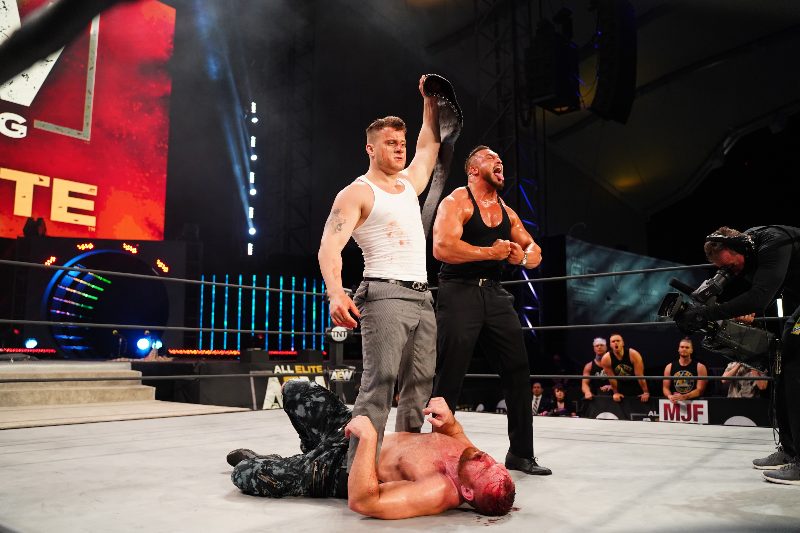
Chris Jericho vs. MJF (If MJF wins, he joins the Inner Circle)
I was really wondering how they were going to get to a Jericho/MJF match after Le Dinner Debonair. I should have known the answer was right in front of me all along. I am actually embarrassed I didn’t see this coming. Truly shameful. Le Dinner Debonair was certainly…something, but no one, not a single soul, can say that it wasn’t ambitious. One of the very best things about AEW is that they will just try things and trust the performers to get it over. WWE falls into the habit of trying to please everyone (DQ finishes, people constantly getting wins back, etc), so no one really separates themselves. Even if the segment fell completely flat, people are always going to remember a full on song and dance number on national TV, and that’s worth something.
Are we heading toward a full Jericho face turn (or at least as much as Jericho is capable of turning)? There is a non zero chance this ends with the Inner Circle turning on the Demo God and walking out of Jacksonville with MJF as the new leader. This could happen Saturday or MJF could win and they slow burn to that point (the more likely scenario, IMO). Either way, I think that’s the ultimate end game of all of this.
I don’t think they invested the time in this program just for MJF to lose and walk away from it. He wins on Saturday and begins to sow seeds of dissension throughout the Inner Circle. An additional question: what happens to Wardlow?
World Title Eliminator Tournament final: Hangman Page vs. Kenny Omega
Page is the most relatable, big name pro wrestler in a long time. He’s open about his insecurities. He broadcasts his flaws on television every week. Being one of the few actual humans in pro wrestling makes him stand out. When something, or in this case someone, is relatable, they resonate. A big part of the reason Steve Austin was so over was that everyone knows what it’s like to hate a boss and to want to rebel against an authority figure. Of course, part of his success was generational talent, but the relatability really took it to the next level.
None of us are ever going to wrestle a historically great match like Omega, but all of us know what it’s like to deal with self doubt and destructive coping mechanisms. We all know what it’s like to have those coping mechanisms affect our relationships, so when we see Page’s foundation start to shake, we empathize. Keep being sad, Adam. It reminds us that it’s okay for us to feel things.
Page’s humanity is a wonderful juxtaposition to the entirely unrelatability of this version of Kenny Omega, aka the best wrestler in the world version. I touched on it above, but very few, if any, know what it’s like to be the absolute best at something. I barely know what it’s like to be average. There’s always going to be that distance. We can marvel at the physical gifts and be in awe of the performance (personal preference caveats apply), but we can’t relate. It’s something out of our reach.
This does seem more like the Omega people expected when AEW was announced — the guy putting on classics and living at the top of the singles card. As much as I’d love to see Page win, I don’t think it happens against this iteration of Omega.
TNT Champion Cody Rhodes vs. Darby Allin
The nature of wrestling is inherently corny. And, as I frequently say in these columns, that’s okay. Something can be corny and good as those aren’t mutually exclusive things. But, and this is an all caps, bold, size 44 font BUT The Nightmare Family is both the absolute corniest and one of the worst things about AEW. Having a coach that comes to the ring with a clipboard? Corny even though it’s Arn heckin’ Anderson. QT Marshall? A bag of corn chips. And, last, but certainly not least, is the Gunn Club. All the Gunn Club (God, I hate typing this) does is sit ringside and cheer. That’s it. Sometimes, Billy hops in the ring, but largely they just whoop it up in the stands with their pals. Who was clamoring for more of them? I know the Nightmare Family is just whatever Cody wants it to be on any given day, but Jesus, man.
The dog is the best part of the family. This is somehow a less intimidating stable than Retribution.
The reason Allin hasn’t come up yet is because Allin has barely come up during the build to Full Gear. Sure, they showed him in the crowd and he got a video this week, but Cody and Orange Cassidy have been the recent focus of the TNT title picture. This match has no build. Cody just came back looking like an edgelord version of M. Bison one week, won the title back, and then everything picked up right where it was before he left to do a TV show no one will watch. Great stuff by our Three Star General, as always.
Cody didn’t win the belt back just to lose it. My mistake, let’s try that again: Cody didn’t win back the “Ace belt” just to lose it. I would love to get to the level of delusion he’s just putting out into the world. Yes, Cody having milquetoast matches with some indie guys makes you an ace. It would be great if they would finally just pull the trigger on Darby here, but Cody needs another overly drawn out, melodramatic victory yet again.
AEW Women’s Champion Hikaru Shida vs. Nyla Rose
The lack of attention given to the AEW women’s division is yet again on full display here. Running back the same match they did at Revolution in February is certainly a decision they made. Only five of the female wrestlers listed on AEW’s website have more than ten singles matches in 2020. Five. Not a typo — five in almost an entire calendar year. Sure, Kris Statlander got injured and sure, there was a pandemic preventing them from bringing in foreign talent, but those are excuses, not reasons. If John Silver can get on a PPV and if they can run another Matt Hardy/Sammy Guevara match, there is certainly room for more than one women’s program to run at the same time.
One segment at the end of the go home show does not make a feud. Shida and Rose could have actually tried to kill each other and it still wouldn’t be enough to get this program where it should be. There is a history to work with that would have been easy. Instead, Rose just demanded a match, Shida said “lol, sure” and now, here we are. I’m all about simple builds but c’mon, a little effort goes a long, long way.
Rose has gotten exponentially better since she started with AEW, but Shida has still been better. She’s carried the division for most of the year and deserves to end the year as champion. Shida retains.
AEW Tag Team Champions FTR vs Young Bucks (If the Bucks lose, they will never challenge for the titles again)
Man, where to start with this one? I guess the stipulation makes the most sense. It worked well when Cody did it as it added serious stakes to his match last year with Jericho. Obviously, that was all undone when they introduced the Cody Rhodes Championship earlier this year (that is the TNT championship, for the record). This just feels lazy. This feels tacked on to something that shouldn’t need it. This match has been talked about for years which is all this build needed. These are two teams that have wanted to do this forever getting to finally do it. I don’t even know why the belts need to be involved, but I suppose it does make sense for ‘The Best Tag Team In The World ™’ to walk out with gold for gravitas, but putting on an actual dream match is enough.
The Young Bucks mescaline vision quest to just be the most unlikeable good wrestlers alive is still going strong. AEW really needs to make up their minds with the Bucks alignment. Heel/face alignment matters less than ever in wrestling, but consistency actually does. You can’t have them superkicking non-wrestlers and bragging about getting fined one week and then starting an injury angle the next. Mix that with some ‘huge stakes’ and baby, you got a stew going. What we certainly didn’t need is the 900th Matt Jackson injury angle of the past few years. Whatever. I’m not rooting for the Bucks and neither should you.
If Omega beats Page and Cody beats Allin, the Bucks have to lose here. Otherwise, every Executive Vice President is going over and that would be a real tough scene. Plus, FTR is just better at this — better at playing characters, better at telling stories, just better all around. Please, for the love of god, let them keep the belts.
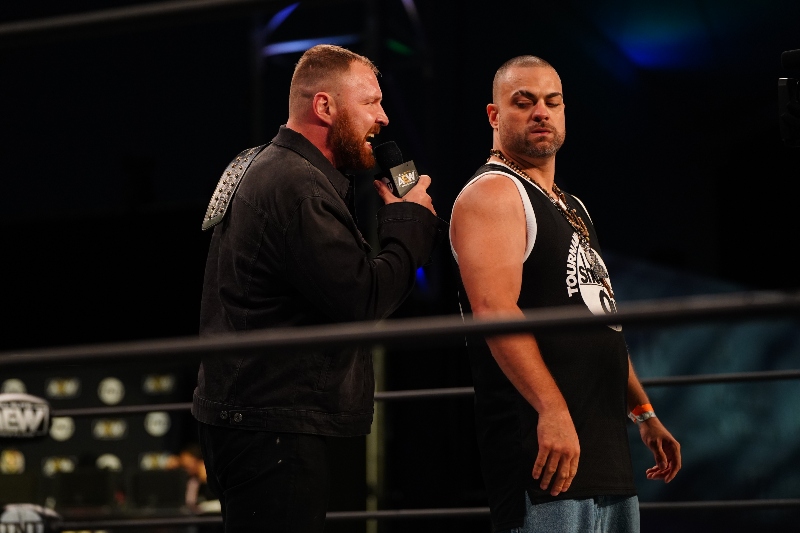
I Quit Match: AEW World Champion Jon Moxley vs. Eddie Kingston
Kingston is, and has been for a long time, one of the most authentic performers in all of wrestling. He is a spectacularly captivating promo artist – and make no mistake ghat he is an artist on the stick – that really makes you believe what he says. We believe it because he believes it. When he says this is his life, this really is his life. It’s all he has and it’s all he needs.We’re squarely in this ‘meta era’ of pro wrestling where it’s never been more clear that people are playing characters, but Kingston goes against that. He is genuine and real, desperate and calculating. He doesn’t break kayfabe because there is none to break. The Mad King is, unquestionably, the “Last of a Dying Breed”.
Moxley has found such a great dance partner in Kingston. His program with MJF was incredibly “pro wrestling” with MJF playing the over the top heel. His program with Jake Hager didn’t have a whole lot to it because, well, Jake Hager. He hasn’t really got to sink his teeth into anything since he took the belt off of Jericho in February. Man, remember February? That was a long time ago in a galaxy far, far away. With Kingston, he’s found someone who matches his intensity. Their shared history grounds the story and gives them something to play off of. Moxley has been fine and was getting by on his presence and intensity until Wednesday night. What a segment that was with two world class talkers going head to head. One small thing that I absolutely love is that Moxley has no catchphrases and no gimmicks.
‘I Quit’ is the perfect stipulation for this match. It plays into both of their strengths as tough as nails brawlers who will do anything to win. For as much praise as I’ve spouted for Kingsto, there’s just no way he wins. This has been one of the best transitional feuds in recent history but that’s all it is: a transitional feud. Mox retains and ends 2020 with Pretty Platinum™ on his shoulder.
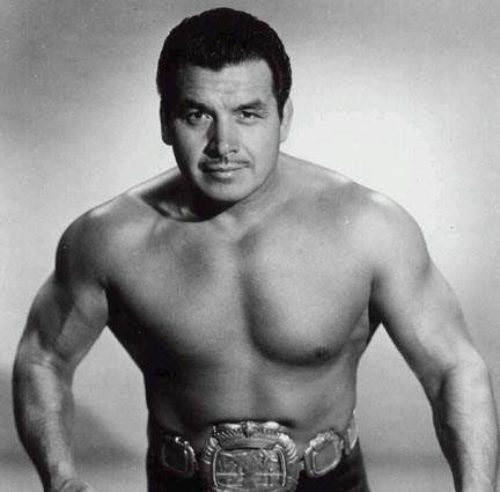
If one were to judge the career of “The Latin Flash” Enrique Torres based on the two matches of his that have survived on video, you might be a little underwhelmed. But make no mistake, this man is a Hall of Famer with a 22-year career and he has been overlooked for many years.
Torres was not born in Mexico, but for most of his career, he was known as a Mexican wrestling star. Born in Santa Ana, California, on July 25, 1922, he would make his wrestling debut twenty four years later almost to the exact day. The start of his career was advertised in the local paper as “Latest Latin Star, Enrique Torres, Mexican mat star who may become the Idol of Little Mexico, replacing Vincent Lopez”.
Torres defeated Jack Page on July 23, 1946, in two straight falls to gain his first victory. This was the start of his full-time career as he continued later that week with wins over Tommy O’Toole, Bulldog Clements, Wee Willie Davis, and Frank Albertson. A month later, he wrestled his first of many main events at the Grand Olympic Auditorium in Los Angeles, defeating the Swedish Angel (Olaf Olson) in three falls in front of 7500 fans. He started wrestling on other weekly California shows in LA, San Bernardino, Wilmington, and North Hollywood.
In October 1936, Torres won three separate October one night tournaments, leading to a match with the winner of the other bracket (Bob Wagner) on October 30th. Torres defeated Wagner to claim the California (State) Championship in three falls before 9000 fans. Meanwhile, George Becker won the vacant Los Angeles World title in September 1946. Torres’ winning ways would lead to him challenging Becker on December 11, 1946. He defeated Becker in three falls lasting over 45 minutes to capture the World title to a near sellout of 10,000. A week later, Torres successfully retained the title over Hans Schnabel in two straight falls.
Torres faced several big challenges in the spring of 1947. On March 5th, he wrestled former world title claimant, Sandor Szabo, to a one hour, three fall draw. He defended the title successfully against all the top area stars including Ivan Kameroff, George “KO” Koverly, Dutch Hefner, Danny McShain, Rebel Bob Russell, and the Swedish Angel. On April 2nd at the Olympic, he also wrestled AWA (Boston) World Champion Frank Sexton to a one hour draw. The same result took place on May 21st against George Becker. On June 25th, he defeated 57-year-old legend Ed “Strangler” Lewis in three falls.
In the summer of 1948, other promoters started to take notice of Torres’ ability and more importantly, his drawing power. He faced Canadian star Yvon Robert in Montreal, Bobby Managoff in Ottawa, and then, it was time for St. Louis and promoter Sam Muchnick and his partners in Indiana and Tennessee. But, his Los Angeles title was not on the line in other areas of the country.
Torres went almost undefeated in the St Louis territory, having matches against Hans Schnabel, Sky Hi Lee, Wladyslaw Talun, Don McIntyre, Al Galento, and Babe Zaharias. Another former champion, Bill Longson, defeated Torres by DQ and again due to an injury. This would lead to Torres having the inevitable showdown against Lou Thesz.
Thesz was the champion of the old National Wrestling Association and was determined to get rid of all the other so-called champs around the country by defeating them and unifying the titles. On September 24th in front of 7,148 fans in St Louis at the Kiel Auditorium, Thesz kept his title in 33:41 due to Torres suffering a large cut on his head and being unable to continue. A rematch on October 9th saw Thesz defeat Torres in 32:28. They had actually fought once before in Dallas the year before as they went to three falls and a 90-minute draw.
This was considered the start of a rivalry that would go around the country for the next 16 years. Over a ten month period from December 1947 to September 1948, they faced each other at least 17 times with Thesz always winning or going to a draw. They wrestled in Chicago, Evansville, Memphis, Chattanooga, Indianapolis, and Cincinnati until they wound up in California for a three match series and with Torres’s LA World title on the line in a double title challenge. The first match went 60 minutes in Long Beach, followed by two draws at the Olympic on August 31st and September 7th.
Torres continued to travel a lot in 1949 and 1950, while also defending his title on a regular basis around California. He faced many new opponents during this time including TV sensation Gorgeous George, Babe Zaharias, Ben Morgan, Karl Davis, Terry McGinnis and Ivan Rasputin. He wrestled the Dusek Brothers (Ernie & Emil) and the Sharpe Brothers (Ben & Mike) in tag matches. He went to Oakland, Sacramento, Kansas City, Pittsburgh, Columbus, OH, and Winnipeg, Canada.
Meanwhile, a man who had recently relocated from New York to California was becoming a huge television star and top contender. His name was Baron Michele Leone.
Torres faced Leone at the Olympic on November 8th, 1950, in a sellout of 10,400. The match was a 60 minute draw with neither scoring a fall over the other. Two weeks later in another sellout, the inevitable finally occurred as Leone defeated Torres to win the World Title in three falls. The Baron kept the title with a three fall, 60 minute draw in a rematch on December 13th in front of 9000 fans. Torres never regained the title and he ended the year with a loss at the Olympic to another TV star from New York: Antonino Rocca.
Torres remained a top star everywhere he went the next few years and was a top contender for both Thesz and Leone. He drew another Olympic sellout with Leone winning in three falls on May 9th. He faced Thesz in Fort Worth/San Antonio (44:10) and El Paso (60:00). In the spring of 1952, he shifted his focus from Southern California to Northern and became a big star in the San Francisco area. He held the NWA San Francisco Pacific Coast Heavyweight Title ten times over the next nine years. He was a top contender to the NWA World tag titles held by the Sharpe Brothers with partners such as Leo Nomellini and Gino Garibaldi. Nomellini & Torres had a short run with the belts in May of 1953. He and Johnny Barend won the belts in July 1955 from Lord James Blears & Gene Kiniski.
Torres stayed in the San Francisco area most of 1956 and 57. He did a few matches for Dory Funk Sr. in the NWA Western States (Amarillo) where he faced Mike DiBiase, The Great Bolo (Al Lovelock), Art Nelson & Rip Hawk. In December 1957, he went to Florida and wrestled there for three months against the likes of Dick The Bruiser, Duke Keomuka & Mr. Moto. He went back to work in Montreal for promoter Eddie Quinn for several months in 1958 and challenged Killer Kowalski for his version of the World title. In the fall, he went to New York and debuted at Madison Square Garden, but not as a headliner. He faced Don Lee, Joe Christie, Roy Shire and Skull Murphy on different shows. He and Alberto faced the Dan & Bill Miller in Newark, NJ. He would again go to New York for Vince McMahon Sr. in 1961 and 1962 and was back in Florida for two months. In January 1959, he started working for Jim Crockett Promotions in the Carolinas, mostly in tag matches with his brothers.
From May thru July of 1959, he did two tours with the Japanese Wrestling Association, going to the semifinals of the first annual World League tournament, going to a 32 minute overtime draw with Jess Ortega. On his last night in Japan, he faced Rikidozan for the NWA International Title, going to a double countout in Osaka on July 21st. He went back to Los Angeles and did some TV tapings for the NAWA. After that, he went back to the Carolinas for the rest of the year.
In 1960, he was back in the San Francisco/Oakland area. He was still a headliner, winning the World tag titles with Reggie Parks in August. By 1961, he was in Los Angeles working for the newly formed WWA. He challenged their champion, Freddie Blassie, at least four times for the title, going to a draw and double countout and losing to Blassie in three falls and losing to Blassie in a steel cage match on February 1, 1962 in Long Beach, CA. He lost again to Blassie at the Olympic on June 6th at a TV taping.
In October, he wrestled Johnny Valentine in Toronto for their version of the United States title, losing in 45:36. In June of 1963, he and Joe Blanchard challenged the newly formed AWA (Roy Shire’s) San Francisco World Tag Team Titles, losing to Art & Stan Neilson.
In January of 1964, he apparently needed a change of scenery and wrestled almost exclusively for the Vancouver, British Columbia, promotion until June of that year. He teamed with Billy Watson against the Funks (Dory Sr & Dory Jr.) and he and Roy McClarity challenged Don Leo Jonathan and Kinji Shibuya for their titles. In April, he faced Lou Thesz for the NWA Title on two nights in Tacoma, WA, and Vancouver. In Tacoma, they went two out of three falls and wrestled for over 37 minutes. A few months later, on September 22 in El Paso, TX, he challenged Thesz for the final time, ending their rivalry in 30:20 in two out of three falls.
November 1964 brought another change of scenery as he went to Hawaii and stayed there for the next 10 months. He teamed with Nick Bockwinkel against the Von Stroheims, and the team of Mighty Ursus & The Mongol. He defended the Hawaii US Heavyweight title in a 60 minute, two of three falls draw against King Curtis Iaukea on January 9, 1965. At 43, his knew that his career was starting to wind down. In September, he worked a few weeks in Portland, OR, against Tony Borne, Stan Stasiak, Jerry Christy, and Soldat Gorky. In November & December, he worked some more TV tapings in Los Angeles, teaming with Bockwinkel and Pedro Morales against the likes of Gorilla Monsoon, Lonnie Mayne, and Luke Graham.
In January 1966, he moved on again to his final territory, Georgia, and stayed there wrestling with his brothers Alberto & Ramon for the next two-and-a-half years. While in Georgia, he even got to team twice with old rival Lou Thesz in March 1968. Torres and his brother, Alberto, won the NWA Southern Tag Team titles from Hans Schmidt & El Mongol on May 31, 1968.
Torres retired suddenly a week later, still a champion at the age of 46. His last match was a six man tag with Jim Wilson and Alberto in a losing effort to Johnny Valentine, Jack Crawford & Tarzan Tyler.
After his retirement, he lived in California, Hawaii and Nevada, before finally moving to Calgary, Alberta, Canada, with his third wife. Alberto died tragically at 37 of a ruptured pancreas due to an in-ring accident while his other brother, Ramon, retired in 1982 and passed away in 2000 at the age of 69. Enrique was the oldest brother and outlived both of them, dying at the age of 85 on August 10, 2007.
Thanks to the research of Steve Yohe and the late J. Michael Kenyon, and many others from various sources all over the Internet.
These are the only two currently known matches of Enrique Torres that exist on Youtube or anywhere else:
Enrique Torres vs. Pat McGill (8/13/51) Hollywood Legion Stadium, Los Angeles, CA: Part one and part two
Career Title History (Courtesy of Cagematch)
Los Angeles World Heavyweight 12/11/46 defeats George Becker – 11/22/50 loses to Baron Michele Leone. (1442 days)
NWA Central States Heavyweight 2/28/52 defeats Bob Orton Sr. – 3/6/52 loses to Sonny Myers
NWA Pacific Coast Tag Team. 11 Times Champion from 8/13/52 to 1956 with Gino Garibaldi, Leo Nomellini, Ron Etchison, Jess Ortega, Rocky Brown & Sandor Kovacs
NWA San Francisco Pacific Coast Heavyweight 10 times champion between November of 1952 and November of 1961. Originally defeats Ray Eckert. Retires the title as champion in 1961, 933 days from 53-56. 406 days in 56-57
NWA Pacific Coast Heavyweight (Los Angeles version). History unclear. Sometime in 1952
NWA World Tag Team (San Francisco version). 7 Times. With Leo Nomellini (2x), Ramon Torres, Ronnie Etchison, Jess Ortega, Bobo Brazil, and Reggie Parks
San Joaquin Valley Tag Team (SF). 5 times from 1/29/55 to 1957. Retired the title with Bobo Brazil. Also with Ron Etchison, Ramon Torres, Sandor Kovacs
NWA Texas Tag Team 2/27/58- 4/22/58 with Alberto Torres as the Torres Brothers
NWA Mid-Atlantic Southern Tag Team 11/23/59-12/19/59 with George Becker
NWA United States Heavyweight (Central States version) 12/13/63 – 12/20/63. Defeats Rock Hunter. Loses to Mongolian Stomper
NWA Vancouver (Canada) Tag Team 4/13/64-5/25/64 with Bearcat Wright. Defeat Kinji Shibuya & Don Leo Jonathan. Lose to the Fabulous Kangaroos (Al Costello & Roy Heffernan)
NWA Hawaii United States Heavyweight 12/11/64 defeats King Curtis Iaukea. 2/24/65 loses to Hard Boiled Haggerty
NWA Hawaii Tag Team with Alberto Torres as the Torres Brothers. 5/28/65 defeat King Curtis & Mr Fujiwara. Lose 7/28/65 to Bearcat Wright & Luther Lindsay
NWA World Tag Team (Georgia version). 4 Times. With Alberto Torres. June 1966 defeat the Infernos. Lose to The Infernos, also June 1966. with Alberto Torres defeat Infernos 8/19/66 – 10/21/66. Alberto Torres injured. Replaced with Ramon Torres 10/21/66 – 1/13/67. Lose to the Vachons (Butcher & Mad Dog). Defeat Vachons 2/3/67. Lose to the Andersons (Gene & Lars) 4/28/67
NWA Southern Tag Team (Georgia) 9 Times with his Brothers, Alberto & Ramon between 5/6/66 and June 1968. Titles retired (final champions)
Editor’s Note: The following is an opinion-based preview and reflects that of the writer.
NXT returns to our televisions and, more importantly, our hearts Sunday for the rare non-Saturday 31st edition of TakeOver.
This is both good for my relationship and bad for my couch cushion of choice because there really isn’t much reason to get off it on Sunday. This TakeOver is a nice little treat for the fans of the third brand as every match on the card looks good. There really isn’t a match you can point to as a dud.
Well, some of the performers are duds (or worse) but none of the matches are going to be bad. I know correlation doesn’t equal causation, but I can’t help but notice that there is no Bronson Reed on the card…
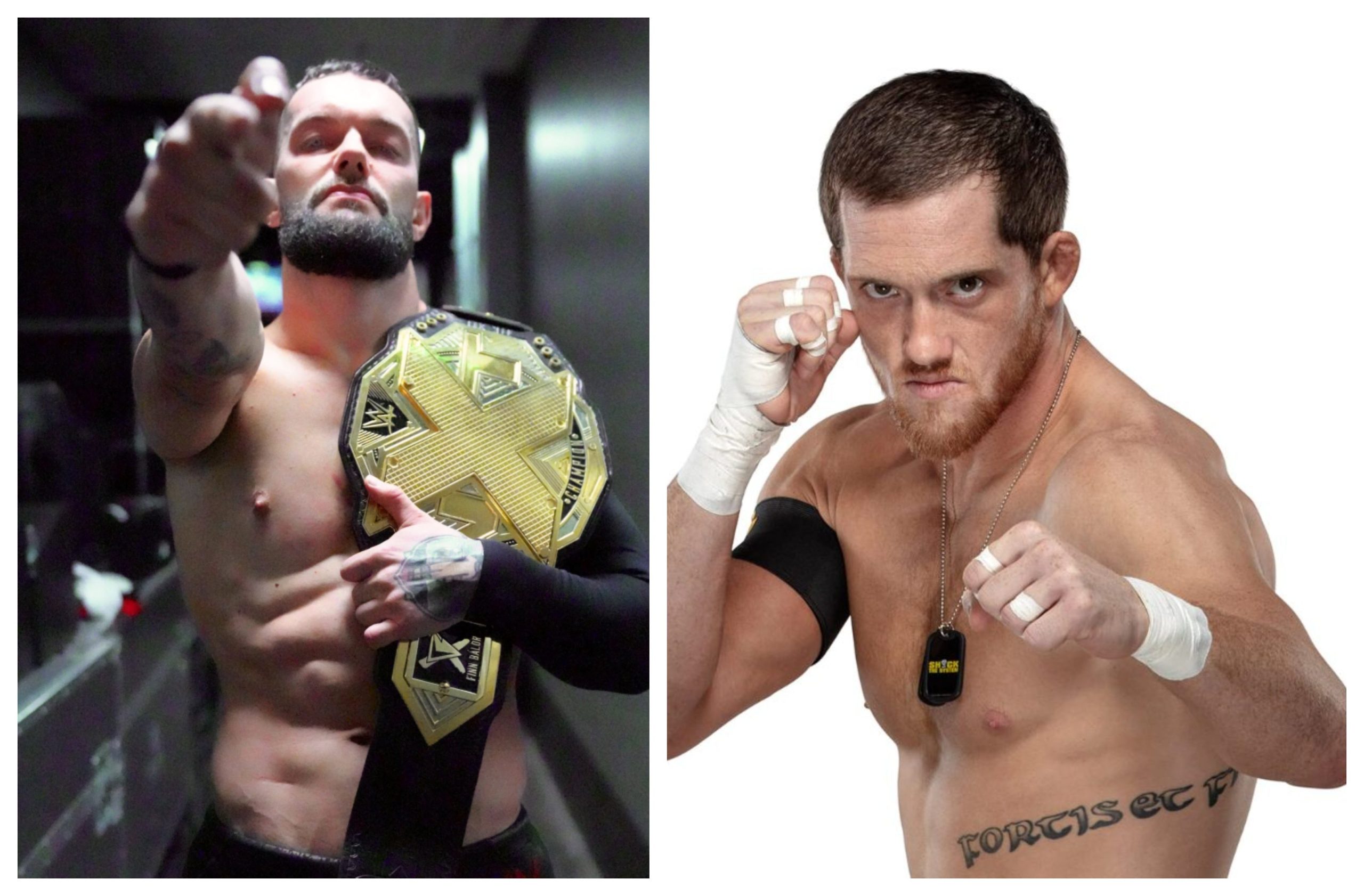
The biggest stories for Sunday are the two deserved title matches for both Candice LeRae and Kyle O’Reilly. Two incredible performers are getting some shine high up on the card and we really do just love to see it. Both have had success everywhere they have ve been, including NXT in some respect. That’s nice, but matches against Io Shirai and Finn Balor at a standalone TakeOver are much, much nicer. I’m so excited! Let’s run through the card match-by0match and see if we can make sense of it all.
Kushida vs. Velveteen Dream
In light of the allegations against Dream, it is, frankly, shocking and inappropriate for him to be on NXT at all, let alone a TakeOver. No amount of talent should ever excuse behavior. Instead of that, I’ll use this space to just talk about Kushida and who the returning NXT Champion might be.
Kushida has been great, is great, and will continue to be great. But, it’s wild how unimportant he has felt in NXT and it’s hard to separate that from his injury history with the brand. His talents are unquestionable and his bonafides are as good as it gets. He’s just never felt like one of the best junior heavyweights in the world of NXT which actually made me sad typing that out. The new edge he has been showing is more than welcome, and I hope that continues on Sunday. Hopefully, he gets something after this with a person who deserves to be on national television.
So, who is coming back to NXT? If it’s someone who was the actual NXT Champion,, the pickings are, well, slim. Here’s a short list of former champs who don’t have much else going on:
Bo Dallas
Samoa Joe (kind of)
Bobby Roode
Ember Moon
That’s it and that’s all. Everyone else is either too big of a name or too busy with something else. It would be great if it was Joe, but if he can return to the ring, Monday nights need him far more than Wednesday. Moon would be the dream here, but is she close to healthy? What I’m saying is that it’s Dallas, the fourth longest reigning NXT champ of all time (great stat, Mike). I was not as into NXT during his run at the top as I am now and there’s a reason for that: Bo Dallas. I never got it and I don’t think I ever will. I feel the same way I do about Bob Roode. Who cares about either of them? Oh, well. Returns are usually fun, at least.
NXT North American Champion Damian Priest vs. Johnny Gargano
The best part of the Gargano heel experience continues to be a Mike DellaCamera sized wrestling heel against these absolute monsters. Heeling it up against Keith Lee? Godspeed, pal. Planning to wear down the 6’5” Priest? Have a ball. This is where the whole suspension of disbelief thing comes in and folks, guess what? I know that. I have watched a whole bunch of wrestling for a whole bunch of years.
One of the starkest differences between NXT and the ‘Main Roster’ ™ is that there is a definitive end to NXT. You reach a point where there just isn’t anything left to do, there are no more talking points, and your character arc has essentially completed. Once that happens, it’s onward and upward, right? Well, maybe not. At least not anymore. With NXT very much it’s own thing, is it time to start really considering different paths and progressions for the wrestlers? We aren’t used to someone losing the title and shuffling down the card, but maybe it’s time we do that.
So what about this match? I’ve been very vocal about not getting Priest. He’s fine, he’s alright, and he’s a replaceable big guy pushing 40. My thoughts, however, don’t seem to mesh with the big boys who run NXT. And that’s okay as not everything is for everyone! It is fun to see wrestlers go against their very natural alignments. Gargano is much better as a heel than I ever thought he would be. I can see myself enjoying a delusional Gargano talking about how he’s the best thing going but is losing matches to Leon Ruff or whoever. Anyway, this is too early for Priest to drop the belt, so The Archer of Infamy retains.
NXT Cruiserweight Champion Santos Escobar vs. Isaiah “Swerve” Scott
This is the one match where there’s at least a whiff of a possible title change. That whiff is more about Escobar being an all-caps STAR than Scott being good (which he is!). Man, Escobar is just the goods, right? He’s an A+ can’t miss star that can do it all. He can speak two languages, can work, can be good looking, probably smells incredible — he’s got it all. He’s got so much that I can’t help but wonder if there are bigger plans for him. The Cruiserweight Title is nice, but that shouldn’t be his ceiling. His ceiling is the top of the card, one that could use an injection of fresh blood.
This program has worked because Scott has been up to the task. “Swerve” has started to find his footing in this feud. His whole gimmick is about being confident, and for the first time in his NXT run, it’s really starting to feel that way. It’s kind of weird to say that because he’s legitimately the coolest dude alive, which speaks more toward how he’s been presented than anything else. The video package this week was nice and was a great TL;DR for people that haven’t quite been keeping up with NXT. “Swerve” is the only guy to pin Escobar in NXT and his losses to him haven’t exactly been clean ones. The simplest things are often the best.
I think this is the one title change on the card. Escobar can move onward and upward while a title will do wonders for Scott’s legitimacy.
NXT Women’s Champion Io Shirai vs. Candice LeRae
Depending on your tastes, this is probably the best match on the card. Of course, by taste, I mean “Do you have good taste?” because if you do, you are looking forward to this match more than anything else. It has the two people who are the closest to the very top of their profession and one of them happens to be “the best in the world at what she does.” These two complete performers, either at or close to their athletic peaks, will put on an absolute banger of a title match.
There is no limit to the amount of Shirai praise that can exist. Her greatness is effortless. But, LeRae is incredible in her own right. She has been deserving of a title for a long time. Much like her husband, she is going against the complete opposite of her natural alignment. Even more so than the man she shares a last name with, she is thriving. She’s taken to her new persona so smoothly that it’s a wonder she hasn’t been doing more of this. Then you remember how good she is as a babyface. There are just no holes in her game. It’s just too bad that she’s sandwiched in between the Rhea Ripley/Shirai reign at the top of NXT, because in any other era, she’d be the top star.
The (good) problem, as always, is Io and the inevitability of another victory for her. The best thing going remains the best thing going. As good as Candice is, Shirai is a step ahead, a level above, and the ultimate final boss.
So few people can claim to be the best at something, but Shirai is truly peerless. She keeps her title.
NXT Champion Finn Bálor vs. Kyle O’Reilly
What an unexpected, delightful surprise: the koolest vs. the coolest of NXT. I have spent a fair bit of Internet pixels expounding on the perfection of O’Reilly. His reactions and eminently GIFable moments kind of take away from the fact that O’Reilly the wrestler is excellent. A multiple time NXT Tag Team champion, a former ROH World Champion and Tag Team champion and a guy who has had multiple matches at Wrestle Kingdom, demands more of our, and even my, respect.
Lately, he has been taking on a far more serious role than what he had previously. Even when he was a tag champ, he was still irreverent and not super serious outside the ring. That’s been different recently. He even got the full on babyface video package with the Explosions In the Sky adjacent music this wee. Heck, I think he turned the entire Undisputed Era babyface by association. This was some beautiful stuff for a great dude. He’s been grinding his entire career and deserves his flowers.
Unfortunately, much like the women’s title match, the outcome of this one shouldn’t be in doubt. Even when Adam Cole was still the champion, Balor’s gravity was too strong. Everything was starting to revolve around him. Now that he has the belt, it’s even more true. There’s going to be an egregious amount of sweat in this match, one that will end with Finn Balor’s hand raised high.
The following originally ran in the February 17, 2010 edition of the Wrestling Observer Newsletter. Jack Brisco would have been 79 Monday.
Jack Brisco was eulogized on 2/11 in Tampa at St. Lawrence Catholic Church, just five miles away from the Fort Homer Hesterly Armory that he regularly headlined on Tuesday nights. And it was on the 41st anniversary of a night that went down in wrestling history.
Brisco defeated grizzled veteran Larry Hamilton of St. Joseph, Mo., better known as The Missouri Mauler, to win the Southern heavyweight championship, in what was the biggest win of his nearly four year professional career. He packed up his belt, and drove back to his new place in the city that he had just moved to the year, after criss-crossing the country working multiple territories in the nomadic life style of a pro wrestler in that era.
The truth is, with as many big matches that Brisco had around the world throughout his career, nearly any date would probably have been some sort of an anniversary of something major involving him somewhere.
Later that night, Dory Funk Jr., who would go on to be the name he would forever be linked with, used his family trademark, the spinning toe hold to defeat Gene Kiniski via submission and become the NWA world heavyweight champion, making him the premier name in the pseudo-sport in most parts of the world. Brisco was aware at that time that the NWA board of directors had chosen Funk Jr.,a former college football star at West Texas State University and the oldest son of the promoter of the Amarillo territory, to replace Kiniski, who had wanted out as champion after blowing up at the promoters at the 1968 NWA Convention.
With his good looks, his well-conditioned athletic physique, his quick adaptation to pro wrestling after winning his NCAA title, and being one of the top two or three all-around athletes in he sport at the time, Eddie Graham by this time was likely already thinking about Brisco as his first personally groomed world champion. But at this point, he wasn’t a big enough or well known enough star in enough of the country to be under consideration.
Funk Jr. was chosen over a small cast of candidates. There had been talk during the 60s of Fritz Von Erich as world champion, to the point that he would change his ring name to Jack Adkisson, his real name, because they didn’t want a gimmick name of a one-time Nazi character representing the alliance. He was an established draw and a tremendous interview and presence both in and out of the ring. But by that point, Adkisson was no longer in the kind of condition necessary to carry the belt. Plus, he was raising his children and was running his own promotion, and had no interest in traveling and taking on the grueling schedule.
Also under consideration was Cowboy Bill Watts, a 6-3, 300-pound bruiser was an established drawing card in many different territories, a national name for years, and an incredible promo. He had a reputation for knowing his wrestling, as well as being a tough street fighter, in a day when things weren’t so controlled. Brisco knew Watts from as far back as high school as both were top athletes in Oklahoma. It was Brisco, a wrestling fan from childhood, who had encouraged Watts many years earlier to try pro wrestling.
“Jack always wanted to be in pro wrestling, and in fact, he was always after me to get into pro wrestling, too, way before I had any desire to do so,” said Watts.
But for many reasons, Watts would not have been a good fit. He was not the level of worker of the world champions of the era. He was also physically overpowering looking in an era where they tried to sell title matches on the local challengers’ ability to win the title. Kiniski was a big, rugged former football star, but was a great worker with remarkable conditioning for a big man, a trait he maintained into his early 50s. Watts was unable to do the 60 minute matches the champions of that era were called upon to frequently do. In the end, only his home promoter, Leroy McGuirk of Tulsa, would vote for him.
The influential Florida office and Graham got behind Hiro Matsuda, who had a national name as the guy who was Danny Hodge’s biggest rival for the world junior heavyweight championship. Matsuda’s claim to fame was ending the four-year title reign by Hodge on July 11, 1964, in Tampa, which led to rematches in several territories. Matsuda had the ability in the ring, and was a renowned shooter, a trait many of the NWA promoters, particularly those who knew the history of wrestling and the in-ring double-crosses like Stanislaus Zbyszko beating Wayne Munn and Dick Shikat beating Danno O’Mahoney, liked to have as its main representative. Matsuda would have been revolutionary since he was Japanese, as the NWA had never in the past considered someone from that part of the world.
The choice was not without controversy. Dory Funk Jr. was a big star in his home Amarillo territory, and had also headlined in many other territories. His title win was largely because of the influence his father, Dory Funk Sr., who ran the Amarillo territory, had with the alliance. He was able to get more votes for his son than Graham was able to get for Matsuda. One of the leading promoters, Paul Boesch of Houston, was so upset over Funk Jr. getting the title that he refused to book the champion for six months.
“I admit I was reluctant, despite Dory’s credentials as a wrestler and a Texan, to be enthusiastic,” Boesch wrote in his autobiography about the title change. “For some time I dragged my feet when I had an opportunity to bring him to Houston for a title match. Finally, six months after he had beaten Kiniski, I signed him to face Johnny Valentine. On the night they met, I learned humility. I learned to say I was wrong and I made a vow never to prejudge an individual again. Humbly, I apologized to Dory for not having him wrestle in Houston sooner. I discovered in young Funk the qualities that make a champion, and so did the fans. Of all those I have seen in action, I consider him second best, behind only Lou Thesz.”
The world title was the position most in the game aspired to achieve. As a teenager, leafing through and studying the wrestling magazines at the newsstands that Brisco was too poor to buy, that championship was more real to him than the NCAA championship. In particular, he idolized Thesz, who was on the cover of many of those magazines, and was the long-time world champion. But he was aware of amateur wrestling as well, because as a high school wrestler in Oklahoma, how could you not know Danny Hodge? Hodge, like Brisco, came from a small town in Oklahoma, became the single most dominant college wrestler of all time, not only going undefeated, but going three seasons without even being taken down once, capturing three NCAA titles at the University of Oklahoma, and a silver medal in the 1956 Olympics. Later, Brisco’s third wrestling hero was Dick Hutton, who defeated Thesz for the title when Brisco was 16. Hutton was also from Oklahoma, and had been a three-time NCAA heavyweight champion at Oklahoma A&M, now Oklahoma State, as well as an Olympian, before winning the NWA title.
As it turned out, very early in Brisco’s career, Thesz took a liking to him. Brisco had only been in the business for a year and a half when he and Thesz defeated The Assassins (Tom Renesto & Jody Hamilton) on December 12, 1966 to win the United States tag team titles. The Assassins were arguably the best heel tag team in the business at the time. The territory run by McGuirk was struggling, and The Assassins were such strong drawing cards that they turned things around, and on good weeks, Brisco could make $600 as a headliner, in those days great money. It was only for a one-night pop, as they won the titles in Tulsa and lost them back the next night in Little Rock, and the title change may not have even been acknowledged on TV. Brisco always noted the coincidence that his childhood hero was the same guy who he credited with being one of the people who helped him the most in making it in pro wrestling. Thesz also always spoke highly of Brisco. Whenever he would be asked about the greatest wrestlers of all-time, Thesz shunned most modern American stars, but would always list Brisco, Billy Robinson and Danny Hodge on the short list of the greatest.
“Lou was not only my idol, but a close friend and mentor, as well,” wrote Brisco in his autobiography, “Brisco.” “I learned as much about the business, inside the ring and out, from Lou as I did from anyone. He was without a doubt the greatest man I ever saw in the ring. There was none better.”
But after beating the Mauler, he took his shower, packed his bags with his newly won title, and drove to his new place in Tampa, ready to get up the next morning and make the drive to Miami for his match the next night.
“Everything was still kayfabe and only the participants and the referee knew the outcome of a world title match,” wrote Brisco in his autobiography. “I went home and didn’t know how the match ended until I heard it on the news the next morning. Had I known what was going to be an event of that consequence, I would have stayed and watched the match. I was sorry that I missed it.”
Brisco, like most, didn’t figure they would change the title at the Armory in Tampa, where no world title had ever changed hands, but figured it would be in a larger arena like in St. Louis for Sam Muchnick or Toronto for Frank Tunney, which drew the biggest crowds and had six of the seven title changes up to that point in the 21-year-history of the National Wrestling Alliance.
Nor did he realize at the time just how important that day would be to his career. Brisco and Funk Jr. had already wrestled several matches in the Amarillo and Dallas territories. Funk Jr. was already established as a main eventer and title contender since his father had groomed him by having him headline against the best workers in the business in main events as a rookie. Brisco was brought in, pushed as a former NCAA champion, and in technical matches, Funk Jr. would beat him in every city on the West Texas circuit. The belief is Sr. trying to show that his son, who he was promoting as the clean-cut best young ring technician in the business, if he had been a college wrestler instead of a football player, he’d have been a national champion. In Dallas, they played upon the Texas vs. Oklahoma rivalry, Funk Jr. being a college football star and Brisco being a national champion wrestler.
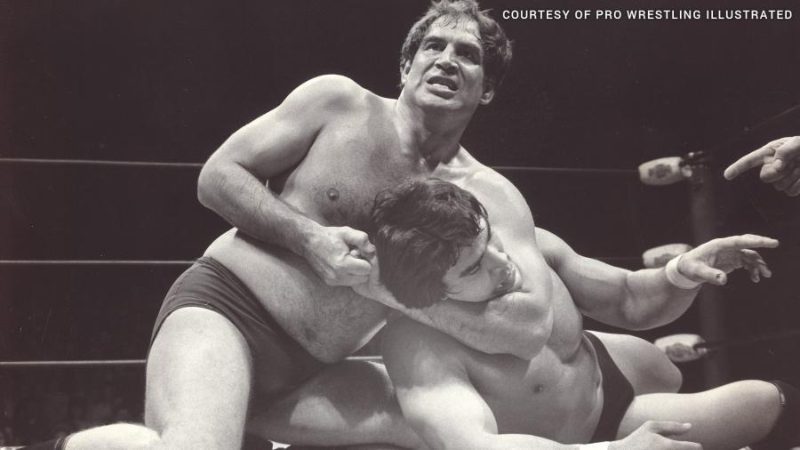
Brisco’s first world title match came against Funk Jr., on July 30, 1969, in Miami Beach at the Convention Center, a mid-sized auditorium about two blocks from the Atlantic Ocean. Funk Jr. won, but the match went so well that Eddie Graham, who ran the Florida territory, brought back a rematch, and had it go to a 60:00 draw, with Funk Jr. caught in Brisco’s finisher, the figure four leglock, at the bell.
“When I won the title, I was a babyface wrestling a lot of heels,” Funk Jr. said about that time. “Wrestling Jack gave me the opportunity to wrestle as a heel and I really loved it. There was nobody better than Jack.”
The advantage of Funk Jr. being world champion and being part of a wrestling family was established at this point. After Brisco followed it up with his first win over Funk Jr., in a non-title match, as well as pinning Jr. in a tag team match, and being on the verge of beating him in another 60:00 draw, both his father, Dory Sr., billed as the undefeated King of the Texas death matches, and his younger brother, Terry came into Florida numerous times. The storyline was that Sr. put up a $10,000 bounty for anyone who could cleanly defeat Brisco in a match, and thus knock him out of the No. 1 contender spot. Sr. himself came in, for Texas death matches, and Brisco got over as not only being a great technical wrestler, but as a tough brawler to the local fans, by beating the King of the Texas death matches at his own game. Terry really established himself as a big-time player during this run, as he was the key opponent during a period where Brisco headlined 13 straight weeks of selling out the 5,500-seat Armory in Tampa. Terry would continually try, without success, to get the win that would enable Dory Jr. to avoid Brisco in a rematch. Or Brisco would beat other top stars with the same goal in mind, pinning Brisco to knocking him off the No. 1 contender perch, or injuring him, to collect Sr.’s bounty. The matches also frequently sold out the rest of the territory. It was the most successful run in the history of the territory up to that point in time.
“He was the smoothest, he was the slickest, he was probably the best babyface in the business,” said Terry Funk. “He was the best guy to get in the ring with if you were a heel.”
Between that night in Miami Beach, during Funk Jr. and Brisco’s long NWA title reigns that continued through the end of 1975, they probably met around 190 times in championship matches, including at least 55 one hour draws. They probably had 75 or more one hour title matches, because they did several one hour matches where there would be only one fall won in the hour, so they weren’t draws, not to mention a few one hour matches when neither was champion. When one considers that the world champion did so much traveling all over the world into different territories, and the depth of main event talent in that era may have been greater than at any point in wrestling history, that number is even more impressive. That doesn’t include non-title matches and frequent tag team matches, which often matched Jack and younger brother Jerry against Dory Jr. and either his father or younger brother. They continued to be regular opponents throughout the 70s and the early 80s in both singles and tag matches.
Even after both had lost the title, they remained each other’s biggest rivals. On July 25, 1976, the night of the Muhammed Ali vs. Antonio Inoki closed circuit match, most of the NWA cities saw on closed-circuit, an undercard from the Omni in Atlanta. The promoters picked as the headline match yet another Funk Jr. vs. Brisco match, even though neither was champion, going to a 30:00 draw, with the feeling that not only would it help draw, but that a lot of sportswriters and boxing fans who normally didn’t follow pro wrestling would be watching, and they wanted to showcase what they believed to be their best example of a main event match to represent the pro wrestling business.
Their last major run was a singles program in 1982 and 1983 over the Mid Atlantic heavyweight championship. There were feuds in that era that were big grudge matches and drew more at their peak, but none headlined in as many different territories nor could match its staying power.
It was one thing for a promoter like Graham, who was at the peak of his booking capabilities at this time, to decide to push someone, and give them wins, but it was quite another that person would click to this degree. A lot of guys were good looking and had nice physiques, and many could work well. Admittedly, few were even close to Brisco as athletes. But the key was turning those attributes into being someone fans would pay year-after-year to see in a headline position.
There are a number of factors that went into this, and with every major superstar that really breaks through, timing is a big part. It was an era where the polite, handsome boy-next-door type babyface was in vogue. He did what would not even be considered pro wrestling interviews today, but at the time, was considered one of the best babyface promo guys in the business. Plus Brisco was dynamic in the ring. The way he moved, his quickness, jumping ability, natural grace and timing stood out from almost all others. His legitimate background helped, because when he did wrestling moves, he did them with more crispness and speed than anyone else. Gordon Solie was the perfect announcer to get him and that style over, as the announcer in both Florida and Georgia. Graham’s careful booking and political protection were also factors, as he made sure Brisco was kept strong when he ventured out of the territory.
“What made him so good was his ability to make you believe,” said Terry Funk. “Once you got people in that frame of mind, you could do anything and it was easy. He was able to portray that wonderfully. He was the best wrestler of all at it. Gerald (Jerry Brisco) was right behind him. Eddie Graham tried to do it with a lot of people, but Jack was the epitome.”
But the fact was, Brisco got over everywhere, usually instantaneously, even without Graham’s booking and Solie’s announcing. In St. Louis, he lost his first three main events and still sold out when going for the world title. His good looks helped, and he had a decidedly athletic looking frame, looking like a fit college 191 pounder, except he was closer to 225 pounds at the time. The role of wrestling magazines in that era was far more important, and Brisco was always on covers because he was in that small group of stars who would sell the best.
You couldn’t compare him to anyone on the scene today. If Kurt Angle came along after the 1964 or 1968 Olympics, he probably could have been Jack Brisco. But because of the changes in the game, any comparison between the two would be limited to that they were both great amateurs and great workers inside the ring. They both adapted quickly to pro wrestling and were stars in their respective eras. But the similarities ended there. Wrestling itself was different. Television was different and the world was different. The closest modern replica, when it comes to presence, drawing power, ability to project athletic superiority, and even promos, would be MMA star Georges St. Pierre.
Brisco was the short-haired clean-cut All-American boy when he first hit it big in Florida, and then as long hair was in style, he had that rock star look. He was often compared with Tom Jones, the famed Welsh singer who was a huge television heartthrob at the time, or Joe Namath, a football quarterback with the New York Jets who was one of the most famous figures in the sports world.
Yet, he was actually a Native American, from the Chocktaw and Chikasaw tribes of Oklahoma. Unlike Wahoo McDaniel, who was actually only a small percentage Native American but played it up huge, wearing an Indian headdress to the ring, or Chief Jay Strongbow, an Italian who made it big in the 70s playing a Native American (and one of Brisco’s early mentors when he was Joe Scarpa, and in fact, Scarpa was the person who recommended Brisco to Eddie Graham in 1968), Brisco was never pushed with the stereotypical role. That role at first would have made it easier for him to get over, since Native American babyfaces with the war dances during comebacks were in vogue. But in the long run, he never would have been Jack Brisco. Still, it was never hidden.
And he had his own personal standards. He would never blade. It tells you just how big a star he was when you consider that, like Thesz, who also adamantly refused to use the blade, that he could headline everywhere and promoters even in heavy blood territories couldn’t convince him to bleed, and that he would approved to be world champion. It is believed Brisco bladed only once, toward the end of his career while working in the Carolinas.
Solie would regularly tout Brisco as the greatest American Indian athlete since Jim Thorpe, the 1912 gold medalist in the decathlon and pentathlon, a one-man college track and one-man college football team who went on to play pro football, baseball, basketball, lacrosse and was even a national champion at ballroom dancing. Thorpe was still a household name in the 60s and 70s.
But where Brisco succeeded as a pro past the level of Billy Robinson, was not just his charisma, but he had the great fire in his comebacks. Robinson with his British style had flashier holds, but he didn’t sell nearly as well nor build comebacks. One promoter of the time when noting the comparison said Brisco was there for the betterment of the match, while Robinson was there to show off how good he was.
People were in awe of Robinson’s ability and they did believe in him as the real article, but they didn’t love him, like they loved The Crusher. With Brisco, it was both. They pushed his wrestling, such as his fireman’s carry, his bread-and-butter move in college wrestling, where he was portrayed as being able to hit it from any angle and at will. Solie understood the sport of wrestling, and often had help from John Heath, a well respected local high school football and wrestling coach with a great reputation who had done pro wrestling and was a spot show promoter. Heath, who in later years was deemed boring as times change, was the right guy to sit next to Solie because he’d be the forerunner of a top level sports analyst, in explaining what and why Brisco was doing with every move.
But Brisco had a quickness and coordination above that of almost everyone else, to go with a wide variety of offensive moves nobody else was doing. He did the crispest suplexes in the business, had some of the best comebacks, his dropkicks were as high and well timed as anyone’s, and nobody could match the speed and grace of his spin under takedowns (only Ricky Steamboat’s were better) and fireman’s carry takedowns, which Funk Jr., who has watched and been a part of pro wrestling for 60 years, said were the best he’s ever seen. He did a wide variety of suplexes in his matches at a time when only a few top wrestlers were doing them. While others did the figure four, none could match his quickness in the set-up and execution. He also popularized the sunset flip out of the corner, and may have invented the skin-the-cat move when Funk Jr. would get frustrated and throw him over the top rope in a last ditch effort to get disqualified, only to have him hang on and flip right back in.
But that was all the prelude in building the match. It was his ability to portray a constant struggle at every moment of the match, both on offense and defense, and build to his fiery comebacks, with his left handed forearms and punches. He would punch to the top of the head, where it was safe, and would land them with very minor force. People would see the punch land, but it was a safe punch to take. He would tell wrestlers he worked with, “I hope you don’t pull your punches, because I don’t pull mine.”
The comeback was a trait that even stood him apart from Funk Jr., who was probably the better ring psychologist and superior at playing subtle heel, which was the most important role for a world champion of that era. In many ways Brisco can best be compared with Thesz as far as presence, and Steamboat or a prime Barry Windham as far as in-ring ability. But Brisco was a far superior singles main event drawing card then either Steamboat or Windham.
But at the end of the day, he didn’t posses whatever Thesz, Race or Ric Flair possessed as far as ego and drive over the long-term. Not that he wasn’t confident. He may have been more than any of them. He obviously had a desire and drive to excel, you don’t get to be NCAA champion or the very different NWA championship without it. But he did not have the same type of ego that drives most of the most successful pro wrestlers, which also explains why he, and only him among every top wrestler of the last few generations, was able to walk away one day when he still could have wrestled for many more years and was still a top hand, and never come back.
“That story about Cael Sanderson (in the 2/8 Observer, when Brisco was asked after Sanderson set the all-time winning streak record of what would have happened if he would have faced Sanderson, and Brisco replied, “It would be the toughest victory of my career”), that’s Jack Brisco right there,” said Ric Flair. “He was the most confident guy I ever met.”
After Brisco won his world championship, he grew to hate the travel. While he had his issues with promoters, panicking some because he would often arrive late, the promoters in general loved him as champion. When he won the title, Don Owen sent Sam Muchnick a letter about how we “finally have a champion who can protect the belt.” They liked that his real sports credentials could garner media publicity that portrayed wrestling favorably. In social situations with media, he wore and suit-and-tie, was charming, polite, and not outlandish or braggadocios like most expected wrestlers to behave. His reign would have been longer had he not made it clear he wanted out. And when it was over, he had no intention of ever taking it again. He was content with wrestling an easier schedule and was no longer out there trying to prove himself nightly to be the best in the business, nor willing to travel to the level to be considered top five in the world, the kind of drive that kept others in the championship picture forever.
But there was a negative. Brisco may very well have been, during the Funk Jr. run as champion, the single greatest No. 1 contender in the history of the National Wrestling Alliance. But he was not the most effective champion. In the ring, as champion, he clearly projected the aura that a world champion should have, and in some ways, as far as walking into the arena and people believing this was really the greatest wrestler in the world, he had it more than any champion since Thesz. But his looks and style made it difficult to play heel. He had the timing and understanding, but he was so good and people knew it that it was difficult to get people to hate him and create the drama with the local babyface. He had many classic matches as champion, but during the Sam Muchnick era in St. Louis, he was the least effective drawing card of the long-term world champions, with 16 title defenses in the NWA’s main city, that averaged 8,631 paid.
Larry Matysik, Muchnick’s assistant and television announcer during that period, still believes Brisco was hurt by timing of winning the title in the summer, and not beating Funk Jr. as planned.
“The squabble about a supposed injury Dory suffered in an alleged truck wreck stopped all title matches, thus keeping the crown from going from Funk to Brisco in March, 1973, as planned,” he wrote. “The momentum was with Jack, who was hot, at the time. When the switch got delayed until July and the title went through Harley Race briefly first, Brisco never really got traction back, at least in St. Louis. Nonetheless, Brisco lured a few big turnouts and was a consistent attraction.”
Matysik also noted that the gas crisis hit during the start of Brisco’s reign, and it came during a bad period of the U.S. economy. While that may seem like an excuse, those factors played a part in destroying pro wrestling’s sister sports entertainment franchises, Roller Derby in 1973 and Roller Games in 1974. His title reign came during a decline in the pro wrestling business, particularly from the huge success almost every territory was having in the early 70s, in much of North America. The popularity of Roller Derby, Roller Games and pro wrestling on a national basis were all near all-time high levels during the the economically prosperous Funk Jr. reign when Brisco was the perennial top contender. Funk Jr. in St. Louis had 24 title defenses and averaged 10,703 paid, while headlining most of the time in an arena that couldn’t hold much more than that.
But in hindsight, Brisco really was better in the role of being the contender who came close. His best trait as a drawing card was his ability to project being the best and most talented athlete and his ability to get people to keep coming back because they believed he would someday be the champion. He was so good he could lose and stay over, but beating him came across as a great accomplishment and for most of his career, anyone who beat him automatically was regarded by fans as a much bigger star. In Florida, Paul Jones became an instant superstar through one win over Brisco.
“It wasn’t about going 60 minutes, it was about going 60 minutes in a way where you draw a better crowd the next time,” said Funk Jr., who had more of a business relationship with him. “I’ve read about him and his personal life, but I had to have known him better in the ring than anyone.”
The closest 80s equivalent would have been the Kerry Von Erich chase of Harley Race and Ric Flair in the early 80s. While Von Erich was nowhere close to Brisco’s level as a wrestler, he had the advantage of having grown up before the people’s eyes (and to a degree, in Florida, where Brisco arrived as an unknown and worked his way to being a national superstar while remaining based in the state, and having seen him through the long chase, there was that same kind of feeling). Von Erich did project the aura of athletic superiority and had the looks. While their physiques were entirely different, their frames were actually quite similar. In fact, if Brisco was into lifting weights for bodybuilding purposes, something he didn’t do because when he was a sports star the athletic community were of the mistaken belief it slows reflexes and makes one stiff, and if he had loaded up on steroids, there probably would have been a great physical similarity between the two. But for Brisco, it wasn’t an issue, because his look in the 1969-75 era was considered the prototypical athletic look by fans at that time.
In St. Louis, when Sam Muchnick closed his promotion down for a month, they aired television shows from other parts of the country. In the summer of 1969, they aired an episode or two of Championship Wrestling from Florida, at the time Brisco was the territory’s top star. He looked impressive enough that on the next show at Kiel Auditorium, on August 15, 1969, Brisco debuted in the semifinal, teaming with former world champions Pat O’Connor & Whipper Billy Watson against Blackjack Lanza & Bobby Heenan (in his first St. Louis match) & Moose Cholak in a unique elimination match. Brisco ended up left with Lanza and Cholak. He first pinned Cholak. The rules were that if it came down to one man on each team, they would meet in a two of three fall, 30 minute time limit match. Lanza, an established top heel in the city, and Brisco then split falls, and went to a 30:00 draw.
Brisco’s first appearance on Wrestling at the Chase was eight days later, to set up his first main event. Brisco & long-time area star Ron Etchison faced Kiniski, the former champion who was being groomed for a title rematch at Funk Jr., & Corsica Joe in a 2/3 fall match. Kiniski pinned Etchison in the first fall, Brisco pinned Joe in the second, and it ended in a draw.
“I remember my late mother’s comment when we watched his first match in St. Louis live at a TV taping,” said Irv Muchnick, Sam’s nephew. “It was just a semi-squash to get a new face over, but I remember Mom saying, `He’s really dramatic,’ which meant two things, he was good-looking and his athletic moves were smooth and well-timed and told a story.”
With just two appearances on television and one impressive debut on a major show, he was put in the main event on September 19, 1969, with Kiniski. Brisco’s job was to put Kiniski over to set up the Funk Jr. vs. Kiniski match they had been building. It drew 9,058 fans, not quite a sellout, but well above average for a show without a world title match. It was a very impressive showing for someone with such little exposure in the city. It was the start of a major storyline. It probably wasn’t in anyone’s mind on that night, but a few years later when it was clear Brisco was going to be world champion, he was always booked to lose to Kiniski, figuring it would pay dividends when he was champion. Also, the feeling was he got over in the match even though he lost. It became easy to use him as the last stepping stone of credibility to build contenders.
This reputation in St. Louis, where Brisco was used in that role before he became champion, but still drew in his title chances, and after he became champion, wasn’t lost on Race. In early 1983, when they were building up a Flair vs. Kerry Von Erich match, the booking idea was to have Von Erich beat Race for the Missouri State title to set up the win. On successive shows, Von Erich beat Race via DQ, the latter with the stips that the title could change hands via DQ so Von Erich became champion. Race made it clear that he was not going to lose to Von Erich in St. Louis, noting as a former champion, “I’m not going to become Jack Brisco here.”
Brisco returned on January 23, 1970, going to another draw with Lanza in a semifinal under a Pat O’Connor vs. Waldo Von Erich main event that drew so-
so. But it was strong enough that it was brought back two weeks later, this time as a main event, before 6,669. Brisco took the first fall in only 50 seconds, but Lanza won the second fall with a piledriver, which “injured” Brisco’s neck. Brisco came out for the third fall, but in selling the injury, ref Joe Schoenberger stopped the match.
He was used as a high mid-carder for a while. Lanza pinned him again in a tag team elimination match. On March 20, 1970, he got an easy payday, as Lanza challenged Brisco & Wilbur Snyder, saying he would beat one after the other, in less than 30:00. Snyder started against Lanza and lasted the 30:00. So Brisco ended up just standing at ringside.
He remained kept strong, including time limit draws with big names like Killer Kowalski, The Crimson Knight (Bill Miller) and O’Connor. On television, he unmasked the Knight, only to find that the Knight had a second mask underneath. His third main event was October 16, 1970, drawing 6,139 and losing to the Knight, which was a set up for Funk Jr. vs. Knight title vs. mask a month later. After Knight lost and was unmasked as Miller, it was Brisco’s turn.
On December 4, 1970, he won the annual Battle Royal, pinning Miller when they were the last two, and setting up the first Funk Jr. vs. Brisco match in St. Louis for January 1, 1971.
So after losing to the area’s top heels, getting some draws with top contenders, and his only main event win being in the Battle Royal, Brisco was booked in the city for his first title shot at Funk Jr. In the final angle before the match, a tape was shown of O’Connor going to Florida in the gym and drilling Brisco on how to counter the spinning toe hold.
It worked, and on the night where Brisco firmly established himself as a national star, the two drew a sellout of 11,587 fans to Kiel Auditorium, selling out in advance and causing a riot because of how many thousands were turned away. The belief is they could have sold 20,000 tickets that night, as the two did a one hour draw that was considered one of the greatest matches in the history of St. Louis wrestling. It was the first of their eight St. Louis main events over the next seven-and-a-half years, the first five of which all went 60:00.
They had to shut things down at 6:30 p.m. that night before the show. There were so many people being turned away that the police came with police dogs to quell those who couldn’t get in. At that time, they used portable structures to sell tickets, and with no tickets left, the rioters began turning over the ticket booths. When the police came, they said they had to get 4,000 people who didn’t have tickets to leave the area. It also led to Kiel Auditorium putting in permanent ticket booths.
“He’d never had a title match in St. Louis before,” said Funk Jr., who said he remembered that night well. “St. Louis was one of the best paying cities (Brisco, as the challenger in a world title match in St. Louis, would have gotten 8% of the gate). At one point I put him in a crossface and whispered in his ear, `Do you know how much you’re going to get paid?’ and then I told him.”
“If anyone ever got the classic build, it was Jack Brisco,” wrote Larry Matysik in his not-yet-released book, “Glory Days: The St. Louis Record Book. “ “Here was the former national collegiate champion, a charismatic and obviously talented young star. St. Louis could feel they were part of his growing up, as Brisco came so close over a year to bursting through to stardom, only to be stopped in nip-
and-tuck thrilling battles by salty, nasty competitors like Kiniski, Lanza and the Crimson Knight. But he kept coming back, getting victories, displaying his fire, coming oh-so-close. Therefore, when Brisco finally blasted through the ceiling, he was accepted and respected as a star. It was a status Brisco had earned in the eyes of the fans. Plus, look ahead to March 5, 1971, when Brisco was generous enough to set up Lanza for Dory. If Brisco could hold the champion to a draw, and Lanza beat Brisco, wasn’t it logical that Lanza could beat Funk?”
Brisco and Lanza first had a draw on television, to build for another main event. However, rather than going back to Funk Jr. vs. Brisco, the idea was to wait until later in the year, and go with Lanza next. Lanza beat Brisco, but more importantly, the show drew another sellout of 11,766, which, ironically, was more than the Funk Jr. vs. Lanza cage match, the cage to keep Heenan from interfering, for the title drew, pulling in 11,033 at the larger Arena.
“I saw them (Funk Jr. and Brisco) do five one hour matches and every one was different,” said Matysik. “They all told different stories.”
The first Brisco Brothers vs. Funk Brothers match in St. Louis aired on Wrestling at the Chase on October 30, 1971. The teams went the time limit, with one fall taken, with Jack pinning Dory as the natural set-up for their second title match.
It’s hard to say what happened. For obvious reasons, they moved the November 19, 1971, match from Kiel Auditorium to the larger Arena, and drew 12,614 fans, the biggest crowd of the year, but based on how many were turned away for the first match, it was a disappointment. Dory won the first fall at 19:15, and they wrestled 60:00 without another fall being taken.
However, when Matysik was asked about his favorite Brisco vs. Funk Jr. match, he said it was November 15, 1974, the last one hour match the two did in the city. In this one, Brisco was the champion. Lou Thesz was referee. Funk Jr. was working as the babyface, and bleeding heavily. Brisco threw him over the top rope at 51:30 in the only fall of the match which went the time limit.
Funk Jr. said the ones that stood out to him was a 90 minute match in Jacksonville, a match at the famous Bayfront Center in St. Petersburg, a match in Osaka, Japan on NTV and a match in Abilene, TX, where the ring collapsed late in a match, and the two and the fans just ignored it since the championship was a bigger deal then the spectacle of seeing guys exchange holds in a ring split in two, continued working until the 60 minutes expired.
Clips of their classic long matches in Tampa, and sometimes other cities around the state, would be edited into the Florida television show. Gordon Solie would push certain points, noting that the amount of actual time in play of a football game was about eight minutes, so he’d note at the 55 minute mark how the two had just done the equivalent of seven football games, but without the rest between plays. He’d note that at the time, college wrestling matches were nine minutes. What was pushed was the idea these athletes had a level of conditioning that elite athletes in the major sports couldn’t match. Once, Solie asked the two to weigh in before one of their long matches and again after, and would bring up how Brisco lost ten pounds and Funk Jr. lost 12 pounds during the course of the match.
Brisco started hitting his stride in 1970, as he and Funk Jr. wrestled roughly 45 championship matches that year, at least a half-dozen of which went 60:00, as well as a few non-title matches during the year. Most were in Florida. The first time the two were brought to Charlotte, they did a near sellout, and they also headlined in Puerto Rico. The feud outgrew the Jacksonville Coliseum, and a May 23 match was moved outdoors to the Gator Bowl.
In 1971, they had close to 20 more matches, about half of which went 60:00. It was during that year that Brisco had his program with Mr. Wrestling (Tim Woodin). It was a unique program as Mr. Wrestling was portrayed as an AAU national champion, which he was, and one of the great pinners in history (Tim Woodin’s pinning percentage in college at Michigan State of 71% was believed to be the second best in college wrestling history behind Danny Hodge).
The making of Brisco in Florida was built around portraying him as the greatest technical wrestler in the world. Brisco’s first Florida title win in 1970 was over Masa Saito, who was billed as the 1964 Olympic gold medalist (Saito actually tied for seventh place). He also won a program over Dale Lewis, a two-time Olympian and two-time NCAA champion, and another former Olympian in Bob Roop. Mr. Wrestling was brought in as a completely scientific heel, who would only use heel tactics at the very finish of the match, which as it turned out, for a psychological standpoint, at that point, worked out better than the full-fledged heels he’d go against.
In his promos, he would claim he was equal to Brisco in every physical aspect, but superior to him mentally, as he would be able to get Brisco to lose his temper, and capitalize. It was pushed as the two best technical wrestlers in the business battling over the No. 1 contendership.
The program started with matches under amateur rules, with Heath as referee. They would be tied after two periods, and Brisco would take the lead late, and Mr. Wrestling would, in the middle of the match, throw an illegal punch or elbow to get disqualified, ultimately getting more heat since he had bragged of his ability to get Brisco to lose his cool. Later, Brisco used a figure four leglock on Mr. Wrestling, but he refused to submit and the match went the distance. They sold it as Mr. Wrestling tearing knee ligaments. When he returned, he began wearing a knee brace. It was sold that the knee brace allowed him to withstand the figure four. He also would use a knee with the brace to the head behind the ref’s back to get wins. In later matches, Brisco would get disqualified as, when his figure four didn’t work, he would go to remove the brace, and when the ref would try and stop him, he’d hit the referee. This put even more heat as Mr. Wrestling would brag that he agreed to wrestle Brisco even though he had a knee injury, and Brisco at 100% couldn’t beat him at 60%. After Brisco unmasked Mr. Wrestling, Brisco had another round of matches with him, usually positioned as battles for the No. 1 contender spot, as the unmasked Tim Woods.
In 1972, Brisco and Funk Jr. worked regularly in Florida and the Carolinas, as well as expanded the feud into new territories, most notably the Amarillo territory, where Brisco played heel, and Georgia, where a promotional war started at the end of the year. They had about 30 championship matches that year, and about another half-dozen going 60:00.
The most famous was February 8, 1972, at the Bayfront Center in St. Petersburg, which was very controversial at the time. Jack Brisco called it the best match of the series (a tape of this match, which aired as a one-hour television show on Championship Wrestling from Florida, still exists and is available on the Wrestling Classics web site). Solie once referred to it as the greatest match he ever saw.
Every major city in Graham’s circuit had seen the match probably five to ten times by that point. Because of how the world championship was promoted in the Florida territory, the crowds were almost always significantly up when Funk Jr. came to town, and Brisco was easily his best drawing opponent, hence they kept going back to the match and it kept drawing.
Graham moved the show from a Tuesday night in Tampa, where the match would routinely do about 5,000 fans, packing the Armory, to a Saturday night in St. Petersburg. Tickets in those days were $5 ringside and $3.50 General Admission. They would be raised $1 for a world title match, since the champion was supposed to get 10% of the gate, and Sam Muchnick, who booked the champion, was to get 3% of the gate as a booking fee. Graham promoted the match heavier than ever, and put ticket prices at $25 and $15, unheard of at that time. He also announced there would be no disqualification, on the heels of Funk Jr. losing via DQ to Brisco in previous matches. He thought, and it turned out to be the case, that the higher ticket prices would draw more fans because they would believe with the higher prices they were going to get a title switch. He was right and they were wrong.
It was so controversial that the local newspaper wrote an editorial decrying the idea of ticket prices that high for pro wrestling. Wrestling fans in the area were furious when the prices were announced. Still, they drew a full house of 7,000 fans and set the state gate record, and did yet another one hour draw.
Many people consider Funk Jr. vs. Brisco in their minds as what early 70s pro wrestling was. The reality was very different. Wrestling was absolutely not about two guys exchanging holds in a contest that looked real, except when the top guys went at it. What made Funk Jr. vs. Brisco is that they did a style different from almost everyone.
The other thing was, because generally they drew crowds in most cities well above usual, the promoters would shoot big angles, have run-ins, blood and wild brawls underneath, trying to build angles for their future shows when Funk Jr. and Brisco weren’t there. Then the two would get in the ring, and exchange holds while telling a story where the match portrayed a constant struggle for something tangible.
“I think a lot of fans must have thought with the ticket prices that high, there was a good chance they would get to see me finally win the title,” Brisco wrote. “I was sorry to disappoint them, but they got one hell of a show.”
“It was the fastest one hour I’ve ever seen,” noted John Heath, when the match was in its last few minutes. Neither man took a fall. At the finish, Brisco caught Funk Jr. in an abdominal stretch with about 55 seconds left. Funk Jr. refused to submit. Brisco then dropped him to the mat in a lateral guillotine with about 25 seconds left. The finish was closer to amateur wrestling with Brisco trying to force Funk Jr.’s shoulders down. It wasn’t one-two-kick out like pro wrestling. It was one-two and Funk Jr. barely getting the shoulder up while Brisco was forcing it down. The whole thing was a struggle until the time limit expired.
It’s easy to say the match more closely resembled an MMA match than a modern pro wrestling match. But it wouldn’t be accurate. It actually had elements of amateur wrestling, such as the last 30 seconds, with the basic pro wrestling moves, arm drags, body slams, suplexes and the like. It didn’t resemble the UWF-style wrestling that was popular in Japan with all the submissions, as fans didn’t know them and submissions were limited to moves like the spinning toe hold and the figure four leglock. The audience reaction to this was closer to MMA than modern pro wrestling. But it was more the reaction at an intense high level college wrestling dual meet, except with participants who were like MMA headliners as celebrities. But it didn’t have the modern pageantry and the music. There was no playing to the crowd. But it took very little, such as Funk Jr. escaping the ring for a breather in slipping out of the figure four, to get intense heat. It wasn’t intense heel heat, but frustration from the crowd.
“Funny thing about the payoff that night, even with a full house and a record box office, our pay envelopes weren’t any heavier,” he recalled. “Eddie thought it was all his idea so it was all his money. The boys were in disagreement about the split and I went to Eddie to try to negotiate a better payday. The conversation didn’t last long. He told me in no uncertain terms that he was the boss and we all worked for him.”
But it was a lesson.
“The one bright spot about the pay that night, it made me realize all the more who really made the money in wrestling and it certainly wasn’t the boys. Not even the champion pulled in what a good promoter did, so I began to devise a plan to buy into the territory. Why not be part owner and top card (top draw) at the same time? The money would be at least double, maybe more.”
Later that year, the two wrestled to a 90:00 draw in Jacksonville. They did two other 90:00 draws, one in Houston in June of 1973 when neither was champion in a match to determine the No. 1 contender for Harley Race. After Brisco beat Race, this draw set up natural Brisco vs. Funk Jr. rematches. They did another 90:00 draw on September 20, 1973, this time with Brisco defending and playing heel, in Funk Jr.’s home turf in Abilene. The two likely did more one hour matches with each other than any two wrestlers in history. The three 90:00 matches, as well as a Funk Jr. vs. Wahoo McDaniel 90:00 match for the title in Houston, are believed to be, along with a Ric Flair vs. Barry Windham title match, the longest major promotion singles matches of the past 40 years in North America.
In early 1972, Graham directly asked Brisco if he was interested in becoming world champion. Before Brisco could answer, Graham pointed out the pitfalls, the pressure on him to draw everywhere because he’d be getting 10% of the gate, and the ridiculous worldwide schedule. The positives were the money, as he’d become the highest paid wrestler in the business. As it turned out, due to the emergence of Andre the Giant as an attraction and the contract Bruno Sammartino signed when he returned for his second run as WWF champion, Brisco was not necessarily the highest paid wrestler in the world during his title years. Plus, he’d have an aura that would stay with him for the rest of his career, the prestige of holding the title which few men held, and it would elevate him on a worldwide level to a level that he’d maintain with promoters and fans long after he lost the title. But as someone who grew up leafing through magazines and seeing Thesz with the belt that he was being offered a chance to carry, he couldn’t say “Yes” loud enough.
It was at the NWA Convention in August of 1972, that Brisco was chosen to be the next champion. It had been expected since early 1971 that when Funk Jr. would either give it up or be replaced (Funk Jr. eventually gave it up because of the difficulty of having any kind of family life on the schedule), Brisco would be the choice, although there was nothing official about that until the convention. Funk Jr was a great draw as champion coming up on his fourth year with the belt. Other names were brought up, most notably Race, championed by his promoter, Bob Geigel, and Terry Funk, championed by Dory Sr. Funk’s name was rejected because at that point in time, the idea of having Terry beating Dory Jr. to become world champion was considered too “fake” to be considered. Graham, Muchnick, Nick Gulas, Shohei Baba and Mike LeBelle, who were the others on the NWA board that decided the champion, with Geigel and Funk Sr., all voted for Brisco. There was also an underlying power struggle between Dory Funk Sr. and Eddie Graham as far as carrying influence on all the promoters was. The two had a unique relationship where they were best friends one minute, and literally could be in a fist fight the next, and then do business again the next day.
In 1973, because they were doing the title change, there were only a few matches between Funk Jr. and Brisco scheduled before the March 2, 1973, scheduled title change in Houston that didn’t happen. In many territories, on television, the big world match in Houston would be mentioned in passing, some places on television, others just in the local programs sold at the matches, so having the same match elsewhere didn’t make sense. In the Los Angeles program sold at the matches at the Olympic Auditorium, they wrote it up that it was the match LeBelle wanted, but that he was outbid by Boesch for the big world title match. Unlike four years earlier when Funk Jr. won the title and nobody, even the wrestlers, knew it was going to happen, while by no means was it common knowledge in the business about this change, it was hardly a secret either.
Leading up to the match, Brisco’s role was to travel all over the world, billed as the No. 1 contender, and lose to the local top star or stars in every promotion. The idea was those losses would pay off when he got the title. The only exception was in Houston, where the title change would take place, and to build up the gate locally, they portrayed Brisco as a wrestler on a hot streak like no other. Brisco scored wins over Red Bastien, Jose Lothario, McDaniel (considered a huge win at the time since McDaniel was the area’s top babyface), Valentine and the Missouri Mauler, among others.
The other territory where Brisco didn’t lose, was the WWWF. Because Championship Wrestling from Florida aired in several WWWF cities, they would bring the top names into New York, Philadelphia and Boston as guest attractions.
Brisco, billed as “The All-American Boy,” was the main outside attraction brought in for the September 30, 1972, show at Shea Stadium underneath the Bruno Sammartino vs. Pedro Morales match. On that show, he beat local wrestler Mr. Fuji, who was half the tag team title. But usually, Brisco would be brought in against one of his main opponents from Florida, like Paul Jones or Bobby Shane.
“On January 24, 1973, at the Philadelphia Arena, Jack Brisco and Bobby Shane tore the house down,” remembered former record company exec Mike Omansky. “Brisco won with the figure four and it was one of the biggest reactions, other than for Bruno Sammartino, that I ever saw at an East Coast arena at the time. This was an amazing wrestling match and Brisco came across as a major main event level babyface.”
In fact, the part of Brisco’s legacy that was never talked about the past few weeks was the effect he had on Vince McMahon Sr. A few years later, when Sammartino asked out as champion, Sr. was looking for a replacement. By this point, Brisco was older, burned out on travel and there was no way he’d do the necessary schedule to be WWWF champion. McMahon Sr. asked Eddie Graham and Muchnick that he wanted someone as champion who could be like Jack Brisco. Both recommended Bob Backlund, and McMahon even gave him the same “All-
American Boy” moniker he’d given Brisco four years earlier.
Two days before the title change was to go down, as Brisco was getting out of the shower after his match in Miami Beach, Graham told him he just got a phone call from Dory Funk Sr., saying Jr. rolled his truck on the ranch, separating his shoulder, and he would be out of action indefinitely.
“It appeared to me that Dory Sr. was bound and determined that his son was not going to drop his world championship to me,” said Brisco. “I am not sure if it was because he just didn’t like me, the fact those years earlier that he was putting Junior over me in two minutes, my amateur background, or the fact that they were Texans and I was from Oklahoma. I also knew that he didn’t want Junior losing to a babyface. Losing to a babyface would mean that he lost to a better wrestler, so Sr. wanted him to lose to a heel so he could be screwed out of the championship (particularly in creating a still champion but without the belt aura around Jr. as he would return to be the top full-time star in the Amarillo territory). That way, he could always claim that even though he no longer held the belt, he didn’t lose it fairly.”
Of course the skepticism was high given the nature of pro wrestling, and probably should have been. The Funks to this day maintain the accident was legitimate, pointing out that besides ruining the truck, there were medical bills, and Funk Jr. missed some big paydays while out for nine weeks, as rematches would have been held around the country, plus it hurt the home territory because he couldn’t headline.
“Fritz Von Erich and Sam Muchnick were going crazy trying to get me back in the ring instead of being concerned that I was hurt,” said Funk Jr. “I went back to the ring early.”
“First, there was a wreck, I saw the truck,” wrote Terry Funk in his autobiography. “The truth is, the truck was totally torn up, and Junior was hurt. He and our father were at a creek on the ranch. The creek had a good, steep bank, and he went off the bank and into the creek. That same shoulder had been bad for a long time. He’d even had surgery on it previously after hurting it in college playing football.”
Dory Sr. sent medical records to the NWA office immediately after informing them of the accident. Sam Muchnick was skeptical. Matysik, who noted that things in the NWA got really tense at this point, said medical evidence was sent by The Funks but it was not detailed and they were not convinced about it.
Part of it was because on August 20, 1965, the main event on a Kiel Auditorium show was scheduled to be Dick the Bruiser vowing he could beat both Dory Sr. and Dory Jr. in consecutive matches within 30 minutes or he would forfeit the match. Before the match, Sr. claimed he suffered an injury in an auto accident on the ranch and couldn’t wrestle, although he did appear at the show. The main event was changed to a singles match, where instead, Bruiser vowed to pin Funk Jr. two straight times within 30:00. Bruiser won the first fall, but Funk Jr., in pinning Bruiser to win the second fall, took the match. At the time, scoring a win over Bruiser in St. Louis was a big deal in Funk Jr.’s career. It is entirely possible for two accidents on the ranch, but in wrestling, the suspicion given that history was also natural, like perhaps the ranch accident was a part of somebody’s play book.
When Muchnick released information to the local media, he used words like alleged all over the release, careful that if somehow it came out that it wasn’t legitimate, that he’d at least shown skepticism rather than have the media believe he was lying to them. Brisco never believed the accident was real, nor did Paul Boesch, although he was more political about it in his autobiography than he was privately. In talking with him before he passed away in 1989, he was still irate about how things went down before the Funk Jr. vs. Brisco match more than a decade later, and this from someone who couldn’t sing the praises of Funk Jr. as a performer loud enough.
But with Funk Jr., injured, there was no champion. Brisco went to Houston and beat sub Fritz Von Erich that night. He was scheduled to tour as champion, so he took many of the championship dates he was going to go on, including going overseas. Terry Funk also took some of those dates. Both men went around the country, usually losing to the top stars in every territory over the next nine weeks.
Funk Jr. returned on May 9, 1973, working his home West Texas territory, mostly (although he did work dates in Florida with Tim Woods and for McGuirk against Danny Hodge and The Spoiler) before going to Kansas City to lose to Race. It was made clear to Race from Muchnick that under no circumstances was Funk Jr. to leave the ring as champion. Race had a reputation as a street fighter par excellence. Most of the wrestlers of that era talked with great respect of Race’s bar knockouts when trouble brewed with wrestlers and fans who wanted to challenge them. Plus, there was the long-time friendship of Kansas City promoter Geigel (who was a partner with Muchnick in St. Louis) with Funk Sr., dating back to the early 50s, along with Race’s relationship with the Funk family. In the end, there were no problems.
Funk Sr. was able to manipulate his son to lose to a guy who was a heel, with a finish where there was a ref bump. Referee Richard Moody went down. Funk Jr. had Race beaten and pinned for a visionary three count after a knee off the top rope. As Funk Jr. went to help up the ref, Race came from behind, delivered his finishing vertical suplex and got the pin. In doing so, it actually strengthened the Funk Jr. vs. Brisco feud, because Funk Jr. could claim that Brisco chased him for years, but never beat him. Due to the nature of the finish of the match he lost, plus the story of him coming back early from the injury, he could claim that he was still the rightful top man.
“That was fantastic for business,” said Funk Jr. “Jack beat Harley Race for the belt. He didn’t win it from me. When we brought the match into the Amarillo territory, everywhere we did capacity business. It was unfortunate the pick-up truck accident took place, but it was good for him. ”
While it was not the plan, there was an argument that it ended up being better than the plan, at least when it came to the Funk Jr. vs. Brisco feud.
But Matysik noted that it hurt Brisco as champion at least in their city. Originally, Brisco was going to beat Terry Funk in his first defense, which would have likely been a great match to kick off his reign. Instead, he felt having Brisco beat Race after a short run didn’t have the impact of beating Funk Jr. after four years with their rivalry. Plus, Brisco’s first title defense instead ended up against Bobo Brazil, a 60:00 draw, which he rated as one of the worst St. Louis main events ever, and probably the only bad Brisco match he ever saw. Brisco had always been a babyface, but tried to work heel, using punching and kicking because you couldn’t wrestle Brazil for 60:00. While the people booed him, they didn’t understand why Brisco didn’t wrestle, since it was his forte. It made sense in that it was the only way to go that long with the very limited Brazil for 60 minutes, that in of itself was a booking mistake, but from a fan perspective, why would he abandon everything he did to win the title the first time he had the title?
But even though it was only for two months, world title changes were so rare that just being a champion made Race into a national star, and he was mentioned in the same breath as Funk Jr. and Brisco, and in many parts of the country, they became the big three stars. The Brisco-Funk Jr. feud had another layer. The storyline was that Funk Jr. claimed his shoulder wasn’t healed, and it was the pressure of Brisco, who in storyline was also questioning the reality of the injury, that he came back too soon and lost the title. Race came to Houston for wins over Ivan Putski and Lothario, and his storyline in that city was he refused to wrestle Brisco, saying Brisco’s role as top contender didn’t apply any longer since Funk Jr. wasn’t champion. This set up the Funk Jr. vs. Brisco 90:00 draw to determine who was the top contender. Then, Race refused to wrestle Brisco because he didn’t beat Funk Jr. Finally, the story was that the NWA ordered the match, which explained why all the NWA dignitaries would be coming to town for the July 20, 1973, match at the Sam Houston Coliseum. The location was to pacify Boesch, mad about not getting the title change in his city that he had been promised.
By that point, Brisco was also a partner in both offices, owning 8% of the Florida office and 5% of the Georgia office, buying in at well below what would be the real market value of that stock. He was such a hot commodity that Graham, who maneuvered Brisco into getting stock in both companies, wanted to make sure he remained based in that part of the country.
Muchnick came in for the match, bringing with him the famed “domed globe belt,” also known as “the ten pounds of gold,” with the flags of several different countries on it, replacing what was called in the profession, the “Thesz belt.” The belt actually dated back to 1959, to Pat O’Connor’s reign, but was known as the “Thesz belt,” because he carried it from 1963-66. The new belt, which was red (it was later changed to black because the red coloring didn’t hold up well over time), was scheduled to be debuted for the original tile change date, and ironically, the first major U.S. star to carry the belt was Brisco, who was given it by Mike LeBelle in Los Angeles and flew with it to St. Louis to give to Muchnick before the scheduled March 2 match.
The belt remained in play until 1986 when Jim Crockett Jr. replaced it with the belt most associated with Ric Flair, the first man who wore it, the design of which is the same as WWE’s current world championship belt.
Before the match started, in the ring, Race, who came into the ring wearing the old belt, handed it to Muchnick, and Muchnick handed Race the new belt to hold, if only for a few seconds.
Race won the first fall in 12:00 with a vertical suplex. Brisco won the second fall at the 25:00 mark with the figure four leglock. Brisco won the third fall at the 40:00 mark, using the Thesz press.
“I had planned to win the belt with the finishing move that Lou created,” Brisco said. “It was no secret that Lou was my idol and had the most influence on my career. It was because of him and Danny Hodge that I became a professional wrestler. Using the Thesz press to win the title was my way of saying thanks to Lou.”
Announcer Boyd Pierce announced Brisco as the new champion while photos were taken of his hand being held up by referee Bronko Lubich, and with Muchnick.
For his role in the title switch situation, Race was promised a run with the championship. Brisco himself felt that when it was time for him to drop it, he wanted to drop it to Race.
The local newspapers covered it, not like it was a huge story (it was on the second page of the sports section of the Houston Post the next morning), but like it was a sports story, noting Brisco became the first person to win the world heavyweight championship in a Houston ring since 1942, noting two previous title changes in the city as Bobby Managoff beating Yvon Robert that year, and Bronko Nagurski’s title win over Thesz in 1939. The story noted Brisco’s high school and college sports success.
“Jack was the most naturally gifted athlete to ever be honored with the NWA championship,” wrote Jim Ross, who said being asked to speak at Brisco’s funeral was “honestly one of the biggest honors of my life.”
“The funny thing is I didn’t want to leave the ring. I wanted to savor every second of what had just happened. I knew no matter how many times I may win the title, it would never be like this. I thought of Lou and the champions who went before me. I wondered if they all felt the way I was feeling at that moment.”
It would be a long night. He and Eddie Graham, who flew in for the title change, went out for a steak dinner before Brisco caught a 2 a.m. flight out of Houston back to his condo in suburban Atlanta, where he had moved in 1972 because it was a hub airport and he was traveling all over the country putting over contenders before winning the title. On his way home from the airport at about 5 a.m., he was pulled over, and the officer saw a big case, holding the championship belt. He figured it was a case holding a machine gun. He told Brisco to open the case, and then grabbed his gun. When the officer saw it was the world title belt, everything was fine, but then he wanted to talk pro wrestling for a half hour. With barely any sleep, he went to the WTCG studios in Atlanta, where at the onset of the morning tapings for the show that aired at 6 p.m., Gordon Solie announced that Brisco had won the world title last night in Houston and brought him in with the belt to start the show.
Surprisingly, the match was not taped. It was the only major NWA world title change from 1969 on that wasn’t taped. Brisco in his book blamed it on Funk Sr. screwing him one last time, but that explanation makes no sense since Funk Sr. had passed away on June 3, 1973, from a heart attack at the age of 54. After a Funk family cookout with the Amarillo wrestling crew, with food and beer flowing, Funk Sr. and Les Thornton, a noted shooter from the U.K. who was later a multi-time junior heavyweight champion, got into a discussion over who was the toughest shooter. Thornton bragged that Funk Sr. couldn’t hold him in a front facelock (which would now be called a guillotine). He gave Funk Sr. the move and both started struggling for all they were worth, until Thornton eventually passed out. But Funk Sr. had a heart attack a few moments later.
After a day off, something that would be a rarity over the next two-and-
a-half years, Brisco went to Orlando for his first title defense, pinning his idol, Lou Thesz.
“It was almost surreal for me that night,” Brisco wrote. “In all the times I dreamed of being the world champion, I had never imagined I would be defending my title against Lou. When I entered the ring that night, coming last, as the champion does, Lou was waiting for me, grinning from ear-to-ear. When they introduced me to the crowd, the place went wild. It was the first time I’d been back to my territory as champion. As I waved to the crowd, I glanced over to the opposite corner, where Lou was standing. He was applauding along with the rest of the crowd. He had helped train me and taught me about the business and all its pitfalls. And there he was, applauding me as much as anyone.”
All told in 1973, Brisco and Funk Jr. did another 15 to 20 matches, a half dozen of which went 60:00. They were in Florida, Georgia, the Mid Atlantic territory and Texas, including headlining the annual Thanksgiving show at the Greensboro Coliseum and drawing the biggest crowd of the year.
The program continued in 1974, with matches in both Texas promotions, Georgia, Florida, St. Louis, as well as their famous match on January 29, 1974 in Osaka. During that year, they did roughly 40 matches together, with 25 going the time limit. In 1975, they did roughly another 30 title matches.
During the first half of the 70s, the general feeling was that the best wrestlers in North America as far as performers inside the ring who could also draw money as headliners were Race, The Funks, Brisco and Valentine. Both Dory and Terry Funk had told me at different points the two best wrestlers they ever faced during their careers were Brisco and Valentine. Don Leo Jonathan once said he believed Brisco was the best wrestler he ever saw.
“I never had a bad match with Jack,” said Dory Jr. “Every single match was spectacular for the wrestling fans. He was an ideal challenger for me to work with. It was always a pleasure to be in the ring with him. And he always had a super attitude.”
“I’d say Jack Brisco was right at the top of the list with Ric Flair and Lou Thesz,” said Dory Jr. “During the four-and-a-half-years I was NWA champion, I felt Jack Brisco was the No. 1 guy in the sport.”
Jack Brisco was born Fred Joe Brisco, known as a kid as Freddie Joe, on September 21, 1941. The name Jack came from his grandfather, who gave it to him as a nickname because as a kid he was always chasing jackrabbits. He ended up hating the name Fred, refused to answer when people called him that, and before long he was Jack.
He was the third of six children. His father, an alcoholic, disappeared when he was nine, leaving his mother, a waitress at Bob’s Grill in Blackwell, OK, to try raise and support four children, since two older brothers had left, one for college and the other for the marines. She couldn’t do it so two sisters moved in with an aunt, and he and Gerald became inseparable. From the age of 8, Jack was Gerald’s brother, his father, and his best friend.
“Jack was the best big brother in the world,” said Gerald, who currently works for WWE and followed his brother as a wrestler at Oklahoma State, although quit school in 1968 once he got a taste of pro wrestling during the summer. “When I faced tough times as a youth, he was always there for me. He paved the way for me in both amateur and professional wrestling.”
He was a football and wrestling star at Blackwell High School. He was 185 pounds as a sophomore, and wrestled as a heavyweight because in those days the top high school weight class before heavyweight was 165. Even though he was usually outsized, he went 17-1 as a sophomore, and never lost as a junior or senior, winning three state titles. He was also a two-time all-state fullback, leading his team to the state championship game in that sport, which they lost.
He was heavily recruited as a football player, and signed with the University of Oklahoma under legendary coach Bud Wilkinson and was told he could wrestle during the off season. That clinched the deal, the idea he would be training in the same mat room that Danny Hodge did a few years earlier.
After signing with Oklahoma, Myron Roderick, the Oklahoma State coach, tried to convince him to change his mind, telling him he could win a national championship in wrestling. Times were different, as it’s hard to believe today someone with a full scholarship to a major Division I football program would turn it down to be a wrestler, but his goal since eighth grade was to be a pro wrestler, and Roderick, himself in his mid-20s, had won national titles in 1954-1956, and had connections with McGuirk, who himself was a former national champion in the 30s. Another factor is Ted Ellis, a football and wrestling teammate who was two years older, started wrestling at Oklahoma State and won the NCAA heavyweight title in 1959, beating Robert Marella (Gorilla Monsoon) of Ithaca College in the finals.
Brisco said the decision came down to his lifelong goal, to become a world champion in pro wrestling, and he felt as a football player on a powerhouse team that would likely go to Bowl games, he’d start wrestling in mid-season, and thought he probably couldn’t win a national title. Roderick was able to get Jack’s mother out of Bob’s Grill and get a better job at a hardware store in Stillwater, and moved into a small house in Stillwater, earning enough that his sisters could move back.
Freshman weren’t eligible in those days for varsity competition, so Jack wrestled on the freshman wrestling team, winning the national championship, and also beat the varsity 191 pounder in a freshman-varsity meet on campus.
But a wrinkle was thrown at him. As a freshman, he fell in love, got married, and not long after that, had his first child. He needed to support his family and couldn’t find a job in Stillwater, so moved to Oklahoma City as a carpenter’s helper. Roderick told him to save his money and a scholarship was still there for him. He worked there for two years, before getting a job in Stillwater cleaning toilets and mopping and waxing floors, which enabled him to return to school in the fall of 1963, but with the gap in time, he lost a season of eligibility, and would come in as a junior.
Brisco continued working at the job through college. After school and practice, even after appearing on ABC’s Wide World of Sports, which carried the NCAA tournament, he was still cleaning toilets at night. Brisco was part of the Cowboys team that won the 1964 national championship, led by Yojiro Uetake, the Japanese Danny Hodge. Uetake was a three-time NCAA champion, one of the greatest college wrestlers of all-time, who won gold medals for Japan in both 1964 and 1968 Olympics.
In his second match in 1964, he faced Ken Hines, who place fifth in the nation the year before, and ended up as a draw. He won the Big 8 championship and went into the NCAA tournament unbeaten, and ranked third in the nation, behind Harry “The Snake” Houska of Ohio and John Gladish of Lehigh. He breezed through the competition, beating Gladish 5-1, before losing 6-3 to Houska in the championship match that aired on Wide World of Sports, devastated that his first time on national television was his first loss since his sophomore year of high school. It was also the last real wrestling match he would ever lose.
Brisco, when asked about that match, for years would only say, “I lost to a better man.”
But years later, in his autobiography, Brisco said that when he went out for his favorite fireman’s carry, his hand slipped off, and all of a sudden, he saw Vaseline all over his hands. He claimed Houska covered his arms and shoulders with it.
He was dominant as a senior, undefeated and ranked first in the nation going into the NCAA tournament in Laramie, WY. He beat Hank Schenk of Oregon State 7-2, pinned future pro wrestling opponent Larry Lane of Northern Colorado, pinned Allen Keller of Colorado State, decisioned Al Rozman of Western State, and on Wide World of Sports, pinned Dan Pernat of Wisconsin to capture the title.
But after his win, the national title was still on the line, however future pro football superstar Jim Nance of Syracuse beat Cowboys heavyweight Russ Winer in the final match of the tournament, which meant Oklahoma State fell one point shy of Iowa State in the tournament.
He immediately turned pro in the McGuirk territory, and had his ups and downs, such as a short stay working for Nick Gulas and getting payoffs of less than $20. He debuted in Japan in 1967, and toured Australia in 1969, where he worked a program with Billy Robinson over the WCW world heavyweight title.
It was during this period that Brisco and Robinson had their famous hotel room challenge. The two became friends in Australia because both loved wrestling. Robinson thought his submission style learned at the Snake Pit in Wigan, England was the superior style. Brisco had worked out with submission wrestlers, and none had ever been able to do anything with him.
One night in a hotel room in Melbourne, both were drinking beers while talking wrestling. After last call, they grabbed a few six-packs and went to his room. It started with each man demonstrating moves on the other, and then it got rougher, and all of a sudden it got competitive.
They’d wrestle, drink some beers, wrestle some more, and started hurting each other. By the time the sun came up, Robinson had a few broken fingers on his right hand. Brisco nearly had a broken foot and had a badly sprained ankle. Their faces were swollen, both were hung over, and they missed their flight to Adelaide, although they made a later flight.
Brisco was actually hurt worse when they wrestled, slammed hard in a boxing ring, blacked out and was rushed to the hospital, scared to death because he couldn’t feel his legs for a few hours.
Jerry Lawler told Scott Bowden that Brisco was one of the three best wrestlers he ever faced, which is saying a mouthful given all the wrestlers he was in the ring in during a career that has spanned the past 40 years.
“Jack was in that same class as Dory Funk Jr. and Nick Bockwinkel,” said Lawler. “He was so smooth inside the ring. Jack never rushed things. He never got flustered and always took his time in building a match. Just a pleasure to work with. He made it appear that even a local kid like me could beat the world champion. He was the first world champion I ever faced in Memphis, which really was the start of the program that we always went back to, with me chasing the belt. All the NWA champions of that era were great, Terry Funk, Harley Race, but Jack was special. Because of his amateur background, he truly carried himself like a sportsman, which added to the prestige of the NWA title.”
Their first match was on September 16, 1974, before a near sellout of 10,125 fans at the Mid South Coliseum, with Eddie Graham at that show watching with Jerry Jarrett. Lawler pulled out a chain and knocked Brisco out and pinned him to apparently win the title, until Jerry Brisco told the referee Lawler had used a chain and the decision was reversed.
“Eddie Graham and I stood at the back of the Mid South Coliseum,” said Jarrett to Bowden. “We were both very emotional. Brisco was Eddie’s man. He loved him. He groomed him and he nurtured him to become the world champion. Lawler was my man. That night, it almost felt like our sons were out there really fighting for the world title. That was such a fun time in my life.”
During his two-and-a-half years as champion, the list of Brisco’s opponents was virtually every major star of the worldwide NWA promotions.
The names included The Funks, Thesz, Valentine, Paul Jones, Buddy Colt, Bobby Shane, Watts, Woods (both as Tim Woods and as Mr. Wrestling), Race, Mark Lewin, John DaSilva (a former member of the New Zealand Olympic team who was New Zealand’s biggest star in that era), Spyros Arion, Billy White Wolf (who became better known years later as Sheik Adnan El-Kaissie), Bob Armstrong, Johnny Weaver, Ole Anderson, Lord Jonathan Boyd, Mr. Wrestling II, Ricky Romero, Eric the Red, McDaniel, Kiniski, The Brute (later to become Bugsy McGraw), Bob Harmes, Ken Lucas, Don Carson, Rip Hawk, Abdullah the Butcher, Dick Murdoch, Dick the Bruiser, The Mongolian Stomper (under both that name and as Archie Gouldie), Steve Kovacs, Nelson Royal, Lawler, Assassin #2 (Jody Hamilton), Bob Roop, Giant Baba, Jumbo Tsuruta, The Destroyer, Bobo Brazil, Stan Stasiak, Rufus Jones, Dusty Rhodes, Jose Lothario Curtis Iaukea, Ron Fuller, Red Bastien, Moondog Mayne, Siegfried Stanke, Cyclone Negro, Bill Dromo, Sonny King, Dan Kroffat (the original), Jimmy Snuka, Dale Lewis, Al Madril, Killer Tim Brooks, Rocky Johnson, Ivan Koloff, Superstar Billy Graham, Bob Backlund, Edouard Carpentier, Ivan Putski, Ron Wright, Hans Schmidt, Greg Valentine, John Tolos, Don Leo Jonathan, Leo Burke, Larry Hennig, Killer Karl Kox Rene Goulet, Jimmy Golden, Pat Patterson, Toru Tanaka, The Spoiler (Don Jardine, and also Jardine as Super Destroyer), Blackjack Mulligan, Mad Dog Vachon, Jos LeDuc, Mil Mascaras, Blackjack Lanza, Kim Duk, George Gordienko, Ken Mantell, Pedro Morales, Roger Kirby, Mike George, Don Muraco, Pak Song, Larry Lane (who he had beaten in the 1965 NCAA tournament), Danny Little Bear, John Quinn, Dutch Savage, Tony Parisi, Domenic DeNucci, Tony Borne, The Sheik, Billy “Red” Lyons, Karl Von Steiger, Guy Mitchell and Rasputin.
“I met him when I was first breaking in here (in the Carolinas),” remembered Ric Flair. “He was the world champion when I got here in 1974. He’d show up late, drive Jim Crockett Jr. crazy, smoke his pack of Marlboro’s, do five jumping jacks and go out and do a hard, physical 60 minutes. He didn’t even warm up. Then we’d go out and have fun. He had a lot of fun in his life until his health went bad about ten years ago.”
“He had it a lot harder than I did,” said Flair, in comparing title reigns. “He was in there, night-after-night, doing long matches with The Funks, Race, Valentine. Those were physical grueling matches. He never had a day off. I had matches with guys like Bulldog Bob Brown, or working 60 minutes with Dusty, which was easy because he was so over. By the end of his run, he got so worn down and skinny. He was down to about 196 pounds.”
I can recall once when Brisco was to wrestle Moondog Mayne at the Cow Palace in 1974, in the days before cell phones, that the show started at 8:30 p.m. and there was no Brisco. After the first match, ring announcer Allan Bolte made the announcement, actually telling the truth, that Shire had not heard from Brisco in weeks, and at this point the only thing they could presume is that he’s not going to be there. He announced that fans could get ticket refunds, and announced a restructured card. It was about 9:30 p.m., when Bolte rushed to the ring and said, “Ladies and Gentlemen, the world champion has arrived! Jack Brisco has arrived! The pop was enormous.”
Brisco arriving late became enough of an issue that Muchnick wrote him a letter, saying, “I love my wife, too, but take care of your business.”
There were other minor issues. Brisco kept putting off taking publicity photos that the NWA would send to the various promotions. There was a disagreement, as the idea was that the champion paid for them, and Brisco wanted the NWA to pay for them, so kept avoiding doing them. But they eventually got done. Another source of problems between Brisco and Muchnick was the Giant Baba title change in Japan. Still, despite whatever difficulties there were, both always spoke highly of each other. After Brisco lost the title and did very little traveling, rarely wanting to work outside the territories he was part owner in, he regularly worked St. Louis, at least the arena shows.
“He hated to travel,” said Matysik. “Even when we made him Missouri State champion, it was very difficult to get him to work television dates.”
Terry Funk, one of the All Japan bookers, was the conduit in getting Baba his one week title run. Funk offered him a $25,000 bonus to drop the title for a week, and suggested not letting anyone know ahead of time, lest they try and politically nix it. He said they could work a story where he took a bad bump, was knocked out, and they had no other alternative but to pin him and win the title.
Brisco said he’s only do it with the NWA’s approval. Brisco told Muchnick, Eddie Graham and Jim Barnett ahead of time, and told all of them that he was getting $25,000 plus his regular fee and he was going to do it, and said none had any objections about it. On December 2, 1974, in Kagoshima, Japan, in what was billed as a PWF vs. NWA title match, Baba became the first Japanese wrestler to win the NWA title winning two of three falls from Brisco. Baba won the first fall with a dropkick and Russian leg sweep, while Brisco took the second with a vertical suplex followed by the figure four leglock. Baba won the third fall at 24:46 with a flying clothesline. Brisco got a souvenir from that match, as when he went for a shoulder tackle, Baba’s clavicle hit Brisco in the mouth, causing his lower teeth to bite completely through his lower lip,
Three days later, a rematch was held in Tokyo with both titles at stake. Baba won two of three falls in 26:36.
On December 9, 1974, in Toyohashi, Baba won the first fall with a backbreaker, and Brisco the second with the figure four. Brisco took the third fall with a rolling reverse cradle, the O’Connor roll.
Brisco and Muchnick had a disagreement, since Muchnick thought, as Brisco’s booking agent who arranged for the Japanese tour, he was entitled to a percentage of the $25,000. Instead, Brisco only gave him a percentage of his weekly guarantee, which was the deal Muchnick had negotiated. A few months later, Brisco asked out as champion. For all the minor issues, the promoters liked him as champion, because he was the closest thing in the business to Thesz, the guy who, to the promoters, was the prototype of what the world champion should be. But he showed he was serious when he no-showed the 1975 NWA convention, and was incommunicado, spending the weekend on his boat at Lake Lanier near Atlanta. With him not there, they had a vote on the replacement, and Terry Funk got four votes to three for Race. Interestingly, Brisco was vocally in favor of Race, thinking Funk’s wildman style didn’t suit the championship.
As irony would have it, Brisco’s title loss was chosen for December 10, 1975, at the Miami Beach Convention Center, the same site where six-and-a-half years earlier, he had his first title shot. For storyline, it was advertised as Brisco vs. Dory Funk Jr., although it was never to be the case, as Dory was actually in Japan at the time. This was Eddie Graham’s storyline, to protect Jack, with the idea he had trained for Dory, but the Funks pulled a double-cross and sent Terry, a completely different style wrestler, who had trained for Brisco. Funk scored the spin as Brisco went for the figure four, Funk used an inside cradle. While Brisco was waving his arms, acting as if he was struggling unsuccessfully to get out of the hold, he nailed referee Sonny Myers, breaking his nose. Brisco was so mentally burned out by this time that he dropped out of sight. He did one rematch in Tampa, and then disappeared from wrestling for several months.
When he returned, things were different. He moved back to Tampa. Wrestling had changed in the mid-70s. The polite and humble babyface who relied on being a clean wrestler as the top star of the promotion had given way to the wild brawlers almost everywhere. Dusty Rhodes had replaced Brisco as the top star in Florida.
Brisco remained a major star in Florida, but worked on his own time. He and brothers Gerald and Bill (who never wrestled) in 1973 opened up the Brisco Brothers Body Shop in Tampa. He held singles titles, but more often, worked as a tag team with his brother, by choice, as it was more fun. He met the future Hulk Hogan, at the time a bass guitarist in a band, in a Tampa night club. He also met the future Jan Brisco, who he married in 1980, and remained married to until his death. In his autobiography, aside from those things, it was almost as if the period from 1976-1980, where he was still a top star, and Funks vs. Briscos was still a big deal in singles and tag teams, didn’t exist.
He lived rather quietly with his wife in a cabin in Odessa, FL after his retirement. He became a big pro football and NASCAR fan, but over the past ten years battled serious health problems. When he left pro wrestling, he never looked back. After leaving the business in 1984, even though his brother was a WWE executive, he never attended a show. Finally, in 1997, his brother and Jim Ross convinced him to be honored at a PPV show in St. Louis, but it was very difficult to get him to do it, finally only agreeing when he found out they were also honoring Muchnick, who was such a big part of his career and he hadn’t seen in more than a decade.
In 1999, while tossing a large piece of asphalt into a truck, he threw out his back. Soon, it got so bad he couldn’t move his legs. He had a growth in his spine, and was told without surgery, he would probably die. He underwent the surgery, but in doing so, picked up a bacterial infection and ended up on life support for six days. He survived, but spent about six months mostly in a wheelchair, before graduating to a walker. He also battled circulatory problems and emphysema, caused by years of heavy smoking. He finally quit smoking in recent years, but was suffering from heart problems. He never fully recovered from open heart surgery on Jan. 2, and passed away on 2/1.
There was a famous story when Brisco was working a program with Roddy Piper where Flair said he’d give Piper $100 if he could take Brisco down without Brisco knowing it. Brisco was well-known to have the philosophy that if you’re working, you can take him down as many times as you want, but the minute you start shooting, you aren’t getting the takedown. Piper went for it with Brisco unaware it was coming, and he snatched a high single leg. Brisco then started hopping on one leg with almost no balance but Piper couldn’t do anything to get him down.
Dory Jr. liked to bring out the fire in Brisco by messing up his hair, which he would demand people stay away from. With Terry, it was a different story.
“He said, Goddamn Terry, blankety blank, blankety blank, blankety blank, don’t touch my hair,” said Terry Funk. “I didn’t ever touch his hair again.”
Terry Funk noted that he was so smooth, that he watched at times when Brisco was playing the role of house shooter, having to hurt people who said they wanted to be pro wrestlers in Florida.
“He was so smooth that when he was shooting with people, it looked like he was working.”
Jim Wilson described those encounters in his book “Chokehold.”
“Jack got in with a young guy with a nice body but didn’t know anything about wrestling. Jack got him in a full nelson and dragged him down to the mat. With the guy’s arms hanging upward, Jack pushed his face into the mat. BLUUP. He mashed the guys’ face farther into the canvas, as the blood flowed across the ring. He broke his nose.
It was the first tie in my life I witnessed deliberate, sadistic breakage of human bones, legs, arms , jaws and noses. As my stomach turned, Eddie Graham experienced near orgasmic excitement as he stood nearby, sweating a little and giggling. It was a weekly ritual that appealed to Graham’s perverse sadism and functioned as bizarre public relations for Championship Wrestling from Florida. When guys who were beaten up got back on the street, they told their friends, `hey, that shit is real.’”
“We were having a few beers with one of Jack’s oldest friends in the business, Chief Jay Strongbow, and they were talking about guys that they had wrestled over the years,” said Mark Nulty of WrestlingClassics.com, who became a good friend of Brisco’s after his career ended. “The name Pat O’Connor came up. `I couldn’t stand that sonofabitch,’ Strongbow exclaimed. Strongbow complained about a move O’Connor would catch that would stretch his opponent.
“Yeah, he tried that with me when I wrestled him,” Jack remembered. “I sat out, reversed and rubbed his face in the mat. He didn’t do that anymore.
Strongbow just looked at him and said, “Jack, not everybody won the NCAA’s.”
There was also a famous story, and who knows the exact details, but when Ernie Ladd held a title in the Florida territory, and he was asked to drop it, he agreed, as long as it wasn’t taped for television. While Ladd was wrestling, he noticed a camera was filming the match, and then changed the finish, refusing to do the job.
Later that night, he got a surprise visit from the Brisco Brothers. Not leaving anything to chance, he went to the trunk of his car, and hid a crowbar. Before they could make a move, he nailed both with it, knocking them both out. The story ends with him putting both brothers in the trunk of his car and driving them either to the local hospital, which is probably accurate, or dumping them on Eddie Graham’s front lawn, which is likely the romanticized version.
“Jack never displayed any ego in all the time I knew him,” said Nulty. “He was the most comfortable person in his own skin I ever met. He always exuded a quiet confidence and never felt any need to impress on anyone his status as a champion or a celebrity. He loved professional wrestling and was proud of his career. But he never let his professional wrestling or his accomplishments define him as a person.”
He ended up going back full-time when Funk Jr. was booking for Jim Crockett Promotions doing his last major singles program with Dory, as well as working with the likes of Flair, Piper, Paul Jones and others. The most well-known angle of that period was the Brisco Brothers as heels, trading the world tag team titles with Ricky Steamboat & Jay Youngblood.
Steamboat & Youngblood, the top babyface team in the Carolinas, had just finished their landmark program with Sgt. Slaughter & Don Kernodle. The matches started out with a babyface vs. babyface feud, with a few “mistakes,” in particular a title match on television where Jack had Steamboat in the figure four, but Steamboat was refusing to submit. Gerald accidentally fell down on both men’s legs, with the idea doing so injured Steamboat. The rematch saw Gerald have Steamboat in the figure four, but this time, as referee Tommy Young wasn’t looking, Jack clearly deliberately splashed onto the legs, turning them heel.
It was Steamboat who asked for the program and suggested the Briscos go heel. Crockett was skeptical a Eventually, the Briscos went full-fledged heel, including stealing Youngblood’s Indian headdress, which Gerald would wear to the ring and on interviews. The feud is well remembered because all four were great workers and they had strong matches. But the truth was, Gerald’s ability to be the obnoxious little brother who would talk big, while Jack, the supreme wrestler, smirked behind him with the idea that he could take care of business, couldn’t follow the heat of the prior feud. Still, they were a major part of the original Starrcade event on November 24, 1983, where Steamboat & Youngblood regained the titles. Jack’s last big singles run in 1984 came in winning a tournament on Atlanta television to become the No. 1 contender for Flair, and getting a title shot in Baltimore, in one of the first NWA shows in that city.
“My second show in Baltimore, April 1984, featured Ric Flair’s first appearance there,” said Gary Juster. “He was to defend the title against the winner of a tournament on TBS, which was won by Jack Brisco. So my first title match as an NWA promoter was Flair vs. Brisco (which also wound up being Brisco’s last NWA title match). As it was the end of Jack’s career, I was glad to have had that opportunity. Little did I know he would soon orchestrate the sale of Georgia Championship Wrestling to Vince.”
McMahon had just started going national in early 1984. His first expansion was going into California after the folding of the LeBelle promotion in 1982. But that was considered minor, since there was no major league wrestling in that city. The game had already started becoming survival of the fittest. The talent started migrating to a few places, WWF, the Carolinas, Dallas, Mid South and the AWA were strong. Georgia and Florida, which Jack still had stock in, were starting to struggle. The Georgia group had successfully expanded into Michigan, Ohio and West Virginia, after The Sheik had largely gone belly-up. Because of the success, Jack wanted Barnett to go national to take advantage of their platform of having national television on TBS. Barnett didn’t want to complete with the other promoters, saying they were his friends, while Jack argued that this was wrestling and none of these people were really his friends.
But the Georgia company started losing money, blamed on Barnett’s heavy spending. The stockholders forced Barnett out and turned the company over to Ole Anderson. Brisco and Anderson had their issues from the past. Then, as the company started getting profitable again, the Briscos weren’t getting any dividends, while Anderson was making a big salary.
By 1984, McMahon started going nationally, first making a deal in St. Louis to get the time slot for “Wrestling at the Chase.” Sam Muchnick retired on January 1, 1982, and things remained strong for more than a year, but suddenly, Matysik left to promote on his own and ratings for the Chase show nosedived.
The sale to McMahon, according to Jack’s book, started out of the blue. He called up Vince, largely to check on rumors that Piper was seriously injured. He said McMahon then brought up wanting to buy the Florida and Georgia offices. Rumor had it that the Briscos wanting to sell the Georgia stock to the Murnick brothers, who helped promote house shows for Crockett, but they were overextended having opened up some night clubs. After some conversations, the Briscos were able to get proxy for a controlling interest in Georgia, which also meant the TBS contract, at the time the most valuable time slot for wrestling in the country. Two days after Brisco had headlined the first NWA world title match ever held in one of the WWF’s core cities with Flair in Baltimore, McMahon flew into Atlanta on April 9, 1984, and after 14 straight hours of negotiations, purchased controlling interest in the company for a reported $750,000.
To say the least, the same Briscos that nobody would say a bad word about, were being maligned everywhere. It was regarded as they had sold out the NWA in the middle of what was becoming the most serious wrestling war in the modern history of the business. It was the same NWA that had made Jack world champion, employed both brothers and allowed them into a partial ownership role of a closed business. At the time, they were even world tag team champions. In what was typical NWA fashion when someone left the fold to compete, both Jack & Gerald’s wives started getting phone calls claiming marital infidelities on the road. Once the word got out about the sale, which took a few weeks, Crockett had them drop the tag titles and fired them.
A little while later, McMahon brought them into the WWF for what turned out to be the last run of his career. They were babyface working with heel tag team champions Dick Murdoch & Adrian Adonis. And gone was their entire past. The Briscos, Jack was now 42, about to turn 43, and Gerald was 38, were billed as two young wrestlers just out of Oklahoma State where they were college wrestling stars. Even though Jack was one of the biggest names of the 70s, a world champion who had headlined worldwide including in most of the cities McMahon was no running, and a household name in parts of the country, he was a fresh-faced guy a few years out of college now.
The run didn’t last long. In the middle of a blizzard, at the Newark Airport, Jack Brisco’s career ended. There were a number of factors, but much of it was that he recognized he had lost a step. He had other business interests and he was a proud man who didn’t want to be seen as that guy who used to be Jack Brisco. Most of all, he wasn’t consumed by money. Even before he became world champion, he used to drive the accountants at several of the wrestling offices he worked for crazy, because he would be so late in cashing the checks. Jim Wilson in his autobiography noted going to Jack’s place in Tampa, and unopened checks for his matches were all over the place.
He and his brother were getting picked up by Don Muraco, who forgot where he parked, and by this point all the cars were in the parking lot were covered in snow.
“The wind was blowing, snow was falling, and my face had gotten so cold that my lips were frozen,” he wrote. “In fact, my entire face was stinging and all this time we were freezing. Walking around the parking lot, I kept hearing all those planes heading south. It was almost comical, if it wasn’t for the fact that I couldn’t feel my face or my hands. I turned around to Jerry and told him, “Jerry, you see all those planes heading south? The next one leaving–I’m going to be on it.”
Note: The following is an opinion-based preview and reflects that of the author.
AEW is back with a Labor Day pay-per-view for all of us beautiful babies, one where some of us can even go in person.
That seems like a real bad idea. Well, it’s not a “have a concert in Sturgis during Bike Week” bad, but it’s definitely not great, Bob. Wrestling is helped tremendously by a live crowd. A good crowd is as much a part of the match as the wrestlers involved, making good matches great and great matches legendary. I’m just worried about everyone, that’s all. Please wear your masks and be careful if you’re going and don’t risk it all for a stale pretzel and some grapes if you don’t need to.
As always, we aren’t getting cheated on this show when it comes to wrestling as there are a ton of matches on this card. AEW really likes to pack their PPVs with as many matches as possible, and this one has nine. Even with that many, they typically do a really nice job pacing their shows and the matches all get the time they deserve.
Overall, All Out is a bit lacking compared to some of their previous offerings. The matches at the top lack juice and the tag team title match is overshadowed by a team that isn’t even in it which is not ideal. However, as always, we soldier on, and we preview each match of All Out — even the pre-show!
Pre Show: Big Swole vs. Britt Baker in a Tooth and Nail match
Dr. Britt Baker is putting on a master class on how to stay relevant without ever wrestling. The Roll Model stuff is great. The Michael Jordan thing is great. Her ineptitude is great. Her relationship with Tony Schivaone is the greatest. She deserves everything that is coming to her and we really want to see her get it.
The question is do we really care that Big Swole is the one to deliver the comeuppance? Up until this Wednesday, I wasn’t sure. But then Baker continued to do the Lord’s work by using the wrestling Holy Trinity: a pizza, a crutch, and a submission on the floor and suddenly, I really wanted Big Swole to ruin her return.
AEW loves these WCW adjacent stipulations. I have no idea what a tooth and nail match is and I can’t even hazard a guess. Apparently, it’s a cinematic match in a dentist’s office, so I’m officially intrigued!. Swole is still looking for a signature win or even a signature moment in AEW. The closest thing so far was her “Where to, doctor?” line a few months back. That changes Saturday when she makes the dentist need a doctor.
21-man Casino Battle Royale for an AEW World Title shot
These are usually pretty good, convoluted rules aside. They really like to make things harder for themselves, don’t they? As always with these types of matches, here are some bullet point thoughts on everyone announced for the match as of Thursday night:
Shawn Spears: Still doing this, huh?
Billy Gunn: Sure.
Austin Gunn: Right.
Jake Hager: Whatever.
Santana: So great. He could easily be a singles star.
Ortiz: Great in a different way, but could not be a singles star.
Lance Archer: The biggest, tallest, meanest guy in AEW is deserving of a win.
Eddie Kingston: He has an Incredible presence and is wholly captivating. He demands your attention.
Darby Allin: Still spooky and still skating. Time off TV hurt his shine a bit, but he might get it back on Saturday.
Ricky Starks: He is an actual star. He carries himself like one, talks like one, and wrestles like one.
Brian Cage: Half as good as Starks but twice as big.
Pentagon Jr: Not nearly as good as his brother, but often the more memorable of the two.
Rey Fenix: He was going to be the biggest star in the last battle royal and is still the biggest star in this one.
The Butcher& The Blade: One of my pals knows them and says they are great dudes so I always root for them. But, they are lumped together because they equally have no shot.
My heart wants Starks to win as someone totally new and fresh at the top would be great. But, he’s headed directly into a program with Allin. I was picking Fenix to win the last one before he got hurt, so let’s say he gets the win this time.
The Dark Order (Brodie Lee, Colt Cabana, Evil Uno and Stu Grayson) vs. Matt Cardona, Scorpio Sky, and The Natural Nightmares (Dustin Rhodes and QT Marshall) (w/Allie)
There’s always one match on every AEW card that I just can’t be bothered with. That is this match. I get the stakes but who cares? The NIghtmare Family is beyond corny and cringeworthy. Cody isn’t a babyface anyway, so why should we care if he gets beaten up? We definitely don’t care if QT “Why am I on tv?” Marshall is involved. Sky is good though. Actually, everyone in the Dark Order is really good too, but now is not the time for vengeance. The no-longer-spooky guys take this one.
The Young Bucks vs. Jurassic Express
Gotta have the Bucks on the ol’ PPV, right? All of my Bucks criticism will be retracted if they superkick Luchasaurus all the way out of the company. Is Jurassic Express popular? Reggie Miller was talking about them on an NBA broadcast this week and I just about fell off the couch. This does not warrant much space on the internet. The Bucks keep their newly found ‘edge’ and win this easily.
Matt Hardy vs. Sammy Guevara in a Broken Rules match where Hardy leaves AEW with a loss
Hardy and Guevara are filling the emotional void that exists without a Cody match. It will be interesting to see how AEW handles a match like this without using some of Cody’s favorite tropes. This is either going to end with Hardy adopting Sammy or them getting married. He cares about Sammy in a way Chris Jericho doesn’t but Sammy is rejecting that. There is actually some depth to this storyline, and we really love it, don’t we folks?
This feud has really heated up since Sammy returned, and, as AEW loves to do, it has included more than its fair share of blood. It started (perhaps) unintentionally when Sammy split Matt open with a chair and continued with Matt returning the favor a few weeks later. None of the other matches on the card feel this personal, so these two should really go at it.
This is an odd one though as the stipulation only goes one way. This isn’t a true loser leaves town match as the only person who has a chance to leave AEW is Hardy. Considering he just signed, that can’t be happening. Unless this is his transition off of television into a backstage role, it’s hard to see him losing. That said, being the reason Hardy is off TV would be a great way to keep the hate for Sammy growing. The Spanish God wins this.
Chris Jericho vs. Orange Cassidy in a Mimosa Mayhem match
“This match can be won by pinfall, submission, or throwing your opponent into a tank of mimosa.” Right, cool, got it.
Look, I get AEW wants a blowoff to this feud with a stipulation match, but this is just a bridge too far. It takes everything I have to not just insert ‘fonzijumpingshark.gif’ here and calling it a night. Imagine if this was in WWE and the reaction if Otis was in a Smoked Meat Steel Cage match or something similar. People would be posting screenshots of them cancelling the WWE Network. (Just a reminder: you can like something and still criticize it.)
Even though the concept is egregiously stupid, this will probably be fine. Jericho will make it tolerable and Cassidy will bring Wrestling Twitter to their collective knees by doing something slightly above average. As SummerSlam had the subtitle “You’ll never see it coming”, the subtitle for this would be “The overexposure of Orange Cassidy by the Covid King Chris Jericho” or something like that.
Prediction: Cassidy wins, but who cares. This is just way too corny.
AEW Women’s Champion Hikaru Shida vs. NWA Women’s Champion Thunder Rosa for the AEW title
For all its criticisms, and there are many, this is a cool thing AEW is doing. Bringing more eyes to not only their women’s division, but the women’s division of another company, is great. They’ve really created a collaborative environment with independent wrestlers and this is a continuation of their relationship with the NWA, one that brings far more attention to the NWA than it does to AEW. Their acknowledgment of a world outside of theirs is a small thing, but a refreshing one.
Rosa is good at this. Shida is good at this. Logic would suggest that this match will be really, really good. Shida has pulled good matches out of far worse opponents, and this is one of her more talented opponents. If she can pull a good match out of Nyla Rose, think of what she can do with a more talented dance partner. That’s what Thunder Rosa is. She has come a long, long way from her Lucha Underground days and is a certifiable star.
The video packages have been great and they have done a good job introducing Rosa to the audience and presenting her like an actual threat. The only issue is that she works with the NWA. I said earlier the collaboration is great, but I hope that doesn’t lead to a wonky non-finish of some kind, something that often happens in matches like these. Since Shida is the one who works for the company putting on the PPV, she retains here.
AEW Tag Team Champions Kenny Omega and Adam Page vs. FTR
Even when they aren’t in the match, the Bucks pervade the tag team division of AEW. Why am I writing about the Bucks when this match has nothing to do with them? Well, dear readers, I am here to tell you that nothing in the AEW tag team division happens without them. Instead of just continuing with Omega and Page feuding with FTR, the Bucks had to get involved.
We had to have the embarrassingly bad scene where Page is kicked out of The Elite. (Never mind that he wanted out months ago.) The Bucks had to kick him out. The only appropriate ending to that scene was Page throwing both Bucks through that mirror and into a different dimension. But, no. They had to get involved and had to get their shine.
It’s been a fait accompli since FTR joined AEW that they were heading for a collision with the Bucks. That match is there, that match is money, and that match needs to happen. It just stinks that this match is really just a speed bump on the way to that, and will most likely result in the end of the Omega/Page team. Something that could redeem the situation is Omega turning full heel while Page gets a monster babyface push. The more likely outcome is the Bucks getting involved and costing Omega and Page the belts.
All of this distracts from what will probably be the best match of the night. Omega and Page have been doing work for months, and the skills of FTR have never been in question. The title change seems obviously telegraphed here, but sometimes the simplest answer is the right one. FTR leave as new champs. Say yeah.
AEW World Champion Jon Moxley vs. MJF
I have finally decided that MJF is good. It’s not a decision that came easily, but every man reaches a point where they must take a stand. My stand is that MJF is objectively good and Moxley is objectively much, much better.
The issue with this match is that the entire lead up has made MJF look weak. Yes, he is supposed to be the weasley heel. I am, unfortunately, well aware of how pro wrestling works. He just never looked strong on his own. There was never a point during this feud where he stood up on his own and posed a credible threat. The fake injuries and lawyer are things that someone should be doing once they are established as the heel champion, not when they are chasing the belt.
Even the final shot of him standing tall, wearing Mox’s blood, was not something he did on his own. Wardlow beat him up. Wardlow was the one who looked strong. Even though he is undefeated, he actually does need to look strong. His win streak isn’t a Goldberg one that started slow but ultimately had him beating credible threats. MJF has beaten the joke that is Marko Stunt and something called Griff Garrison. Mox beat Brodie Lee, who squashed Cody. Mox beat Jake Hager, a shoot MMA fighter. I know Max hasn’t lost, but he’s largely beaten D and F tier wrestlers.
Mox is just better. He is better in both kayfabe and real life. Max might be the future, but Mox is the present and closes the show with the belt.
Editor’s note: The following is a column and represents the views of the author.
The 30th and easily the most eXXXplicitly named TakeOver is upon us and for the first time in a long time, this sure doesn’t seem like much.
They’re trying, Jennifer, but the interest just isn’t there like it has been for previous TakeOvers. A match with a retired NFL punter, Dakota Kai getting ruined, plus Damian Priest and Bronson Reed definitively not stealing the show — what more could you want?
This is all just fine, I guess? There’s nothing on the show that is must see and nothing that makes me think about canceling all the plans I don’t have to watch this. Of course, I’m going to watch it, but that’s beside the point. The point is that for an ‘anniversary’ TakeOver like this, there isn’t a ton that really gets my excitement up to watch it.
Maybe it’s just hard to care about the show when our current world demands that we care about everything but. We should not be forced to have an opinion on the US Postal Service. That should not be a hill we need to take a stand on. But, dear reader, I am forced to ask ‘why are we doing this?’. If we are forced to care about everything, it leaves very little room to care about escapes like wrestling. Most people can’t even muster up the desire to start a new TV show, so they just re-watch Succession for the fourth time in a year (turns towards the camera).
Unless it is truly compelling and unless it is otherworldly exciting, it’s hard to get invested in anything right now and this card isn’t anywhere close to compelling. But, we endure, fight through and preview the 30th NXT TakeOver for all the beautiful people out there like you who are doing the best they can.
Vacant North American Championship Ladder Match: Bronson Reed vs. Damian Priest vs. Cameron Grimes vs. Johnny Gargano vs. Velveteen Dream
Remember when NXT signings used to be huge and landscape altering names like Prince Devitt, Shinsuke Nakamura, Samoa Joe, Kevin Owens, etc? Now, they sign everyone like Bronson Reed, which makes the new names so much less impactful. If everyone is new, is anyone actually new? Just like it’s hard to care about anything when we are forced to care about everything, it’s hard to care about new signings when everyone gets signed. Sometimes it’s nice to be surprised.
What, exactly, is the point of Reed? The only guy who got zero reaction when he was in the 2018 PWG Battle of Los Angeles probably wouldn’t be getting one now even if there were live crowds. I don’t know what is special about him and what he has shown that is so deserving of a push. It sure isn’t the “Thicc boi” nickname. That is so beyond bad that it makes me want to never watch wrestling again. Fret not because much like I will never log off, I will never stop watching.
The only person who makes sense winning here is Grimes, who is excellent. How many chances is Priest going to get before people realize he’s just whatever? Why is Gargano on TakeOver again? Why Velveteen Dream on our TVs at all considering…everything? Ladder matches are always mindless fun, and even though my fondness for the competitors isn’t all that high, it should still be enjoyable.
I really think it’s Grimes time, baby. His shouty cartoon villain style promos are so much fun, and he would be just insufferable with a belt around his waist. I really hope they give it to him.
Adam Cole vs. Pat McAfee
Is this really going to end with McAfee standing tall while the Undisputed Era crumbles? I have gazed upon the ruins of the future and this is all I see.
Yes, it’s clear they are positioning Cole as a babyface, but is McAfee the best we could do to get there? That’s nothing against him, and maybe I’m underestimating his reach (re: I am too old) but this is Adam Cole, the longest reigning NXT champion in history and a guy who has spent years at the top of the card. And now he’s having a match with a pseudo celebrity? I just don’t get it. There has to be a better way to get to the end of the Era than this. Surely, there is something better. Surely, there is something more.
I think this has to be the beginning of the end of this current version of the Undisputed Era. It’s not even a secret that Cole is playing the face here. He’s openly giving interviews where he is saying, “I don’t see how anyone can see me as the bad guy in this situation. He’s the guy that doesn’t belong.” McAfee really drove that home this week on NXT, showing up with an entourage of former NFL players and getting a hell of a promo. Full credit where it’s due, McAfee is really good on the mic. He even threw in the obligatory “you people” for good measure.
There is just nowhere else this can go, so what is the point of having a one off feud with a punter? All I can think about is my precious and perfect Kyle O’Reilly taking over the Era from Cole and helping McAfee somehow win here. 2020 has been going on for eight years, and not once in those eight years did I ever think I’d be writing “Pat McAfee beats Adam Cole on Saturday.”
Yet there it is, and here we are.
Finn Balor vs. Timothy Thatcher
Now this is good stuff, pal. This is something everyone should be able to sink their teeth into: a match featuring ttwo of wrestling Twitter’s thirstiest fandoms coming head-to-head. I love that these two had all of one interaction and Tim got so mad that he came out and brained Finn. Then, like, 18 hours later, there was a match announced. Sometimes it doesn’t take all that much to stick two guys in the ring together and see what happens.
Seeing Thatcher get a huge stage to perform on is a wonderful surprise. He’s been doing this for so long without fitting the WWE mold that it was an actual surprise when his signing was announced. That makes me think he came on his own terms and is going to wrestle his way which is great because Timmy is a wrestler, man. I wish there was a less corny way of saying that, but there really isn’t. He’s going to stretch you. He’s going to slap you. He’s going to beat the heck out of you. He’s going to tap you. He’s going to make you think that all of this is real.
This is a great matchup for Balor who is obviously continuing to do the very best work of his WWE career. He has wrestled a super indie worker (Gargano), a tall guy (Priest), a certifiable maniac (Dragunov), and now the best wrestler of the bunch. Thatcher is completely different from anyone Balor has been in the ring with recently to the point that this should feel more in line with some of his heavyweight matches in New Japan.
Balor has nothing really to gain here with a win and it’s clear there are some plans for young Timothy. Thatcher goes over in the best match of the night.
NXT Women’s Champion Io Shirai vs. Dakota Kai
Why is this happening to Dakota Kai and what has she done to deserve this? This is the most relevant she has felt since she came to NXT and also has a zero percent chance to win Saturday.
Up until now, she has kind of been booked like a chump. She came out of her feud with Tegan Nox looking very chump-like. Her mini feud with Mia Yim also resulted in pseudo-chump status. The only people she has regularly beat recently are Kacy Catanzaro and Kayden Carter. Bull Nakano, they are not. Even her victory over Rhea Ripley was through no doing of her own. She got handled easily throughout that match, never once looking like a real threat. How can anyone reasonably expect her to beat the fully leveled up version of Shirai?
The crazy part about all of this is that Kai is actually really, really good. The switch to heel gave her character and depth, but even with all that, they still waited such a long time to pull the trigger on a full push that it almost feels like all of this is months too late. Before she had nothing, she just did a bunch of kicks. Now she actually has substance to her, but still feels a full level below the top of the women’s division in NXT which is squarely Shirai and Ripley. The return of Raquel Gonzalez certainly gives her a little extra something but that little something isn’t nearly enough.
Of course, Shirai is going to win this. She’s the best wrestler in every match she’s in. She should win every match. She should hold every title. She can do everything at such a high level. We truly do not deserve her.
NXT Champion Keith Lee vs. Karrion Kross (w/Scarlett)
Earlier I wrote that since NXT signs everyone, it is hard for anyone to feel special. Kross is the exception to that rule.
I have really enjoyed everything they have done with he and Scarlett. The allusions to the occult/supernatural, the outrageous theater kid entrance music and ring walk, and the minimal screen time have all worked tremendously. There is so much unique interest in Kross the character. He is at the top of the card and there is still so much we don’t know and so much story to tell. It has been a while since they had a character like this, one that isn’t just saying “Hello, I am from the indies, but it was my dream to be in WWE.” He just showed up, suplexed Tommaso Ciampa right out of NXT, and started his spooky journey to the top. You love to see it.
The only bummer about this match is that someone has to get cooled off. Lee has been the best thing going for a year now. Not even him dropping the North American title, which I thought was dumb, stopped his momentum. It’s almost unbelievable that him winning the title was just back in July, but that’s what happens when we live in a year of only Sundays.
I’m still trying to figure out why this only got the ol’ video treatment in advance of Saturday. Surely, an NXT title match deserves more than this. However, the video package was good as hell though. The overall aesthetic of everything Kross is involved in is the perfect mix of film school and hourglasses.
How does this end though? Two months isn’t enough of a top title run for someone of Lee’s caliber. Then again, Kross as champion feels like an inevitability. He has been shot to the top of the card with no signs of stopping. Will they really do some kind of non finish? Maybe big Dom Dijak gets involved in some way? Since this is Lee’s first defense of just the NXT title, let’s say he keeps it but the finish won’t be clean.
Mike DellaCamera is probably scrolling through Uber Eats and not ordering anything. Find him intermittently here.
While the big reveal (?) of “Undertaker: The Last Ride” has been discussed since it aired last Sunday, there has been considerably less talk about the entirety of the fifth and final episode (“Revelation”) which was a proper end to one of WWE’s best documentary efforts to date.
Yes, Mark Calaway said that he’s done. Kind of. But the totality of the nearly five hours of the series was a fascinating look at one of the game’s most reclusive stars. Following this series and his seemingly endless stream of media appearances, that reclusiveness is gone and he’s one of us mere mortals. Kind of.
The fifth episode starts by bringing us back to Madison Square Garden, a special place for Calaway and one that he didn’t think he would return to. A picture of him is now framed below a picture of Elvis in a hallway, meaningful for Calaway if you’ve heard his story about seeing the Elvis and Muhammed Ali pictures there earlier in his career.
While in a locker room, a request for someone behind the camera to get makeup remover turns into a good story. His dad, who was a big supporter of his son’s career despite being disappointed he didn’t follow through on a basketball scholarship, just shook his head backstage at a Houston Raw early in Calaway’s career as he was putting on his eye makeup.
“I miss him,” Calaway says, giving insight into his past which we hadn’t seen in the series to this point. The fifth episode gives a little bit about his pre-wrestling past, but not as much as I found myself hoping for. Looking back over the five hours, insight on his upbringing, his first marriage, his decision to not take the scholarship and some of those other personal details were the only thing really missing that would have helped round out the story.
Although Calaway seems at ease if he never wrestles again, the series-long foreshadowing of a match with AJ Styles comes to fruition as a mutual friend of Styles’ family and Calaway’s helps connect the two after Calaway alludes to wanting to go out on his own terms during a Steve Austin podcast, interesting Styles greatly.
Before he accepts, he takes a trip down to the Performance Center to work with some of the big guys and to gauge how he’s feeling when working with younger talent. To no surprise, he feels “much better than expected” and the match is on, even after an off-screen, poorly executed rib on Styles perpetuated by Vince McMahon that Calaway wants to work with someone else. There’s a lot of Styles/Undertaker build and background in episode five, so if you’re not really into that aspect, this episode probably didn’t work for you.
Then, the ‘rona hit and we launch into the strength of episode five: the planning and execution of the boneyard match. While I’m not the biggest fan of the cinematic style, I found this to be fascinating. The initial “this?” of the location, how they were able to come up with and execute their vision, the nearly disastrous broken car window spot five minutes into shooting, and Calaway’s admission that it was physically taxing because of how the shoot didn’t exactly line up with his adrenaline bursts.
We also learn that on the day they were to begin shooting, Calaway got a call from his niece that his brother had died of a heart attack. To make matters worse, he was the one that had to tell the news to his mother and his brothers. He moves ahead with the match regardless, a nod toward the wrestler mentality of how work comes first. If there’s one thing we learn about this guy, it’s that he really does give a shit.
After wrapping at 5 AM and riding off into the darkness, Calaway said a lot of thoughts were going through his head and that it felt like a fitting end to the ride.
We jump ahead two months later and a few things have changed. McCool’s nephew passing away after a car accident and Kobe Bryant’s death were a shock to Calaway’s system, reinforcing his need to be present in the moment for his family. He was satisfied with the boneyard match and that, “If there ever was a perfect ending to a career, it’s that.”
Then, we arrive at the moment that has been built up since the series started. Is he done? He says “never say never” when openly questioning if he would come back if McMahon was to call him in a bind, referring to himself as a “Break glass in case of emergency” option. While never saying the magic word, he does say that, “It’s time the cowboy really rides away” and that he can finally accept that he can do more good outside the ring than inside it.
We all know this is pro wrestling and no really ever retires. As we’ve learned through ‘Last Ride’, Mark Calaway’s worst enemy with this decision has been himself. If he indeed holds true to his word, this series is a great capper and fun inside look at the decision making that goes into the end of an unbelievable run.
But, there’s a line he says during the episode that is sticking in my head:
“When I start feeling good, I make bad decisions.”
See you at Mania, Mark.
Notes & Final Thoughts
There was another good section somewhat shoehorned in Calaway’s decision making process into revamping the character for the American Bad Ass era. For those who lived and breathed the Attitude Era, this is your oxygen.
When tossing some wrist tape away while talking, Calaway casually throws in a “Kobe” when it goes into the trash can which was pretty hilarious.
This episode made me wonder how his decision to retire or not retire would have gone had the Saudi Arabia deal never happened.
I still am curious why Bill Goldberg wasn’t interviewed about the Saudi debacle. Did he refuse, was he not asked, or was it just a bad interview?
In a podcast I did with Jason Powell of ProWrestling.net a few weeks ago, I brought up the idea of an Undertaker-Steve Austin boneyard match as a way to give closure to Austin’s career. I don’t know how they would get there, but I think that would be huge. That would truly be the end of an era.
My episode ranking: 1, 2, 4, 5, 3. I stand by my early assertion that the series could air on ESPN or FS1 and get some good numbers if there’s some promotion around it. He did so much already though that perhaps it would lose the effect. Still, there’s a legion of lapsed Attitude Era fans that aren’t Network subscribers that would eat this up.
Writer’s note: The recap of the finale of the series will be up shortly.
When any employee retires or leaves after a long tenure with a company, their most awkward time is their first return back to where they spent all of those hours, whether it’s an office, a playing field, or in the Undertaker’s case, the wrestling ring.
Episode four of “The Last Ride” focuses on Mark Calaway’s continuing internal struggle with whether he should retire and how the awkwardness he felt during his first WrestleMania on the sidelines got him back into the game. Well, that and Vince McMahon, but we’ll get there.
Unlike the disappointing third episode, “The Battle Within” is a welcome return to previous form with the series wrapping up Sunday with its fifth installment.
**********
Coming off the disastrous Saudi Arabia tag team match covered in episode three, Calaway thought he was done, admitting that he “wasn’t all there” due to some personal issues he and his wife were going through at the time.
Anyone that has watched the entire season knows his inability to make that final call and to stick to it has been the running theme. He clearly doesn’t want to leave but keeps looking for a foothold climbing up Decision Mountain, one that will make his decision easier. Everytime he finds that foothold, it inevitably crumbles, leaving him to pause resuming the climb once again.
The meat of episode four is Calaway returning to WrestleMania in New York, but as a former star, hanging out backstage and taking his daughter and wife through Axxess. He is clearly a proud dad and enjoys the opportunity to experience what performers never get to see during the weekend and to have his family by his side, but he feels that little bit of weirdness that he should be preparing for a match instead.
Before Mania, however, we get brief insight into the infamous Starrcast autograph signing cancellation. Calaway says that after so many years of living the character in public, he wanted to take advantage of more exposure and endorsements. Part of that was agreeing to the signing in Las Vegas where he was unaware “the other company” was doing a show there too.
He said he was oblivious to that fact, but Vince McMahon called him about it. Calaway said that he told McMahon there was no way he going to work for them and was just doing a signing. He eventually canceled and admits the two men had a falling out about the situation. Eventually, they both let their guard down to talk, saying “It’s all been sunshine and rainbows since” which a look that tells you everything you need to know.
Of course, McMahon isn’t helping make Calaway’s decision any easier, asking him to do an appearance on the post-Mania Raw. The issue? He didn’t bring his gear, a rookie mistake in the pro wrestling world. Because it’s McMahon, Calaway decides to fly home to Texas to find his bag and then flies back Sunday so he can do Raw Monday. If there’s ever a question he was going to keep at it, this also tells you everything you need to know.
As Calaway surprises McMahon at the gorilla position Sunday, McMahon laughs, “A pro would have brought his gear” to which Calaway quips, “A pro would have booked me to start with.” It’s obvious neither man wants this relationship to end, again compounding the retirement quandary Calaway finds himself in.
Thus begins the cycle all over again. He is booked for another Saudi show as he again wants redemption and Paul Levesque calls him to ask about working with Goldberg. He loves the idea given both of their statuses and their roles in the game during the Monday Night War.
Much like the aforementioned tag match, near disaster strikes. The match falls apart after Goldberg hits his head on the ring post and a botched jackhammer to Calaway comes blessed inches away from possibly paralyzing him, instead injuring his back. He says his visual reactions following the match are real: dejection, frustration, and a realization things could have been much worse.
Disappointingly, we never hear from Goldberg prior or after the match which was odd considering we have heard from anyone that matters during the course of the series.
Calaway comes to a realization that perhaps he shouldn’t be doing this anymore and that the main problem is him. He struggles with the “Is it me?” discussion as any proud top performer would, a glimpse into just how tough this whole thing is for him. Wife Michelle McCool has been supportive the entire time, but tears up when thinking about the Goldberg match and how they are flirting with disaster with each time he goes out there.
To no one’s surprise, he reveals he had previously agreed to wrestle at Extreme Rules and despite thinking about pulling out, he goes through with it, looking to put on a performance that will make people forget about the Saudi match. Again, there’s that redemption thing that keeps the cycle going.
Thankfully, he likes the match (a tag with Roman Reigns vs. Drew McIntyre and Shane McMahon) and is happy enough that, yes, this could be it. He tells Vince as such when he comes back into gorilla to which his friend says, “We can talk about it”, unwilling to let Calaway fully grasp the moment or accept that it’s over.
For as much as Calaway can’t commit to retirement, McMahon is just as bad enabling him. Is it out of friendship, his own misgivings about never retiring, or something else?
The episode ends with Calaway walking with AJ Styles after the match, telling the camera to give them some privacy and thus beginning the cycle once again.
It struck me during episode four that Calaway is like a pro fighter who would rather have one fight too many than one fight too few, needing to ensure their competitive tank is on ‘E’ before hanging them up.
Near the end of the episode, Steve Austin, Levesque, and Shawn Michaels talk about the difficulty in knowing when to leave, but it’s Levesque that says a line that rings true when thinking that leaving isn’t being loyal: “Loyalty is to the dragon you’re chasing — not loyalty to Vince.”
As we prepare for the final chapter, it feels like that dragon is one Calaway will be chasing forever.
Other thoughts:
For those following the recaps, I’m sorry this wasn’t up this past week but I was dealing with a personal situation. The episode five recap should be up later Sunday night or Monday morning at the latest.
We get some great looks into Calaway’s early years when he was filming many of the memorable in-character spots. Him laughing in a graveyard between takes, Bruce Prichard discussing how he bought books on death to better understand the character, and some words from Paul Bearer himself stand out.
McMahon gets in a funny “Giant Gonzalez’s son” line during one of the aforementioned gorilla conversations with Calaway.
The image accompanying this review is one from backstage in Austin, TX, when Undertaker did a Raw appearance. To see Lance Armstrong, Matthew McConaughey, and Taker in the same spot having a casual conversation was surreal to say the least.
Before Extreme Rules, Calaway drops a great line outlining the difference between younger guys and older ones, saying, the latter that have to think vs. younger who just do. “Could be last time”
Sadly, WWE is not giving away a house this weekend. Happily, NXT is back with their first proper TakeOver since February and, well, a lot has changed since that time.
Remember going places and doing things? Hopefully, Sunday can once again provide a meaningless escape, much like AEW did last weekend. Double or Nothing was the most fun I’ve had watching wrestling since that February TakeOver and the In Your House card is even better than that was.
Not many of these feuds have a ton of juice due largely to the environment around us. It’s harder to get invested in the show when there are so many other things worth getting invested in. Not every performer is around regularly and all of their absences are felt, some more strongly than others. The only person who has consistently and constantly been around has been ol’ Johnny Wrestling and that might not be a good thing.
Still, in a vacuum, there’s some quality content here. Karrion Kross’ first proper match in NXT, a triple threat for the women’s title that could be historically great, Johnny Gargano getting his chest caved in and both plenty to look forward to and want to see. Now like we always do at this time, let’s preview the card.
Tommaso Ciampa vs. Karrion Kross (w/Scarlett)
Welcome to the end, Tommaso Ciampa.
This feels like the end, right? Ciampa himself has talked about having a short shelf life because of his neck. All of his ends (Gargano) have been tied up and he’s wrestling a guy whose signature move is a Doomsday neck drop and who might be the apocalypse in human form. What better way for Ciampa to go out then this? It would immediately establish Kross as more than the standard chaos agent, because he’s more than that. Or, at least it feels that way.
A good way to tell how invested someone is in something is to look at their time commitment. When you’re in a relationship that matters, you put in the time. If you’re invested in your job, you work more hours and you spend more time there because it matters. NXT isn’t giving Kross and Scarlett a massive performative entrance like they have if they aren’t all in and if they don’t see the money in them.
It was immediately clear that these two are different. Kross is taller than Keith Lee and Scarlett has the look to go with him. The only problem with investing so much into them is that they might not be long for NXT.
Kross has to win here, clean and fast with no Scarlett interference or 20 minute struggle. I would love for this to open the show and have Kross win as decisively as possible.
Mia Yim, Shotzi Blackheart and Tegan Nox vs. Candice LeRae, Dakota Kai and Raquel González
In what I continue to take as a personal attack on me and my free time, yet another wrestling company added a match after I had already written 90% of my preview. AEW did it with the terrible Shawn Spears, so at least this one has good talent in it. Soem quick reactions to each person in this match:
Blackheart: Very cool and possibly immortal because of how her neck didn’t break last week. Also, she has a sweet tank.
Nox: She seems great and they are clearly high on her. She’s still attached to Dakota Kai. The Lady Kane gimmick is great and there was a predictably bad Reddit thread about how she shouldn’t do it because her chokeslam isn’t good enough. My eyes rolled out of my head just typing that.
Kai: Still attached to Tegan Nox and shockingly great as a heel considering how pure of a babyface she is.
LeRae: Legitimately incredible. I can’t believe how good she is as a bad girl. She is long overdue for a title run.
Gonzalez: Also seems good! She and Dakota really work even if her debut was a bit awkward.
Yim: She is in this match. I kid: She’s fine.
Everyone in this match is good and this match will be good but it was thrown together out of nowhere. I’m excited for the inevitable tower of doom spot and to see what feuds this will set up moving forward. Right now, it’s more important that LeRae, Gonzalez, and Kai look good and stay strong so they take this one.
Finn Bálor vs. Damian Priest
Seriously, what is the deal with this angle? Imagine going from a program with WALTER for the NXT UK title to…whatever this is? What has our Prince done to deserve this treatment? Why is he slumming with Priest? Talk about being outclassed in every single meaningful way. There is nothing Priest does better than Bálor in any meaningful way other than being taller.
Part of my frustration is that I just don’t get the point of Priest. There are other guys his size that move better, look better, talk better, wrestle better, and who are just, well, better. There is nothing remarkable and certainly nothing special here. I wonder how much of this is a combination of stubbornness to try and get something with Priest to work and Finn needing something to do while he waits for the world to return to whatever normal actually is.
This doesn’t warrant a lot of virtual space and it sure doesn’t deserve a lot of time on Sunday. I hope Finn double stomps Priest through the mat and off NXT TV for a bit.
NXT North American Champion Keith Lee vs. Johnny Gargano
If NXT is really operating more like a third brand as opposed to developmental, how can they avoid giving the fans fatigue that is so prevalent in WWE? People have been complaining about Gargano (and Ciampa to a slightly lesser extent) for some time now. What happens if they never leave? What happens if The Undisputed Era stays in NXT forever?
It’s easier to spread the talent out on Raw and Smackdown, but NXT only has so many spots available at any given time. Think about it: each TakeOver typically only has five matches. If 40% of those matches involve the same guys who have been wrestling at TakeOvers for years, how can NXT avoid becoming stale?
All I know is that if i CTRL+F ‘Johnny’ and ‘Ciampa’, they show up more than any other names combined. Even as I was writing this column, I found myself typing their names in matches that they aren’t part of. That’s how ingrained they are in the fabric of NXT. They’ve been great, but it’s time for a change.
Once again, Lee is too big for this. I know Gargano is supposed to be the foundation of NXT or whatever lame gimmick they’re running him out there with, but Lee is so much more. Him even still being in NXT is wild to me. Did Domanik Dijakovic really get the call up before him? Is that a thing that happened? Inexcusable is the word that immediately comes to mind. Sometimes, you just have to shrug and realize that WWE is just doing what they always do.
Imagine if Gargano actually wins here. Imagine if me-sized Johnny Gargano, wrestling as a heel no less, beats Keith Lee on Sunday. I don’t think there are enough coffin emojis in the world to describe my desire to instantly perish if that happens. Even if Lee is leaving NXT, there’s no way in the world he should lose. Our pal John is in for a rough time this weekend.
NXT Women’s Champion Charlotte Flair vs. Rhea Ripley vs. Io Shirai
This is easily the best match on the card which is fitting because Flair is the biggest star in the company.
She is a transcendent talent and proof that the developmental system (and genetic superiority) works. This is what it would be like if Randy Orton, you know, gave a sh*t. She is a galactic, world destroying force. Her gravitational pull sucks everything in and that’s a problem. As big of a star as she is, she might be too big for this. If Lee is too big for a feud with Gargano, Charlotte is too big for NXT as a whole.
Who, exactly, is this match supposed to be helping other than Charlotte? It has done no favors for the women’s division in NXT which has been nothing but fodder for our Queen. Mia Yim? Chewed up. Ruby Riott? Gone. Even Rhea Ripley, who has a ceiling approaching that of Charlotte’s, was no match. We already knew Charlotte was great; we don’t need constant reminders and sacrifices.
When I think of this match, I think of Charlotte and Shirai first with Ripley as almost an afterthought — a wild thing because she has everything. The look, the persona, the charisma, the in-ring skill, it’s all there. If this sounds like me recycling my old “Bianca Belair is the best thing going” take, that’s because it is and it doesn’t make it any less true. Using a corny cliche like “maybe the bloom is off the rose” does a disservice to her and her talent and is also flat wrong. It’s just that right now, she’s a star right next to two supernovas.
I’m begging for this to be Shirai’s time. Shie is a spectacular performer with chaotic charisma, an athletic marvel, an ace. They brought her to NXT specifically for this moment. A woman who is constantly in the discussion for best in the world is someone worth hitching your wagon to. She and Ripley are the present and future of NXT and the chemistry they have shown during their time in the ring together hints at what could be an incredible long term rivalry.
The genius of the sky pins Ripley, sends Charlotte back to Raw and SmackDown and sets NXT back on the course they were on pre-WrestleMania season.
NXT Champion Adam Cole vs. Velveteen Dream
The stipulation here is that if Dream loses, he can’t challenge Cole for the NXT title as long as he’s champion. It’s also the least excited I have been about a Velveteen Dream TakeOver match and the least excited I have been about an Adam Cole TakeOver match.
Dream is helped by the crowd more than any other NXT wrestler. He relies on crowd interaction and is such a character and charisma-based wrestler. Take those away and there’s a bunch of axe handles, elbows, and abs. Think about how hot Dream was a few months ago and compare it to now. Of course, the circumstances couldn’t be more different, but that just shows the impact a crowd can have on a performer and how they are perceived to those watching at home.
Cole has done all the heavy lifting with this build. He remains, and will remain, perfectly cast as the smarmy heel who can actually back it up. Sure, the rest of the Undisputed Era gets involved sometimes, but Cole has been a fighting champion and has actually won some of his matches. Compare that to the main roster where a heel rarely even has a finish to their matches, let alone wins them.
The closest thing I can compare this run to is when AJ Styles was a heel but was still winning matches via the dubious tactic of being better at wrestling than everyone else. What I’m saying is that Cole is real good sh*t.
The fractured nature of the builds combined with no crowds makes every NXT show feel the same. Everything just kind of runs together. Part of me wants to say Dream wins here, but he has no heat and no momentum. The stipulation does make you think, though. Cole possibly not having a contract past Augustreally makes you think.
If Dream loses, is he done on NXT? If so, how fast would he die on the main roster? Over/under is 2.5 weeks. I’m torn here, but let’s say that the purple reign finally comes to NXT and the show ends with Dream on top.
Mike DellaCamera finished a jar of peanut butter (chunky, obviously) while writing this. Yell at him on twitter.
My one big takeaway from “Cocaine and Cowboy Boots” is that Herb Abrams was a crazy motherf**ker in a business full of crazy motherf**kers.
Part of the second season of Vice’s entertaining Dark Side of the Ring series, this installment is about someone I’m fairly certain a majority of modern wrestling fans aren’t familiar with in Abrams or his Universal Wrestling Federation.
The tl;dr if you haven’t seen this yet: Abrams was a New York businessman that made his money selling dresses to big and tall women, a fact that apparently was unknown to most. He was a wrestling fan that wanted to start his own promotion (stop me if you heard that one before), founded it at a convention where there were dozens of available talents signing autographs, and used his money and big dreams to not just launch an indie group but a would-be competitor to the big guys filled with recognizable names and a national TV deal.
The episode focuses on the creation of the UWF and its alignment with Abrams’ bizarre lifestyle and subsequent decline which was more rock star than CEO. As the show title indicates, there was plenty of cocaine and also plenty of money being thrown around…until it wasn’t. This feels like a fever dream of someone writing a movie about a wacky wrestling promoter where the facts seem like more fiction than fact.
A positive for fans of the series is that we hear from some new voices in UWF GM Lenny Duge, Mick Foley, recent WOR guest John Arezzi, Sonny Beach, the non-Harlem Heat Stevie Ray, manager Marty Yesberg, and B. Brian Blair. They are all honest about this strange time with a strange man with some (Foley) looking back with a “What are you going to do, right?” attitude while others (Duge and Ray) are still profoundly affected and emotional in talking about Abrams.
Yesberg and Blair both tell especially memorable stories they can hardly believe themselves as the words come out of their mouths.
We learn that Abrams wanted to work with Vince McMahon early in his UWF tenure, but was rebuffed in his offer to run the U.S. west coast, prompting him to try to go head-to-head with WWF instead. You can guess how that went, but he did help get Andre The Giant more money from McMahon after he appeared on a single UWF broadcast.
And in another tale we’ve heard so many times, when things aren’t going great, the promoter often puts themselves right in the middle of the fray. A crazed Abrams eventually thinks he’s the star of the show as the lead voice and almost heelish figure, but it fails badly as does the promotion. A focus on gimmick matches bombs, two big swing attempts at pay-per-views bomb at the box office, and the money disappears as quickly as the powder into Abrams’ nose.
After four years, the UWF holds its final event, a 1994 PPV in Las Vegas that completely flops, with the true end coming when Abrams is found dead in July 1996. There are differing details if Abrams was found dead in his office, the police station, or a police car after a night of drugs and apparently chasing hookers with a baseball bat — a mysterious and fitting end that people still can’t put the pieces together to all these years later.
Amazingly, despite all of the bounced checks and failed promises, Abrams still holds a special place in the heart of his best friend Duge and Ray who he got behind as a promotional star. Both get emotional talking about their friend with Ray’s words being particularly heartbreaking.
“Cocaine and Cowboy Boots” is a quick and entertaining watch, helping the Abrams name survive for future generations who might have forgotten him all together.
And yes, he named his dog Cokey. And yes, someone thinks he’s still alive.
Notes & Thoughts:
I believe our own Dave Meltzer (not Davey Meltzer) can be seen in a still image when they talk about the promotion launch. I also have no idea why he or Bryan didn’t discuss this episode on WOR.
UWF had a decent amount of names for a 1990 launch including Bruno Sammartino, Steve Williams, Bob Orton, Cactus Jack, Lou Albano, Paul Orndorff and a young Louie Spicolli, among other WWF and WCW castoffs.
Somebody must have a box of Herbie cookies in their basement, right?
This should come as no surprise but you can watch most of the UWF’s run, including those PPVs, on YouTube.
I wanted to know more about who Abrams’ internal champion was for getting him one final show (Blackjack Brawl) at the MGM Grand in Las Vegas after all the financial failures.
When a documentary examines unexplored terrain over multiple hours like WWE’s “Undertaker: The Last Ride” is doing, there are bound to be sags along the way. Episode three — the midway point of the five episode series — experiences just that, a bridge episode of sorts.
Part of the reason is that through two hours, we’ve already seen so much more than we ever expected to in a series about the Undertaker. Thus, “End Of An Era” struggles to sustain the same engagement level as those first two hours until the last 10 or so minutes.
The majority of episode three was spent on the relationship between Undertaker (Mark Calaway), Triple H (Paul Levesque), and Shawn Michaels with the four match WrestleMania series involving all three in different degrees as the focus.
Those with a predisposition to not caring for Levesque will likely have similar feelings here because he is featured so much in it. His relationship to Calaway and how they became friends after an icy start is explored with both men admitting that the other isn’t someone they keep in touch with daily, but they are there for each other any time there is need.
Calaway says the four Mania matches are the favorites of his career. As presented, they tell a long story of how these two best friends could not best the demon no matter what they tried, ending in a pose at the top of the Mania stage that all three men treasure, hence the name of the episode, a phrase WWE attached to the second Taker-HHH match.
Woven throughout the episode is the ‘will he/won’t he’ retirement question which Calaway continues to, ahem, wrestle with. He is looking for “that moment” when he knows the time is right, one that Edge says he hopes Calaway holds on to when he finds it. The issue though is can’t quite get there and is envious that Michaels knew when the time was right.
Similarly to Levesque, the Michaels/Calaway relationship is examined, especially with Michaels’ well-publicized issues.
The final act covers the WWE’s run of stadium shows in Australia and Saudi Arabia and how excited Calaway was to be part of those events. He seems happy with his final singles match against Levesque in Australia, one that I don’t remember to be received that well. Leading into the match, Calaway wanted fans to be excited as the “expectations were astronomical because of the talent involved,” something I also don’t recall.
Of course, that match set up the infamous tag team match featuring he and Kane against Levesque and Michaels, the latter’s return to wrestling after being retired by Calaway.
In honesty that has been a hallmark of the series to date, Calaway, Michaels, and Levesque all admit the match was a disaster. Levesque tears his pec, Kane’s mask pops off, Michaels does a moonsault and isn’t caught, and the match was just plain bad. What was supposed to be “a night off” wasn’t.
Calaway admits that his head wasn’t in it due to “family drama” that isn’t explained. The key takeaway is that it doesn’t give Calaway the closure he needs, something that his wife (Michelle McCool) says he needs in order to call it a career.
He speculates that if the Mania match with John Cena (covered last episode) went longer, that could have been it. Then, he says if the tag match was better, that could have been it. Michaels later says it’s a case of chasing the dragon with McCool saying, with some frustration, that every time he can’t find that moment, the cycle starts again.
Earlier in the episode, Levesque says that closure moments can be a Catch-22 in that you keep wanting more. This only adds to the mental puzzle Calaway is facing as the end is closing in whether he likes it or not.
If someone was to watch this out of context, “End of An Era” doesn’t feel any different than your run of the mill WWE one-hour documentary which is unfortunate. With two episodes left to go, I’m hoping “The Last Ride” gets back on track but am concerned if they have the next level to go to in order to do that.
The main question and perhaps where that next level resides: was this year’s WrestleMania “match” with AJ Styles the one that gave him that closure?
Other Notes:
The next episode won’t air until June 14th which I thought was odd and perhaps due to COVID-related production delays. When I asked WWE, I was told that was the plan the whole time.
We learn Calaway’s youngest daughter is a big Cena fan. She was happy her dad won at Mania, but is still upset her hero lost, leading to Calaway joking he has to worry about that now. It’s these humanizing moments that have really made the series.
We get a lengthy look at Calaway’s likely final MSG appearance as he came to WWE’s annual Christmas week show in the middle of his vacation. He gets emotional in talking about his experiences there and how in awe he was when the outside of the arena was lit up in purple for him.
Things I didn’t know for $200, Alex: Calaway was in Levesque’s wedding and Levesque came to him to ask advice on whether continuing to date Stephanie McMahon was a good thing.
A great Levesque line while he and Randy Orton followed Undertaker/Michaels at Mania: “We’re f*cked.”
We learn Calaway is a backstage cards player, focusing on gin with WWE trainer Larry Heck. We also learn that Hornswoggle, Tony Chimel, and Big Show are apparently bad luck if they are present while he’s playing.
The series has felt like a good advertisement for both Nine LIne and Roots of Fight t-shirts.
Episode four will focus on the disastrous Goldberg match from Saudi Arabia as well as the first WrestleMania without Undertaker on the card, both of which should be great topics to really delve into if they choose to.
Editor’s Note: This preview was submitted before the removal of Fenix and Britt Baker from the card. Also, note this is an opinion-based preview.
AEW is back tonight with a pay-per-view, live in the middle of a global pandemic. Wrestling, like the rest of the world, has been a strange, strange place over the past few months. This preview won’t dive into the pros and many cons of running live events while a pandemic is happening because that topic has already been exhaustively documented just about everywhere.*
With nine matches (including the pre-show), I’m tired just thinking about how many words I’m going to have to hammer into this Google doc having just started a new job this week. But don’t worry: I will never abandon you, whomever is reading this. Thanks for letting me yell into the abyss about wrestling whenever I feel like it. I certainly need it now more than ever, so let’s run through this exhausting card and try to make sense of it.
Pre-Show: Private Party (Isiah Cassidy and Marq Quen) vs. Best Friends (Chuck Taylor and Trent) in a no. 1 contenders match for the AEW Tag Team Titles
I, a professional wrestling writer, forgot about the AEW tag team division. No matter how big you get, you are never too big to fail. I think most of that comes from the fact that the only team that has consistently been around during the pandemic has been Best Friends, who are great. But, the real champions haven’t been around; the champions of my heart, the Lucha Bros, haven’t been around; and the Young Bucks have been gone (and not really missed, honestly). Trent and Chuck really have been holding down an entire division for nearly two months.
Private Party have technically been around on Dark the past few weeks, but they sure haven’t been top of mind. Remember all the momentum they had from upsetting the Bucks in the tag team championship tournament? That is long gone, a cloudy memory in an already hazy brain. You can sort of remember what happened, but you can’t quite remember how it made you feel — you just know that something noteworthy happened. I guess that’s my problem with Private Party in their current state. They don’t make you feel anything…but they will, just not now.
I’d love to see Trent and Chuck get rewarded for keeping the tag division alive. I predict Best Friends will get the win and get to have a delightfully weird program with Kenny and Hangman.
MJF (w/Wardlow) vs. Jungle Boy
If all goes according to plan, this match could be run back for a major title in a year or so. It features two of the youngest competitors in the company that have the most upside, one a charismatic babyface and a loathsome heel. It’s not a complicated story, but sometimes, it doesn’t have to be.
Once again, I ask is MJF good? Sure, this is written to be a hot take but is he good at wrestling? He’s great at creating moments and getting a reaction, which, to be fair, is like 90% of wrestling, but has he had a standout match? Honestly, what is your favorite MJF match? Let me know as this is an honest question I would love the answer to. We remember his betrayal of Cody and recognize his abhorrent actions, but what has he done in the ring that has made any kind of impression? I guess my actual question whether MJF is good or if he is just a noisy boy.
Jungle Boy falls into the rare category of wrestler that has it, the it that can be explained. Nothing about the gimmick should work as he’s not overly big, fast, or strong. It doesn’t matter as it all works. He just works. His 10 minute match with Chris Jericho got a better reaction than just about anything on WWE television this year. It’s kind of wild that he and Darby Allin both have that it, and could not be more different.
MJF seems destined for more than this and he’s closer to realizing his ceiling than Jungle Boy so he takes this one. And remember, Luchasaurus is still terrible.
Shawn Spears vs. Dustin Rhodes
I don’t care about this match, so I’m not writing about it. Maybe Spears wins? I certainly don’t care. Take your dog for a walk during this. Tell your parents you love them. Anything, really.
Penelope Ford vs. Kris Statlander
Statlander is cool and good at this, freakishly good for someone so early in her career. The edges that need polishing might show up Saturday more than anyone would like, but she is capable of some seriously impressive things in the ring. Ford’s addition likely means Statlander goes over here.
Darby Allin vs. Colt Cabana vs. Orange Cassidy vs. Joey Janela vs. Scorpio Sky vs. Kip Sabian vs. Frankie Kazarian vs. Luchasaurus vs. TBD in a Casino Ladder Match for a future AEW World title shot
AEW makes their cards way too long and I already write too many words as it is, so let’s keep this short. Here is a super official power ranking of everyone in the match:
504. Luchasaurus: I’d rather watch an actual fossil try to wrestle
8. Colt Cabana: LOL
7. Joey Janela
6. Kip Sabian: lol
5. Francis Kaz: whatever
4. Scorpio Sky: sure
3. Orange Cassidy: please yes
2. TBD
1. Darby Allin: the real king of the goths* (I originally had Fenix as no. 1 before he was pulled)
The unnamed entrant is now predicted to win.
AEW Women’s Champion Nyla Rose vs. Hikaru Shida
Do we actually know anything about Shida? Does she have any definable characteristics as a wrestler? What’s the hook? What’s the gimmick? The talent isn’t in doubt as she can absolutely work, but there’s something missing that makes it hard to connect with her. I always enjoy her matches, but they all blur together. It’s only 5% that’s missing, but that 5% boldly stands out.
To me, this is more of an AEW issue than a Shida issue. They are still really focusing on one or two women at a time. Right now, Rose and Baker are getting the shine, but did we really need the lame Spears news segment on Dynamite? How many gimmicks does he get to try at the expense of others? Couldn’t we get more character development for Shida or Big Swole or Statlander instead of him?
Rose gets her character. The Native Beast nickname is cool and the handlicking is weird but cool. This is the right way to do things with her. She’s great in promos and backstage segments, and does things in the ring that no other females can. She’s a good champion that should not be losing the belt here. Let her get into a real feud with an actual build before she loses it.
I talk about the builds a fair amount in these previews because there is a clear distinction between those that have a build, the feuds that don’t, and my level of interest in them. A Venn diagram of that would be two circles pretty much side by side. Rose retains here.
It’s another AEW PPV and another Cody match I care about more than I should. The builds to his matches are so thoughtful and have so many layers that I can’t help but care. Look at the build to this: Archer showed up and wanted a match with Cody. Cody said that’s not how it works but that’s exactly how it works! That’s how it always works! Brodie Lee just showed up and already has a championship match! If Cody was really interested in Archer, there would have been no hoops to jump through.
All of this goes to say Cody is the bad guy. MJF has been telling us that for months and it’s actually true. Cody is, both in kayfabe and reality, an Executive Vice President of AEW. He makes the matches, he books the card, and decided not to give Archer what he wanted. He decided not to throw in the towel for his brother against Archer when he was bloodied and broken. Maybe he really was keeping MJF under his thumb all along.
AEW has done a lot of things in its short existence, but the one thing I can trust them to do is pay this off or at least make us think about the true direction that Cody’s compass is pointing.
Archer is the goods though — a dude who danced just outside the biggest spotlights for a long time is very deserving of one. He should get that here. Roberts provides him with validation from those who might not be aware, and enhances his mystique to those who are familiar. I’m not really sure what Anderson is doing though. “Head Coach of The Nightmare Family” is one of the cringiest things in all of wrestling. Archer wins here, and everybody, most assuredly, will die.
Stadium Stampede: Matt Hardy and The Elite (Tag Team Champions Hangman Page and Kenny Omega & The Young Bucks) vs. The Inner Circle (Chris Jericho, Jack Swagger, Sammy Guevara, Ortiz, and Santana)
I have no idea what this is going to be, but it’s going to be fun. Here are some things I’m excited about:
Chris Jericho fighting at least one drone.
Hangman Page’s perfect weirdness making a return
Wrestling in an actual empty football stadium
Matt Hardy with total creative freedom and a budget
Kenny Omega wearing knee pads over weird jeans. Why does our man Ken look so strange in anything but wrestling gear?
The Jacksonville Jaguar (Jaxson de Ville if you’re nasty) getting involved
Here are some things I’m not excited about:
The Young Bucks coming back and being extremely on their bullsh*t
As you can see, there isn’t that much to hate on in this match. It will mean nothing and will be a whole bunch of fun. I joked about the Bucks coming back and being in full Young Bucks mode right away, but there truly isn’t a team more suited for a match like this. Maybe they’ll even bust out a Meltzer Driver off the goalpost or something.
I hope this isn’t meant as a replacement for the cancelled Blood and Guts match. I hope that they use Saturday to formally restart the full Elite vs. Inner Circle angle that has been in stasis since March. Who knows: maybe they can pay it off in the fall or the winter and maybe they’ll never pay it off because we all just exist in our homes for the next 18 months. This is the first big faction feud in AEW and it deserves time to heat back up.
Normally, this is the type of match the heels win, but since the Bucks and Hangman are making fairly triumphant returns, The Elite take this one.
AEW Champion Jon Moxley vs. Brodie Lee
The fruit could not be hanging any lower, but my god, Jim Ross on commentary is atrocious now. It’s more glaring after Jericho’s outrageously good performances filling in. Going from Jericho to the old pervert version of JR is such a downgrade that I can’t even find an apt comparison for it. The recent line that made me think of this when he said he “hasn’t looked forward to a main event like this in a long time.” My eyes just about rolled out of my head when I heard that. This isn’t even the best match on this card, let alone a can’t miss main event.
This match feels hollow because there was no real build. The Undertaker has been making the podcast rounds this week and constantly talks about how no matter how good a match is, the story and the build are what makes it. This just doesn’t have that, especially compared to the build to Jericho vs. Moxley. That was given time to simmer and time to build while this all kind of happened within a few weeks. Lee just decided he wanted the belt and he took it. Mox is down to fight anyone, so here we are. Maybe if this had more time, this would be worth more than one paragraph of exposition.
Of all the matches on the card, this has the most certain outcome. Mox is still flaming hot, close to untouchable as it gets, and wins a match that turns out to be far better than the build.
*An additional thought now that the preview is done as it is worth discussing how the two major wrestling companies are handling this staggering situation, and how one has done so much more than the other.
While WWE acts as if their audience is made up of people who only watch wrestling and nothing else, AEW treats them like, you know, human beings. By saying, “Yes, this is an unprecedented time in human history and we are just figuring it out”, they elevate the audience to the same level of humanity. People are going through a shared experience, one that, no matter how terrible, can bring us closer together. We relate, we empathize. The experiences can resonate more deeply.
That’s why AEW has been relatively successful in this time compared to WWE. Their simple act of showing humanity does that. It makes the escape they are trying to provide us with actually succeed, even in small doses. That’s really all we can ask at this point. This is actually an event I’m looking forward to, which is the first time I’ve said that in a long time. In a time when most of us vacillate between being numb from feeling nothing to being numb from feeling everything. I’m not asking anyone to forget anything or marginalizing the suffering of so many, but a brief, mindless, respite from that can just be nice.
Like chapter one of the “Undertaker: The Last Ride” documentary series, episode two didn’t disappoint, keeping the throttle down on this inside look at the last four years of Mark Calaway’s fascinating life focusing on both relationships and the episode’s title “The Redemption”.
Similar to chapter one, the near hour-long episode is centered around a WrestleMania match, However, the filmmakers take their time having that enter the conversation as the first half focuses on two of the most important people in Calaway’s life: his wife, Michelle McCool, and Vince McMahon.
We open in January 2018 with the Calaways watching the Roman Reigns WrestleMania match for the first time, lighting the fuse for Calaway to not let that be his last effort inside the ring. He is very critical of his performance, calling himself “Bloated Elvis” and feeling terrible that Reigns had to endure working with him that night.
Calaway admits he wasn’t in the right shape and that his body was at the physical limit, and McMahon says as much in a separate interview. The WWE chairman, in particular, shines in this episode, and is as much dehumanized as Calaway is, a nice contrast to how many of us view him, fairly or unfairly, in 2020.
The viewer literally goes inside Calaway’s left hip replacement surgery in New York City and feeling at ease about retirement, wanting time to enjoy his life with his wife and kids. In his pre-op interview, he tells the doctor that McMahon gave him grief for not leaving the hospital the same day and laughs when asked how many surgeries he has had.
To hammer the retirement theme home, we get footage of the couple being normal parents (as normal as wrestlers are, I guess) including time the two spend with their two kids. Calaway, WWE, and whoever produced the series really deserve a lot of credit for being as open about his life as they are. Just when you think that curtain is about to close, it stays open to the series’ credit and hopefully is a template for future deep dives like this.
As we all know, wrestlers have a hard time staying away. After being relatively pain free following the surgery and mentally in a better spot, it’s when he and McCool watch that Reigns match that the wheels begin to turn again and McCool knows what is to come. She doesn’t fight it, understanding him more than any of us will, and instead becomes a rock in his life for support rather than an obstacle. Unlike how women in a similar role are portrayed in pop culture, McCool isn’t portrayed as an anchor depriving fans of one more match which is refreshing.
We learn a lot about their relationship right down to wedding pictures, learning he is playfully romantic, and spousal banter like the rest of us mere humans have every day. Calaway jovially talks about how they met and what attracted her to him which wasn’t just her looks but (seriously) how she could throw a football. They joke about how she didn’t want to meet he or Kane initially when the latter is a very nice guy and she ended up marrying Calaway.
As his contract is due to expire, she accompanies him to WWE headquarters for a Saturday meeting (Calaway rightfully points out how odd that is) with McMahon for a talk about the future. After a few minutes, an orange shirt clad McMahon fresh off a workout tells the cameras to leave but we later learn about their conversation and a Jedi mind trick he might have played on Calaway to get him to consider a comeback.
Like with McCool, we learn a lot about their relationship, the depths of which I never understood but was well-known to Big Show, Shawn Michaels, Batista, Kane, and Bret Hart who talk about it in great detail. Calaway says he’s the most important man in his life other than his father and a visibly emotional McMahon tells the cameras to stop rolling when asked about what Calaway means to him. It’s amazingly heartwarming.
The final act of episode 2 is on the comeback itself. Following the 2018 Royal Rumble where Calaway says McMahon casually brought up the idea of a John Cena match at Mania, Calaway gets a ring sent to an abandonded, leaky, jet ski shop which he cleans renovates into a makeshift gym so he can begin to test out whether he still can go. This was one of my favorite parts in trying to think through the conversations about sending a ring to Calaway, them finding a location, the cleaning itself, and how they kept everything under wraps from locals.
We get a great amount of training footage, more insight into his decision making process and finally, the video he sends to McMahon during the Elimination Chamber saying he’s back and how McMahon reacts.
The work it takes to get back into ring shape is on full display. Calaway takes the cameras into these training sessions with relatively no filter and is honest about the shape he was in going into this to where he ends up. You can see his confidence growing the stronger he gets and how he doesn’t just want but needs to make amends for the Reigns match.
Finally, we get to WrestleMania 34 and the secrecy in having him there as part of the “will he/won’t he be there” that was part of the build. The moments as he is heading to the ring to culiminate this journey elicits goosebumps with the anticipation of this moment even all these years later. Unsurprisingly, the execution is near flawless and that damned curtain remained open the whole time.
The match is essentially a five minute squash and Calaway is a bit disappointed as he was training to go 45 minutes. Unsurprisingly, he can’t give an answer as to whether that was his final match but by the look in his eye, we already knew what that answer would be.
“The Redemption” is just as good as the first chapter and continues to make “The Last Ride” must watch viewing every week.
You can watch both episodes now on WWE Network.
Leftovers:
Find yourself a doctor who looks at doing surgery on you the same way Calaway’s does.
“I really don’t want to water up here” was a great tough guy line. Who knew this guy was such a big softie?
Also in the ‘Who Knew’ folder: Calaway’s mom wasn’t a big fan of the Billionaire Strut.
Calaway talking about the McMahon conversation saying “I will train and if someone gets hurt, I’ll be ready to go” indicates he ain’t leaving anytime soon.
I loved the foreshadowing of Calaway watching AJ Styles at the Rumble and saying he would have loved to work with him. You see something click as if to say, “Yep, that’s happening.”
It’s still surreal to see McMahon, Shane McMahon, Calaway, Michael Hayes, and Cena all sitting in a row in gorilla while everything is going on around them.
PRIMO COLON. That is all.
We get some Taker/Reigns time as he tries to make amends for the bad match the year before. Reigns seems genuinely unaffected by Calaway’s performance and doesn’t seem to hold a grudge.
Next week’s episode featuring the infamous Crown Jewel tag match and Triple H is seen saying it was a disaster. Sounds like must watch viewing to me.
In describing his approach to matches in the early part of his WWE career as the Undertaker, Mark Calaway said the approach was “Less is more…then, bang.”
That could also describe Calaway’s recent pulling back of the curtain into his life after decades of relative reclusiveness. Until recently, the 55-year-old was a throwback in the social media-driven “look at me” era, choosing not to share his private life with the throngs of wrestling fans dying to know everything they couldn’t see for themselves.
In recent years, that changed with a presence on social media, appearances on podcasts, and more public appearances for autograph signings.
The culmination of the change is a five part WWE-produced documentary series called “Undertaker: The Last Ride” which debuts on WWE Network this Sunday after Money In The Bank. While there is part of us that may yearn for the days of some secrets remaining just that, the first episode (“The Greatest Fear”) quickly flips that script as we get the most honest and enthralling look at the veteran that we have ever seen.
The series was filmed from 2017 through 2020, kicked off when Calaway called Vince McMahon three days before his WrestleMania 33 match against Roman Reigns. The skeleton of the first episode is the days surrounding 33 as it was expected to feature his final match. Through the near hour-long presentation, the viewer gets every moment from the minute he steps off the plane in Orlando, Florida, that weekend to the minutes when he leaves the ring and goes backstage after the match itself.
For longtime wrestling fans, it’s pure bliss at times to see how a machine like WWE works behind the scenes, especially with a production montrosity like WrestleMania. From the Hall of Fame to rehearsals to the big day itself, you see the stars acting like, well, normal co-workers and interacting like we would when we could actually physiclaly go to an office.
As a WWE production, there is no shortage of access to legends that give their insights on Calaway the person and the hard decision on when it’s time to call it a career. From Bret Hart to Jim Ross to Steve Austin to Chris Jericho to Batista to Vince McMahon himself, nearly 20 different people in Calaway’s life are interviewed, giving different perspectives on the approach to the end.
One of the episode’s strengths is the look into Calaway’s mental state in 2017. Despite what a success he and the character became, he lost his confidence along the way and needed a pre-match pep talk from Paul “Triple H” Levesque to get his head straight. It’s the admissions of these temporary setbacks that hopefully continue the rest of the series. It’s rare we see industry greats admit serious misgivings about themselves, but in this first episode, Calaway lays everything out on the table including the one belonging to WWE doctors.
The first episode also does a great job at illustrating pain and the physical toll it takes to be a top wrestler. Austin and Levesque lay out why it’s hard to do the Undertaker schedule with Austin going into detail of why working several nights a week conditions your body in a way one match a year doesn’t.
The viewer also gets details into some of the decision making that went into why that Mania match was going to be the end of his career which includes him being carted out at WrestleMania 27 (Levesque) and the infamous end of the streak at WrestleMania 30 where he was severely concussed and still doesn’t remember anything after 3:30 PM that day.
The final part of the documentary closes on the Reigns Mania match, Calaway noticably limping all weekend due to a decimated hip, getting shot up to help ease the pain, the match itself, and the aftermath including an emotional embrace with Levesque. While I could have done without the extended match highlights, I also understand why they were important to help complete this first part of the story, especially one sequence in particular that is examined in the second episode.
If the rest of the series remains as gripping as “The Greatest Fear”, it will be arguably the best documentary series WWE has ever done and is so good, it’s one that could be sold elsewhere for more general audiences to consume.
Other Notes:
Pardon the english, but it will never not be strange to hear Calaway talk in his regular voice and to do things us normal humans do like drink water.
In a scene from a future episode, VKM is wearing an bright orange t-shirt that has to be seen to be believed.
We do get a human side of VKM several times, notably following the Lesnar match. Cameras don’t follow the group, but we are told McMahon and Lesnar both accompanied Calaway to the hospital, even with Mania still going on.
New episodes air every Sunday night on WWE Network.
While the subject of the latest Dark Side of the Ring episode from Vice didn’t focus on the sexiest of topics, “The Assassination of Dino Bravo” made for an intriguing watch for a man that turned out to be a casualty of both the end of the territory era and, apparently, the mafia.
Modern fans that don’t have a taste for the classics may not be familiar with Bravo (Adolfo Bresciano), best known to fans like myself for his seven year WWF run from 1985 through 1992.
The doc does a good job at setting up just how big Bravo was in his home province and country of Quebec, Canada, and International Wrestling, specifically. As their top star, longtime champion, and part owner, he was the type of regional star that the territory era was built around.
Eventually, though, the WWF steamroller killed the territories and the once hot organization was no different, losing The Rougeau Brothers, Rick Martel, and then in 1985, the reluctant Bravo to a big money contract.
Stop me if you’ve heard this before, but despite being hugely over in Montreal, Bravo never fully got a big run in WWF. He was paired up with Jimmy Hart, dyed his hair blonde, and did eventually get singles matches with Hulk Hogan and tag matches against Hogan alongside Earthquake. But by 1992, WWF didn’t renew his contract and he dropped out of the business altogether.
And that’s where our story takes the turn. With family ties to the mob and wanting to sustain an expensive lifestyle, Bravo became part of the world of organized crime and specifically an enforcer with a focus on the contraband cigarette trade.
Throughout the episode, those interviewed do a great job at painting the picture of who Bravo was and who he became. His wife, Diane, and daughter, Claudia, were standouts, conveying the raw emotion of having their husband/father brutally murdered in their home and being the ones to initially come home to it. Claudia, especially, still struggles with his death, saying one of her two children looks exactly like his late grandfather.
Friend of the site Pat Laprade, Tony Mule and Gino Brito of International Wrestling, the always on Jacques Rougeau, Rick Martel from a previous interview, and two Canadian mafia journalists round out the group responsible for also filling in the blanks, a welcome respite from the bickering of Jim Cornette and Vince Russo on other episodes.
To this day, it is still unknown who put 11 bullets in the 44-year-old Bravo’s head and chest on that cold March 1993 night as he sat watching a hockey game. Everyone has theories and potential reasons that are given in the episode, but the death of Dino Bravo remains an unsolved pro wrestling related mystery and the perfect fodder for this series.
Notes & Thoughts
I was curious why Bravo was just done with the business after his WWF run was over instead of looking for opportunities in WCW or elsewhere. He had been in the game for 20 years, but wrestlers usually just don’t seem to just leave the business. I read that he did an overseas tour, but perhaps the demand wasn’t there anymore.
I would most compare this episode to last season’s Gino Hernandez episode with the unsolved mystery element while I liked the Hernandez episode more.
A Rougeau story of Bravo staying true to his Montreal Canadiens fandom is an entertaining one. One thing is for sure: Rougeau definitely is comfortable in front of the cameras.
It’s not mentioned in the documentary, but Bravo was actually a WWWF tag team champion for three months with Dominic DeNucci in 1978, an NWA tag team champion, and also the WWF Canadian champion, a short-lived title that no one remembers that was created in 1985 and shuttered in 1986.
This Tuesday’s episode will be an interesting one to gauge interest as they focus on “Dr. D” David Schultz, he of the slapping John Stossel fame and a few interesting stories through the years.