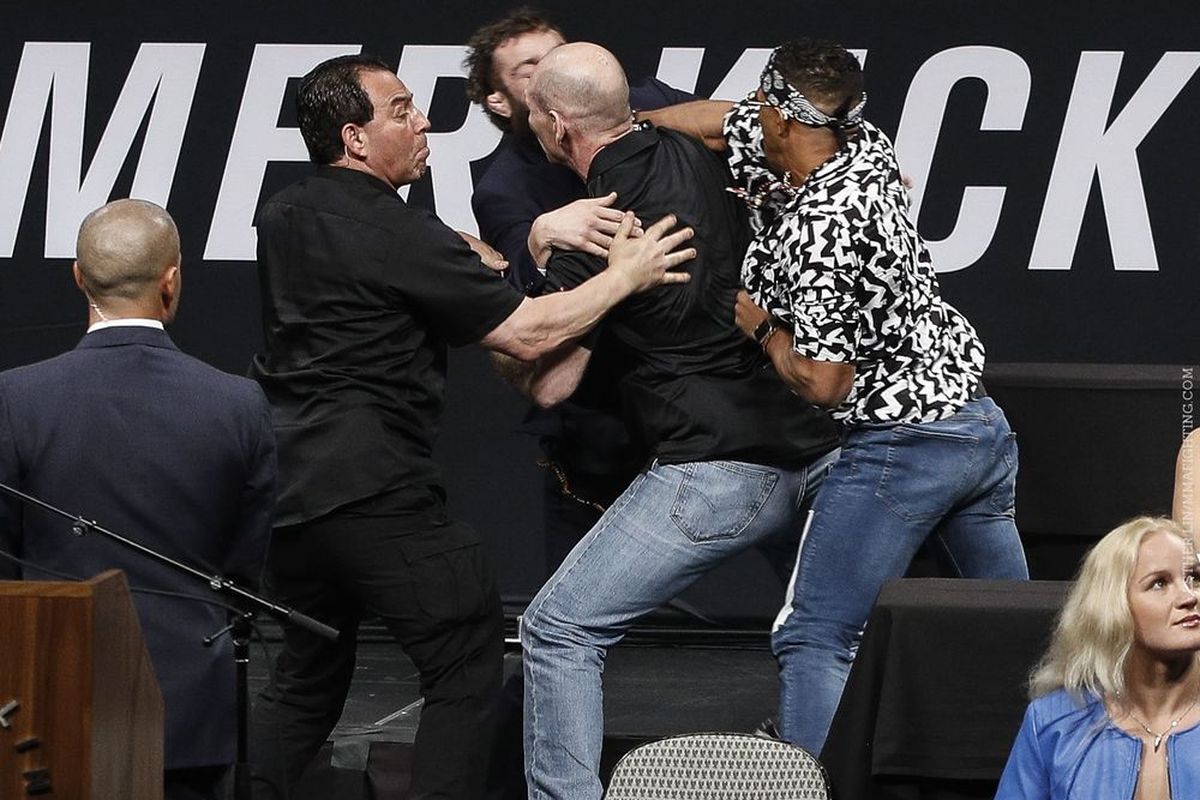
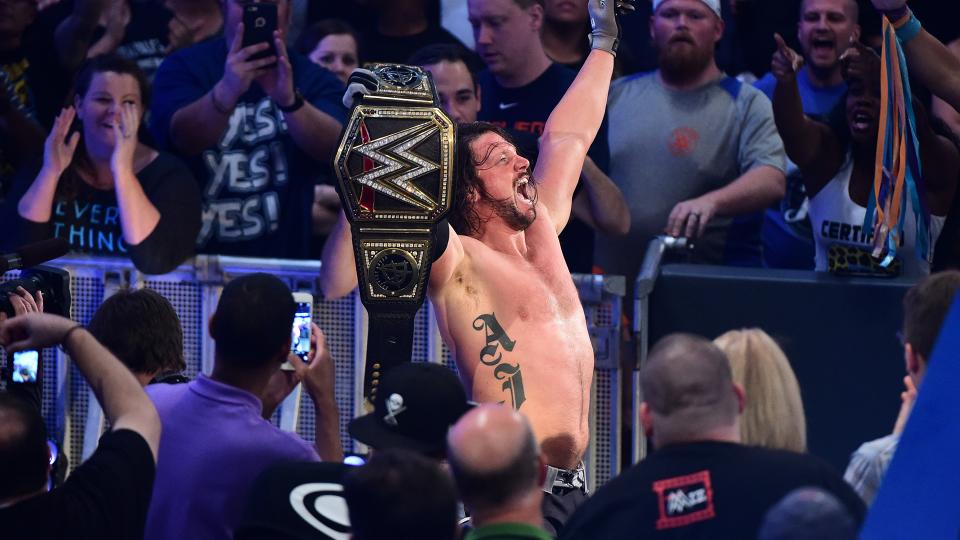
Yours truly continues his look back at the year in MMA one quarter at a time and was joined by two guests to help look back at a fun and historic three month stretch in the sport.
Bleacher Report lead MMA writer, Co-Main Event Podcast co-host and author Chad Dundas dropped by to discuss all the happenings in April which included:
Light heavyweight champion Daniel Cormier retiring Anthony Johnson at UFC 210 in Buffalo to set up a rematch with Jon Jones
Demetrious Johnson retaining his UFC flyweight gold for the 10th straight time
The continued will they/won’t they surrounding Floyd Mayweather and Conor McGregor
Dana White going retro with public comments against a slew of foes, and lots more.
Then for May and June, combat sports commentator Sean Wheelock steps for a 90-minute chat about the following and much more:
The announcement that Mayweather vs. McGregor was signed and all of the questions we wanted answered
Demetrious Johnson going public with his grievances against the UFC
An eventful UFC 211 headlined by Stipe Miocic retaining his heavyweight gold
Bellator’s return to PPV with a mix of old stars and emerging talents
A slew of interesting results and newsbits
Just in time for your holiday shopping, enjoy this giant-sized two hour edition of Josh Nason’s Punch-Out now as well as the January-March recap with Paul Fontaine now.
After making our choices for the first half of the major category Wrestling Observer Newsletter Awards yesterday, our team is back today to make our picks for Match of the Year, Fight of the Year, Promotion of the Year, and the rest of the awards. Our participants are:
Alan4L (Dr. Keith Presents host and Figure Four Weekly writer)
Alan Boon (British wrestling expert and columnist)
Joseph Currier(F4WOnline editor and Figure Four Weekly writer)
This is for the wrestler who does the most innovative and solidly executed flying maneuvers within the context of putting together great wrestling matches. This is not for simply the hottest daredevil moves, which are sometimes hit and sometimes miss.
Bryan Rose: Will Ospreay owns this category. Just a tremendous high flying wrestler in an era where there are many insane high flyers.
Paul Fontaine: Will Ospreay. I’ve been watching wrestling since the mid-70s and I’ve never seen anyone do the things I’ve seen him do in just a few matches.
Mike DellaCamera: With Ricochet toning down the flying a bit, this is very clearly Will Ospreay. A spectacular flyer in every sense, he makes the incredible look routine.
Ryan Frederick: Will Ospreay. It’s him or Ricochet, but Osprey has been flying more and it has been really fun this year watching him move.
Joseph Currier: There are other high flyers at least close to being as athletic and talented as Will Ospreay is, but no one is as willing to consistently do as many mind-blowing moves. He’ll likely have to slow down at some point before his ambition catches up with him, but he had one of the best years that a high flyer has ever had.
Kyle S. Johnson: Will Ospreay, and it isn’t even that close.
Brian Hoops: Ricochet. Will Ospreay was close in an era of some amazing high flyers.
Most Overrated
The wrestler who gets the biggest push, despite lacking ring ability or charisma.
Kyle S. Johnson: My immediate inclination is to say Roman Reigns because he is not even remotely over to the level of his push, but I’m also inclined to go with Nia Jax because she is nowhere near ready enough for the main roster.
I’ll stick with my gut and go with Reigns because his WWE Championship runs in the voting period completely fizzled out, he briefly lost his main event push not for bombing with audiences but by virtue of failing a drug test, and he has since done absolutely nothing to improve the value of the United States Championship.
Mike DellaCamera: Cody Rhodes. Cody Rhodes is fine, which is really all I can say about him. None of his matches since leaving WWE have lived up to the hype, and he’s worked with some of the best in the world. Hopefully Cody in NJPW can make me care in 2017.
Brian Hoops: Sheamus. I can’t change the channel fast enough when he is on TV. Sad, as he is paired with Cesaro.
Paul Fontaine: I have to go with Reigns here. It’s not even that he’s that bad, it’s just that he’s not near good enough to justify the amount of juice WWE is putting behind him.
Joseph Currier: I thought that Cody Rhodes got too big of a push before he even left WWE, where he seemed to think that he was underutilized. He’s had a few good matches since leaving the company, but he’s been treated as a star that is far above his ability. His work at Final Battle was promising after the voting period was over, and hopefully he can excel in ROH and NJPW, but his indie run has almost always been disappointing.
Ryan Frederick: Sheamus. I really don’t know with this one. I’m going against the grain and not picking Roman Reigns. Sheamus has been fine but they push him more than his ability deserves.
Bryan Rose: Baron Corbin has potential but still has a long way to go to be where WWE wants him. I kind of feel bad voting for him as I think he’s improved a lot in the last year, and seems to be finding a better role on SmackDown in the last few weeks but still isn’t what I’d call great or anything yet, especially when he’s now being put in main events.
Most Underrated
The wrestler with the most ability, who, for whatever reason, doesn’t get a push commensurate with their ability. This should be based on this past year, and not a business reputation earned in prior years.
Joseph Currier: Cesaro may win this category for the rest of his career if he never gets a legitimate run at the top. It’s probably worth trying him at that level, but I didn’t have much of a problem with how he was booked last year.
Neville’s extended absence from TV in 2016 even after returning from injury should win him this award. He’s been one of the best parts of WWE programming since coming back while elevating the cruiserweight division with his presence. There’s no valid reason that he shouldn’t have been part of the introduction of the division.
Bryan Rose: They finally seem to be doing something with Neville, but he’s done nothing for the majority of this year. Granted, he was out a few months with an ankle injury but he had been cleared forever and did so little. Given his immense talent, it’s just downright silly they couldn’t find a role for him until the cruiserweight division began. And even then, they waited three months before actually putting him there.
Kyle S. Johnson: Neville. Like gravity, WWE seemed to have forgotten Neville’s existence in 2016, leaving him almost entirely out of the mix during the early going of the brand split where talent was so desperately needed.
This seems to be getting reversed at last with his thus-far incredibly fun positioning as the monster heel of the cruiserweight division, but for having been wasted or ignored for so long after returning from injury, Neville gets it this year. Cesaro is always a top contender because he’s a bona fide main eventer, but 2016 was quite frankly the closest WWE has been to actually recognizing his talents, so perhaps there’s hope for 2017.
Brian Hoops: Neville. Granted he was injured for part of the year, but was largely not pushed or squashed when he did wrestle.
Paul Fontaine: Yes, he just won a tag team title, but that was not in the voting period for the awards and they could have done so much more with Cesaro. Until he gets a main event program, he will always have my vote.
Mike DellaCamera: Unfortunately Cesaro will probably win this category as long as he is in the WWE.
Ryan Frederick: Cesaro. He should be in world title contention but they never pull the trigger. He’s a top five worker in the WWE.
Promotion of the Year
Should be based on which group put together the best live and television product on a consistent basis, and secondarily, the ability to sell that product at a high level. This means box office and marketing combined with product quality. Theoretically, the top pick should be a company at or near the top on both categories.
Paul Fontaine: It’s not just that they drew more money, the UFC consistently put on good to great shows and managed to increase their TV ratings during a period when ratings are on the decline in general.
Ryan Frederick: UFC. It’s hard to pick against them especially since Zuffa sold them to WME-IMG for $4.2 billion. They’ve also had a really good year of fights and events.
Kyle S. Johnson: UFC. 2016 was a year of monster shows, monster buyrates, monster gates, and a monster sale to WME-IMG.
Brian Hoops: Hard to argue with the monster PPV year the UFC has had. NJPW was best wrestling promotion.
Bryan Rose: New Japan Pro Wrestling continues to be a hotbed of great pro wrestling action and storytelling. It’s not perfect, but it does a better job than any promotion out there. It also continues to thrive economically despite the departures of AJ Styles and Shinsuke Nakamura earlier in the year.
Joseph Currier: It’s been a year of highs and lows, but no promotion had as good of a year overall as WWE did. There are obviously still plenty of issues, and the company probably won’t win this category until three-hour Raws somehow become less of a chore. But they diversified their product greatly while putting out a variety of quality content. SmackDown and Talking Smack became must-watch shows every week, while the Cruiserweight Classic provided a few months of some of the best WWE programming ever.
Best Weekly TV Show
Weekly television shows are the only ones eligible, not monthly shows, specials or individual episodes of a specific program. This is for the best consistent program. The shows have to be produced with the idea they are a weekly ongoing show and not a short-term mini-series.
Kyle S. Johnson: SmackDown Live with Talking Smack a close second. The brand split could have been a disastrous thing, but it has led to a creative resurgence for SmackDown, which has consistently had the most compelling storylines and best writing of any WWE product. With Raw, you can get the gist of things from a quick recap or a condensed version of the show; more often, SmackDown tends to feel like must-watch stuff.
Joseph Currier: SmackDown was too mediocre for too much of the voting period prior to the brand split to get my vote. But Talking Smack has been incredible for nearly the entirety of its run. It’s hard to consider a show that doesn’t feature any in-ring action as the best weekly TV show of the year, but it’s really provided a fresh spin on using talking to advance character development.
For too long, we’ve heard the same overly scripted in-ring promos used to eat up TV segments. Talking Smack should have given WWE a look at what would be the best way to present their characters going forward.
Bryan Rose: SmackDown has been consistently good since the brand split, so it gets my vote. Maybe it’s the two-hour thing, but it seems way more cohesive than Raw, which does a great job of dragging things out and making everything feel sterile and bland. SmackDown is on point, usually has a good match or two, and most segments are pretty fun to watch. NXT has felt way too bland this year to be considered for this award, and I think Lucha Underground is too stuck in its own lore to be considered anymore.
Paul Fontaine: If I could only watch one show a week, it would be Talking Smack so that gets my vote.
Mike DellaCamera: SmackDown Live. As the year progressed, I found myself caring more about what happens on SmackDown than I do Raw. The stories make sense, are logical, and are capped off with good wrestling. It’s Raw with all the fat trimmed off.
Ryan Frederick: Talking Smack. It has no in-ring action but it is far and away the most entertaining wrestling show put on, and it does so much for the characters. Not to mention that it had some of the best promos of the year. Really, the Cruiserweight Classic should win this award but the voting rules make it ineligible.
Alan4L: CWF Mid-Atlantic Worldwide. The best thing in wrestling that nobody realizes. Brad Stutts and his crew put together the most well thought out, easy to digest, wrestling television I’ve seen in years. The show has also been home to three of the best matches of 2016 in Trevor Lee’s title bouts with Roy Wilkins, Andrew Everett, and Cedric Alexander.
Brian Hoops: ROH. Consistent wrestling and good TV angles each and every week.
Pro Wrestling Match of the Year
Remember, matches from last December are eligible, but nothing after November 30th from this year is eligible.
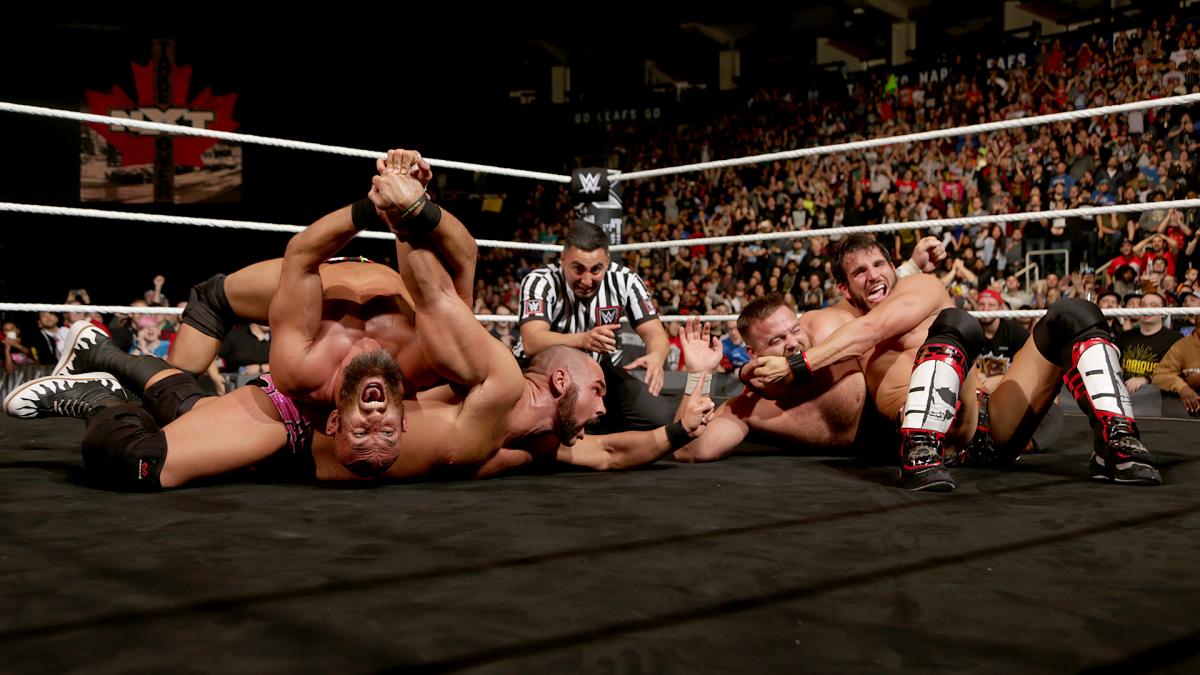
Mike DellaCamera: The Revival vs. DIY from NXT TakeOver: Toronto for me is the match of the year, and one of the best tag team matches in recent memory. The two-out-of-three falls stipulation was perfect here, as it completely raised the stakes of even the slightest in-ring movement. A spectacularly wrestled match that could have only been better if The Revival retained, because The Revival should always be the champs.
Kyle S. Johnson: Kenny Omega vs. Tetsuya Naito on August 13th in the B Block Finals of the 2016 G1 Climax. It was a close call between this and the exceptional story told between Okada and Tanahashi at WK 10, but Omega and Naito turned it up to a completely different level here. I went back and watched this match twice after seeing it for the first time, and it’s pretty likely that I’ll be returning to it again with a great degree of regularity in the future.
Joseph Currier: This was maybe the most difficult choice for me of any category. I ultimately went with Hiroshi Tanahashi vs. Kazuchika Okada from the Tokyo Dome show. I’m not sure that I liked it better than their match the year prior, but it was at least on par with the unreal standard that the two have set.
There’s nothing I enjoy more in wrestling than Tanahashi in a big match spot, but I also heavily considered DIY vs. The Revival from TakeOver: Toronto and Will Ospreay vs. Marty Scurll from PROGRESS Chapter 25.
Ryan Frederick: Kenny Omega vs. Tetsuya Naito. Just a fantastic all-around match in the B Block Finals of the G1, and both men had great matches this year. A real hard selection in a year of a lot of great matches.
Alan4L: Okada vs. Tanahashi from the Dome. An amazing, incredible final chapter to the best rivalry of the era.
Brian Hoops: The Revival vs. DIY from NXT TakeOver: Toronto. Loved the two-out-of-three falls concept and the old school way it was worked. Reminded me of the Eddie Guerrero/Love Machine match from When Worlds Collide. Nakamura vs. Styles at Wrestle Kingdom 10 is a close second.
Bryan Rose: Kazuchika Okada vs. Tomohiro Ishii was a stupendous match in a year where there were a ton of stupendous matches. But there is something about the way Ishii works a match that just makes it so compelling to watch. I think it is the way he sells; he may be proof that even though people sell, no one sells like they should…except for Tomohiro Ishii. The match had everything, from great wrestling to a hot crowd. What more could you ask for?
Paul Fontaine: Volador Jr. vs Cavernario from the finals of CMLL’s Reyes Del Aire tournament takes this for me. This match had everything and had me on the edge of my seat throughout. I don’t watch as much CMLL as I’d like to but this made me seek out more matches involving both of these guys.
MMA Match of the Year
Remember, matches from last December are eligible, but nothing after November 30th from this year is eligible.
Paul Fontaine: Conor McGregor vs. Nate Diaz II was an awesome fight where both guys left everything they had in the cage. McGregor squeaked out a win in what will set up a third fight that will likely draw even more money down the road. Pro wrestling wishes they could book something this good.
Brian Hoops: Conor McGregor vs. Nate Diaz II was the best MMA match in a year of several great matches.
Ryan Frederick: Robbie Lawler vs. Carlos Condit. It was two men known for exciting fights delivering a hard-hitting slugfest with a title on the line. The fifth round of that fight was epic and exciting. It was such a fantastic fight.
Kyle S. Johnson: Dong Hyun Kim vs. Marco Polo Reyes on June 4th on the UFC 199 Prelims. This was close for me, just narrowly edging out Lawler vs. Condit by the slightest of margins. Man, what a fight this was.
Rookie of the Year
This is based on ring performance, not how someone is pushed or necessarily even long-term star potential. By the standards of the category, a rookie is someone who hasn’t had a regular job with a full-time wrestling company before September 1st, 2015.
Alan Boon: Matt Riddle has “it.” I’m not sure what “it” is but you know it when you see it, and Matt Riddle is in secure possession of the intangible. For someone with so little time in the professional game, he shows an astonishing level of comfort between the ropes, and has been able to parlay his MMA background into a realistic style, something that has evaded many similar athletes. If there are issues preventing him finding a spot in WWE or Japan then that’s just what it is, because there’s a realness to him that’s part of the appeal.
Joseph Currier: It’s impossible to understate what a special talent Matt Riddle already is at this point in his career. He has seemed to grasp the fundamentals effortlessly, while also knowing how to present himself as a character and personality. He has everything it takes to be a legitimate top star wherever he goes.
Mike DellaCamera: Matt Riddle. Already an absolute star. There is no realistic limit to his ceiling as a wrestler, Bro.
Bryan Rose: Matt Riddle is really, really good one year into his career. I’d love to see where he goes from here as he can go anywhere and be a star at this point.
Paul Fontaine: Matt Riddle.
Ryan Frederick: Matt Riddle. He has made such a great transition from MMA to wrestling, and he’s such a natural. He’s already a star. He’s only going to get better too.
Kyle S. Johnson: Matt Riddle. In such a finite amount of time, this guy has already become a must-see star. He’s someone you look at and can almost immediately envision walking down the aisle at a WrestleMania.
Brian Hoops: Matt Riddle. It’s almost ridiculous how good this guy has become this quickly.
Best Non-Wrestler Performer
For the best performer on a television show who isn’t a traditional wrestler, whether they be a management figure or a traditional manager.
Joseph Currier: Daniel Bryan again finding a regular role on WWE TV has been one of the best parts about SmackDown since the brand split. Having a face authority presence has really helped differentiate SmackDown from Raw, while Bryan’s honesty on Talking Smack is vital to making that show work.
Ryan Frederick: Daniel Bryan. It’s hard seeing him not wrestle, but he’s been good in the GM role on SmackDown, and has been fantastic on Talking Smack.
Kyle S. Johnson: I’ll go with Daniel Bryan for his phenomenal work on Talking Smack and his contribution to making The Miz one of 2016’s most surprising success stories.
Paul Fontaine: Dario Cueto is in a class by himself, in my opinion.
Brian Hoops: Dario Cueto. Very good for his role.
Best Television Announcer
Bryan Rose: I get some of the criticism people throw at Mauro Ranallo when it comes to his announcing, and they are pretty warranted, but he’s still the best announcer WWE has and it’s not even close. I’ll go with constant Japanese references over the inhumanely robotic Michael Cole any day.
Ryan Frederick: Mauro Ranallo. He’s very good and was great on the Cruiserweight Classic shows. He’s also very different from the typical WWE announcer, and a very good different.
Kyle S. Johnson: Mauro Ranallo. From the Cruiserweight Classic to SmackDown, this guy exudes a level of knowledge, class, and intelligence that WWE programming has been sorely missing at the commentary table since the departure of Jim Ross.
Brian Hoops: Mauro Ranallo is simply the best in the business.
Paul Fontaine: Mauro Ranallo. It’s so nice to see him finally get his dream job and he delivered in a big way.
Mike DellaCamera: Corey Graves. He works three shows, (Raw, NXT, 205 Live) and makes each one of them exponentially better. It’s a testament to his skill that he has tremendous chemistry with such a diverse set of broadcast partners. And I know it’s technically outside of the timeframe for the awards, but his reaction to Sami Zayn being “traded straight up for Eva Marie” was the commentary moment of the year.
Alan4L: Brad Stutts. Legitimately one of the best wrestling commentators I’ve ever heard. A modern take on old school 80s announcing and it’s so good. Brad enhances great matches and makes them classics.
Joseph Currier: Lenny Leonard’s professionalism helps make every EVOLVE show feel like a big deal. He’s done a great job of always putting the product first and elevating what’s going on in the ring. He’s especially worked well when put in the tough position of being the only voice on EVOLVE’s broadcast team.
Worst Television Announcer
Bryan Rose: There are so many different definitions of bad in this category. You can go with grating (JBL), robotically sterilized (Michael Cole), or bland as all hell (Byron Saxton, Tom Phillips, David Otunga). But I think I will go with Matt Striker, who by now I think is not only self aware that he’s pretty bad, but has responded by becoming a parody of himself, going out of his way to be amazingly awful in every capacity when it comes to being an announcer. At least with others I can tune them out; I can’t with Matt Striker.
Brian Hoops: So many to choose from. Matt Striker is a guy who I loved to listen to eight years ago and is now the worst in the business.
Kyle S. Johnson: Perhaps the most hotly-contested award of the bunch, I’m almost inclined to call this a tie between David Otunga and Matt Striker, who both narrowly beat out Josh Mathews, JBL, Byron Saxton, and Michael Cole. All six of these guys have been infuriating at some point or another throughout the year, though Otunga seems to be on a completely different level of ineptitude.
His commentary is like what I would imagine it might sound like if you gave a headset and microphone to the yawning void of the furthest, emptiest reaches of space and asked for its opinion on AJ Styles’ strategy in a triple threat match, only I suspect that the cold and insentient vacuum at the fringe of our solar system might possess more knowledge about professional wrestling than David.
Still, Striker’s grating commentary for Lucha Underground would be enough to pull him into a close race with Otunga on its own merits, but his abysmal and embarrassing performance at Triplemania alone — including the call of “doing it for Benghazi” on a tope con giro and a prolonged segment where he ranted insipidly at Twitter — blows away even Otunga’s hair-tearing cluelessness. We’re talking Lou Albano at Heroes of Wrestling levels of bad.
Paul Fontaine: Striker is annoying. David Otunga is useless. Byron Saxton is just plain horrible. It’s close but I think it has to be Saxton.
Ryan Frederick: Byron Saxton. It’s rough listening to him for over three hours several times a month. He tries too hard to be funny and it’s amazing how bad he is when he has someone next to him who is so good in Corey Graves.
Mike DellaCamera: David Otunga. There are no shortage of candidates, but Otunga is just abysmal. He has no character, no charisma, and weirdly bashes people with infinitely more talent than he will ever have. All due respect to Byron Saxton, who would win this in any other year, but no one is in Otunga’s league.
.
Best Major Show
This should be a major show, as opposed to a TV taping or house show, although TV specials like Saturday Night’s Main Event or Ultimate Fight Night are eligible.
Kyle S. Johnson: Wrestle Kingdom 10 on January 4th at the Tokyo Dome. UFC 199 is a very close second, so much so that I started writing it up as my selection before having a change of heart. NXT TakeOver: Dallas and UFC 202 are right there as well, but nothing quite tops the 2016 Dome show for me. The final three matches on the card were all heavy contenders for my personal match of the year with each bringing something different to the table.
Shibata vs. Ishii was a violent war that left me cringing more than once, Nakamura vs. Styles could not have been a more perfect send-off for two guys who wound up successfully making the leap to WWE soon thereafter, and Okada vs. Tanahashi told an amazing story that rewarded fans for being familiar with the history between two of New Japan’s modern-day greats. Really, the thing separating WK 10 and UFC 199 in the end was the completely insane Doraemon skit during the pre-show, which deserves some sort of special distinction itself for fueling many of my waking nightmares in the months that followed.
Brian Hoops: Wrestle Kingdom 10 on January 4th at the Tokyo Dome. There were several NXT TakeOver shows that were close.
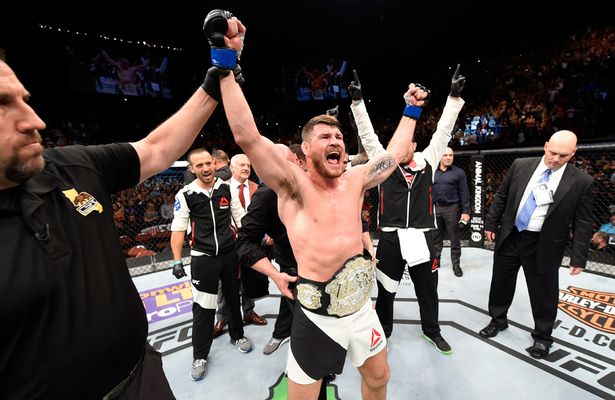
Ryan Frederick: UFC 199 in June. It started with one of the best fights of the year with Polo Reyes against Dong Hyun Kim. It ended up with a lot of incredible moments, from Dan Henderson scoring the final win of his career in spectacular fashion, to Max Holloway and Ricardo Lamas throwing down in the final seconds of their fight, capped off with Michael Bisping capturing the UFC Middleweight Championship after a long career by knocking out Luke Rockhold. A fantastic event all around.
Joseph Currier: Wrestle Kingdom 10 was the weakest of the past three Tokyo Dome shows, but the quality of the top matches and it taking place on the biggest stage possible will likely deliver a fairly safe win. But I’m going with NJPW’s King of Pro Wrestling show from October, which I felt was more complete than WK and was similarly topped by three great matches.
Paul Fontaine: I was there live so this may have influenced my vote but it’s really tough to top NXT TakeOver: Dallas. A packed house, a rabid crowd, and matches that were great on paper and even better in execution. I’ve been a wrestling fan my whole life and have never had more fun at a show.
With the most newsworthy and eventful year in MMA history now a wrap, Josh Nason continues his annual year in review process one quarter at a time.
After looking at the table-setting Q1 with Paul Fontaine, Josh is joined by Bloody Elbow’s John Nash to reconstruct an eventful April-June, tackling the following:
– The incredible UFC 199 that featured a big title change upset, the announcement of both Brock Lesnar’s return and Conor McGregor vs. Nate Diaz II, and Ariel Helwani’s MMA Fighting crew being put on the banned list for several days afterward
– The drama surrounding Conor McGregor being pulled from UFC 200, his “retirement” on Twitter, the new headliner of Jon Jones vs. Daniel Cormier, and the circumstances that led to Jones vs. Cormier II being pulled from UFC 197 to begin with
– Benson Henderson’s rough welcome into Bellator
– The UFC’s new morning weigh-in policy and how it’s affected the game
– The UFC 198 Brazilian megashow and why UFC hasn’t been back to the country for a PPV since then
– The impact of the deaths of Kimbo Slice and Muhammad Ali…and more!
Though the malaise of three-hour Raws and seemingly constant content often made it difficult to appreciate in the moment, 2016 was a transformative year for WWE that featured high points in diverse in-ring action.
Some of the same problems that have long existed still remain as we enter the New Year. Raws are, indeed, too long. Main event booking on the flagship show has been as stale as ever with the same handful of talents being shuffled around without a compelling direction. And even with the influx of new talent into the company last year, many of them haven’t been used to their full potential.
But those problems don’t outshine what was the best year in company history in terms of match quality. WWE has never before had as many excellent matches in a given year. The roster has never had so many talented workers.
Where WWE succeeded most in 2016 was making a genuine effort to present their product in different ways. The most obvious example of that has been the quality of SmackDown since the company once again attempted a brand split in July.
SmackDown wasn’t totally useless prior to the WWE draft. The show usually featured good matches, but it existed mostly as a watered-down two-hour version of Raw without signature moments or much angle advancement.
The brand split changed that. SmackDown (and Talking Smack after the show) became a legitimate must-see program every week. Led by the otherworldly performance of AJ Styles both as a character and inside of the ring, the show has consistently utilized nearly every talent on the roster to their strengths. Styles boosted the brand’s pay-per-views and TV shows by wrestling every match seemingly in an attempt to prove that he’s the best wrestler in the world and capable of carrying the company.
Styles’ main events and WWE Championship programs helped carry the brand, but other talents have thrived as well. The Miz has done the best work of his career. Becky Lynch and Alexa Bliss have been solid women’s champions. The Wyatt Family has once again become a compelling act with Randy Orton joining the group. Baron Corbin has shown a lot of promise. Even Heath Slater and Rhyno were a bright spot on the show for a brief period.
In addition to its women’s title programs, SmackDown has been able to always juggle more than one feud within the division at once with Nikki Bella, Natalya, Carmella, and Naomi also doing good work at times. WWE’s 2016 might ultimately most be remembered as the year that the women’s revolution finally took hold on the main roster.
It wasn’t always perfect. The rivalry between Charlotte Flair and Sasha Banks went on for too long. They had too many pointless title switches. The redeeming qualities of their Hell in a Cell main event — the first time that a women’s match has ever closed a WWE PPV — were at least equaled by the low points. But just being able to main event a PPV with a women’s match that didn’t at all feel out of place was a considerable achievement.
Despite the problems, Charlotte and Banks were often the best part of Raw. The existence of meaningful women’s matches has tremendously helped programming while making an actual attempt to appeal to all portions of the audience.
WWE presented a unique product that the company never would have in previous years over the summer with the Cruiserweight Classic airing on the WWE Network. For a few months, the CWC was some of the best programming that the company has ever produced. WWE seamlessly integrated the diverse styles of lightweight wrestlers and allowed some who didn’t even end up signing with the company to shine.
Led by the instant classic between Cedric Alexander and Kota Ibushi, the tournament produced some of WWE’s best matches and moments of the year. Raw’s cruiserweight division and the early introduction of 205 Live haven’t had the same success. But Rich Swann being given a shot as the division’s champion, along with Neville’s stellar work in the first few weeks in his new role as a heel seem to suggest that better days are ahead in 2017.
The plethora of other options and a lackluster year for the brand overall made it so NXT’s role in the diversification of the WWE product in 2016 was mitigated. NXT was home to the best tag team wrestling in the company with The Revival always delivering in big matches and Johnny Gargano and Tommaso Ciampa serving as their best opponents to date. Their two TakeOver matches in Brooklyn and Toronto were among WWE’s best of the year and stood above everything else NXT did in 2016.
With SmackDown serving as a more effective alternative to Raw and 205 Live featuring many of the wrestlers who otherwise would have made their way through NXT, it might be best for NXT to carve out its identity by embracing its role as developmental going forward. Fans want to watch talents improve and develop over time. They want to get invested in their journeys. If stars like Shinsuke Nakamura and Samoa Joe aren’t immediately going to be placed on the main roster, fans want to watch them have short runs in NXT before being promoted to those deserving spots.
While the use of Nakamura, Joe, and Bobby Roode may have helped ticket sales as NXT attempts to become a viable touring product, it’s undeniable that buzz for the brand cooled off considerably last year.
The announcement of the United Kingdom Championship tournament and whatever is to come of that seems to indicate that the diversification of the WWE product will only continue into 2017 and the years to come. Triple H has said that they don’t expect fans to watch all of the content they put out as it’s happening, and it seems like we’re heading into an era where programming on the Network that appeals to niche audiences will make it easier for fans to pick and choose what they want to watch based on personal preference.
That won’t change many of the flaws inherent in WWE programming. Though there were better episodes towards the end of the year, Raw will still be too long. Much of the creative will still be uninspiring. Part-timers will still be heavily featured as we enter WrestleMania season. The company will still have problems creating legitimate mainstream superstars.
Those flaws shouldn’t be overlooked. But the transformation of WWE should only continue into 2017. The company will produce more great matches. More of the best wrestlers from around the world will sign with WWE, while many talents on the roster will get chances that we didn’t think were possible even a few years ago. And WWE will continue to find new ways to present a diverse variety of content. Things aren’t perfect, but they’re undeniably getting better.
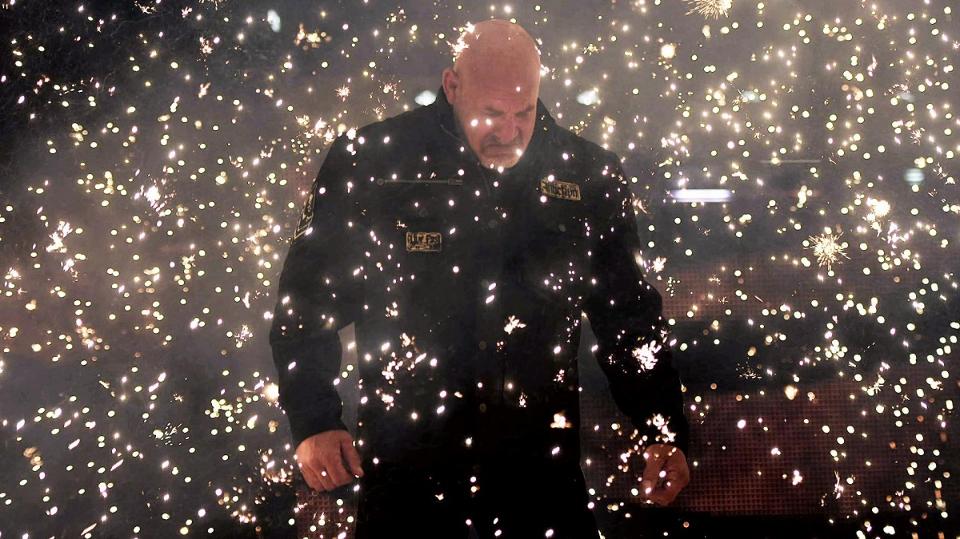
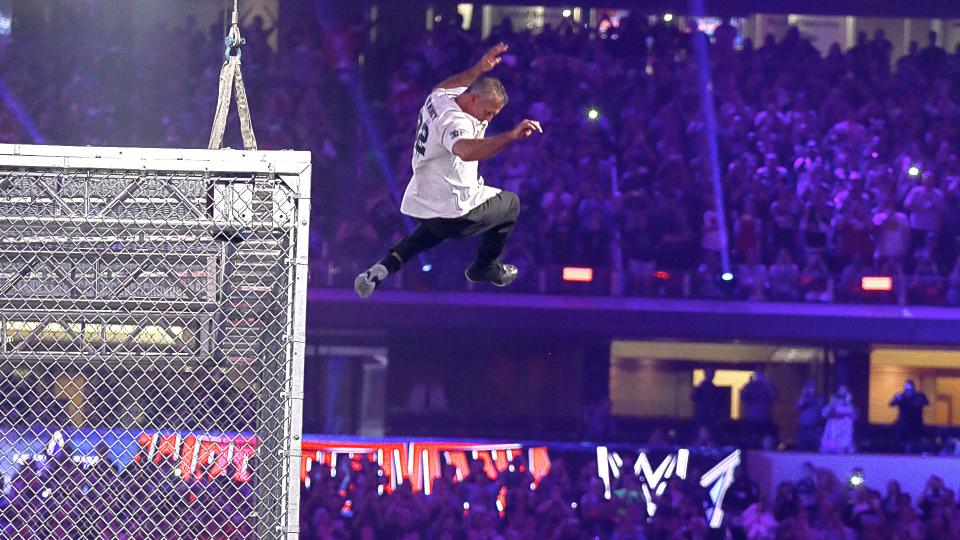
Shane McMahon shockingly reemerged after a several-year absence, battling The Undertaker inside (and outside) of Hell in a Cell. Goldberg returned to WWE after a 12-year absence, demolishing Brock Lesnar in what was essentially a squash match.
Earlier in the year, Lesnar himself destroyed Randy Orton, leaving him a bloody mess.
These were all big time WWE moments that many people won’t soon forget. But there’s an underlying theme to all those stories, and it’s becoming a bigger problem as the years go by — they don’t get over anyone who is actually a full-time performer in WWE.
Not to say that these wrestlers should never have made their return. All of the above scenarios were intriguing on paper, and for the most part they delivered when the time came. Business wise, it makes total sense. But when you continually undermine those who work hard to get where they are at on weekly WWE television, you’re creating scenarios where it’s probably smarter for full-timers to leave WWE so someday they can come back with a schedule and a push like Goldberg.
For all the talk about brass rings, it seems like the only ones who are allowed to grab them are the ones who have already made their names. That is exactly why the part-timers are far more over than the weekly wrestlers, because they have that aura that is completely nonexistent in today’s WWE superstars.
You could argue that it’s all about the talent currently on the main roster. Realistically, there’s no one on the main roster right now that is at the level of a breakout superstar like The Rock or Stone Cold Steve Austin. And I would agree, to a point — someone like Seth Rollins, who is a fantastic worker, pales in comparison to those two.
But also think about how Rollins has been pushed since coming back from injury. Let’s remember how he got to where he is now: booking and dialogue given to him made sure people booed him upon his return (despite getting big babyface reactions), and when they eventually did start booing him, WWE immediately turned him face. And not only did they make him a babyface, they made him a pretty lame one, with the storyline being he wanted to prove the Authority wrong, not because he stood against their doctrine of crowning undeserving champions, but because he wasn’t the one the Authority wanted anymore. Cool face move, dude.
Wrestling and the mainstream only click when there is a bankable superstar that is able to transcend the business itself. Hulk Hogan, Steve Austin, even John Cena to an extent have done this. But that can’t happen these days, because everyone is taught from day one in NXT that WWE looks out for itself the most, not the wrestler.
Wrestlers are taught to be humble and thankful for their opportunities. If anyone complains about their spot, they’re punished and made to feel completely irrelevant. If anyone acts like a superstar backstage, they’re quickly taken down a peg.
All the elements that help a talent go to that next level are usually denied, and instead of a desired top superstar you get Roman Reigns, a guy Vince McMahon loves and will push to the moon no matter what, but by now to fans it’s obvious that despite his strengths — he’s a Lex Luger and not a Bret Hart. And at least Lex Luger got some nice pops as a face.
When it comes to the big returns of 2016, and who gets the biggest reactions, you have to compare why they get over, besides the fact they aren’t on weekly WWE television. Goldberg became a star because he won a lot of matches and did little else, creating a mysterious, dominant aura that carried him to the top of WCW. Undertaker got over by not selling, losing rarely and again, having an aura no one else in the WWE had at the time. Same with Lesnar. That is the complete antithesis of today’s WWE booking, where wins and losses don’t matter and top stars are required to do comedy or recite painfully forced, stilted dialogue that feels unnatural.
So it’s great we have superstars like Goldberg and Brock Lesnar on the roster, because they are a dying breed of superstar that we don’t get anymore — those that are able to get themselves over without the weight of what WWE wants their performers to do.
Being on weekly TV for WWE is actually pretty detrimental, because booking is changed on the fly, and it’s usually a detriment to those who have to work with what they’re given. WWE really needs to completely change the way they book and handle talent. Someday the likes of Goldberg, Undertaker, and others won’t return for a payday. What will they be left with then?
While it may be difficult for many to remember 2016 fondly, it was a transformative year for professional wrestling both domestically and around the globe. That transformation was especially apparent in WWE as 2016 saw the addition of so many talents to the company, the women’s revolution finally take hold on the main roster, and the implementation of another brand split.
The following is a list of our top 10 wrestling events of the year based solely on views for the live post on our website. Events from NXT and other promotions were eligible, but WWE shows ended up taking every spot on the list.
Most of the focus going into Hell in a Cell was centered on which match would main event the show. WWE had advertised that the PPV would feature a “triple main event,” but what match would go on last wasn’t confirmed until shortly before it started.
The main event ended up being a historic one. Sasha Banks vs. Charlotte Flair became the first ever women’s match to close a WWE PPV, as well as the first ever women’s Hell in a Cell match. The match itself wasn’t the best that the two had in 2016, but it was certainly a considerable milestone even if WWE didn’t hype it as one.
Whether WWE considers the decision to have Banks and Charlotte main event remains to be seen, but Hell in a Cell was the only brand-exclusive PPV since the WWE Draft to break into our top 10.
Fastlane didn’t quite end up being the last Network special before WrestleMania with the addition of Roadblock (the one before the End of the Line) in March, but it decided who would go on to face Triple H for the WWE title at AT&T Stadium.
Roman Reigns won a triple threat match over Dean Ambrose and Brock Lesnar to earn that spot. The direction for other WrestleMania matches was also solidified at Fastlane with Charlotte defeating Brie Bella to retain her title and Kevin Owens successfully defending the Intercontinental Championship against Dolph Ziggler.
AJ Styles defeated Chris Jericho on the show in his first PPV singles match after joining WWE, and the two would go on to face each other again at WrestleMania.
This was a bit of a surprise. Goldberg essentially squashing Lesnar in the main event was one of the most talked about WWE moments of 2016, but Survivor Series still ranked in the bottom half of this top 10.
What that can be attributed to is anyone’s guess. Perhaps the traditional Survivor Series elimination tag matches failed to capture the attention of viewers who wanted title matches, but this was proof that the “big four” wouldn’t easily top this list like I had expected.
Two title changes ultimately ended up headlining this year’s Money in the Bank. Rollins defeated Reigns in the scheduled main event as he made his return from a lengthy absence due to a knee injury to reclaim the WWE Championship. But Rollins’ reign didn’t last long. Ambrose cashed in the Money in the Bank briefcase that he won earlier in the night to win his first top title in WWE.
Just two days later, it was announced that Reigns had been suspended for 30 days due to a wellness policy violation.
The show may end up most remembered for being home to the first singles meeting between Styles and John Cena. Styles got a win over Cena with the help of Karl Anderson and Luke Gallows here, and he went on to get a clean win over Cena two months later at SummerSlam. The two will meet for the third time on the first WWE PPV of 2017 as the Royal Rumble takes place in San Antonio, Texas.
Survivor Series ranking so low made it so this wasn’t unexpected, but it was still pretty surprising. Where Survivor Series has lost some of its luster, the Royal Rumble is still unquestionably one of WWE’s top few events of the year. The show also traditionally serves as the start of WrestleMania season every year.
But for whatever reason, the 2016 edition ranked in the bottom half of our top 10. It was, like most years, headlined by the 30-man Royal Rumble match, but this year’s match was for the WWE Championship rather than a title shot at WrestleMania.
Triple H came out on top by last eliminating Ambrose. The Rumble also featured Styles’ WWE debut after news that he had signed with the company broke earlier in the year.
With two strong WWE Match of the Year contenders, it’s easy to look back fondly on Extreme Rules. Reigns defended the WWE Championship against Styles in a match where both men put on tremendous performances.
It was a shame to see Styles removed from the title picture as Rollins made his return after the match was over to continue his feud with Reigns, but that decision is easier to tolerate with the benefit of hindsight. Styles went on to feud with Cena and again have great main event PPV title matches after he was established as one of the top stars of the SmackDown brand.
The second WWE Match of the Year contender came earlier in the night as The Miz defended the Intercontinental Championship in a fatal four-way against Cesaro, Owens, and Sami Zayn. In a year where Miz was involved in several excellent IC title matches, this four-way remains his best match of 2016 for me.
There were some low points on the Extreme Rules card, though. The less said the better about the tedious Ambrose Asylum match between Ambrose and Jericho.
Boosted by its position on the WWE calendar as the first PPV after WrestleMania, Payback was also the first of two times that Styles challenged Reigns for the WWE title in a PPV main event. Styles would have to wait until later in the year to win that championship, but his series with Reigns and later matches with Cena likely were what solidified his place at the top of WWE cards.
Styles and Reigns went on to have a better match at Extreme Rules. And Owens and Zayn’s Payback match was topped by their (for now) feud ender at Battleground in July.
The guarantee of a new Universal Champion led to the August 29th edition of Raw beating all but two PPVs in views, and it obliterated all other TV shows. As a result of Finn Balor injuring his shoulder at SummerSlam and requiring surgery to repair the injury, Reigns, Rollins, Owens, and Big Cass were placed into a fatal four-way main event to decide Raw’s new top champion.
Owens won the title with some help from Triple H. We haven’t seen Triple H on Raw since, but with WrestleMania season quickly approaching — it seems likely that his program with Rollins will soon kick into high gear.
WWE’s attempts to turn SummerSlam into their second biggest event of the year proved to be a success based on our metrics. The difference in views between SummerSlam and the August episode of Raw was greater than any previous jump on this list.
This year’s edition of SummerSlam was the second PPV after the WWE Draft. It was headlined by a match between Raw’s Lesnar and SmackDown’s Randy Orton that would become most remembered for its controversial finish with Lesnar opening up Orton’s forehead with stiff strikes.
The Universal Championship was unveiled to a negative reaction from the live crowd, and Balor was the first titleholder before having to relinquish it due to the injury he suffered during his match with Rollins.
Elsewhere on a loaded card that delivered in some spots and failed to in others, Styles got a clean win over Cena, Charlotte regained the Women’s Championship by beating Banks before Banks took a few weeks off due to back issues, and Ambrose retained his WWE title against Ziggler.
As if there was any doubt, WrestleMania easily topped this list. WWE’s signature event of the year didn’t double SummerSlam, but traffic for the show came in at 65 percent higher than that post.
The show will likely be remembered more for the spectacle of it than anything else with just under 100,000 fans packed into AT&T Stadium to see the marathon event.
Most of the build going into the night was based on Shane McMahon’s Hell in a Cell match with the Undertaker. With Shane’s leap off of the Cell to the announce table below, the match probably delivered as much as it could. And Reigns won the WWE Championship after he defeated Triple H in a flat main event.
The most significant thing to come out of the show was the end of the WWE’s divas division. After the announcement was made that the women would be referred to as superstars from then on and a new title was unveiled, Charlotte was the first to hold it after defeating Banks and Becky Lynch in a very good triple threat match.
This year started off with a bang as WWE signed four of the biggest talents from New Japan Pro Wrestling, all who had a banner year in 2015. Not only was it shocking, as WWE normally isn’t as aggressive in signing talent from there, but it was during their renegotiation period, where New Japan normally signs their guys to one-year contracts as had been tradition for decades.
I guess all traditions eventually come to an end, much like the runs of these four men in the promotion, as it caused NJPW to think differently when it comes to negotiations. But it was a year in which many traditions were broken, not just about New Japan’s contract situations, but also WWE’s mentality of who can be a star. Let’s take a look at the New Japan Four’s banner year, and where they are today.
Karl Anderson & Luke Gallows
Being one of the top tag teams in NJPW for years, people raised eyebrows when Anderson and Gallows jumped ship over to WWE. After a few months of questions regarding their debut, they finally arrived on the April 11th edition of Raw. They immediately looked to make a name for themselves in the tag division, all while being chummy with AJ Styles, their former Bullet Club leader.
That trio soon cemented their unit, giving themselves the clever and very original name of “The Club.” Once the brand split went down, they were split up with Anderson and Gallows joining Raw while Styles became exclusive to SmackDown.
Since the brand split, Anderson and Gallows have pretty much been at the center of the tag team division, never too far away from getting a title shot. With New Day having firm control of the belts for most of the last year, they’ve yet to become champions. But it seems likely somewhere down the line, they’ll eventually get a run with the titles, and they’ll be at the top of Raw’s tag team division, much like they were during their time in New Japan.
Shinsuke Nakamura
To say it was shocking when Shinsuke Nakamura announced his departure from NJPW in January 2016 would be an understatement. Not only was he the IWGP Intercontinental Champion, he was one of the cornerstones of the promotion, always at the top of the cards and a certified draw.
So when Nakamura announced he was going to WWE, 2016 was already off to a completely unpredictable start, as it was unheard of that someone like Shinsuke Nakamura would jump from New Japan, where he started and wrestled since 2002, to WWE, where his comfy position at the top wasn’t necessarily guaranteed.
But when transitioning to the WWE, Nakamura instantly “got” the mentality of how WWE, and American wrestling in general, worked. When he made his debut on April 1st at NXT TakeOver: Dallas against Sami Zayn, he didn’t have a crazy, blow out match like he did in big time New Japan matches. He had an amazing match against Zayn, but didn’t go crazy. He got over in that match not by killing himself with scary looking moves, but by just being Shinsuke Nakamura, one of the most charismatic figures in pro wrestling today.
Not only did it work for Nakamura, but everything about him — the music, the entrance, the charismatic swagger — instantly got over and propelled him quickly to the NXT title, defeating Samoa Joe on August 20th.
Although Nakamura is obviously ready for the main roster, apparently Triple H and those in charge over at NXT see differently. Much like how Finn Balor was the anchor for NXT in 2014-15, Nakamura is now poised to be the main attraction for the brand for months to come. His next feud will be against Bobby Roode, where they are destined to face off at NXT TakeOver: San Antonio over Royal Rumble weekend.
There is no timetable for Nakamura’s debut on the main roster, but at 36, it’s painfully clear the time to pull off a debut on Raw or SmackDown would be best suited for everyone sooner rather than later.
AJ Styles
Out of everyone on this list, it’s apparent that AJ Styles has flourished the most under the WWE banner. Like Nakamura, he had a reliable position at the top of NJPW cards as the leader of the Bullet Club. But when WWE came calling with a big money offer, Styles took it. While working in Japan is great, it’s probably better to make that kind of money wrestling at home rather than abroad.
But like most who develop a big name outside of WWE, Styles had a somewhat rocky start. After making his debut at the Royal Rumble, Styles soon found himself in a tag team with Chris Jericho. Y2AJ didn’t last all that long, as Jericho swerved him, leading to a match at WrestleMania.
Styles lost, even though it made total sense for him to win as the next night on Raw he became the number one contender to Roman Reigns’ WWE title. Although he went on to lose those matches, he instantly became a star to not only those in the crowd, but also backstage. His next program, with John Cena, was somewhat of a dream series as one of the biggest names in WWE (Cena) battled one of the top names outside of the WWE in the last decade (Styles).
Their SummerSlam match was one of the best matches of the year, leaving Cena beat as Styles proved to be “The Champ That Runs the Camp,” as he would soon be calling himself. Despite the dumb name, Styles went on to even bigger success, defeating Dean Ambrose at Backlash, doing what many thought was impossible only a few years prior by becoming WWE Champion.
Styles is one of the biggest stars, if not the biggest star, of the SmackDown brand. In the transition from New Japan to WWE, Styles hasn’t lost much — he continues to be one of the best overall workers in the business and almost never has a bad match as he’s just so consistently great in everything he does in and out of the ring. Barring injury, 2017 is set to be a banner year for Styles. He’ll continue to make a case for himself as one of the best in the industry, and he’s completely deserving of another look for the Wrestling Observer Hall of Fame.
In our first look at our most viewed news stories of 2016, the emphasis was on injuries and WWE signings.
But that was 6-10, and we find ourselves ready to present the top five most viewed stories on WrestlingObserver.com of 2016 featuring two backstage scuffles and talents either on their way out of WWE or blocked from coming back in.
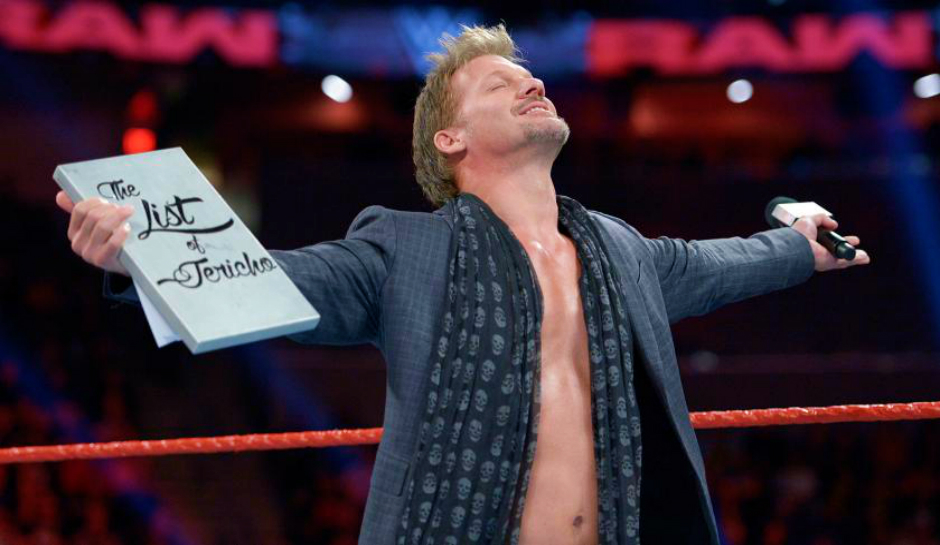
The List of Jericho got a name written in bold in November as Sin Cara (Jorge Arias) and Y2J got into an altercation on a bus in England during WWE’s fall overseas tour of the United Kingdom. It seems Arias was annoying some of his fellow wrestlers and when Jericho confronted him in an effort to get him to quit it, things got ugly. A finger bite later, the two were separated and Arias was kicked off the bus, left to his own devices.
Both men had quite a year with backstage frays, so this was the icing on the 2016 cake. You’ll be hearing more about the Jericho Fighting Championship in a few paragraphs.
For many, the voice of “The King” was part of their wrestling upbringing, for better or worse. Along with Jim Ross, the dirty old man who never thought he was old was synonymous with the experience of watching Raw and most PPVs.
In recent years, Lawler had been moved around from property to property and in December, he finally ran out of real estate. Both he and fellow WWE Hall of Famer Lita (Amy Dumas) were removed from the pre-show panels, signifying the end of an era in the case of the former.
While they did both ink Legends deals, Lawler and Dumas now become the equivalent of retired hosts in the Westworld warehouse, waiting to be programmed again to have usefulness for the big show.
Arguably the biggest WWE alumni member still on the outside looking in, Angle will remain in that role for the foreseeable future, according to a WWE official our Dave Meltzer spoke with in June following a radio interview Angle did.
Since then, the wrestling content world has changed incredibly. More and more emphasis is being put on name value as opposed to pre-conceived notions about what a pro wrestler is in 2016. However, Angle’s checkered past and battles with his demons have cast doubts about whether Vince McMahon is willing to sign off on bringing him back.
Then again, a 50-year-old Goldberg just decimated Brock Lesnar in a few minutes at Survivor Series. As always, card subject to change.
To give you an idea of how big this story was, the views for this post were nearly double that of #3 on this list.
It’s cliche to say “the year started off with a bang” but in this case, that would be fitting as this was a massive story to kick off 2016. When two of the world’s best and one of the most notable American teams in NJPW decided to turn their gaze to Titanland, it raised eyebrows and set the course for a wild news year with lots of moves by lots of top talent partially driven by content needs.
Since then, we saw AJ Styles debut at the Royal Rumble, lose to Chris Jericho at Wrestlemania, have a tremendous feud with John Cena, and go on a run that sees him finish off the year as WWE Champion. Nakamura is the NXT Champion and is still working in front of a few hundred people a night at armories in Florida instead of thousands on the road for the big club.
And then, there’s Anderson and Gallows. Let’s just move on.
This was one of those stories that we knew would be huge, but we didn’t expect this to be the biggest post of not just the year but of all-time for our website.
Pretty simply, Jericho was curious as to what happened in the finish of Lesnar’s memorable match with Randy Orton that left Orton in a pool of his own blood and viewers with mouths agape. Lesnar walked backstage, heard something he didn’t like, and it…was…on.
Jericho has never backed down from a challenge (Goldberg, anyone?) and apparently, Lesnar wasn’t going to be the first. You know this was wild and crazy when Vincent Kennedy McMahon gets involved in breaking it up.
Backstage fights will always generate interest, but one with a former UFC champion and a fiery Canadian who has hockey in his blood? That’s gold, Jerry. Gold.
Next up on our year-end countdown of lists: the most-viewed wrestling events of 2016.
2016 was a banner year for the business of pro wrestling from top stars moving to new in-ring zip codes, new technology affecting everything from how wrestling is presented to how talent gets signed, and several surprising in-ring results and happenings that had our faithful readers buzzing.
Unless something else substantial happens in the next few days (on Wednesday of course), the following is #6-10 of our most viewed news stories for the year that was 2016 — a mix of legal happenings, signings, and injuries.
Well, even those working for pro wrestling websites can get swerved from time to time. And by “those”, I mean “me”.
We got a note from a reader that Bayley had hurt her knee in a match with Nia Jax at a set of late-April tapings, and thanks to our roving reporter JJ Williams, we even had a few pictures. Seeing as she was one of NXT’s biggest stars, this was a no-brainer to do a story on.
However, it was soon pointed out that one of the medical personnel attending to her was actually a developmental talent, so “(maybe)” got inserted into the headline soon thereafter. The injury was part of a storyline and now both Bayley and Jax find themselves on Raw every Monday sans recurring knee injuries.
One of the stranger news stories of the second half of the year was the Billy Corgan and TNA/Dixie Carter business marriage quickly turning into divorce. It culminated with a lawsuit by Corgan in an attempt to gain control of the company based on money owed to him and some terms in the contract he signed.
The documents becoming unsealed moved things forward to what ultimately was a court loss for Corgan. However, he was soon made whole by eventual TNA financial angel Anthem Sports & Entertainment and settled everything with the company. Individuals? Not as much yet, but you can hear more about that in his interview with Dave Meltzer & Bryan Alvarez.
Following in the footsteps of Daniel Bryan, Finn Balor became the latest anti-establishment wrestling star to get injured just when it looked like he had broken through the McMahon double-tempered glass ceiling.
In his eventual successful win over Seth Rollins to win the first WWE Universal title at SummerSlam, Balor suffered a labrum tear on a power bomb spot into the barricade outside the ring, putting him out of action for what was expected to be 8-12 weeks and soon turned into 4-6 months.
After surgery, the injury was worse than they expected and as we turn the corner into 2017, there’s no timetable for his return although plenty of fans are hoping it will be at this year’s Royal Rumble even though that would be at the short end of the recovery spectrum.
He has been making appearances in the UK and was on stage at the announcement of WWE’s UK championship tournament, so he’s not completely out of sight. However, we’ll be more excited to see him back in the ring competing in 2017.
Even if LU isn’t the most watched pro wrestling show out there, a freak injury to one of their top stars was enough to get this story in our top 10.
In a deathmatch against Dragon Azteca, Mutanza (aka Jeff Cobb) punched through a window and sliced a vein in his arm badly enough to the point the match had to be stopped and he had to be sent to the hospital.
Cobb was fine and re-taped the match with Azteca at a later date.
Hero had another fantastic in-ring year on the indies, drawing praise for his matches in PWG, EVOLVE, and in various UK promotions. Regardless of who he worked for and where, reports sent into us always featured glowing remarks about his matches.
That’s what made his soon-to-be inked deal with WWE of such interest. He had already had one run in the company’s developmental group and was a member of NXT before it was truly NXT. That he would be returning to the promotion in any form or fashion was a surprise, but in the Content Era, all bets are off.
As of now, we’re still waiting to hear if all of Hero’s medicals and other pre-contract tests are a go, clearing the way for his signing. Where he goes from there and his course of action will then be another story of interest for our readers.
Later this week, we’ll run down our top five stories of 2016 and will follow up with the top 10 wrestling shows of the year after that.