An agreement in principle has been reached in the WWE shareholders lawsuit.
On Sunday, Brandon Thurston of Wrestlenomics reported that Court Administrator for the Delaware Court of Chancery Tamara Burton said the parties have reached an agreement in principle.
Thurston wrote:
“Burton this afternoon tells me the parties have reached an agreement in principle. ‘At the parties’ request, the trial is cancelled. The parties have advised the court that they will present the settlement for approval in due course.'”
The lawsuit had been set for a four-day trial scheduled to begin on Monday, June 8. However, Bloomberg reported Friday that the trial was no longer scheduled on the Delaware Chancery Court’s calendar. Thurston reported shortly after that the trial had been canceled, but as of Saturday, it had not been confirmed whether a settlement had been agreed to.
In the lawsuit, shareholders alleged that WWE’s sale process was not designed to seek maximum value for shareholders, but instead was structured in a way that would lead to the company being sold to someone who would keep Vince McMahon in charge.
McMahon, Nick Khan, Paul “Triple H” Levesque, Mark Shapiro, Ari Emanuel, and others had been scheduled to testify at the trial.
Burton this afternoon tells me the parties have reached an agreement in principle.
“At the parties' request, the trial is cancelled. The parties have advised the court that they will present the settlement for approval in due course.” https://t.co/ncdwqR0uhm
— Brandon Thurston (@BrandonThurston) June 7, 2026
AEW won a ruling in court Wednesday as a judge ordered a 2024 lawsuit filed by announcer Kevin Kelly and wrestlers the Tate Twins (formerly The Boys) to go to arbitration.
First reported by Post Wrestling, judge Harvey E. Schlesinger from the U.S. District Court for the Middle District of Florida granted a previous motion by AEW to move to arbitration as is stated in contracts Kelly, Brendan Tate, and Brandon Tate had signed.
However, the judge denied AEW’s motion to dismiss the lawsuit altogether and ordered it “administratively closed” which makes the case inactive as arbitration proceeds. They must give updates to the court every 90 days, but the details of those updates might not be public.
About the AEW, Kevin Kelly & Tate Twins lawsuit
Via lawyer Stephen P. New, Kelly and the Tates filed the suit against AEW in late-August 2024 with Kelly alleging defamation from AEW and announcer Ian Riccaboni stemming from Riccaboni’s comments on a Discord channel regarding Kelly mentioning a film on-air that was associated with QAnon conspiracies.
The Tates were fired in April 2024 with AEW head Tony Khan saying it was due to no-showing events. The brothers said it was due to miscommunication between themselves and management due to flying out of an airport that was further away from their usual one. Their defamation claim is based on that no-show comment.
Kelly, fired by AEW in March 2024, is seeking monetary damages due to a breach of contract. Kelly and the Tates, via New, was also requesting the court void the arbitration clause of their talent contracts, and certify a class action lawsuit over AEW misclassifying its talent as independent contractors rather than employees.
The case was moved to Florida at AEW’s request after initially going to Pennsylvania federal court.
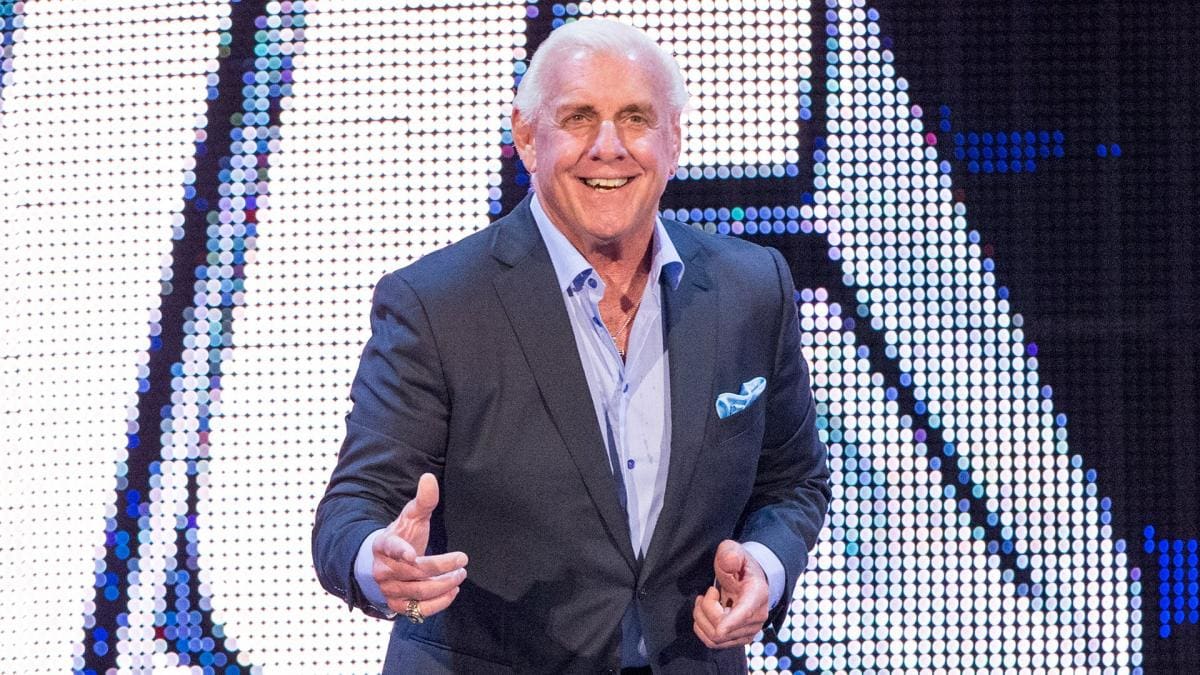
Ric Flair’s former agent and her firm are suing the wrestling star for defamation, announced in a statement Monday.
In a video posted last week, Flair accused Legacy Talent and Entertainment owner Melinda Zanoni of embezzling money from him, claiming WWE had to also help him renew six trademarks that nearly lapsed when the firm ignored his requests. Flair claimed he had documented proof Zanoni stole money and that he had talked to a lawyer before making the now deleted video.
Legacy released the following in response:
“Today we have taken the first step and filed a Civil Lawsuit against Richard M. Fliehr a/k/a as Ric Flair and certain unnamed (for now) defendants for defamation per se and look forward to proving the falsity of every wrongful allegation contained in his video that was posted on YouTube on June 3, 2019. Ric Flair having taken down the video is not enough.
We will vigorously use the court system to protect our good names and reputations, and obtain damages due to Ric Flair’s defamatory comments contained in the video. We intend to amend the lawsuit to include all involved parties and hold all involved accountable.
We completely stand behind our client’s well known reputation for truthfulness, professionalism, honor, and integrity.”
Flair sued the agency after leaving them in 2017, claiming they embezzled $46,000 in royalties from his ESPN 30 for 30 documentary as well as a local endorsement deal. He also claimed that Zanoni left a threatening voicemail for his wife from a blocked number, adding he hoped the video got Zanoni disbarred. He had been with the agency for a decade and friends with Zanoni for two decades.
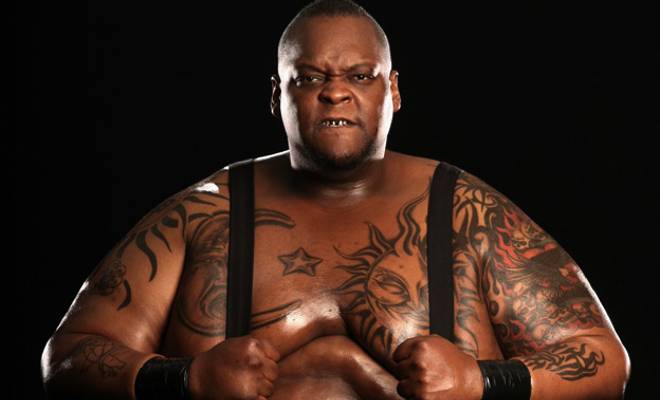
On Thursday, U.S. District Judge Vanessa Bryant dismissed wrongful death lawsuits against WWE filed by Michelle James, the girlfriend of Matt Osborne, and Cassandra Frazier, the widow of Nelson Frazier Jr.
Osborne, best known as “Maniac” Matt Borne and the original Doink the Clown, passed away on June 28, 2013, in Plano, TX, from an accidental opiate overdose at the age of 55.
Frazier, who wrestled as Viscera, Mabel and Big Daddy V among other names, passed away due to a heart attack at age 43 while in the shower at his home on February 18, 2014.
In both cases, the lawsuit was a claim that both men suffered brain injuries while working for WWE that in some form led to their early deaths. In both cases, neither wrestler’s brains were examined after death to see if there was an issue with CTE.
Bryant ruled that James didn’t provide facts that would indicate that Osborne had CTE or his overdose death was in any related to that CTE. Frazier was cremated without an autopsy.
She also ruled that a wrongful death action can only be taken by an executor or an administrator, and James, who had a child with Osborne but was not married to him, was neither. She stated that the court may have considered allowing a re-filing of the case using family members but declined to allow it, stating the case would be futile as the lawyers have not plead a plausible cause of action.
With Frazier, the case was dismissed because the planitiffs failed to allege a plausible casual relationship between his death and any wrongful acts by WWE.
Bryant noted that the lawsuit stated that “upon information and belief” both Frazier and Osborne had CTE, but neither lawsuit contained any information where such a belief could be derived. With no diagnosis of either man, she wrote that it was impossible to plausibly allege, much less prove, that either man developed CTE from their tenure working for the company.
She also noted that the complaint failed to establish any link between CTE and Frazier’s heart failure, and the allegation that Frazier could have survived the heart attack if he didn’t have CTE was “another bald and baseless allegation, which the court deems unworthy of the barest measure of credibility.”
While Bryant wrote that lawyer Konstantine Kyros’ “false and misleading statements” were “highly unprofessional,” she did deny the WWE’s request to take sanctions against him regarding these cases.
However, she wrote, “The court admonishes Kyros and his co-counsel to adhere to the standards of professional conduct and to applicable rule and court orders lest they risk future sanctions or referral to the Disciplinary Committee of this court.”
When Rene Dupree’s lawsuit against WWE over WWE Network royalties was quickly dropped a few months ago, the question coming out of it was not if there would be another such lawsuit, but when and with whom as the next plaintiff would be.
The answers? August 9th and Marcus “Buff” Bagwell.
The same lawyers that represented Dupree are representing Bagwell in the lawsuit, but this time, they appear to have done a bit more due diligence. The Dupree case was dismissed within days because he had not told his lawyers that, in 2011, he had signed some kind of agreement that gave up the rights to future claims against WWE.
On top of that, while he did sign the WWE booking contract that included language about video royalties for “other technology, including technology not yet created,” that language was rendered moot in his next contract. WWE contracts supersede/merge into each other, so when WWE junked the language in 2004, it meant that anyone who re-signed the newly-worded deals effective had never agreed to the “other technology language.” Those later contracts also exclude royalties from internet subscription feeds and video on demand.
So in finding the perfect plaintiff, the lawyers needed to find someone who:
1. Signed with WWE between approximately 1999 and 2003.
2. Did not ever re-sign after 2003.
3. Did not ever sign a legends deal or any other agreement with WWE that gives up certain rights to future claims.
4. Was sure enough that he or she would never be back in WWE that they were willing to sue.
Bagwell fits that bill. He was signed in 2001 for the planned original brand extension to go along with the WCW invasion, only to be released within weeks for a myriad of reasons. WWE did not inherit his Time Warner contract because it happened to expire the week of the sale, so he signed a deal with WCW Inc. (the intended umbrella within WWE for the “new” WCW) that was virtually identical to a WWE contract from that period. Bagwell’s lawyers paid special attention to this section:
“WCW shall maintain books of account related to the payment of royalties hereunder at its principal place of business. Wrestler or Wrestler’s designated independent certified public accountant who is a member in good standing of the AICPA, may at Wrestler’s sole expense examine WCW’s books insofar as they pertain to this Agreement for the purpose of verifying the accuracy thereof, during WCW’s normal business hours and upon reasonable notice.
Such audit shall be conducted in a manner that will not unreasonably interfere with WCW’s normal business operations. Wrestler shall not audit WCW’s books and records more than twice during any calendar year and no such audit shall be conducted later than one (1) year after the last statement of royalties is given, delivered or sent to Wrestler. Each audit is limited to seven (7) days in duration. Statements of royalties may be changed from time to time to reflect year-end adjustments, to correct clerical errors and for similar purposes.”
According to the complaint, Bagwell did indeed retain the services of an accountant, who “contacted WWE officials around June 23, 2016 to schedule a time to examine WWE’s books and was told the last week of July 2016 or the first week of August 2016 would be possible times to conduct an audit.”
However, on August 5th, they got a letter from K&L Gates (Jerry McDevitt’s law firm), which accused Bagwell and company of “assert[ing] a pretextual and invalid audit request to attempt to stealthily obtain that information (WWE network royalty audit).” The letter goes on to state that “neither [Plaintiff’s accountant] nor any other purported representative of Mr. Bagwell will be permitted to audit WWE accounting records. . . Because your client is not paid any such royalties (WWE Network), there is nothing to audit.”
As we noted with the Dupree case, the general idea of someone suing over a breach of the 1999-2004 WWE Talent Booking Contract does appear to have a superficially stronger case than the other wrestlers who have sued for royalties in the last few years. Those were all suits from wrestlers with contractual ties to no WWE (or ESPN, in the cases where they were also sued over ESPN Classic programming) based on various intellectual property claims. It doesn’t mean they’d win, but it’s fairly easy to understand the logic behind the suit.
However, Bagwell’s claim isn’t exactly what was being tried with Dupree, for reasons specific to his own case. He didn’t appear on any pay-per-views, leaving his lone Monday Night Raw appearances as the only match from his WWE contract on the WWE Network. They do have his WCW career up, though, so the argument is that because of the merger clause, the WWE royalty terms apply to his WCW work (“…all prior understandings, negotiations and agreements are merged into this Agreement. There are no other agreements, representations, or warranties not set forth herein with respect to the subject matter hereof…”
There are various problems with that argument, the first of which is that while he had signed with two different companies named WCW, WWE only bought WCW’s assets and not the company outright. There was no previous contract to merge. On top of that, Bagwell “assigned his intellectual property rights to WCW in consideration for other benefits, not for WCW Video Products royalties,” Here’s the relevant portion of the merchandising agreement Bagwell signed with the original WCW in 1998:
“Notwithstanding anything herein to the contrary, Wrestler expressly acknowledges and agrees that in no event shall Wrestler receive or be entitled to any share of any revenue derived by WCW from the sale or other exploitation of any of the Intellectual Property in connection with (i) any wrestling magazine published and distributed by WCW (or its licensees), or (ii) the sale or licensing in any medium, market or form of videocassettes of any wrestling matches or other events sponsored by WCW, or (iii) any telephone call-in lines (such as 800, 900, 511, or 976), or (iv) any pay-per-view wrestling matches or events.”
When reached for comment, Jerry McDevitt specifically pointed out that Bagwell was never promised royalties for videos of his WCW work. For what he *was* eligible for royalties on, Bagwell’s WWE royalty statement for the first quarter of 2016 has him getting $64.40.
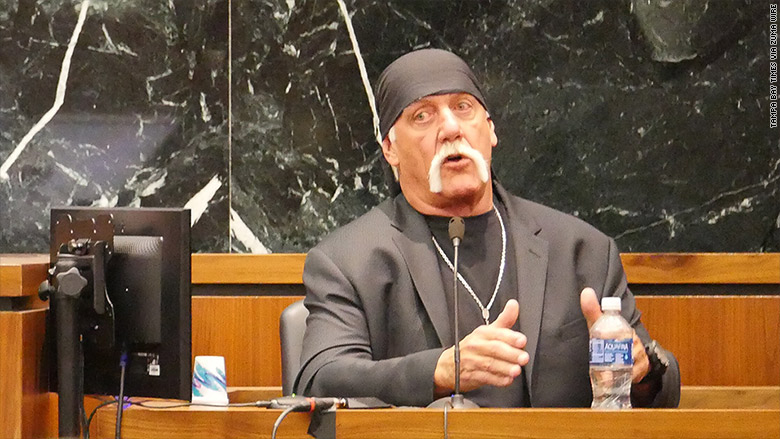
Hulk Hogan aka Terry Bollea has filed a second lawsuit against Gawker, claiming the company was responsible for leaking the contents of a sealed document which led to the end of his relationship with WWE.
Bollea’s side has claimed that Gawker was responsible for leaking the contents of the tape of Hogan’s racist remarks to The National Enquirer, which published them. When the WWE was informed that the remarks were coming out, they immediately severed all ties with Hogan and tried to remove most of the mentions of Hogan from its web site, including his name from their Hall of Fame.
The lawsuit noted that Nick Denton, the CEO of Gawker, had written a blog piece predicting that Hogan’s real secret would soon be revealed.
The contents of the tapes were sealed. However, long before they were sealed, a web site, The Dirty.com had done a story discussing the tapes much earlier which for whatever reason, didn’t get the same media play, largely because there was a description of the remarks without the actual wording of the remarks.
Hogan is also suing Florida DJ Mike Calta, known as Cowhead, who he claimed sent at least one of the secretly recorded sex tapes to Gawker.
For reasons not exactly clear, law enforcement officials never filed charges against Calta or anyone involved in what was believed to have been stealing the tapes from Bubba the Love Sponge, who had recorded Hogan having sex with wife Heather.
The new lawsuit doesn’t list specific monetary damages.
Just a few hours after Hulk Hogan was awarded another $25.1 million in punitive damages by a Pinellas County, Florida jury, the concussion-themed lawsuits against WWE took a major hit last week after a 71 page ruling by Connecticut Federal District Court Judge Vanessa L. Bryant. The wrestlers/plaintiffs did have a minor win in there: Vito Lograsso and Evan Singleton didn’t have their cases thrown out, in part thanks to Bryant buying the argument that WWE’s outreach to former talent tolls (extends) the statute of repose (more strict than a statute of limitations). But by and large, this was a victory for WWE. Right before the judge agreed with WWE’s argument that they should be protected “under the contact sports exception they could only be held liable for reckless and intentional conduct, and not ordinary negligence,” she wrote this:
The trial of Hulk Hogan vs. Gawker Media, Nick Denton, and A.J. Daulerio (who we’ll collectively call “Gawker” unless we need to be more specific) turned out to be quite possibly even more of a circus than anyone even could have imagine, as of this writing, it resulted in Hogan being awarded $115 million in compensatory damages with punitive damages still to come. The jury split the compensatory damages as $60 million in emotional damagers and $55 million in lost wages, with the latter number determined in large part from how much Hogan claimed he would have made if he had decided to market the video. He most likely won’t get close to that, if anything. There’s a question of exactly what Gawker will need to do to appeal, as Florida has various laws relating to posting a bond to secure the award when filing an appeal. There are alternatives, but the options including Gawker trying to stay the bond with the trial judge (unlikely given Judge Campbell’s rulings up to this point), posting the maximum allowed $50 million bond, or having to hire a bond company and paying about $12 million so the bond company can post $50 million.