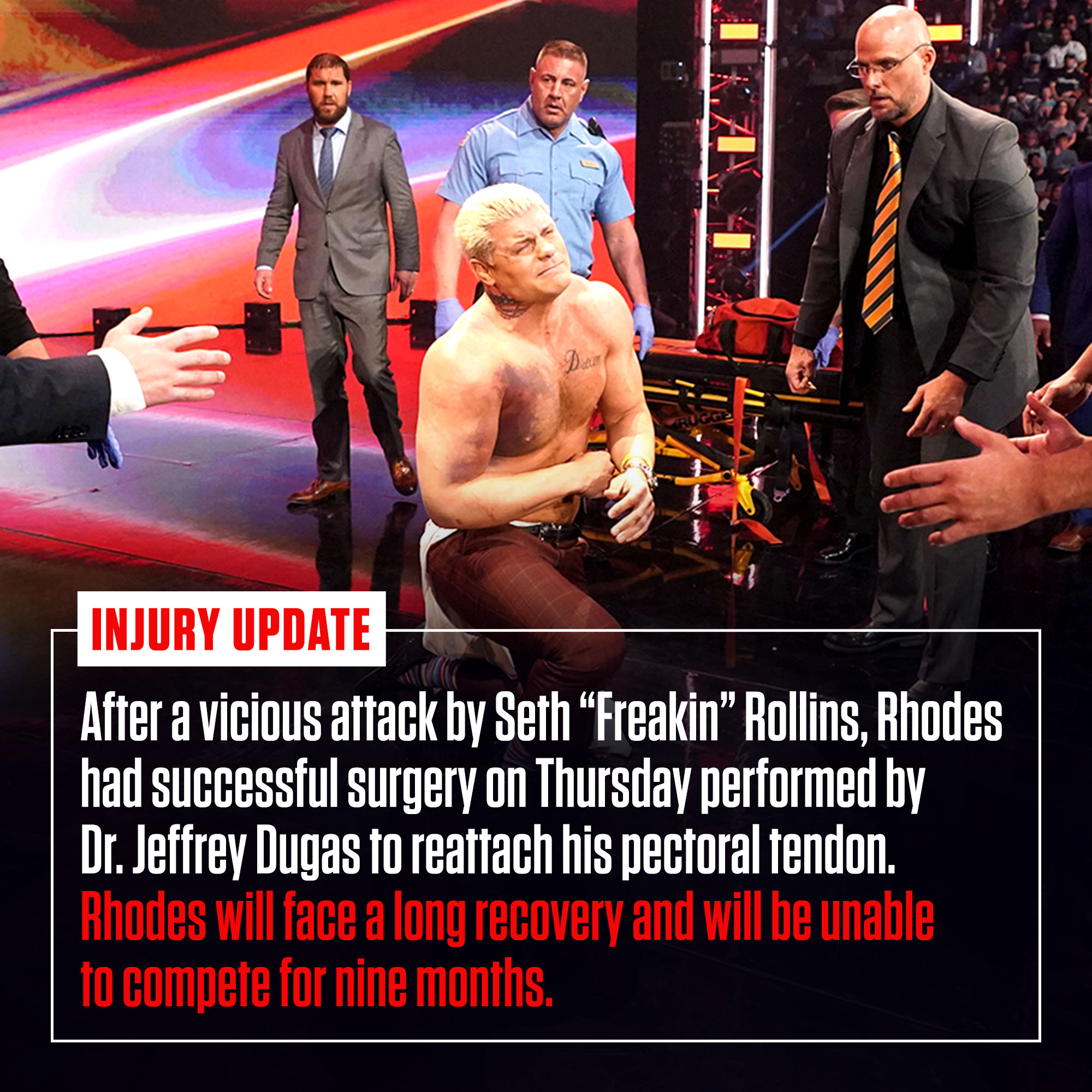

Cody Rhodes will miss nine months after undergoing surgery to repair a torn right pectoral tendon, according to WWE.
The company announced on social media on Friday that Rhodes had undergone successful surgery on Thursday, but faces “a long recovery and will be unable to compete for nine months.”
Update: After successful surgery, @CodyRhodes will be out of action for nine months. #SmackDown pic.twitter.com/5ITIvRzPcL
— WWE (@WWE) June 11, 2022
The announcement echoes a tweet from Cody’s wife Brandi Rhodes on Thursday, which stated that the surgery was successful.
The doctor just repaired Cody's pectoral tendon which was torn completely off the bone. Successful surgery. He is on the road to recovery now.
— Brandi Rhodes (@TheBrandiRhodes) June 10, 2022
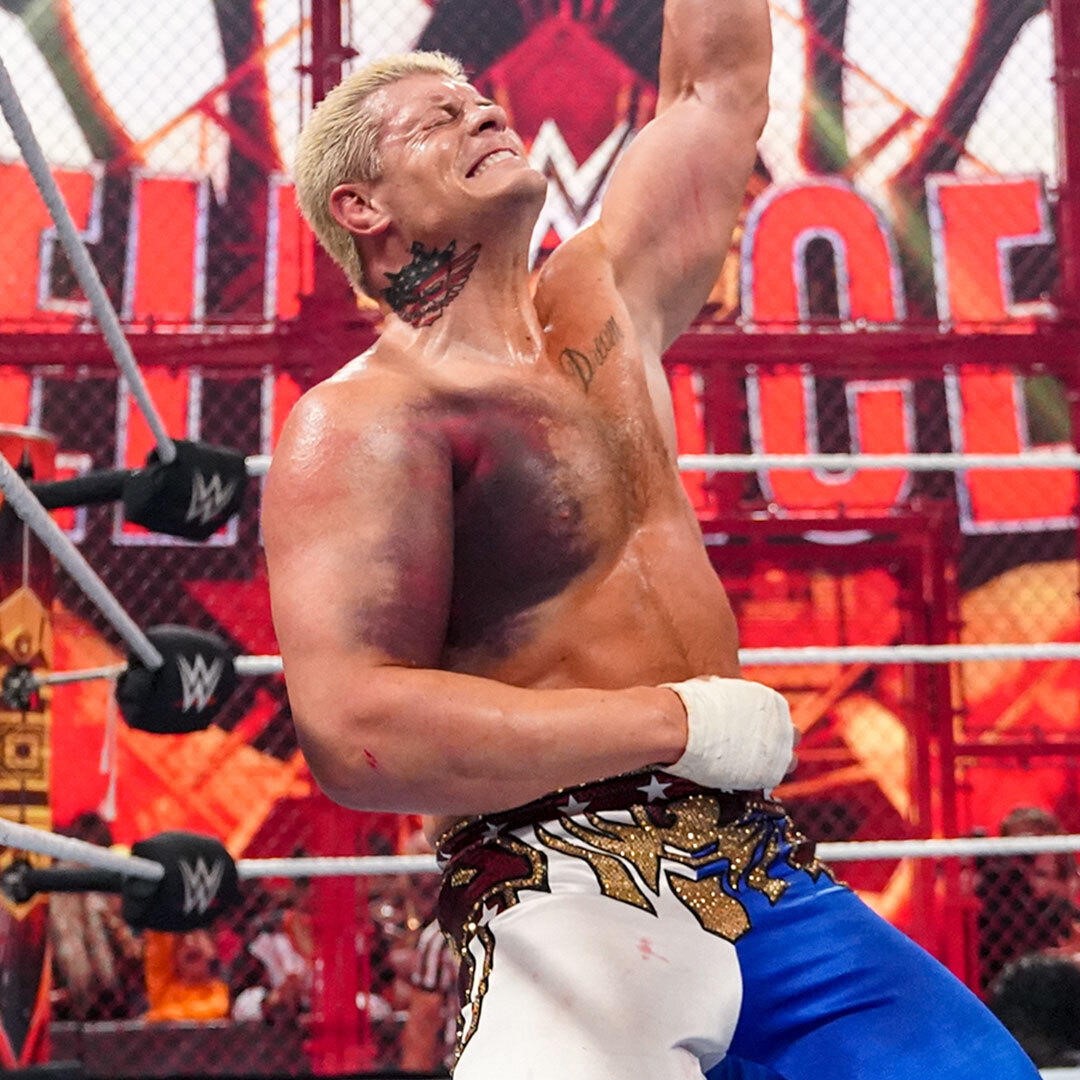
Rhodes suffered the torn pec while weight training last week ahead of Sunday’s Hell in a Cell match against Seth Rollins. Rhodes performed at Hell in a Cell in spite of the injury, with bruising evident across his chest and right arm.
On Monday’s Raw, an injury angle was shot where Rollins attacked Rhodes with a sledgehammer, writing Rhodes out of storylines while he recovers, and giving him a built-in opponent when he is able to return.
Rhodes re-joined WWE earlier this year after a three-year run as a talent and executive vice president in AEW. He re-debuted at WrestleMania 38, defeating Rollins in his first match back with the company.